Wall Street week ahead CPI
Bank earnings kick off Tuesday, September CPI lands Wednesday morning, and crude sits near $100. After weeks of pricing in a perfect outcome, the market is about to get its assumptions checked against reality.

The Wall Street week ahead CPI calendar is the busiest of October, and it arrives with stocks priced for perfection. On Tuesday, October 13, JPMorgan, Goldman Sachs, Wells Fargo and Citigroup open Q3 earnings season before the bell. On Wednesday, October 14, the September Consumer Price Index hits at 8:30 a.m. ET — the last major inflation reading before the Federal Reserve's October 27-28 meeting. And all week, crude oil near $100 a barrel looms over everything, threatening to turn a contained-inflation story into an energy-driven one.
Track it live: Live markets tracker · Oil price forecast
Why this matters
Equities have spent several weeks pricing in a favorable scenario: contained inflation, a Federal Reserve near the end of its hiking cycle, and uninterrupted AI investment. This week tests each assumption against hard data. If CPI comes in at or below expectations and the banks and TSMC deliver, last week's record highs become support rather than resistance. If inflation surprises to the upside while earnings merely meet forecasts, a 10-year Treasury yield above 5.2 percent becomes a persuasive argument for reducing exposure — because at that yield, investors get paid handsomely to wait.
The stakes are unusually concentrated. Three of the market's biggest risk factors — the credit cycle (banks), the inflation path (CPI/PPI), and the energy shock (oil) — all report within 72 hours of each other. It is rare for the entire macro debate to be settled, or at least clarified, in a single week. By Friday, the market will know considerably more than it does today, and the range of plausible outcomes is wide in both directions.
The calendar: day by day
Monday, October 12 — Columbus Day, thin liquidity
US stocks trade normally, but the bond market is closed for Columbus Day and Tokyo is shut for Sports Day. Thin liquidity can exaggerate moves — a Monday equity move may offer a less complete picture of the market's view of rates and growth, because the bond market, where rate expectations actually live, is not participating. Also beginning Monday: the IMF and World Bank annual meetings in Bangkok, running through Sunday, where the global policy establishment will be gaming out the same inflation and debt questions markets are asking.
Tuesday, October 13 — the banks open earnings season
JPMorgan Chase, Goldman Sachs, Wells Fargo, Citigroup and Johnson & Johnson all report before the open. The banks are the first real read on credit conditions and lending since the Fed's September rate rise — investors will be parsing net interest income, loan-loss provisions, trading revenue, and management commentary on consumer credit quality for signs that higher-for-longer rates are finally biting borrowers. Apple also holds a smart-home product event Tuesday, a reminder that the consumer-tech cycle keeps turning even in a macro-dominated week.
Wednesday, October 14 — CPI day, the main event
September CPI arrives at 8:30 a.m. ET. Consensus expects headline inflation of about +0.6 percent month-over-month (prior +0.4 percent) and roughly 3.6 percent year-over-year (prior 3.4 percent), with core at about +0.2 percent monthly and ~2.5 percent annually. The August baseline for comparison: headline +0.4 percent month-over-month, with gasoline accounting for more than a third of the increase; annual headline 3.4 percent; core 2.4 percent; energy up roughly 16 percent year-over-year. RBC Economics forecasts September headline at 3.7 percent year-over-year, noting that headline inflation remains largely an oil price story — which makes Wednesday's number hostage to the same crude market that has been climbing all month.
Also Wednesday: the Fed's Beige Book at 2 p.m. ET, adding regional color on business conditions, plus earnings from Bank of America, Morgan Stanley, BlackRock and ASML — putting financial services and semiconductor equipment in focus on the same day the inflation data lands.
Thursday, October 15 — PPI, retail sales, TSMC
September PPI (+0.5 percent expected), retail sales (+0.3 percent expected versus +1.2 percent prior), weekly jobless claims, the Philly Fed survey, and business inventories all land in the morning. TSMC's earnings conference — the key read on AI chip demand and capital expenditure — is the day's market-moving corporate event. Tesla is also expected to unveil its next-generation Roadster. Together, the data will tell investors whether pricing pressure is broadening, whether the consumer is finally pulling back, and whether the AI investment cycle is intact.
Friday, October 16 — options expiration and the Warsh watch
September import and export prices at 8:30 a.m., industrial production and capacity utilization at 9:15 a.m., and monthly options expiration — which can amplify intraday swings as positions roll. The week's coda: Fed Chair Kevin Warsh in a fireside chat with IMF chief Kristalina Georgieva, scheduled for 11:30 p.m. ET Thursday (Friday morning in Bangkok), where every syllable about the October 28 decision will be parsed. The next scheduled FOMC meeting is October 27-28, with no dot plot at this meeting — making Warsh's tone the market's best preview of the decision.
Background: how we got to 5.24 percent and $100 oil
The backdrop is what makes this week dangerous for the bull case. The 10-year Treasury ended last week near 5.24 percent; it closed September at 5.29 percent, with the 30-year at 5.64 percent — its highest in Treasury data going back to 2002. Fed minutes released October 7 showed most officials saw another interest-rate increase likely before year-end. The September jobs report, released October 2, showed just 29,000 jobs added with unemployment at 4.2 percent — soft enough to worry about growth, not soft enough to guarantee the Fed is done.
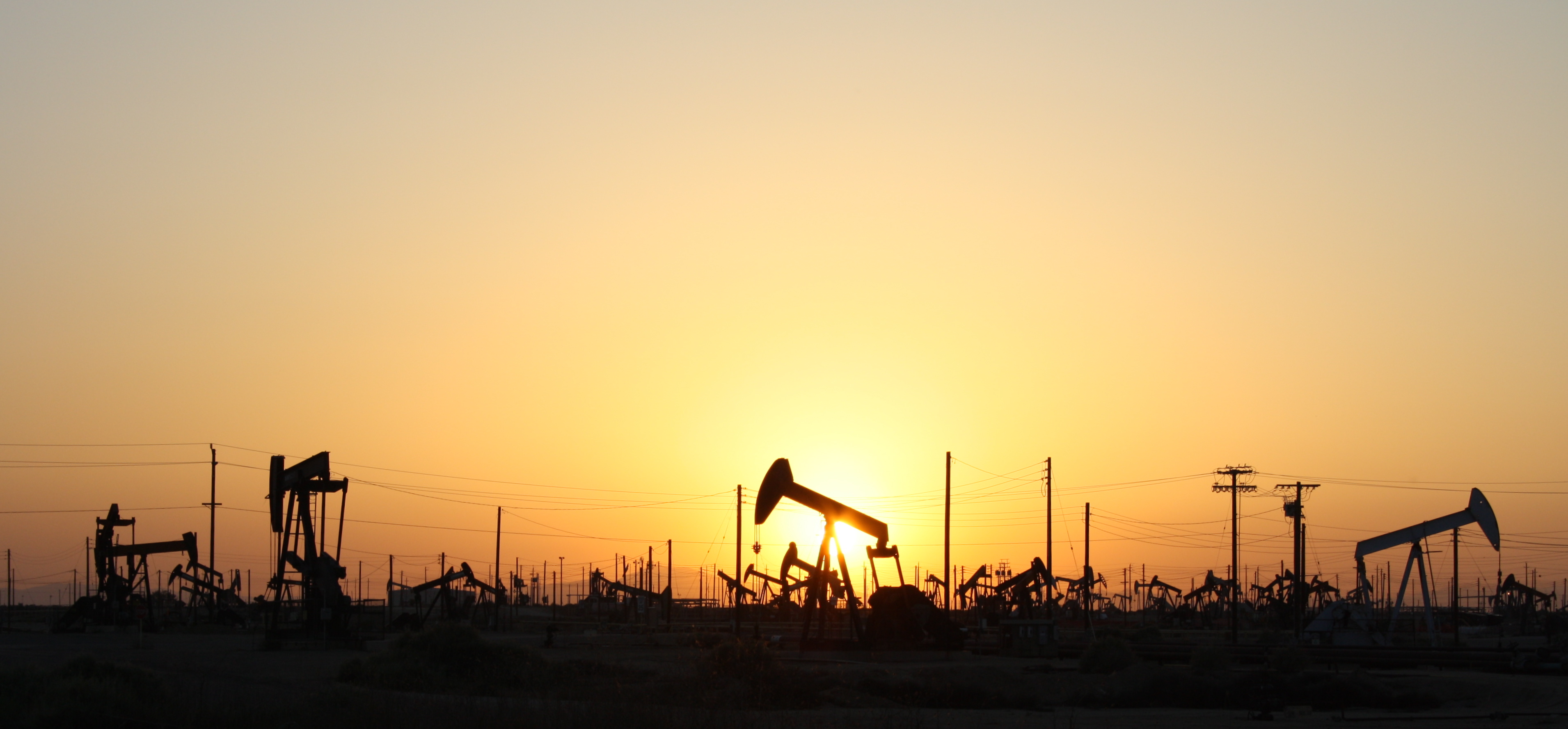
Oil is the accelerant. Crude has been strengthening after Russia pounded Ukrainian energy targets just hours after President Trump's "energy ceasefire" declaration, diesel futures have been paring declines, and traders are on edge over Houthi strikes on Riyadh's airport — with Strait of Hormuz negotiations running in the background all week. Brent has topped $100, and China's halt of October fuel exports added another $4 to the rally last week. Bitcoin, meanwhile, sits around $82,000 — the crypto market's own referendum on liquidity conditions, and highly sensitive to any shift in rate expectations.
Compare this to a year ago and the regime change is stark. Then, the debate was whether the Fed would cut; now, the debate is whether it will hike again before year-end. Then, oil was a tailwind story; now it is the single biggest upside risk to the inflation data. The market's record highs were built on the assumption that the hiking cycle is over. This week is the audit.
Scenario analysis: hot CPI vs. cool CPI, strong banks vs. weak banks
Scenario 1: Cool CPI (at or below consensus) + strong banks
This is the bull case and the market's base assumption. A benign inflation print — especially one driven by broad easing across shelter, services and goods rather than a single volatile component — would validate the "Fed is done" narrative, pull the 10-year yield back from its highs, and let record levels become a launchpad. Strong bank earnings would confirm the credit cycle is intact despite high rates, supporting financials and the broader economy. Crypto would likely rally with higher amplitude: a soft print could take Bitcoin back toward $85,000.
Scenario 2: Hot CPI (above consensus) + banks merely okay
This is the week's real risk. A hot print — particularly one driven by energy, which the Fed cannot fix with rate hikes — would force markets to price another hike before year-end, pushing the 10-year toward 5.3 percent and beyond. At those yields, the equity risk premium compresses hard: why own stocks at record multiples when risk-free bonds pay over 5 percent? Growth stocks and the Nasdaq would take the most damage, since higher yields reduce the present value of future earnings. Bitcoin would test whether the large holders accumulating since October 1 are prepared to defend $82,000.
Scenario 3: Mixed — soft CPI, weak banks (or vice versa)
The most likely outcome, statistically, is a split decision: benign inflation but cautious bank guidance on credit quality, or strong banks alongside a sticky core reading. In that case the market's reaction will hinge on which signal the Fed weights more. Watch Warsh's Friday framing and the Beige Book's anecdotes on lending standards — they will tell you which half of the mixed picture the central bank is watching.

Who wins, who loses
Winners in the benign scenario: equity holders broadly, growth and tech stocks (duration-sensitive and yield-relieved), homebuilders and rate-sensitive sectors, and crypto. Winners in the hot scenario: energy producers — in an inflationary environment driven by energy, owning energy producers is a direct hedge — plus short-duration bondholders and anyone positioned for another Fed hike.
Losers in the hot scenario: the same growth complex that has led the market's record run, commercial real estate borrowers rolling debt at 5 percent-plus, and consumers — household purchasing power is already declining on tepid real income growth, and another leg up in energy prices would squeeze discretionary spending further. The Conference Board has even flagged the possibility of rate hikes in September, October and December to combat renewed inflation pressures driven by energy prices and supply chain costs. That is the path the market is not priced for, which is precisely why it would hurt.
Critics of the consensus make two points worth hearing. First, that the market is underweighting the oil channel: with crude near $100 and geopolitics deteriorating, the consensus CPI forecast may already be stale. Second, that bank earnings are a lagging indicator — loan books reflect the past, not the future, and management teams have every incentive to sound confident on the call. The neutral read: treat Tuesday's earnings as a health check on the present and Wednesday's CPI as the market's best available guide to the future, and weight the future more.
The numbers, in context
Line up the figures and the tension is visible. Headline CPI expected at 3.6 percent year-over-year against a Fed target of 2 percent — inflation is still running nearly double the target nearly five years into the fight. Core at ~2.5 percent versus headline at 3.6 percent: the 1.1-point gap is the energy story in a single number, and it is why oil matters more than usual this month. The 10-year at 5.24 percent versus the S&P 500's earnings yield: when the risk-free rate exceeds what stocks yield, the valuation math gets unforgiving. And $82,000 Bitcoin versus record equity highs: crypto's consolidation, after weeks of accumulation, suggests at least some large holders are hedging rather than chasing.
The year-over-year comparisons sharpen the inflation picture. Energy up roughly 16 percent year-over-year in August; gasoline drove more than a third of August's monthly increase. If September repeats that pattern at higher crude prices, the "contained inflation" narrative fails on contact with the data. Conversely, if core holds at +0.2 percent monthly while headline runs hot on energy alone, the Fed faces its classic dilemma: hike into an energy shock it cannot control, or look through it and risk unanchored expectations. That dilemma — not the number itself — is what Wednesday is really about.
What happens next: three paths into the FOMC
1. The benign path: data cooperates, records hold. Cool CPI, solid banks, TSMC confirms AI capex is intact. The 10-year drifts back below 5 percent, the Fed stays on hold October 28, and the market's benign scenario is validated. Watch for: core CPI at +0.2 percent or below, bank commentary describing credit as "stable," and Warsh sounding patient in Bangkok.
2. The repricing path: hot CPI forces the Fed's hand. Inflation surprises higher, yields spike, and the October 28 meeting becomes live for another hike — the outcome the Fed minutes already hinted most officials see as likely. Stocks correct, with growth leading the decline; Bitcoin tests $82,000 support; energy outperforms. Watch for: headline CPI at 3.7 percent or above, hawkish Warsh language about expectations, and widening credit spreads.
3. The muddle-through: mixed data, volatile chop. The likeliest single outcome — some numbers hot, some cool, and the market whipsawing as each release reframes the Fed debate. In this path, stock-picking beats index-chasing: banks with clean credit books outperform, energy hedges its own sector, and duration stays a tactical trade rather than a conviction. Watch for: intraday reversals on each data release and options-expiration volatility into Friday's close.
Either way, by Friday the market will have considerably more information than it has today. The record highs of last week were a bet — that inflation is contained, that the Fed is done, that AI investment continues uninterrupted, and that $100 oil is a sideshow. This week, every one of those assumptions gets its day in court.
Related coverage
Sources
- Wall Street Journal — Stock Market Today: Dow, S&P 500, Nasdaq (live coverage) (October 12, 2026)
- PandaForecast — Banks, Inflation and $100 Oil: The Week That Tests Wall Street's Record Highs (October 2026)
- Schwab Network — Week Ahead: Banks Kick Off Earnings; PPI and CPI Economic Data in Focus (October 2026)
- The Hairy Times — Stock Market Week Ahead (October 2026)