Stock market today: the S&P 500 fell 1.11% to 7,718.94 and the Nasdaq Composite dropped 1.9% on Wednesday, October 14, 2026 — the worst day since July for both — after September inflation printed hotter than expected and futures traders lifted the odds of a Federal Reserve rate hike at the October 28 meeting to about 37%, up from 22%.
Worst Day Since July: Hot Inflation Revives Fed Rate-Hike Bets
Track it live: Live markets tracker — indexes, yields and currencies as they move; plus the oil price tracker and the crypto tracker.
The scoreboard
The Dow Jones Industrial Average slipped 48.62 points, or 0.09%, to 51,621.48 — a rounding error of a move on a day when the rest of the market was reeling. The S&P 500 fell 1.11% to 7,718.94. The Nasdaq Composite, laden with the technology shares most sensitive to interest rates, dropped 1.9%. Small companies fared little better: the Russell 2000 lost 1.39% to 2,744.75. For the S&P 500 and the Nasdaq, it was the worst single session since July — a measure of how completely the inflation report caught a complacent market leaning the wrong way.
Under the surface, the pattern was classic risk-off. Only three sectors finished higher: health care, consumer staples and energy — the defensive corners investors buy when they want to own stocks without owning the economy. Technology, industrials and consumer discretionary led the declines. The SOXX semiconductor index fell for a seventh straight session, extending a slide in the chip shares that had carried the market for much of the year.
Why one inflation report did all that
The trigger was the September CPI. Headline inflation ran at 3.7% year over year against expectations of 3.6% and an August reading of 3.4% — the wrong direction, at the wrong speed. Core inflation, which strips out food and energy, rose 2.6%, above the 2.5% forecast and the prior month's 2.4%. Neither number is catastrophic in isolation. Together, they told traders that the last stretch of disinflation — the grind from 3% toward the Fed's 2% target — may be going into reverse.
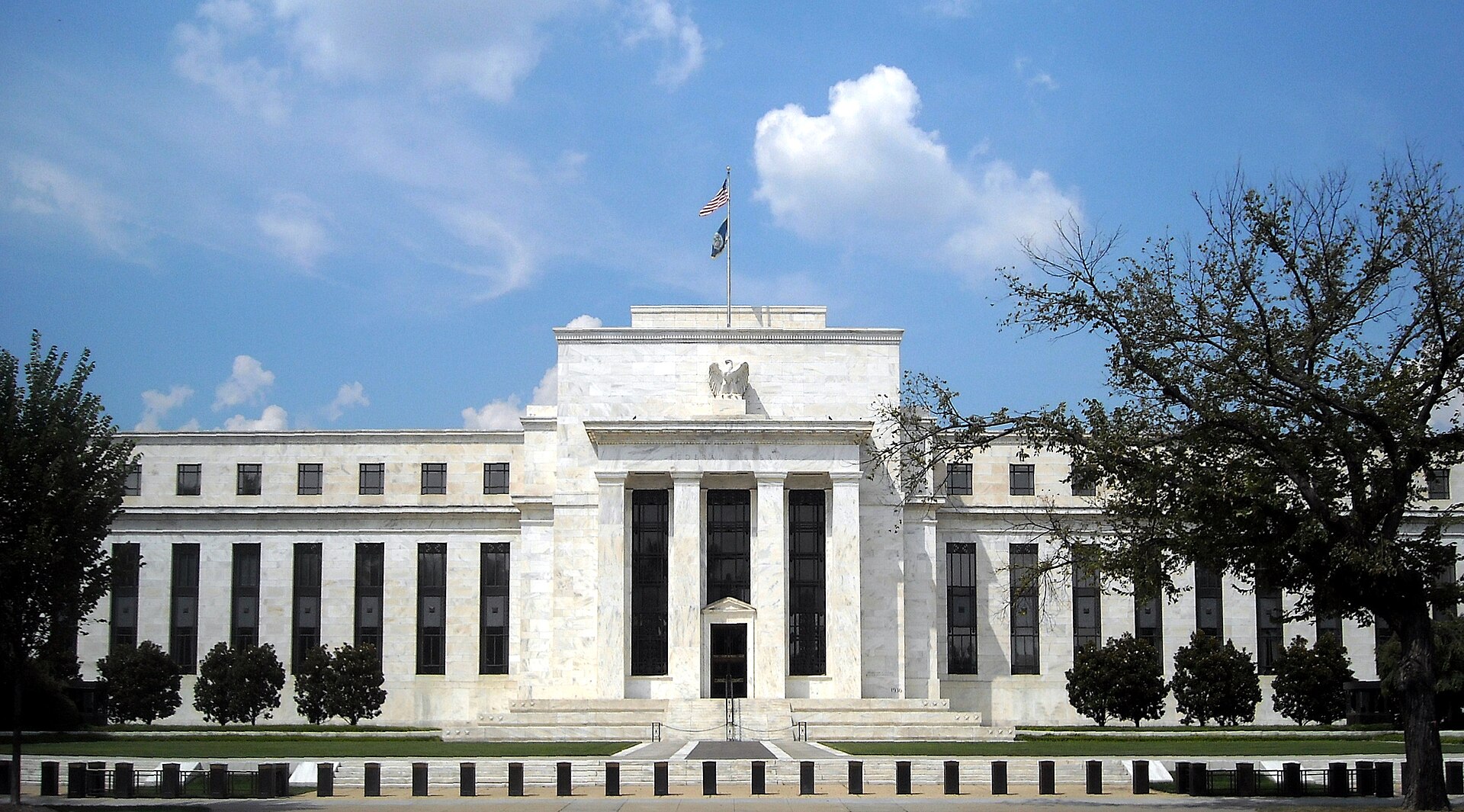
Markets price interest rates before central banks move them, and the repricing was immediate. CME FedWatch showed the implied probability of a rate hike at the Fed's October 28 meeting climbing to about 37%, from 22% before the report, and the odds of at least one hike by December reaching roughly 91%. That is a remarkable sentence to write about a central bank that investors, not long ago, expected to be cutting. The Fed's own Beige Book, released the same day, added a stagflationary flavour to the mix: wage growth little changed, business sentiment on hiring weaker — the combination of sticky prices and softening momentum that policymakers dread most, because it punishes both halves of their mandate at once.
What the bond market is saying
The 10-year Treasury yield is the number that connects a CPI print to your mortgage, and Wednesday showed why it matters. The yield spiked to 5.33% in the immediate aftermath of the report — the market's first, panicked read — before settling back to close at 5.19%, down 2 basis points on the day. That round trip is the story in miniature: inflation is hot enough to force the Fed question back onto the table, but not yet so hot that bond investors believe a hiking cycle is certain. Mortgage rates, which track the 10-year with a spread, take their cue from exactly this number — which is why a "boring" inflation release at 8:30 in the morning can change what a house costs at the closing table by Friday.
One bank's very bad day — and two good ones
Earnings season supplied the day's biggest single-stock casualty. Bank of America fell more than 8% to its lowest level since May after reporting earnings per share of $0.91 against expectations of $1.10, on revenue of $30.0 billion. The miss came with a headline attached: a $1.21 billion anti-money-laundering penalty, tied to more than $5 billion in unreported suspicious transactions, which the bank said cost it about 17 cents a share. Trading revenue fell 5% to $5.1 billion. It was a reminder that in this market, a bank can miss on operations and compliance on the same morning, and be punished for both.
The same industry produced the day's winners. BlackRock rose 4.7% after a strong quarter that took its assets under management to roughly $15.5 trillion — a figure larger than the GDP of every country on earth except the United States and China. Morgan Stanley beat expectations on equities trading and record wealth-management inflows. The exchanges themselves did what exchanges do on volatile days: CME Group gained 2.72% and Cboe 2.81%, because turbulence is their product. And the day's most eye-catching mover was a small drugmaker: Liquidia jumped about 40% after settling its dispute with United Therapeutics in a way that keeps its inhaled therapy YUTREPIA on the market.
Oil up, gold down, bitcoin softer

Energy was the exception to the sell-off, and the reason sits in the Middle East. November WTI crude settled at $95.09 a barrel, up $0.95, and Brent held above $106, as supply risk around the Strait of Hormuz and the region's still-unresolved confrontations kept traders paying a premium for barrels. Gold, the classic hedge against exactly the kind of day Wednesday was, did something less classic: December gold settled at $4,122.10 an ounce, down $55.20 — high yields compete with gold, which pays no interest, and on Wednesday yields won. Bitcoin slid 1.98% to about $81,776, behaving like the risk asset it has become rather than the digital gold of its branding. The dollar index was roughly flat at 102.17, near an 18-month high.
What it means for regular people
For anyone with a 401(k), Wednesday was a bad day on paper and, if history is a guide, a day to do nothing about: the S&P 500's worst session since July still leaves the index near its highs, and the losses were concentrated in the rate-sensitive growth shares that dominate many funds. The more concrete channel is borrowing. A 10-year yield above 5% keeps mortgage rates elevated, which is why housing economists watch CPI day as closely as traders do: a hot print does not just move portfolios, it can postpone a refinancing or a first home purchase. Savers get the other side of the trade — money-market and high-yield savings rates stay generous while the Fed stays tight. And for small businesses, the Beige Book's picture — steady wages, softer hiring sentiment, expensive credit — is the lived version of what the indexes were pricing.
None of that is advice to buy or sell anything. It is the mechanics of how a 0.1-percentage-point inflation surprise in Washington becomes a different monthly payment in Ohio — and why the next few data points matter more than Wednesday's decline itself.
What to watch next
Thursday brings the producer price index, the wholesale cousin of Wednesday's report; another hot number would harden the hike narrative, a soft one would let the market argue Wednesday was a head-fake. Then the calendar runs to the Fed's October 28 meeting, with hike odds now the single most-watched number in finance, and into the heart of earnings season, where the banks that stumbled and soared on Wednesday will be followed by the technology giants whose shares led the decline. Technicians, for their part, are watching whether the S&P 500 holds its 50-day average near 7,707 — a level only a dozen points below Wednesday's close. The index ended the day almost exactly on the line the charts say matters. Thursday will grade the homework.
Related coverage: Hot CPI puts a Fed rate hike back in play (today's earlier market report) · Stock market today, October 12: the full close
Sources: closing data via MarketWatch, Barron's, Investopedia and Brownfield; CME FedWatch for rate probabilities; company reports and Reuters for Bank of America, BlackRock and Morgan Stanley. Index levels and analyst expectations are as reported at Wednesday's close; this article is general market education, not investment advice.