Dow surges 557 as yields plunge — investors rotate out of AI, not out of stocks
Track it live: Live stock market and index tracker
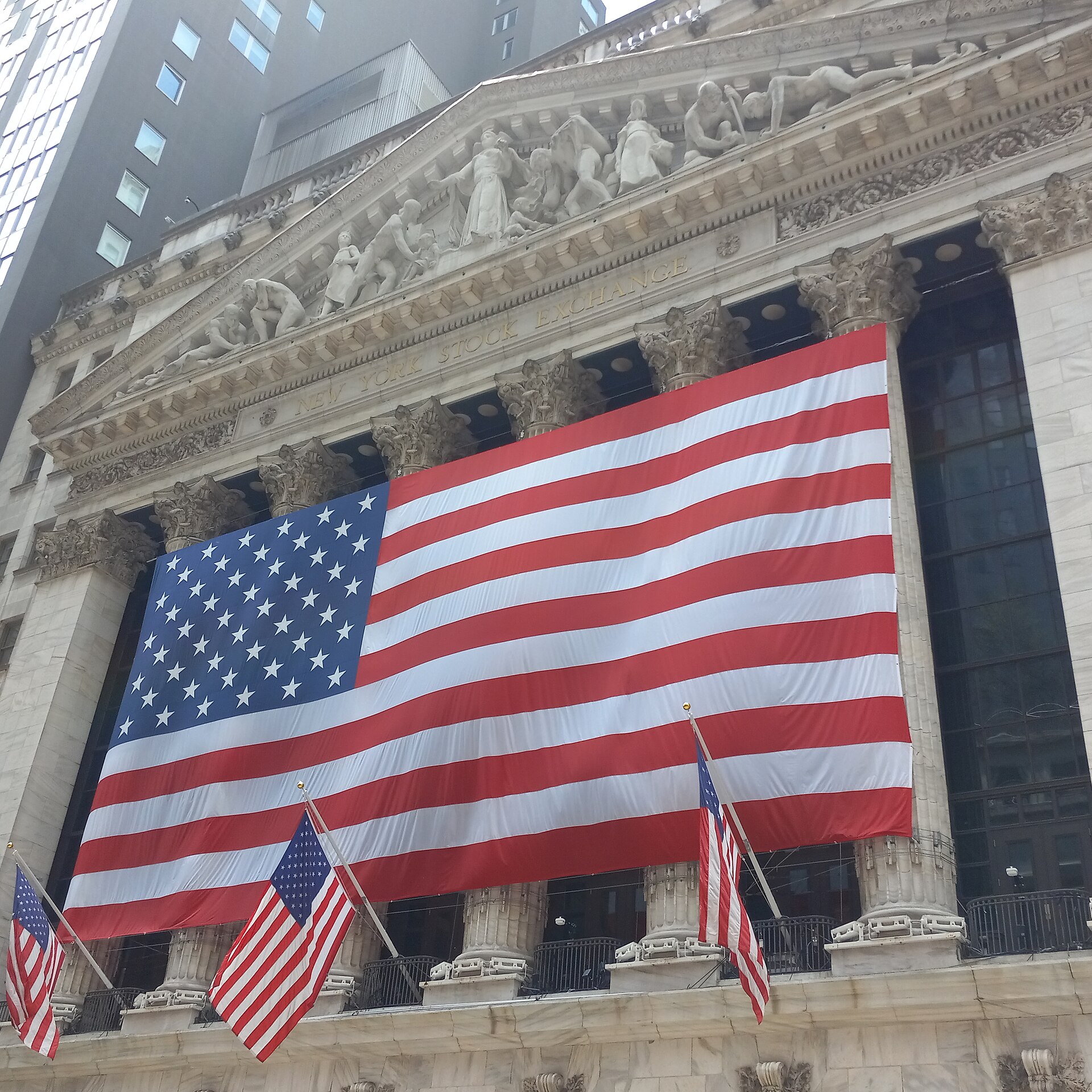
NEW YORK, October 15, 2026 — Anyone who checked the stock market today at lunchtime and again at the close saw two different days. In the morning, the session looked like a grim sequel to Wednesday, when September consumer prices printed at 3.7% year-on-year and the S&P 500 fell 1.11% and the Nasdaq 1.88% in their worst session since July — the selloff we traced in this morning's market report, when Nasdaq futures were down 1.2% and the day hinged on data still to come. By the close, the Dow had gained 556.80 points, breadth was decisively positive, and the Russell 2000 index of small companies had risen 1.37% to about 2,767 — not the fingerprint of a market in retreat, but of a market changing its mind about what it wants to own.
The close in numbers
The Dow's 1.08% gain to 52,178.28 recovered Wednesday's small 0.09% dip many times over. The S&P 500 added 25.17 points to 7,744.11, a 0.33% rise that understates the swing: the index had been down roughly 1% intraday before reversing. The Nasdaq Composite added 20.16 points to 26,713.03, up 0.08%, a flat finish that itself represented a recovery of more than a percentage point from its lows. The day's most telling number may have been breadth: advancers beat decliners by more than three to one on the New York Stock Exchange and about two to one on the Nasdaq, on heavier volume than Wednesday. Selloffs narrow as they age; rallies broaden. Thursday broadened.
The bond market supplied the day's biggest move. The 10-year Treasury yield fell 10.2 basis points to 5.086% — its largest one-day drop in more than a year — while the 30-year yield fell 9.7 basis points to 5.427% and the two-year fell 5.3 basis points to 4.747%. Gold futures rose $62.90, or 1.5%, to $4,147.70 an ounce. West Texas Intermediate crude settled around $97.70 to $97.93 a barrel, up about 3%, while Brent crude was roughly flat near $105.94. Bitcoin recovered to about $82,300 after dipping below $80,000 intraday for the first time in about a month, and the WSJ Dollar Index eased 0.2%.
Why yields plunged on a hot inflation day
By the textbook, Thursday's inflation data should have pushed yields up, not down. The producer price index — wholesale prices — rose 1.3% in September from August, more than double the roughly 0.6% economists expected, the largest monthly increase in more than four years, and up 6.3% from a year earlier. Core producer prices, excluding food and energy, rose 0.7% on the month and 5.0% on the year. The increase was led by energy, which connects the inflation story directly to the oil market: crude near $98 a barrel is not an abstraction, it is a line item that flows from refiners to wholesalers to, eventually, store shelves. Stacked on Wednesday's 3.7% consumer inflation print, the data describe an inflation problem that is broadening again rather than fading.
So why did bond investors buy? Three explanations circulated on trading desks, and they are not mutually exclusive. First, positioning: after two days of selling, yields above 5% on the 10-year had drawn in buyers who view that level as compensation enough for the inflation risk — the same magnet effect that pulled the yield back from its post-CPI spike above 5.3% on Wednesday. Second, the rest of Thursday's data was softer than the headline. Retail sales rose a strong 0.8% in September, double expectations, but stripping out autos and gasoline the gain was only about 0.25% — a consumer who is spending on cars and fuel, not splurging everywhere. Weekly jobless claims came in at 199,000, low and calm. Third, some investors are simply hedging: if inflation forces the Federal Reserve to tighten into a leveraged AI boom, the accident, when it comes, will send money running into Treasuries, and Thursday's buyers may be purchasing that insurance early.
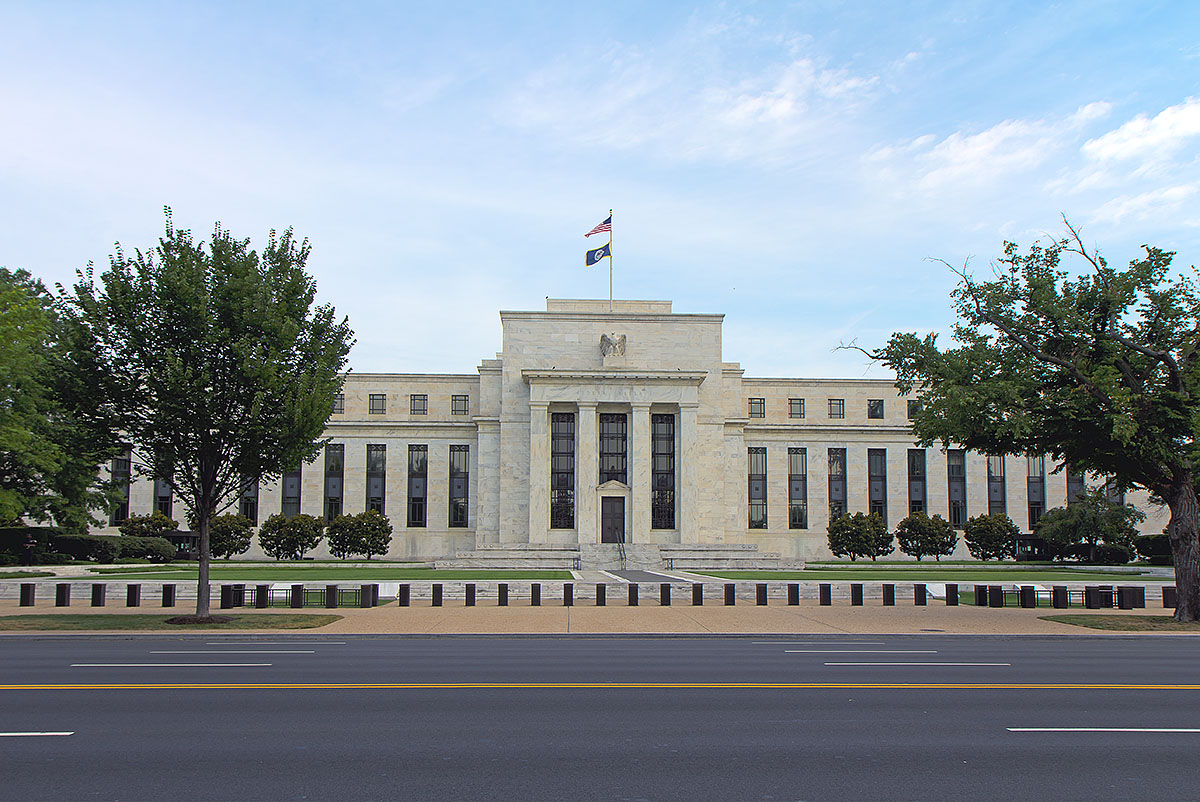
The Fed arithmetic remains the market's central tension. CME FedWatch pricing puts the odds of a rate hike at the October 27-28 meeting at roughly 29%, and the probability of at least one hike by December at about 88% — a complete inversion of where expectations sat a month ago, when the question was when cuts would resume. Investors will get fresh guidance quickly: Fed officials including Kevin Warsh, speaking tonight at an IMF event in Bangkok, and Cleveland Fed President Beth Hammack are on the calendar, and their language about wholesale prices will be parsed word by word.
The AI debt scare
If bonds rallied and most stocks followed, the exception was precise and telling: the companies carrying the debt of the AI build-out. CoreWeave, the data-center operator that has borrowed roughly $50 billion to construct AI computing capacity, fell another 5.9% on Thursday after a 15% drop on Wednesday. Its bonds yield more than 15-16%, and credit-default swaps on its debt trade around 1,000 basis points — pricing that treats the company less like a growth stock and more like a credit under examination. The selling spread through the hardware chain: Dell Technologies fell 6.9% after a Barclays downgrade that also hit Hewlett Packard Enterprise, down 7.1%, and NetApp, down 3.8%. Vicor fell about 12% intraday and Semtech about 9%, and AMD, Intel, Micron, Marvell and SanDisk all declined. Even flawless earnings did not protect the complex: TSMC fell 1.8% despite a record third quarter, and ASML's U.S. shares fell despite raised guidance. With AI capital spending running above $700 billion this year, the market has begun asking a creditor's question — who owes what to whom, and at what rate — instead of a believer's question about how big the future is.
Late in the session, the tone in the AI complex steadied after Nvidia's chief executive said CoreWeave would not need a Nvidia backstop — a denial that functioned as reassurance, since it addressed the fear directly: that the build-out's financing depends on quiet support from its richest participant. Whether that calm holds depends less on statements than on borrowing costs. Every week CoreWeave and its peers refinance or raise at double-digit yields, the arithmetic of the boom gets harder, and Thursday's stock moves say investors have started doing that arithmetic name by name rather than buying the theme whole.
Winners, losers, and the shape of the rotation
The money leaving AI debt did not leave the market; it moved. Nike led the Dow, rising 5.2%. Salesforce gained 4.5% and Home Depot more than 4%. Enterprise software — the sector AI was supposed to disrupt — had one of its best days of the year: Atlassian rose 6.1%, ServiceNow 6.1% and Workday 4.2%. Walmart and Vertex Pharmaceuticals were among the Nasdaq-100 leaders, International Paper rose 6.8% on reported buyout interest in its European packaging business, Penske Automotive jumped 8.8% on take-private news, and Eli Lilly advanced. Apple slipped 0.3%, a mild give-back after Wednesday's milestone, when its market value touched $5 trillion. Read together, the leaderboard describes a classic rotation: out of leveraged momentum, into cash-generative household names, defensive growers and small caps — the Russell 2000's 1.37% gain fits the same pattern, since small companies are the purest bet that the economy underneath the headlines is still fine.
Why this matters
Thursday matters because it separated two fears that Wednesday had fused into one. The first fear is inflation: producer prices rising 1.3% in a month is a fact, and it raises the odds that the Fed hikes into the autumn. The second fear is financial: a $700 billion-a-year building programme financed substantially with debt, some of it at 15% yields. On Wednesday, investors sold both fears at once. On Thursday, they priced them separately — buying Treasuries as if inflation might eventually break something, buying ordinary stocks as if the economy is nowhere near breaking yet, and selling only the specific credits where the leverage actually lives. That is a more discriminating market than a panic, but discrimination cuts both ways: it means the broad indexes can look calm while individual balance sheets are being repriced violently, and calm indexes are exactly what most savers see when they check their accounts.

What this means for your money
For 401(k) savers, Thursday is a case study in why index returns and portfolio returns diverge. A saver weighted toward broad index funds saw a green day; a saver concentrated in AI infrastructure names saw a second punishing session, and both were looking at the same market. The educational point is not to trade the rotation — it is to know your concentration before the market teaches it to you. For mortgages, the yield plunge is the rare piece of unambiguously friendly news in an inflation week: mortgage rates follow the 10-year Treasury, and a 10.2-basis-point drop, if it holds, eases borrowing costs at the margin — though one day of rally inside a 5% yield regime changes monthly payments by far less than the level itself does. For savers, the regime remains generous: yields above 5% across the Treasury curve mean cash and short-term bonds still pay historically strong returns, which is precisely why stocks must now compete for money in a way they did not when rates were zero. And at the gas pump, crude near $98 and an energy-led PPI print point the wrong way: wholesale energy costs of this size tend to reach retail prices within weeks.
What to watch next
The calendar now tightens. Tonight, Kevin Warsh speaks at the IMF in Bangkok and Beth Hammack also appears — the first Fed voices after the PPI shock. Friday brings industrial production data. The October 27-28 Fed meeting looms over everything, with hike odds near 29% and rising, and earnings season will test whether the rotation into software and consumer names has fundamental support. Two market gauges deserve particular attention: CoreWeave's borrowing costs, which have become the boom's pressure gauge, and oil — with WTI near $98 and the Strait of Hormuz in the background of every energy calculation, crude is now an inflation input, not just a commodity. Thursday's verdict was that investors are rotating, not retreating. Next week will show whether the Fed lets them keep that distinction — for the full arc of this selloff and rebound, see our October 14 close report on the Dow, S&P 500 and Nasdaq.
Sources: Closing prices and market data reported by the Wall Street Journal, Investor's Business Daily, Investopedia, Barron's, Reuters and MarketWatch, October 15, 2026; U.S. Bureau of Labor Statistics producer price index for September 2026; U.S. Census Bureau retail sales; U.S. Department of Labor weekly jobless claims; CME FedWatch.