War · South Sudan · Africa
A night raid on the Bol Bol cattle camp in Tonj East County left 24 civilians dead by Sunday evening, seven of them children. Warrap officials blame fighters loyal to Riek Machar’s SPLA-IO — an attribution the movement has not publicly answered and that has not been independently verified.
Track it live: Africa wars tracker · War tracker
TONJ EAST, November 22, 2026 — Raiders attacked the Bol Bol cattle camp of the Luacjang community in Tonj East County, Warrap State, beginning at around 10 p.m. local time on Saturday, November 21, 2026, and fighting continued into Sunday. By Sunday evening, acting county commissioner Machuei Bith had revised the civilian death toll to 24, including seven children and six women, and warned that it could rise further. A local police officer, speaking anonymously, confirmed the account and said fighting was still going on into Sunday morning. Bith and Warrap State officials blame fighters from neighbouring Unity State loyal to the SPLA-IO, the armed movement of former first vice president Riek Machar, and say the attackers wore SPLA-IO uniforms. That attribution is a claim by one side: no SPLA-IO comment was reported in the coverage, and it has not been independently verified.
What happened at Bol Bol
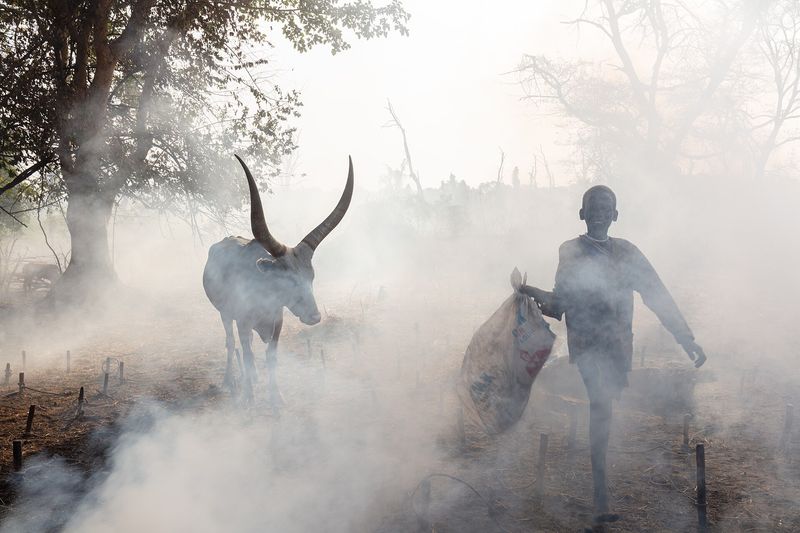
The attack began at night, at about 10 p.m. on Saturday, against the Bol Bol cattle camp of the Luacjang community in Tonj East County. Cattle camps are not villages in the settled sense: they are seasonal encampments where herders — many of them young men and boys, with women, children and elderly relatives among them — live alongside the herds that hold a family’s wealth. A raid that begins at 10 p.m. meets a camp asleep, and the composition of the dead reported by officials reflects that exposure.
The fighting did not end with the first assault. A local police officer, speaking to AFP on condition of anonymity, confirmed the officials’ account and said the fighting continued into Sunday morning. The Warrap State Ministry of Information and Communication Services, in a statement issued in Kuajok, the state capital, on November 22, said cattle taken during the raid were later recovered — a detail that, if accurate, marks the raid as a killing rather than a successful theft, and one that will shape how the community reads its purpose.
What officials have not provided, in the reporting available, is a verified account of how the attack unfolded beyond its opening hour: how many raiders took part, how they arrived and withdrew, and what security forces did during the hours of fighting. Those gaps are normal in the first day of reporting from a remote county, but they matter, because almost everything beyond the toll itself currently rests on the statements of Warrap officials.
The toll: 15, then 21, then 24
The death toll reached the outside world in three steps, and each step belongs to a named source. Machuei Bith, the acting county commissioner, first told AFP that 15 civilians and cattle keepers had been killed, and that four of the raiders had also died. The Warrap State Ministry of Information and Communication Services then put the toll at 21 killed and 18 wounded, and said that 15 of the dead were women, children and elderly people. By Sunday evening, Bith had revised the civilian death toll upward again, to 24, specifying that seven children and six women were among the dead, and he warned the figure could rise further.
Three numbers in one day is not, by itself, evidence of confusion or bad faith. It is the familiar signature of counting the dead in a place where the dead are scattered across a cattle camp and its surrounding grazing land, where communications are poor, where some victims are found hours after the fighting moves on, and where the wounded are carried to facilities that may be a day’s journey away. The first count is almost always the count of the bodies nearest the officials doing the counting. The revisions that followed — 15 to 21 to 24 — are what it looks like when information walks in from the bush faster than verification can follow it.
Two cautions follow. The first is that every figure in this article is attributed, because none has been independently verified: Bith’s counts come from Bith, the ministry’s from the ministry, and the anonymous police officer confirmed the broad account without supplying a separate tally. The second is that the composition of the toll has been consistent even as the total moved — women, children and elderly people make up the majority in both the ministry’s breakdown and Bith’s final figures, which is consistent with a night attack on a sleeping camp rather than a clash between armed herders. Consistency is not proof, but it is the strongest internal check the reporting currently offers.
What is claimed — and what is not proven
The most consequential claim in this story is not a number. Bith and Warrap State officials say the raiders came from neighbouring Unity State and were fighters loyal to the SPLA-IO — the Sudan People’s Liberation Army-in-Opposition, the armed movement of former first vice president Riek Machar, who has been under house arrest since March 2025. Officials say the attackers wore SPLA-IO uniforms. On that basis, Warrap’s authorities present the raid not as communal cattle violence but as an opposition military operation across a state line.
That claim must be carried as a claim. Uniforms are evidence of what men wore, not of who sent them: uniforms circulate, are captured, are copied, and in South Sudan’s fragmented armed landscape they are weak proof of command. No SPLA-IO comment was reported in the coverage of the attack, and the attribution has not been independently verified. Signal Post News is not aware of any public SPLA-IO statement accepting or denying responsibility, and readers should treat responsibility as unproven unless and until evidence beyond Warrap officials’ statements establishes it.
The distinction is not pedantry, because the two readings point to different countries. If the raid was communal — armed men from across the Unity border raiding cattle, whatever they wore — it belongs to Warrap’s long cycle of raiding and revenge, and the remedy runs through disarmament, local peace conferences and policing. If it was an SPLA-IO operation ordered or sanctioned by the movement’s command, it belongs to the national confrontation between President Salva Kiir’s government and Machar’s movement, and it lands on a peace process that is already failing. The same 24 bodies support both stories; only evidence can separate them, and that evidence has not yet been produced in public.
Why this matters
The humanitarian stakes are immediate
Eighteen wounded, on the ministry’s count, in a county where serious trauma care is scarce and distant, is a medical emergency layered on top of a massacre. The survivors of Bol Bol have lost relatives, and in a cattle economy the loss of herders and the terror of the raid itself disrupt the milk, meat and income a community lives on even where the herd is recovered. Families that flee a camp after an attack do not stop needing food and water; they need them in a new place, quickly, in a state where humanitarian access is already stretched. The dead are counted in a day. The consequences are measured in seasons.
The raid lands on the Kiir–Machar fault line
According to AFP, clashes between factions loyal to President Salva Kiir and to Riek Machar have intensified in recent months. Machar has been under house arrest since March 2025, and his movement’s relationship with the government in Juba has deteriorated through that period. An official accusation that SPLA-IO fighters crossed from Unity State to kill civilians in Warrap — made publicly, by name, within hours of the attack — hardens that confrontation regardless of whether the accusation is ever proven. Accusations of this kind have their own momentum: they justify deployments, arrests and retaliation, and they narrow the space in which a denial, if one comes, can be heard.
It happens under a postponed election
South Sudan’s repeatedly postponed elections were due in December and have been postponed again, now set for February. A country that keeps deferring its vote while its armed factions accuse each other of massacring civilians is a country whose political settlement is not holding. The Tonj East raid will be read in Juba through that lens: not only as a crime to be investigated, but as a test of whether the state can protect a cattle camp in Warrap at all — and of whether the February date, already once moved, can survive a winter of violence like this.
Warrap’s cycle of raids: how we got here
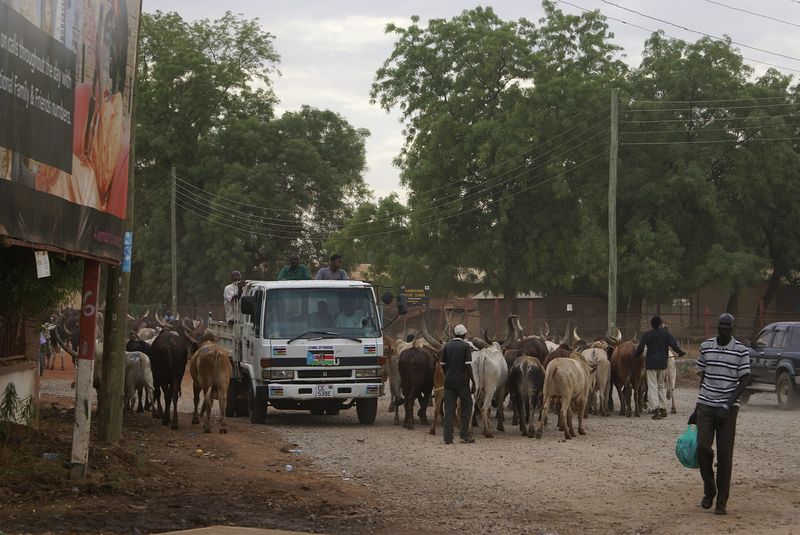
Warrap State sits in South Sudan’s northwest, bordering Unity State to the east, and its recent history is a cycle: cattle raids across community and state lines, revenge killings in answer, and communal violence over grazing land and water that spikes as herds move and pasture tightens. Cattle are wealth, bridewealth and survival in this economy, and a stolen herd can impoverish a family in a night — which is why raids are answered, and why answers so often become massacres of people rather than recoveries of animals.
The proliferation of firearms has changed the arithmetic of that cycle. Raids once fought with spears are now fought with automatic weapons, and the line between herder, militiaman and soldier is porous: young men guard herds with rifles, communities arm themselves because their neighbours are armed, and uniforms and weapons from the country’s overlapping armed forces leak into communal hands. That is also why the officials’ claim about SPLA-IO uniforms, while central to their account, cannot on its own settle who the raiders were.
The immediate background is a county already on edge. Earlier clashes around Tonj this month led authorities to impose a 24-hour curfew in the county — an extraordinary measure that signals both the seriousness of the violence and the thinness of the security presence meant to stop it. A curfew can hold a town quiet at night; it cannot garrison every cattle camp scattered across Tonj East’s grazing land, and Bol Bol was attacked at 10 p.m. anyway. The national background is darker still: South Sudan, independent since 2011, fought a five-year civil war between Kiir’s and Machar’s forces, and the peace that followed has been fraying for years, with the intensified factional clashes AFP describes as its latest stage. Violence between the Sudans’ armed movements is a standing risk across the region, as our coverage of the Abyei Amiet market drone strike, after which South Sudan summoned Sudan’s ambassador, has shown.
What happens next
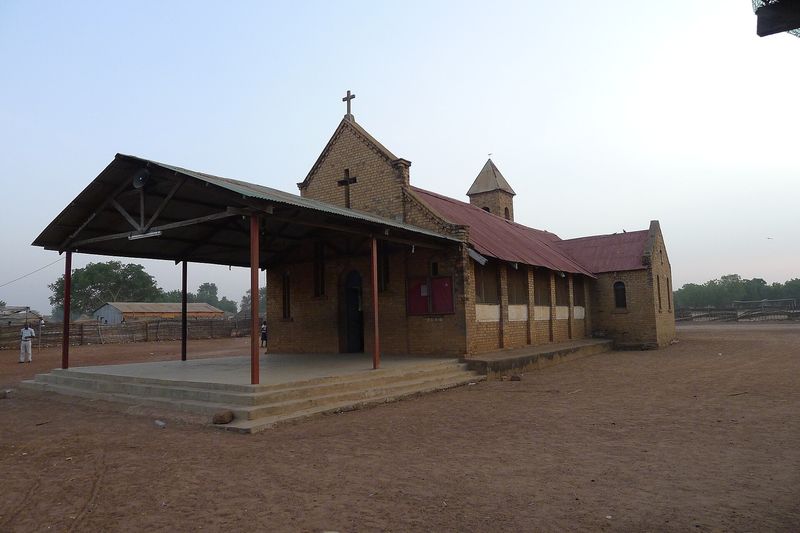
The first question is retaliation. Warrap’s cycle punishes delay: if the Luacjang community and its allies conclude that the raiders came from Unity State, the pressure for a revenge raid will build within days, and the same officials now counting the dead will be tested on whether they can hold their own side back. Watch for deployments to the Unity border, for the curfew’s extension or tightening, and for whether community leaders and church figures — often the only mediators both sides accept — are brought in publicly and early.
The second question is verification. A credible investigation — by state authorities, by Juba, or with outside support — that establishes who the raiders were, where they came from and who, if anyone, commanded them would do more to stabilise the situation than any statement issued so far. So would a public SPLA-IO response: the movement’s silence leaves Warrap’s accusation standing unopposed in the public record, and every day it stands, it hardens. If the movement denies involvement, the contest becomes one of evidence, which is where it belongs.
The third question is political. Juba must decide whether to treat Tonj East as a communal-security failure or as an act of war by the opposition, and that choice will echo through the confrontation with Machar’s movement and through the run-up to the February elections. The grimmest possibility is that it does not matter which reading is true: in South Sudan’s current condition, a massacre attributed to the SPLA-IO functions politically like a massacre committed by it, unless evidence separates the two. The region has seen, in Sudan’s war next door, how quickly attributed atrocities become strategic facts — a dynamic visible in our reporting on how El Fasher fell as Sudan’s army abandoned Darfur’s last stronghold and in General Burhan’s refusal, since then, to return to peace talks, as he vowed to retake “every inch” from the RSF. For the families of Bol Bol, none of that analysis buries the dead. What they need first is security at the camps, care for the 18 wounded, and a count of their dead that stops moving.
Related coverage: Abyei drone strike: 153 reported killed at Amiet market as South Sudan summons Sudan’s ambassador · El Fasher has fallen: Sudan’s army abandons Darfur’s last stronghold · Burhan rejects Sudan peace talks, vows to retake “every inch” from the RSF
Sources
Sources: Agence France-Presse (AFP), November 22–23, 2026, as carried by Arab News — acting county commissioner Machuei Bith’s accounts (the initial toll of 15 civilians and cattle keepers killed and four raiders dead; the Sunday-evening revision to 24 civilians dead, including seven children and six women, with a warning the toll could rise; the blame placed on SPLA-IO fighters from Unity State and the statement that the attackers wore SPLA-IO uniforms), the anonymous local police officer’s confirmation that fighting continued into Sunday morning, and AFP’s context that clashes between factions loyal to President Salva Kiir and to Riek Machar have intensified in recent months — arabnews.com. AFP reporting as carried by NewsCentral TV, November 22, 2026 — the attack on Bol Bol in Tonj East County between Saturday night and Sunday morning and the toll’s rise from 15 to 24 — newscentraltv.com. AFP reporting as carried by Sweden Herald, November 22, 2026 — 24 civilians including seven children killed in Warrap State, and the postponement of South Sudan’s elections from December to February — swedenherald.com. Warrap State Ministry of Information and Communication Services statement, issued in Kuajok, November 22, 2026, as reported by AFP — the toll of 21 killed and 18 wounded, 15 of the dead being women, children and elderly people, and cattle taken in the raid later recovered. The attribution of the attack to SPLA-IO fighters is Warrap officials’ claim: no SPLA-IO comment was reported in the coverage and the attribution has not been independently verified. Analysis in this article is Signal Post News’s own and is distinguished from the reported facts above. Photos: a Mundari cattle camp at Terekeka by Diego Delso (CC BY-SA 4.0); Dinka cattle in Juba by Ranjit Bhaskar via Al Jazeera English (CC BY-SA 2.0); and the Catholic church in Tonj by Ernst Ulz (CC BY-SA 3.0) — all via Wikimedia Commons, each credited in its caption, and none depicting the November 21–22, 2026 attack itself.