south korea september exports 120 billion
SEOUL — South Korea September exports of $120 billion were surpassed decisively as outbound shipments reached $120.94 billion, an 83.5% increase from a year earlier. The scale reflects an AI-driven memory cycle that has lifted demand for the chips, components and manufacturing capacity supplied by Samsung Electronics and SK Hynix.
The figures place Asia's fourth-largest economy at the heart of the global artificial-intelligence buildout. Large AI systems require processors, but they also need enormous quantities of high-bandwidth memory and other advanced storage. South Korea's strongest technology companies occupy that bottleneck, turning data-center spending in the United States and elsewhere into Korean factory output and export receipts.
Investors responded in kind. The KOSPI gained 1.0% on October 1, while Japan's Nikkei climbed 2.7% as strong Micron earnings lifted chip shares across Asia. The equity reaction shows how a single U.S. memory report can reinforce expectations for suppliers thousands of miles away. The risk is that the same interdependence transmits any downturn just as rapidly.
Why South Korea exports rising 83.5 percent matters
An 83.5% annual increase is not a normal cyclical improvement. It indicates a powerful combination of higher volumes, stronger pricing and an unusually favorable comparison with the prior year. Export growth at that pace can lift industrial production, corporate profits, tax revenue and the trade balance at the same time.
The national impact is magnified because South Korea is deeply integrated into global manufacturing. Semiconductors feed smartphones, servers, vehicles and industrial equipment. When chip exports accelerate, the gains spread to chemicals, precision machinery, logistics and port activity. The figure from September is therefore both a technology statistic and a macroeconomic one.
But concentration matters. If a large share of the gain comes from the AI memory supercycle exports, the economy becomes more sensitive to a small number of corporate investment budgets and product cycles. A broad-based export boom is more durable than one driven by a handful of high-value components.
Samsung and SK Hynix sit at the AI memory bottleneck
Samsung Electronics and SK Hynix have long been central to the memory business, an industry known for sharp cycles. AI changes the demand mix because accelerators need memory capable of moving huge datasets quickly. High-bandwidth memory commands greater technical complexity and can carry higher value than standard commodity products.
That is why Samsung Electronics AI chips and SK Hynix export growth matter beyond market share. Their ability to qualify new products, add capacity and maintain yields can determine how quickly global AI infrastructure expands. Short supply supports prices and margins; operational mistakes can redirect orders toward a rival.
The rally after Micron's earnings confirmed that investors see the cycle as international. Micron competes with the Korean producers, yet strong demand at one supplier can validate the market for all three. The competitive question then shifts to who can deliver the highest-value memory most reliably.
What $120.94 billion says about the export mix
The headline total is a nominal figure. It reflects the value of goods shipped, not just the number of physical units. Stronger chip prices can raise export value even without equivalent volume growth, while currency moves can change the dollar result. Those distinctions will matter when economists assess how much of the surge translates into real output.
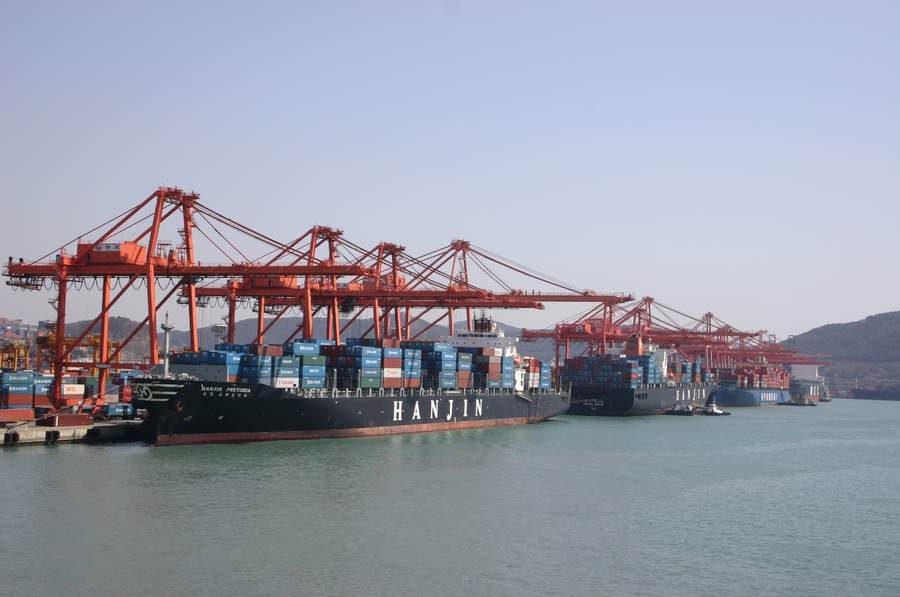
High-value semiconductors can also make ports look less busy than the dollar figure implies. A container of advanced electronics represents far more value than one of many bulk goods. The Port of Busan remains essential to the trade system, but the export story is increasingly determined inside clean rooms and advanced packaging lines before goods reach the terminal.
The number should therefore be read as a sign of pricing power and technology demand, not simply as more boxes crossing a dock. Follow-up data on semiconductor volumes, unit prices and destination markets will show how broadly the gain is distributed.
KOSPI gains, but higher Treasury yields complicate the rally
The KOSPI gains October 2026 reflect better earnings expectations. If Samsung, SK Hynix and their suppliers capture more AI spending, index profits rise and export momentum supports the currency and domestic confidence. The Nikkei's 2.7% advance on the same chip signal shows the regional effect.
Yet the 10-year Treasury yield above 5.3% pushes in the opposite direction. Higher global discount rates reduce the present value of future profits and raise the cost of financing fabs, power systems and data centers. A company can enjoy booming orders and still see its valuation constrained by bonds.
This tension separates the economic and market stories. Exports can remain strong while stock returns become less spectacular. Investors must decide whether faster earnings growth is enough to overcome a higher required return. That is a more demanding test than the low-rate environment in which valuation expansion did much of the work.
The $200 billion U.S. energy pledge broadens the relationship
President Donald Trump announced a $200 billion South Korean energy-investment pledge tied to a reduction in the U.S. auto tariff from 25% to 15%. The package spans nuclear power, LNG and electricity infrastructure, giving Seoul a second route into the AI buildout: not only exporting chips, but helping supply the energy system those chips require.
Our analysis of the Trump-South Korea investment package found that some components are firmer than others. Seoul said Alaska LNG remained under review even as Washington presented the broader commitment as an agreed investment program. The distinction matters because a pledge does not contribute to exports or growth until contracts, financing and construction follow.
The auto-tariff reduction is more immediate. Moving from 25% to 15% lowers a significant barrier for Korean manufacturers, though 15% remains a cost. It creates a trade: Korea accepts large U.S. investment expectations in exchange for better access for one of its most important export industries.
Who wins from the AI memory supercycle
Samsung and SK Hynix are the obvious winners, along with equipment makers, materials suppliers, advanced-packaging firms and logistics providers. Korean workers and local governments in semiconductor regions gain from stronger plant utilization and investment. The national treasury benefits if profits and wages rise.
Global AI developers also benefit from expanding memory output. Accelerators without enough fast memory cannot operate at full potential, so supply growth can reduce a bottleneck and improve system economics. Customers may eventually gain if competition restrains prices, although tight supply currently favors producers.
The losers include electronics manufacturers that must absorb higher component costs and industries competing for engineers, electricity and capital. Smaller Korean companies can be crowded out when the semiconductor giants draw talent and investment. Traditional exporters may also receive less policy attention when chips dominate the national growth narrative.
The concentration risk behind Korea semiconductor exports
Memory is cyclical because producers make long investment decisions against demand that can shift quickly. High prices encourage new capacity. When that capacity arrives, supply can overshoot and margins fall. AI may lift the long-run demand curve, but it does not abolish the industry's capital cycle.
Geopolitics adds another layer. Korean chipmakers sell into a world divided by export controls and strategic competition. Rules governing advanced equipment, customer access or overseas production can reshape the market without changing underlying consumer demand. A national export boom tied to leading-edge technology is therefore exposed to policy decisions made in Washington, Beijing and other capitals.
Energy is a third constraint. Advanced fabs require dependable electricity and water. The same AI boom creating chip demand is raising power demand in data centers, tightening the entire infrastructure chain. South Korea's U.S. energy pledge recognizes that connection, but domestic capacity and grid resilience remain just as important.
What happens next
Watch the monthly export mix. If semiconductors remain strong while autos, machinery, chemicals and consumer electronics also improve, the recovery is broadening. If the headline depends increasingly on memory pricing, the upside can remain powerful but less diversified.
Company guidance will show whether the AI order book extends into 2027 and how quickly suppliers plan to add capacity. The crucial variables are high-bandwidth-memory qualification, factory yields, capital spending and long-term customer commitments. Revenue growth without disciplined capacity can plant the seeds of the next downturn.
Finally, watch the link between trade and rates. The export boom supports Korean growth, but a global bond selloff raises financing costs and can strengthen the dollar. South Korea is benefiting from the AI investment cycle at the same moment that markets are making that cycle more expensive. September's record proves the demand is real; the next question is how durable and profitable it remains.
Sources and reporting notes
- Morningstar / Dow Jones: South Korea export data and Asian market moves
- Newsquawk: October 1 European equity opening news and Korea market context
Reporting note: Export totals, annual change, index moves and the U.S.-Korea policy announcement come from the cited market reporting. Interpretation of the export mix, beneficiaries and risks is Signal Post News analysis.