World · Somalia · UAE · Diplomacy
Mogadishu calls Emirati interference an "open invasion" — the sharpest break yet in a feud over ports, regional deals and sovereignty that has been building all year.
Track it live: follow the Horn of Africa and the wider region on our live Africa wars tracker.
MOGADISHU, November 19, 2026 — Somalia ordered the ambassador of the United Arab Emirates to leave the country within 72 hours on Thursday, November 19, 2026, and recalled its own envoy from Abu Dhabi for consultations — the sharpest diplomatic break yet between Mogadishu and one of the Horn of Africa's most powerful outside players. Information Minister Abdifatah Kasim Mohamud announced the measures after a weekly cabinet meeting chaired by Prime Minister Hamza Abdi Barre, accusing the Emirates of violations of Somalia's sovereignty that, in the government's words, amounted to an “open invasion”. “Measures will be taken against anyone who co-operates with UAE in the invasion against Somalia,” the minister said in a broadcast on the state-run news agency.
What Mogadishu actually ordered
The cabinet instructed the Ministry of Foreign Affairs to notify the Emirati ambassador, Ahmed Juma Al-Rumaithi, to leave within three days, and to bring Somalia's ambassador home from Abu Dhabi for consultations. The decision followed a Foreign Ministry report on what the government described as blatant interference in Somalia's internal affairs. Defence Minister Ahmed Moalim Fiqi underlined the tone on X, telling the ambassador to “pack your bags and leave”. The minister did not detail the specific Emirati actions that triggered the order when it was announced, and the exact hour the 72-hour clock expires has not been published — counted from Thursday's announcement, the deadline falls around Sunday, November 22.
Why this matters
This is not a routine diplomatic spat. Expelling an ambassador and recalling your own envoy in the same stroke is the loudest signal a government can send short of severing relations — and Mogadishu chose the language to match, reaching for “invasion” rather than the usual diplomatic euphemism of “interference”. The choice of words matters because it reframes a quarrel over deals and influence as a question of national survival, which makes it far harder for either side to climb down quietly. For the Horn of Africa, the rupture lands on top of already fragile security: Somalia is still fighting al-Shabaab — a war whose cost was underlined again in October, when dozens of Somali soldiers were killed in the al-Shabaab battle at Buurhakaba — still rebuilding a federal state that its own regions routinely defy, and still dependent on outside partners for money, training and muscle. Losing — or freezing — a wealthy Gulf partner does not happen in a vacuum; it rearranges who Mogadishu can call on, and who its rivals can call on instead.
How we got here
Two days in public, ten months in private
The expulsion was two days in the making in public, and ten months in the making in private. On Tuesday, November 17, President Hassan Sheikh Mohamud used a televised national address to accuse the UAE of undermining Somalia's sovereignty — unauthorised military arrangements, support for armed groups outside federal control, and agreements with regional administrations over strategic ports struck without Mogadishu's consent. The rupture behind that speech dates to January 12, 2026, when Somalia's Council of Ministers annulled all agreements with the UAE, including security and defence cooperation and port-related deals.
Ports, regions and the Somaliland question
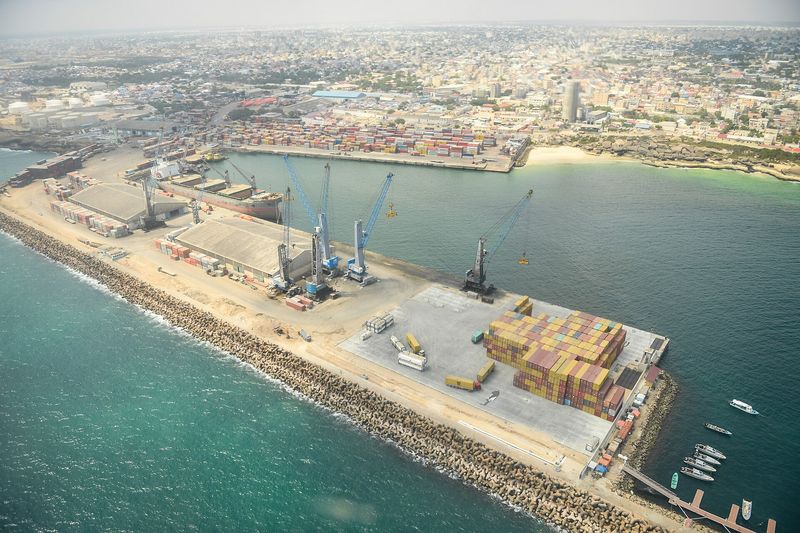
At the heart of the quarrel is a structural tension Mogadishu has never resolved: the federal government claims sole authority over foreign deals, while regional administrations — above all in Somaliland and Puntland — have cut their own arrangements with Abu Dhabi over ports and security, arrangements Mogadishu says bypass the federal government entirely. The dispute has also been sharpened by the wider Somaliland question, including Abu Dhabi's perceived support for Israel's recognition of the breakaway region, which Mogadishu regards as an attack on its territorial integrity — the same fault line that ran through October's row over President Mohamud's claim that Israel plans a naval base in Berbera, which Somaliland denied.
Two capitals, two stories
Abu Dhabi has rejected Mogadishu's account. UAE presidential adviser Anwar Gargash publicly rejected the latest Somali accusations, and the UAE has described the expulsion as irresponsible. No formal response from the Emirati foreign ministry was immediately available when the first reports were published. That gap — a detailed Somali charge sheet on one side, a flat denial on the other — is the story's central uncertainty, and readers should hold it in mind: the specific violations Mogadishu alleges have not been publicly evidenced, and the “open invasion” framing is the Somali government's characterisation. What is not in doubt is the direction of travel: a relationship that survived years of friction over ports, bases and regional loyalties has now produced the most severe diplomatic step either side has taken.
Who gains, who loses
Mogadishu's calculation is legible: a president under pressure at home gets to look like the defender of sovereignty, and a government that has struggled to assert federal authority over its regions draws a bright line no regional leader can cross without being seen to side with a foreign power. The risk is equally legible. The UAE is a major investor, donor and security partner across the Horn; its money has built ports, trained forces and funded institutions. If Abu Dhabi answers in kind — freezing aid, pausing port investment, or deepening its ties with the very regional administrations Mogadishu objects to — the federal government could find its leverage shrinking precisely where it is thinnest. The regional administrations, meanwhile, gain room to present themselves as the reliable partners Abu Dhabi prefers. And al-Shabaab, watching a government quarrel with a security partner, gains nothing to fear and everything to exploit.
What the numbers say
Three numbers frame the crisis. Seventy-two hours: the window given to Ambassador Al-Rumaithi, a deadline short enough to signal fury and long enough to allow a managed departure. Ten months: the time since Somalia annulled the UAE agreements in January — this is not a sudden row but the endpoint of a slow-motion break. Two days: the gap between the president's televised accusation on November 17 and the cabinet's expulsion order on November 19, a sequence that suggests the speech was the warning and the cabinet meeting was the execution. None of these figures proves intent on either side; together they show a government that decided, deliberately and in stages, to force the issue into the open.
What happens next
Three paths are open. The first is a managed downgrade: the ambassador leaves, envoys stay recalled for a cooling-off period, and quiet mediation — the Gulf states and Somalia's other partners have brokered Horn truces before — restores a working relationship without either side retracting its words. The second is escalation: reciprocal expulsions, frozen aid and investment, and a UAE that doubles down on its regional partners, leaving Mogadishu more isolated and its federal project weaker. The third is the one to watch most closely: the dispute migrates from diplomacy into facts on the ground, with port deals, security arrangements and regional loyalties hardening into a new map of the Horn that Mogadishu did not draw. Which path prevails will be visible first in small things — whether the ambassador actually boards a plane by Sunday, whether the UAE foreign ministry answers formally, and whether any mediator picks up the phone.
Related coverage: Somalia's President Says Israel Plans a Naval Base in Berbera — Somaliland Denies It · Egypt Hosts Emergency Summit as Tigray War Threatens Wider Regional Conflict · Dozens of Somali Soldiers Killed in Al-Shabaab Battle as Army Claims 75 Militants Dead in Buurhakaba
Sources
Sources: Reuters, November 19, 2026 — “Somalia orders UAE ambassador to leave, citing 'invasion'” — reuters.com. Associated Press, November 19, 2026 — “Somalia orders the UAE ambassador to leave as a diplomatic dispute escalates” — reflector.com. Al Jazeera, November 19, 2026 — reporting on the expulsion and the sovereignty dispute. Analysis in this article — on motives, gains and scenarios — is Signal Post News's own and is distinguished from the reported facts above; Mogadishu's “open invasion” language is the Somali government's characterisation, and the specific violations it alleges have not been publicly evidenced.