Alamein summit Tigray
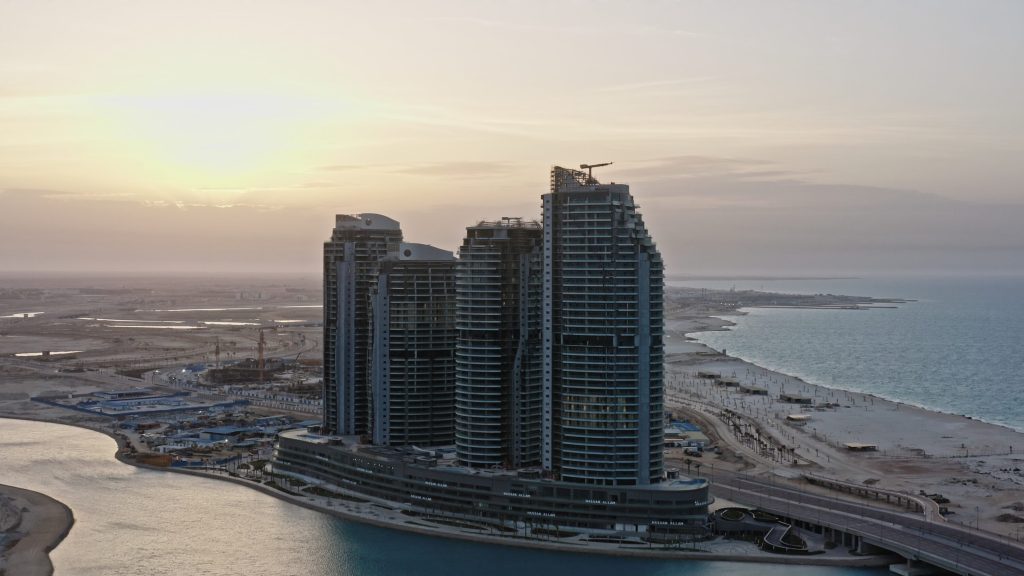
NEW ALAMEIN, Egypt — The Alamein summit Tigray talks brought the leaders of Egypt, Eritrea, Somalia and Sudan together Sunday, within roughly 24 hours of Ethiopian federal forces taking full control of Mekelle, as the region confronted the risk that a swift battlefield reversal could open a wider confrontation.
Egyptian President Abdel Fattah al-Sisi hosted Eritrean President Isaias Afwerki, Somali President Hassan Sheikh Mohamud and Sudan's Sovereign Council chairman Abdel Fattah al-Burhan on the sidelines of an African Business Forum. An Egyptian presidency statement, reported Saturday, said the gathering was convened for “consultation and coordination about regional issues of mutual concern.” The official description was broad. The timing was not.
In Mekelle, a local journalist told AFP that federal troops were patrolling streets and manning key institutions Sunday after communications were restored for the first time in more than a week. Shops remained closed, and some owners were moving stock because they feared looting. A resident who requested anonymity for security reasons said: “There are no police. Last night, we had to organise ourselves and take care of security.”
A pro-government militia commander told AFP: “We have taken control of Mekelle and we are marching forward.” That last phrase places an immediate question over the summit. If the military campaign continues beyond the capital, where does “forward” end—and which neighboring government decides that its own interests are now directly at stake?
The U.S. State Department had warned a day earlier that “increasing cross-border tensions between Ethiopia and Eritrea have the potential to affect the entire region,” urging restraint and dialogue. Sunday joined the warning and the diplomacy to the facts on the ground: a capital under new military control, public order not yet restored and four regional leaders consulting without Ethiopia at the table.
Why this matters
Four heads of state meeting after Mekelle's fall is crisis architecture
Summits are often described through their communiqués. This one is better understood through its clock and its guest list. Egypt, Eritrea, Somalia and Sudan each has a difficult relationship with Addis Ababa, though for different reasons and with different limits. Their leaders convened as a government victory in Mekelle changed the military balance and as Washington publicly warned of cross-border danger.
That is crisis architecture, not routine diplomacy. The summit functions first as a fire alarm: a signal that the conflict is no longer being treated as an internal Ethiopian matter whose effects can be contained within Tigray. It also functions as a pressure instrument. By appearing together, the four governments demonstrate to Prime Minister Abiy Ahmed that his war calculus includes not only the TPLF-led opposition and the security of Mekelle, but a possible diplomatic alignment around Ethiopia's perimeter.
A coordinated rival bloc would not need to announce a military alliance to influence Addis Ababa. It could align public messaging, compare intelligence, coordinate positions at the African Union, tighten bilateral pressure or simply make it harder for Ethiopia to manage each dispute separately. The image of four leaders in one place converts several bilateral tensions into a single strategic picture.
That does not mean the four capitals share a war plan. Their interests overlap without becoming identical, and the available reporting did not announce a joint military command, deployment, sanctions package or defense commitment. The analytical weight lies in the possibility of coordination—and in Addis Ababa's need to account for it before that possibility becomes policy.
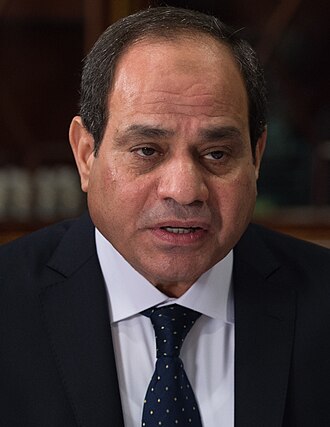
Background: how Pretoria hollowed out and the map changed in 11 days
From a peace agreement to a renewed offensive
The African Union-brokered Pretoria agreement of November 2, 2022 ended the main phase of the 2020–2022 Tigray war. It stopped large-scale combat and supplied the framework for disarmament, restored federal authority, humanitarian access and a return to politics. But the agreement did not settle every territorial, security or accountability dispute, and its implementation weakened as confidence between Addis Ababa and Tigrayan leaders eroded.
The Tigray People's Liberation Front later fractured politically. Rival leaders and competing institutions weakened the premise that one organization could negotiate for the region and then implement the bargain. The split mattered when a seven-party coalition led by the TPLF opened an offensive on September 23, 2026. Early rebel gains produced an immediate sense that the post-Pretoria order had collapsed.
The reversal was faster. Federal forces and aligned units recovered positions, retook the airport serving Mekelle and entered the capital. By Sunday, AFP's local journalist said federal troops were patrolling and holding key institutions. The campaign had moved from rebel initiative to federal control of Tigray's political center in 11 days. See our detailed account of how Ethiopian government forces seized Mekelle.
Now comes the more difficult transition: converting military control into public security and a political settlement. Shops remaining closed, stock being moved and residents organizing their own security show the gap between holding institutions and restoring authority. A capital can be occupied in hours; trust cannot.
The 2018 reconciliation and the 1998–2000 border-war legacy
The regional danger is inseparable from Ethiopia and Eritrea's history. Abiy and Afwerki's 2018 reconciliation ended two decades of formal hostility and was presented as a strategic reset after the 1998–2000 border war. Their governments later stood on the same side against the TPLF during the 2020–2022 conflict. That alignment has since collapsed.
Ethiopia recently severed diplomatic ties with Eritrea. The closing of channels makes ordinary military ambiguity more dangerous: troop movements can be misread, rumors move faster than official clarification, and each side has less political space to reverse course. Our earlier report explains the stakes after Ethiopia closed its Asmara embassy and expelled Eritrean diplomats.
The border war's legacy is therefore not a historical footnote. It is the institutional memory through which officials on both sides may interpret current events: unresolved suspicion, contested narratives and a demonstrated capacity for a localized dispute to harden into interstate conflict. Afwerki's presence in New Alamein ensures that any regional reading of Mekelle begins with that fault line.
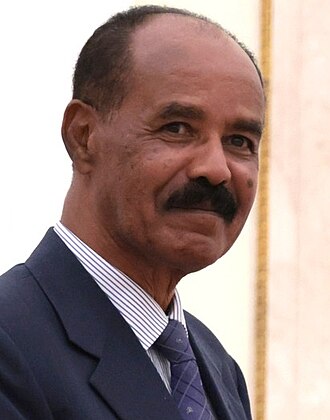
Who benefits—and who carries the risk
Eritrea's leverage play
For Eritrea, the summit offers leverage without requiring a public escalation. Afwerki can place Eritrea's security concerns inside a wider regional consultation rather than appear isolated in a bilateral confrontation with Ethiopia. The meeting also tells Addis Ababa that Asmara has diplomatic company even as Washington urges both governments to show restraint.
The limit is equally important. Eritrea has the greatest geographic proximity to Tigray and the most immediate exposure if fighting moves toward the frontier. Leverage can deter; it can also produce miscalculation if one side assumes the other is coordinating steps that have not been announced.
Egypt's Nile pressure and the Grand Ethiopian Renaissance Dam dispute
Egypt's interest extends beyond Tigray. Cairo's long-running dispute with Ethiopia over the Grand Ethiopian Renaissance Dam gives any deterioration in Addis Ababa's regional position a second strategic meaning. Hosting does not prove that Egypt intends to merge the dam dispute with the war. It does allow Sisi to demonstrate convening power and to remind Ethiopia that pressure over the Nile sits beside, not apart from, Horn of Africa security.
That second fuse matters because crises can become linked even when governments say they are separate. A dispute over water rights and reservoir management may acquire the language of security; a war in the north may reshape diplomatic coalitions over the Nile. Cairo gains bargaining visibility from the summit, but it also inherits responsibility for preventing its pressure campaign from being read as an invitation to regionalize the conflict.
Sudan's armed forces seek allies while Somalia balances
For al-Burhan and the Sudanese Armed Forces, New Alamein offers access to partners at a moment when Sudan's own conflict has placed extraordinary stress on the state and its borders. Coordination with Egypt and Eritrea can increase diplomatic room and reinforce the SAF's claim to represent Sudan internationally. But Sudan's internal war also constrains how much material weight Khartoum can place behind any regional position.
Somalia's calculation is more delicate. President Hassan Sheikh Mohamud has deepened partnership with Egypt while Ethiopia remains an important security actor in the region, including through African Union-linked deployments. Mogadishu benefits from a forum that gives it a voice in the security architecture around Ethiopia. It loses if consultation turns into a binary demand to choose a camp at the expense of practical security relationships.
Tigray's civilians and Abiy's diplomatic front
The clearest losers are civilians caught between a retreating force, incoming units and a missing police presence. The resident's account to AFP—neighbors organizing their own security—captures the vulnerability. Fear of looting is not a side issue after the capture of a capital; it is an early test of whether the new authority can protect the population rather than simply control buildings.
Abiy, meanwhile, gains a major battlefield advantage while facing a more unified diplomatic picture. Federal control of Mekelle may strengthen his hand in any negotiation with the TPLF-led opposition. The four-way summit complicates that advantage by showing that battlefield success can accelerate outside coordination rather than silence it.
Critics of military pursuit will point to the wider-war risk recognized by the U.S. warning. Critics of the regional summit will note that pressure applied by Ethiopia's rivals can harden Addis Ababa's threat perception and make compromise look like capitulation. Both concerns argue for clarity about what the summit did not produce: no publicly reported collective defense pledge, no announced foreign deployment and no disclosed enforcement mechanism.
Data in context
Eleven days now, roughly 600,000 estimated dead in the last war
Widely cited estimates put deaths from the 2020–2022 Tigray war at roughly 600,000 when direct violence, hunger and the collapse of health services are counted together. The estimate is not a verified ledger and remains contested; its value here is as an order-of-magnitude warning. The last war's human toll grew through indirect mechanisms long after individual battlefield reports disappeared from view.
The new campaign's 11-day reversal should not be read as evidence of a limited human impact. It measures how quickly territorial control changed, not the full toll. Mekelle's communications were cut for more than a week—AFP's local journalist said service returned Sunday for the first time in over a week—restricting both family contact and independent reporting. That blackout creates a familiar problem: military certainty can arrive before civilian evidence.
The contrast is severe. Eleven days were enough to move the front line from an opposition offensive to federal control of the capital. The previous war's widely cited death estimate accumulated over two years through fighting, deprivation and disrupted care. Speed can reduce some exposure if it ends combat; it can also compress displacement, shortages and reprisals into a period when outside observers know the least.
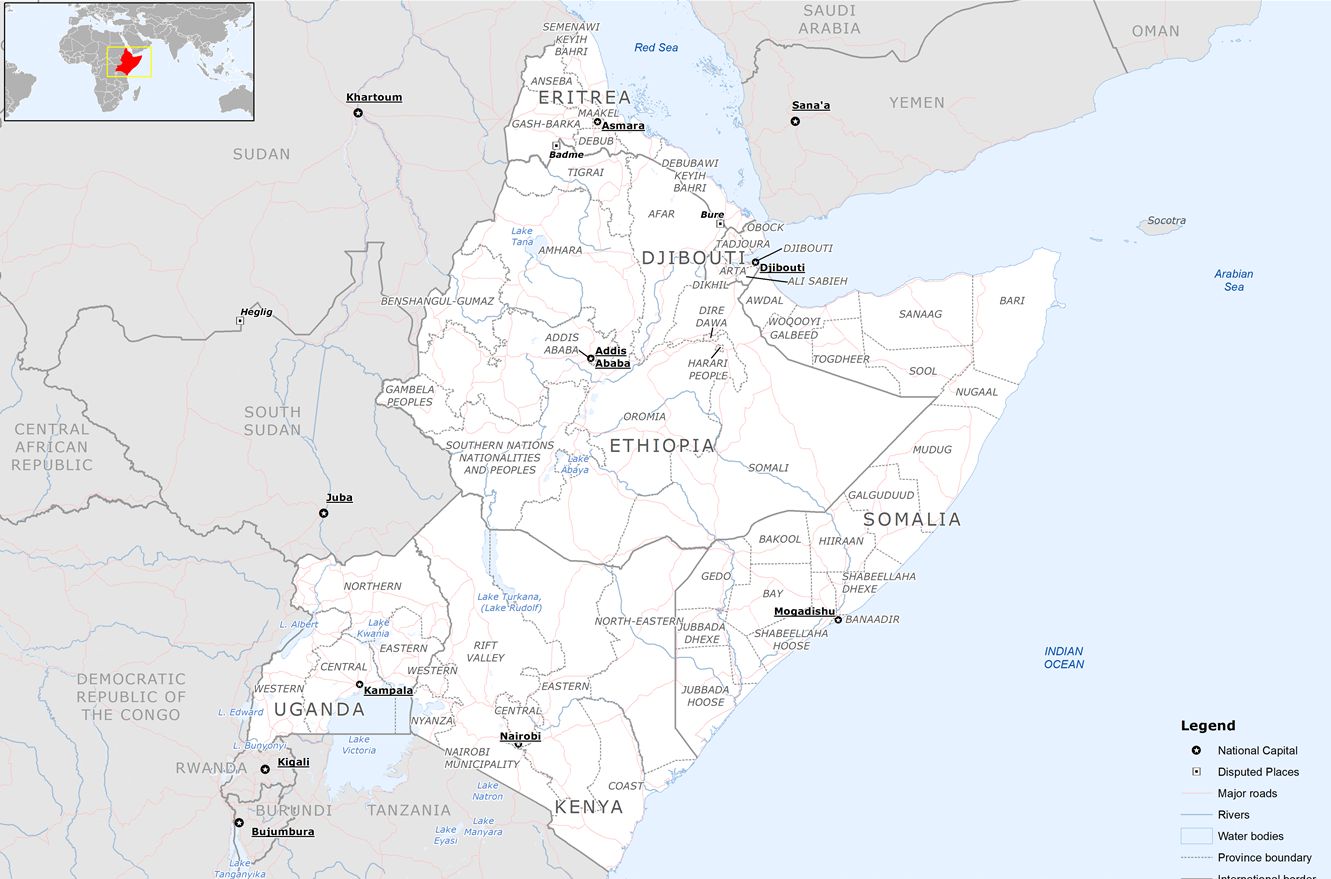
The Red Sea and Bab el-Mandeb shipping stakes
A regionalized conflict would matter far beyond the countries represented in New Alamein. Eritrea faces the Red Sea; Sudan also has a Red Sea coast; Somalia sits along the Gulf of Aden and the western approaches to the Indian Ocean. Bab el-Mandeb is the narrow maritime passage connecting those waters to the Red Sea and, beyond it, the Suez Canal.
No available report says Sunday's summit announced action affecting shipping. The risk is second-order but real: interstate tension can disrupt ports, redirect military attention, alter insurance assessments and complicate security coordination across a corridor already exposed to conflict. A war centered on Tigray need not reach the coast physically to raise the cost of uncertainty along maritime routes.
What happens next
Scenario one: a joint statement becomes coordinated pressure
The most visible next step would be a joint statement calling for restraint, access or talks. Language alone could matter if the four governments carry the same position to the African Union and other regional forums. A stronger version would involve sustained diplomatic coordination designed to constrain Addis Ababa's military options without announcing an alliance.
Scenario two: quiet coordination matters more than public language
The summit may produce little public detail while establishing private channels among Cairo, Asmara, Mogadishu and al-Burhan's administration. Quiet coordination can cover intelligence sharing, diplomatic sequencing or contingency planning. Because none of those steps was announced in the available reporting, they remain scenarios—not claims about decisions already taken.
Scenario three: the summit proves to be optics
The four leaders may agree that escalation is dangerous while failing to reconcile different interests. Egypt's dam dispute, Eritrea's border security, Sudan's internal war and Somalia's security dependencies do not automatically produce one policy. If no common action follows, New Alamein may be remembered primarily as a warning photograph: important for signaling, limited in execution.
Eritrean border moves are the immediate indicator to watch
The highest-risk evidence will be physical rather than rhetorical: unusual force concentrations, border closures, verified cross-border fire or new restrictions on diplomatic and civilian movement. The State Department's language focused precisely on cross-border tensions. In an environment with reduced diplomatic contact, verified movement matters more than anonymous claims circulating online.
African Union mediation remains the most credible institutional route
The AU brokered Pretoria and retains the mandate and institutional memory to reopen a political track. Any renewed mediation would need to account for the TPLF's internal division, the security vacuum described in Mekelle and the international dimension now visible in New Alamein. Simply restating the 2022 bargain would not explain why it hollowed out.
A durable process would also need to separate immediate civilian protections from the longer political settlement: public order, communications, aid access and protection from looting cannot wait for every constitutional question to be resolved. For the battlefield sequence preceding the summit, read our report on federal forces closing on Mekelle as wider-war fears grew.
“Marching forward” and the second fuse
The militia commander's statement—“We have taken control of Mekelle and we are marching forward”—will be parsed across the region. It could describe continued operations against retreating fighters. It could also be read as a warning that the campaign has no defined political stopping point. Clarifying the objective is one of the fastest ways Addis Ababa can reduce the chance that neighboring governments plan for the most dangerous interpretation.
The Grand Ethiopian Renaissance Dam dispute is the second fuse. If military escalation and Nile diplomacy become linked, a compromise in one arena may be held hostage to the other. Egypt can use the summit to press for restraint while preserving its dam position; Ethiopia can reduce the coalition's appeal by making its military limits and political offer explicit. Neither outcome is automatic.
The judgment after New Alamein
The summit is important less for what it announced than for what its existence reveals. Four leaders whose governments have strained ties with Addis Ababa decided that the moment after Mekelle's fall required consultation at the highest level. That is a regional diagnosis: the danger has crossed the boundary between domestic conflict and interstate calculation.
For Abiy, Mekelle is a victory paired with a warning. Federal forces can control the capital while Ethiopia's diplomatic environment worsens. For the four leaders, coordination creates leverage but also responsibility. If their gathering is interpreted as encirclement rather than crisis prevention, the pressure instrument can become an accelerant.
The decisive next signals will be practical: whether police and civilian administration return in Mekelle; whether shops reopen without reprisals or looting; whether federal units stop or continue their advance; whether Eritrean forces move near the frontier; whether the AU receives room to mediate; and whether the New Alamein participants translate consultation into a public, limited demand for restraint.
The summit is a fire alarm. The region still has to decide whether to use it to organize an exit—or to prepare for a larger blaze.
Sources and reporting notes
- AFP via Times of Earth, October 4, 2026: federal control in Mekelle, resident and militia accounts, regional summit and U.S. warning.
- AFP via Morning Chronicle, October 4, 2026: Mekelle security conditions and the leaders gathering in Egypt.
- AFP via Deutsche Tageszeitung: U.S. State Department warning on Ethiopia-Eritrea cross-border tensions.
- Axadle Times, October 3, 2026: Egyptian presidency statement and the announced four-way summit participants.
Reporting note: Current conditions in Mekelle are based on attributed local accounts carried by AFP. The summit's official public description was consultation and coordination on shared regional issues; scenarios in this analysis are identified as scenarios, not reported decisions. The roughly 600,000 death toll for the 2020–2022 war is a widely cited estimate, not a verified final count. All photographs are file images and do not show Sunday's summit or the current fighting.