World · Asia-Pacific · Pacific Security
Four years after a leaked security pact with Beijing stunned Canberra, Honiara has told China the deal will lapse when its term expires in April — and is flying a 24-member delegation to Canberra to sign Australia in as its security partner of choice. The signature is expected on Wednesday. Everything now turns on whether it happens.
Track it live: Wars — live tracker
HONIARA / CANBERRA, November 24, 2026 — Start with the mechanics, because the mechanics are the story. The 2022 China–Solomon Islands security agreement, as leaked at the time, runs for five years and then auto-extends for another five — unless either side gives six months' written notice that it will not. April is the expiry; the notice window is now. Honiara's reported decision to terminate is therefore not a dramatic tearing-up of a treaty mid-term. It is the quieter, harder-to-reverse act of using the exit clause the pact itself contained, on the first occasion the clause could be used. And it is paired with a replacement: not a security vacuum, but a new comprehensive treaty with Australia, negotiated for months, whose signing has been scheduled for the day after the news broke.
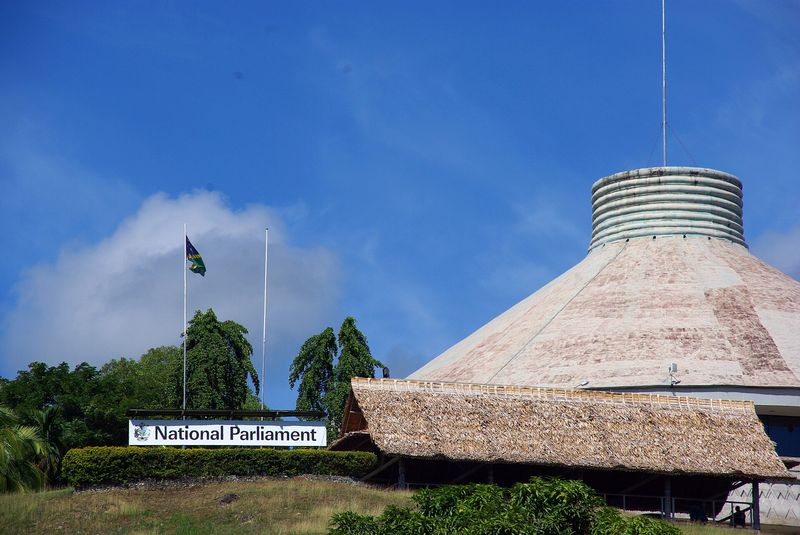
What has been reported: Solomon Islands terminates China pact at its first exit
The core fact, stated with its attribution: Solomon Islands has informed China it will terminate — in effect, not renew — the 2022 security agreement when the five-year term expires in April, the Sydney Morning Herald reported on Tuesday, in original reporting by Matthew Knott, and Reuters reported the decision the same day. The leaked 2022 text matters here. It allows Honiara to ask China to send police and military personnel to help maintain social order; it allows Chinese naval vessels to make stopovers in Solomon Islands ports; and it renews itself for a further five years unless either party gives written notice six months ahead. A decision communicated now is a decision taken inside that window — the difference between a pact that lapses and a pact that locks in until the next decade.
China's policing presence in the Solomons — Chinese police liaison officers and trainers who arrived under the 2022 framework — is expected to be scaled back significantly under the new arrangements, according to the reporting. That phrase, the Solomon Islands China police presence and its rollback, is the most concrete operational change on the table: not a base that never existed being closed, but a visible, uniformed footprint in the capital being wound down as the legal basis for it expires.
The Penny Wong Solomon Islands treaty statement
Australia's Foreign Minister Penny Wong put the replacement on the public record on Tuesday, telling the Senate that Australia is “finalising a new comprehensive treaty with Solomon Islands, which will elevate and deepen our partnership.” The Penny Wong Solomon Islands treaty line is worth holding against her own words from 2022, when she described the China pact as the “worst foreign policy blunder in the Pacific since the end of World War II.” Four years on, the minister who named the blunder is the minister announcing its unwinding — a symmetry Canberra is unlikely to leave unremarked when the cameras are on in Canberra on Wednesday.
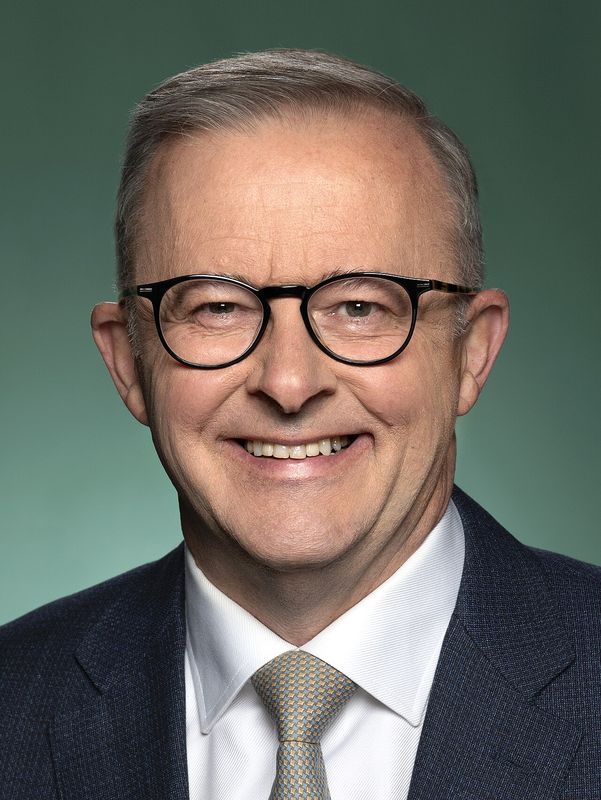
Albanese, for his part, kept his public words warm and general: “I look forward to welcoming my friend, Prime Minister Wale, back to Australia as we continue working together to strengthen the security and prosperity of our region.” The friendship is doing diplomatic work in that sentence. Wale has been to Australia before as prime minister; the treaty, if signed, converts a courtship into a contract.
Wednesday in Canberra: the Matthew Wale Anthony Albanese Canberra treaty signing
The Matthew Wale Anthony Albanese Canberra treaty is expected to be signed on Wednesday, and the size of the travelling party tells you how Honiara is treating the occasion. Wale leads a 24-member delegation: 15 cabinet ministers, four MPs and committee chairs, two senior secretaries from the prime minister's office, the Solomon Islands High Commissioner, and two ministerial spouses. That is not a leader slipping into Canberra for a quiet signature. That is a government arriving in force — most of the cabinet — to be photographed concluding the defining foreign-policy act of its term.
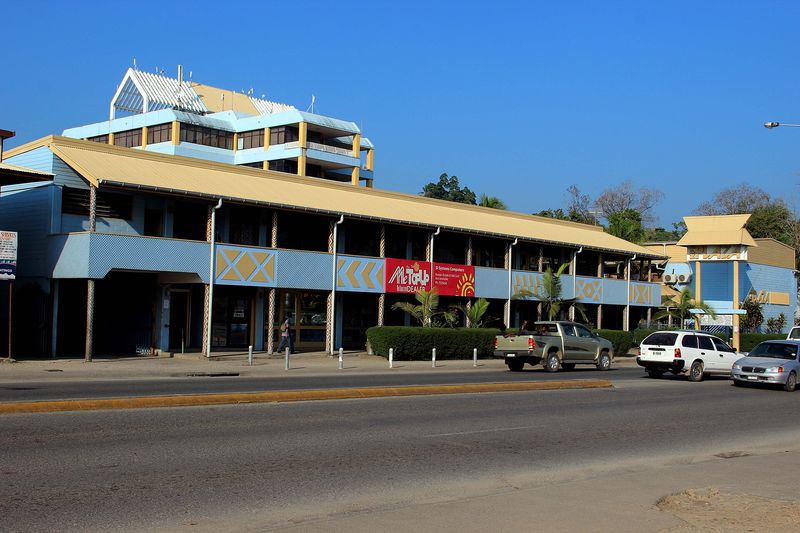
The treaty's stated purpose, per the reporting and Wong's Senate remarks, is to elevate and deepen the partnership across security and development — cementing Australia as the Solomons' top security partner. What “top” means in practice is the question Wednesday's text will answer: whether the treaty contains exclusivity language of the kind Australia has sought elsewhere in the Pacific, how the Chinese police presence is wound down and on what timetable, and what happens to the development funding that, on the SMH's reporting, underpins the whole arrangement — the subject of a later section of this article.
How we got here: the Manasseh Sogavare China security agreement and the shock in Canberra
To understand why a small island state's paperwork moves markets of anxiety in Canberra, go back to 2022. The Manasseh Sogavare China security agreement was negotiated in secret by the government of then–Prime Minister Manasseh Sogavare, and it became public the way such documents most damage their signatories: as a leak. The draft that circulated showed a framework under which Solomon Islands could request Chinese police and armed personnel to maintain social order, and Chinese naval ships could stop over, replenish and make crew transitions in Solomons ports. In Canberra, the reaction was not really about the text. It was about the map.
Solomon Islands sits about 1,600 kilometres — 990 miles — northeast of Australia, astride the sea lanes between Australia and the United States, on the same Guadalcanal geography that made it a battlefield in 1942. A Chinese security footprint there, however modest in its first form, was read in Canberra and Washington as the thin edge of something larger: the possibility of a Chinese military presence in the South Pacific, in a country where Australia had led a 14-year stabilisation mission and considered itself the security provider of first resort. Wong's “worst foreign policy blunder” line was aimed at her own side's predecessors — the Australian government then in office, which had been caught by surprise — but the deeper shock was structural. The Pacific's postwar security order, in which Canberra's primacy went unquestioned, had been questioned, in writing.
The road from Sogavare to Wale
The politics then ran their course. Sogavare's government survived the pact's signing but not the electorate's verdict on the era it represented. Wale was elected in May, in a campaign where China ties were among voters' concerns, and in June he vowed to review the China pact and promised a “reset” with Australia. In July, Australia and Solomon Islands jointly criticised China's ballistic-missile test from a nuclear-powered submarine in the Pacific — a small, deliberate piece of alignment signalling from the new government. In September, Wale survived a no-confidence motion that was widely believed, the SMH reported, to be linked to Chinese efforts to scuttle the Australia treaty talks — a claim reported here as the SMH reported it, as a widely held belief, not an established finding. A government that reviews a pact in June, aligns rhetorically in July, survives a confidence vote in September and signs a replacement treaty in November is not improvising. It is executing a sequence.
Why this matters
Three consequences follow if Wednesday's signing proceeds, and they are analysis, labelled as such. First, the 2022 pact was the high-water mark of China's Pacific security ambitions — the one place where Beijing converted diplomatic momentum, including Honiara's 2019 switch of recognition from Taipei to Beijing, into a written security instrument with deployment and naval-access clauses. Its lapse at the first contractual exit would be the first clear reversal of that advance: not a pact out-negotiated at renewal, but a partner choosing, at the moment of choice, the other patron. China Pacific influence in the Solomon Islands does not end — the economic relationship continues, as Honiara itself insists — but its security chapter, the chapter that alarmed the region, would close.
An Australia Pacific security pact network, completed at its hardest point
Second, Canberra has spent the years since 2022 building an Australia Pacific security pact network precisely so that 2022 could not repeat: security agreements with Tuvalu, Nauru, Papua New Guinea, Vanuatu and Fiji, each designed in its own way to keep Australia the partner of choice and to raise the cost of a rival security presence. The Solomons was always the hardest case — the country that had actually signed with Beijing. A comprehensive treaty with Honiara does not just add a name to the list; it removes the exception that proved the list was necessary. Strategists in Canberra will read Wednesday, if it happens, as the closing of a four-year campaign of repair — begun in the language of blunder, conducted in the currency of funding, and concluded, unusually, with the other government's cabinet flying in to sign.
The police presence is the tell
Third, watch the Solomon Islands China police presence, because it is where paper becomes fact. Treaties lapse quietly; people in uniform boarding planes home is visible. A significant scale-back of Chinese policing personnel — their advisory roles, their training programmes, their place in Honiara's security furniture — would be the operational proof that the termination is real and not merely calendrical. Conversely, if the presence lingers under other labels after April, the lapse will have been a diplomatic event rather than a security one. The region has learned to read these arrangements by their footprints, not their press releases.
The money: a reported $980 million by 2028
Security partnerships in the Pacific are underwritten, and the SMH's reporting put figures on this one — figures that must be carried with their attribution. According to a leaked July message from Australia's high commissioner to Honiara, Jeffrey Roach, to Solomon Islands Deputy Prime Minister Francis Sade, as reported by the Sydney Morning Herald, the package includes $1.9 million per constituency over three years, $142 million over two years for Wale's free school education policy, plus visa and security funding — $980 million in total by 2028. Those are the reported numbers, from a leaked message, as reported; they have not been published as a treaty text, and Wednesday's documents may state them differently or not at all.
Read the structure, though, and the diplomacy is legible even in leaked form. Constituency funding speaks to MPs where they live politically; education funding underwrites the signature domestic policy of the prime minister signing the treaty; visa and security funding binds the everyday relationship to the strategic one. Critics of such packages, in both countries, call this chequebook diplomacy. Its defenders call it the going rate for partnership in a contested region — and note that the alternative bidder was never going to be outbid on rhetoric alone. Either way, the reported total — approaching a billion dollars by 2028, for a country of well under a million people — is the clearest available measure of how much Canberra thinks the exception was worth closing.
Who benefits, who loses — and the critics
The winners are easy to name. Wale's government gets the reset it promised, the funding it needs, and a treaty that converts an election theme into a governing achievement — with the risk, now survived once already, of domestic and external pushback. Canberra gets the reversal it has worked toward since 2022 and a Pacific security architecture with its central hole repaired. Washington, which has watched the Solomons file with undisguised concern since the leak, gets the outcome it wanted without having had to be its public author.
The losers require more care. Beijing loses the security instrument itself and faces a precedent: a Pacific partner using the exit clause at the first opportunity, in favour of the region's traditional power. But the nuance Honiara insists on is real, and this article keeps it: economic ties with China continue. Peter Kenilorea Junior described the government's aim as a “rebalancing of relations” with China focused on economic development rather than policing and security. “The security space… is a little bit too crowded for a small country like the Solomons,” he said. That is the doctrine in one sentence — China as economic partner, Australia as security partner, and a small state declining to host a rivalry inside its own police force.
The sharpest domestic critic is the man who signed the original pact. Sogavare, now opposition leader, warned against scrapping it, in words that deserve to be quoted at length because they are the sovereignty argument in its strongest form: “When we dance to the tune of others, we risk losing sight of our own development aspirations… It is not China or Australia that will bear the consequences of decisions made here. It is the people of Solomon Islands.” The argument does not answer itself. A treaty signed under funding pressure from one capital can be described as alignment or as dependence, and the description tends to follow the describer's politics. What Sogavare's warning establishes, at minimum, is that the decision will be contested at home long after the delegation flies back — and that April's lapse, and whatever replaces the Chinese police presence, will be audited by an opposition that wrote the original deal.
The data in context
Set the numbers in a row. One pact, signed in 2022, expiring in April at the end of a five-year term, with a five-year auto-extension avoided by notice inside a six-month window. One replacement treaty, expected to be signed on Wednesday, carried to Canberra by 24 delegates, 15 of them cabinet ministers. A reported $980 million in associated funding by 2028, including $142 million over two years for free school education and $1.9 million per constituency over three years, per the leaked message as reported by the SMH. A distance of about 1,600 kilometres between the Solomons and Australia. Five other Pacific security agreements Australia has brokered since 2022 — Tuvalu, Nauru, Papua New Guinea, Vanuatu and Fiji. And one joint statement in July, by Canberra and Honiara together, criticising a Chinese submarine-launched ballistic-missile test in the Pacific: the alignment, rehearsed in public months before the treaty that formalises it. The pattern across those numbers is a region being organised, agreement by agreement, into a security order with Australia at its hub — and the Solomons file, the hardest of them, is the one now reportedly closing. The wider contest continues around it: Signal Post News has covered Beijing's expanding naval tempo in our report on China's unannounced Pacific drills and 'silent intimidation' toward Taiwan, and the region's diplomatic temperature in our report on Japan's unchanged Taiwan position at the Shenzhen APEC summit.
What happens next: Wednesday's Canberra signing as the test
Everything reported so far is prologue to a signature, and the signature has not yet happened. That is the precision this story demands: the termination has been reported by the SMH and Reuters ahead of the event; Beijing has not publicly confirmed it; China's foreign ministry did not immediately respond to Reuters; and the treaty exists, so far, as a finalising text and a scheduled ceremony. Wednesday in Canberra is therefore not a formality. It is the test.
Watch, in order, for four things. First, the signing itself, and the treaty's text or official summary: does it name the China pact's lapse, set a timetable for the police scale-back, or speak only in the warm generalities of partnership? Second, the money: whether the reported figures — the $980 million by 2028, the education and constituency funding — appear in announced form, and with what conditions. Third, Beijing's response, when it comes: a ministry statement acknowledging the lapse as a sovereign choice would close the story quietly; language about external interference would reopen it. Fourth, April. The pact expires then, not on Wednesday, and the interval between signature and expiry is where slippage lives — in implementation, in domestic politics in Honiara, and in any counter-offer Beijing chooses to make to a government it still trades with. Signal Post News has also covered the other end of China's overseas-security expansion in our report on China's first overseas air force base in Laos; the Solomons story is the same contest, running the other way.
Four years ago, a leaked document revealed that the Pacific's security map had been redrawn in secret. This week, if the reporting holds and the pens come out in Canberra, it is being redrawn back — in public, with 24 delegates, a Senate statement and a prime ministerial welcome. The redrawing-back is not the end of the contest; small states between large powers do not get endings, they get intervals. But intervals are what Pacific diplomacy is made of, and this one, on the reported facts, belongs to Canberra and to Matthew Wale. Wednesday will tell us whether it is real.
Reporting based on the Sydney Morning Herald's original reporting by Matthew Knott (November 24, 2026) and Reuters reporting (November 24, 2026), and on on-record Australian statements: Foreign Minister Penny Wong's remarks to the Senate and Prime Minister Anthony Albanese's statement. The termination is reported ahead of Wednesday's expected signing and has not been publicly confirmed by Beijing; China's foreign ministry did not immediately respond to Reuters. Funding figures are from a leaked July message from High Commissioner Jeffrey Roach to Deputy Prime Minister Francis Sade, as reported by the SMH. The characterisation of the September no-confidence motion is as reported by the SMH. Analysis is Signal Post News' own and is labelled as such.
Sources
Sources: Sydney Morning Herald, November 24, 2026 — original reporting by Matthew Knott: Solomon Islands has informed China it will terminate the 2022 security agreement at its April expiry; the expected Wednesday signing of a comprehensive Australia–Solomon Islands treaty in Canberra; the expected significant scale-back of China's policing presence; the leaked July message from High Commissioner Jeffrey Roach to Deputy Prime Minister Francis Sade reporting $1.9 million per constituency over three years, $142 million over two years for free school education, and $980 million in total by 2028; the September no-confidence motion widely believed to be linked to efforts to scuttle the treaty talks; and comments by Manasseh Sogavare and Peter Kenilorea Junior. Reuters, November 24, 2026 — Solomon Islands to end the China security pact and sign the Australia treaty; Foreign Minister Penny Wong telling the Senate Australia is “finalising a new comprehensive treaty with Solomon Islands, which will elevate and deepen our partnership”; Prime Minister Anthony Albanese's welcome statement; the 24-member delegation led by Prime Minister Matthew Wale; and China's foreign ministry not immediately responding to a request for comment. Related Signal Post News coverage: China's unannounced Pacific drills, Japan's Taiwan position at APEC Shenzhen, and China's first overseas air force base in Laos.