World · Asia-Pacific · Japan & China
A prime minister came to Shenzhen to restate a 54-year-old formula word for word. She left with two handshakes, a photo near the end of the back row, and the only bilateral of her summit spent on Vladimir Putin — a precise map of where Japan now stands in Xi Jinping's China.
Track it live: Wars — live tracker
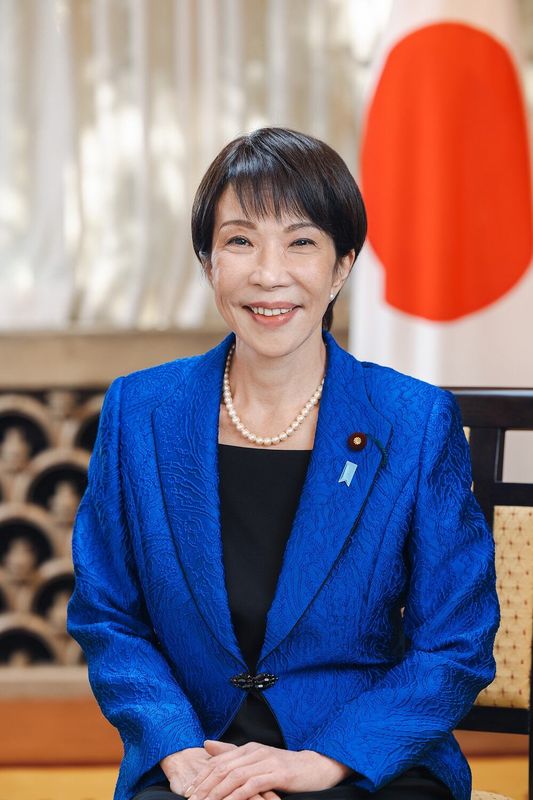
SHENZHEN, November 19, 2026 — Read the sentence she chose, because everything about this summit is in it. Takaichi did not announce a new policy, soften an old one, or withdraw the remarks Beijing has spent a year demanding she take back. She restated the founding formula of Japan–China relations and presented the restatement itself as the news: the position of 1972, unchanged, repeated on Chinese soil, at the end of her tenth overseas trip — a trip that began in the Philippines and ended with the most carefully weighed non-event of the APEC calendar. Whether that counts as steadiness or as stalemate depends on which capital you ask. What is not in dispute is the shape of the week that produced it.
What she said — and what the 1972 formula actually means
The Japan Taiwan position 1972 communique language is worth reading slowly, because both governments now conduct their argument inside its deliberate imprecision. In the 1972 Japan–China Joint Communiqué — the document that normalised relations — Japan stated that it “fully understands and respects” Beijing's position that Taiwan is a part of China. Understands and respects: not endorses, not adopts, not recognises as its own. For five decades that gap between courtesy and commitment was the load-bearing ambiguity of the relationship. Tokyo could maintain unofficial ties with Taipei, trade with both capitals, and shelter under an American alliance, all without ever quite saying where Japan itself stood on Taiwan's status.
That is the formula Takaichi repeated in Shenzhen. Stated as fact: she said Japan's position on Taiwan has not changed since 1972, and that there has been “absolutely no change” to it. Stated with equal precision: she did not retract her November 2025 parliamentary remarks, and she did not apologise for them. The two statements coexist because they operate on different levels — the communique describes Japan's formal position on Taiwan's status; the 2025 remarks described what Japan might do in a contingency. Beijing's complaint, from the first day, was that the second statement broke the spirit of the first. Tokyo's answer, delivered now in person, is that the first statement stands exactly as written — and that this is all the concession on offer.
Japan strategic ambiguity Taiwan: the doctrine she disturbed
Japan strategic ambiguity Taiwan was never an accident; it was the policy. Successive governments in Tokyo declined to specify what Japan would do if China moved against Taiwan, on the theory that vagueness deterred Beijing without committing Tokyo. Takaichi's November 7, 2025 remarks — that Chinese action against Taiwan threatening Japan's survival could prompt a Japanese military response — broke that ambiguity in a single parliamentary answer. Her January 26, 2026 clarification narrowed the remarks (a clash between China and the United States would not automatically trigger a Japanese response, and abandoning American forces could undermine the alliance) but, again, withdrew nothing. Shenzhen was the third iteration of the same posture: clarify the context, repeat the founding formula, retract nothing.
No Takaichi Xi Jinping meeting — two handshakes instead
The Takaichi Xi Jinping meeting that diplomacy-watchers spent the week anticipating did not take place. The record needs to be stated exactly, because summit coverage reaches too easily for verdicts the facts do not contain. No bilateral meeting between Takaichi and Xi was held in Shenzhen — unlike the meetings Xi held with Donald Trump and other leaders. Xi did not refuse her in so many words; no refusal was announced or reported. What happened was contact without a meeting: the two shook hands at Wednesday's welcome dinner and again on Thursday, she thanked Xi for the invitation in those brief greeting encounters, and she described China as “an important neighbour.” At her closing press conference she listed 14 leaders she had exchanged views with during the summit. Xi was not among them.
Context matters here, and Signal Post News has covered the week from the other side of the table: the Shenzhen summit was built around the encounter between Washington, Beijing and Moscow, set out in our report on how the Trump–Xi–Putin trilateral ended with no breakthrough and in our earlier report on China confirming the Xi–Trump–Putin meeting at APEC Shenzhen. Xi's diary was the summit's scarcest resource, and it was spent on the trilateral and its principals. Japan — the region's second economy, America's closest Asian ally, and the government in an open dispute with the host — was not in that queue. Whether that ordering was punishment, protocol or simple priority is the argument of the next section. That it happened is not in doubt.
The choreography of the cold shoulder — reported, and denied
The Takaichi APEC Shenzhen snub story was written, as these stories usually are, in stage directions. Reuters and Japanese media assembled the sequence, and it is presented here as what it is — attributed reporting and media colour, not a finding of fact about Beijing's intentions. On Wednesday's arrival, Takaichi was met with a handshake from a Chinese foreign ministry official and whisked away by car. Trump, by contrast, received music, cheers and pompoms, and a personal welcome from Xi — a break with protocol. Australia's Anthony Albanese received a bouquet; the Philippines' Marcos Jr. received dancers. Kyodo reported that the bouquet-waving youths visible at other landings were nowhere in sight at hers. Jiji called the treatment a “cold shoulder.” In the summit photo shoot she stood near the end of the back row. In the meeting room, Xi sat beside Trump, opposite South Korea's Lee Jae Myung; Takaichi sat seven seats away, near the end.
Tokyo's official answer to all of this was given by Chief Cabinet Secretary Minoru Kihara, and fairness requires it in full: he rejected the idea that Takaichi had been snubbed. “Our understanding is that the host economy extended the customary courtesies to her, just as it did to the leaders of the other economies,” Kihara said. Both accounts can be partly true — summit choreography is deniable by design, which is precisely why governments use it. A welcome can be technically correct and visibly colder than the welcome given to the guest in the next motorcade, and each capital can describe the same tarmac honestly in opposite words. What the choreography indisputably did was give Japanese media a picture — Reuters' phrase for her summit was a “lonely figure” — that no communique could answer.
How we got here: a year of the Japan China rift Taiwan remarks produced
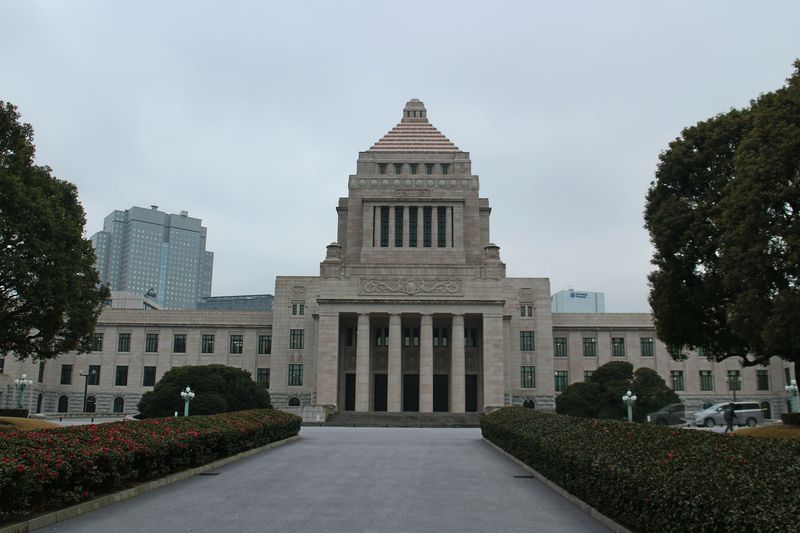
The Japan China rift Taiwan remarks created did not begin in Shenzhen, and it will not end there. The timeline, as Reuters' explainer sets it out, runs in five moves. On October 31, 2025, at APEC in South Korea, Xi and Takaichi met and agreed to pursue stable relations — even as Beijing protested her meeting with Taiwan's representative at the same summit. On November 7, 2025 came the parliamentary remarks: Chinese action against Taiwan that threatened Japan's survival could prompt a Japanese military response. On November 13, 2025, China demanded a retraction of what it called “egregious” remarks, said they contradicted the spirit of the 1972 accord, and warned that Japan “must bear all consequences.” On November 18, 2025, diplomats from both sides met in Beijing and produced no breakthrough. And on January 26, 2026, Takaichi offered her clarification — narrower, contextual, and still not a retraction.
Since then, per Reuters' reporting on Beijing's actions, the pressure has been economic rather than rhetorical. China — Japan's biggest trading partner — curbed exports of critical minerals to Japan, banned Japanese seafood imports, and urged its citizens not to travel to Japan. China demands Takaichi retraction remains Beijing's stated price for normalisation; the demands, the clarification and the restatement have now each been issued more than once, and the positions have the hardened quality of lines both sides have memorised. Takaichi's own history with the file predates the crisis: in September she was already warning on Taiwan and seeking a Xi summit, in our report on Takaichi, Trump, the UNGA Taiwan warning and the Xi summit. Shenzhen was where that search for a meeting finally reached the host city — and still did not produce one.
Why this matters
Four things follow from Shenzhen, and they are analysis, labelled as such. First, the ambiguity is eroding from both ends. Tokyo's founding formula survives as a form of words, but its practical content — say nothing specific about a Taiwan contingency — was abandoned by Takaichi in 2025 and has not been restored; Beijing, meanwhile, treats the formula as a commitment she has already broken in spirit. A doctrine both sides cite and neither side inhabits is not a stable resting place; it is a countdown to the next crisis in which someone tests what the words now mean.
The retraction trap
Second, the dispute has been structured so that neither leader can climb down cheaply. China demands Takaichi retraction as the explicit condition of repair, which converts any Japanese concession into a visible surrender exacted by pressure — the one outcome no Japanese prime minister, and certainly not this one, can deliver and survive. Takaichi's counter-offer, repeated in Shenzhen, is the 1972 formula itself: take the founding words as my concession. Beijing has had a year to accept that trade and has declined, because accepting it would reward the remarks with a summit. Each side's minimum is the other side's humiliation, and summits do not happen inside that geometry. Shenzhen did not fail to produce a meeting by accident; the meeting was unavailable at any price either capital was willing to be seen paying.
China critical minerals export restrictions Japan: the real battlefield
Third, the China critical minerals export restrictions Japan now faces are where this dispute actually lives. The communiques are theatre; the supply chains are fact. Critical minerals feed the cars, chips and jet engines of Japanese industry, and Beijing's curbs — together with the seafood ban and the travel warnings, all as reported by Reuters — are calibrated pressure: painful, reversible, and aimed at the Japanese business constituencies most able to lobby their own government. That is also why the dispute's costs are asymmetric in time. Rhetorical wounds heal at the speed of news cycles; a minerals curb compounds quietly in procurement contracts, stockpiles and boardroom decisions to source elsewhere — decisions that, once taken, do not reverse when the politics thaws. Every month of freeze teaches Japanese industry to need China less, which is a strategic cost Beijing is apparently willing to pay, and a fact Tokyo's planners will not unlearn.
The Putin-only bilateral
Fourth, consider who Takaichi did meet. Her only bilateral at APEC was a 30-minute exchange with Vladimir Putin — the Takaichi Putin meeting APEC produced as her summit's single scheduled one-on-one. She used it to seek the release of a detained Japanese journalist and protections for Japanese companies after Moscow seized Japan Tobacco International assets. No outcomes were announced, and none should be inferred: it was an exchange of asks, not an agreement. But as a signal it is bleakly eloquent. The leader of America's closest Asian ally, at a summit hosted by China, held her only bilateral with the president of Russia — not because Tokyo and Moscow are close, but because the channel to Beijing, the relationship that actually needs repair, was the one that stayed closed. Isolation is rarely announced. It is photographed, seven seats from the centre, and itemised in a list of 14 names with the most important one missing.
Who benefits, who loses — and the critics on both sides
The honest ledger is uncomfortable for everyone. Beijing gains a demonstration effect: the price of breaking ambiguity is a year of economic pressure and a visibly cold summit, a lesson addressed as much to other capitals as to Tokyo. It loses, slowly, the Japanese economic interdependence that has been its best argument against containment. Takaichi gains domestically — standing firm against a retraction demand plays well with her base, and the 1972 restatement lets her claim statesmanship without surrender — but she loses the thing she flew to Shenzhen for, a channel to Xi, and Japanese exporters and coastal fisheries pay the dispute's monthly bill. Washington, fêted in Shenzhen with music and pompoms while its ally sat near the end of the row, gains a reminder that its Asian alliance network runs on relationships it does not control. Critics in Japan split predictably: her supporters call the restatement principled and the cold shoulder proof of Beijing's pettiness; her opponents note that a prime minister who cannot get a meeting with the president of Japan's largest trading partner has made a problem, not a point. Critics in China, in state commentary, hold the mirror image. Both critiques contain the same buried concession — that the relationship is stuck, and that stuck is becoming normal.
The data in context
Strip the choreography away and the stakes are arithmetic. China is Japan's biggest trading partner; the two economies are bound through supply chains in which critical minerals are the narrowest chokepoint — the inputs to Japanese cars, semiconductors and jet engines, the three sectors Reuters names as exposed to Beijing's export curbs. Add the seafood ban, which concentrates pain in politically vocal coastal prefectures, and the travel guidance, which taxes Japan's tourism economy, and Beijing's package is a map of Japanese pressure points drawn by people who have studied it. Against that, Tokyo's instruments are slower: diversification, stockpiles, and the alliance. The 1972 formula, meanwhile, is 54 years old — older than most of the officials now arguing over its spirit — and the Shenzhen summit was its latest stress test. It held as a text. Everything around it moved.
What happens next: three scenarios
Three paths out of Shenzhen are visible, with uncertainty flagged on each. The first, and on current evidence most likely, is a managed freeze: the 1972 formula repeated at intervals, handshakes at multilateral margins, no bilateral, and the economic measures left in place as the dispute's standing temperature. It is stable precisely because both sides have learned to price it. The second is back-channel repair — the route by which the 2025 diplomats' meeting in Beijing was supposed to work — in which a formula is found that lets Beijing describe the outcome as respect for 1972 and Tokyo describe it as no retraction; the raw material for that sentence exists, but no reporting from Shenzhen suggests it is being assembled. The third is further curbs: an extension of the minerals restrictions or new sectors added to the list, which would convert a calibrated dispute into an industrial emergency and force the diversification question from strategy papers into budgets. Watch, in order: any announcement of a bilateral at the next multilateral gathering; Japanese industry sourcing announcements; and whether the word “retraction” quietly leaves Beijing's statements. The first of those to move tells you which scenario you are in.
Sanae Takaichi went to Shenzhen and said the oldest sentence in Japan–China relations, word for word, in the host's own city. She was thanked with two handshakes and a seat near the end of the row. Diplomacy is mostly the management of what cannot yet be said; on Thursday, what could not be said was anything new — by her, because she would not retract, and by Xi, because he would not meet. The 1972 formula survived the week intact. So did everything it was meant to prevent.
Reporting based on Reuters reporting from Shenzhen (Nov. 19, 2026), including its APEC summit-colour report and its timeline explainer on the year-long rift. Descriptions of a “snub” or “cold shoulder” are attributed to Reuters and Japanese media (Kyodo, Jiji) as reported; Chief Cabinet Secretary Minoru Kihara's denial is quoted in the text. Beijing's critical-minerals, seafood and travel measures are as reported by Reuters. Analysis and scenarios are Signal Post News' own and are labelled as such.
Sources
Sources: Reuters, November 19, 2026 — Prime Minister Sanae Takaichi says Japan's position on Taiwan has not changed since 1972, at her closing press conference on the APEC sidelines in Shenzhen; no bilateral with Xi Jinping; China described as “an important neighbour” — reuters.com. Reuters, November 19, 2026 — the APEC tarmac and summit-table colour: the arrival welcome, the welcome-dinner and Thursday handshakes, the photo and seating arrangements, Chief Cabinet Secretary Minoru Kihara's rejection of the snub suggestion, and the 30-minute Putin exchange with no outcomes announced — reuters.com. Reuters, November 19, 2026 — timeline explainer: how Takaichi's November 2025 Taiwan remarks sparked the year-long rift with China, from the October 31, 2025 APEC meeting through the retraction demand, the Beijing diplomats' meeting, the January 2026 clarification, and Beijing's critical-minerals curbs, seafood ban and travel warnings — reuters.com. Related Signal Post News coverage: the trilateral's no-breakthrough ending, China confirming the Xi–Trump–Putin meeting, and Takaichi's September Taiwan warning and Xi summit search.