China Laos air base
China Laos Air Base Opens in Laos: Beijing's First Air Force Base Abroad
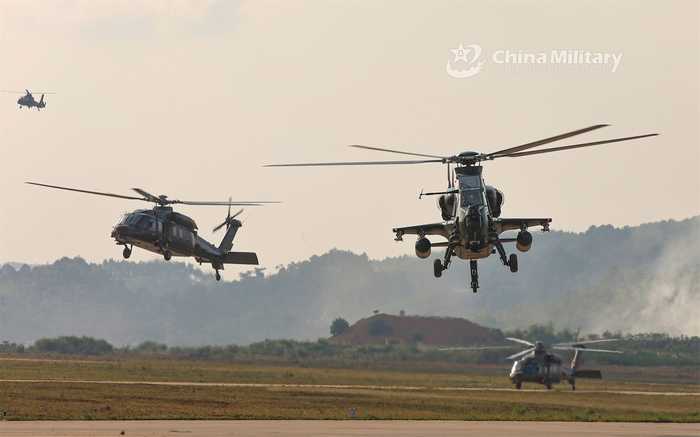
VIENTIANE, Laos — The China Laos air base inaugurated at Ban Keun Airport on September 29, 2026, is modest enough to be described as a school and substantial enough to change the strategic map. Chinese and Lao officials opened the China-Laos Joint Support and Training Center and the China-Laos Friendship Aviation Academy roughly 50 kilometers north of the capital, creating what analysts describe as the People's Liberation Army Air Force's first acknowledged facility overseas.
The official language is deliberately reassuring. China's Defense Ministry says the site will train Lao air force pilots, will be jointly operated and is “not directed against any third party.” The ceremony, attended by Lao Defense Minister Khamlieng Outhakaysone and a PLA delegation, disclosed neither the number of Chinese personnel nor what aircraft will use the field.
That ambiguity is not a footnote; it is the strategic design. Ban Keun need not host a permanent fighter wing tomorrow to matter today. A runway, hangars, apron, classrooms, logistics staff and recurring access can create military options long before a government labels the site a base. The immediate mission may be training. The durable value is access.
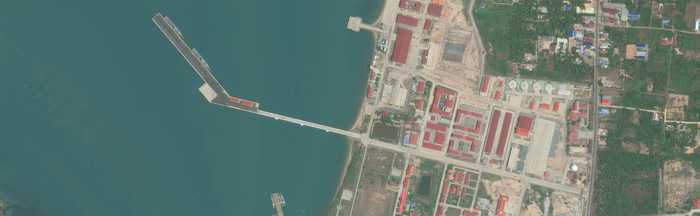
Djibouti gave China a naval logistics foothold near the Red Sea. The China-Cambodia joint center at Ream expanded Beijing's maritime reach in mainland Southeast Asia. Ban Keun adds the missing air dimension. It is China's third acknowledged overseas military facility, but the first organized around aviation rather than a port.
Air access compresses distance. A permanently available field can support transport flights, helicopter operations, pilot conversion and maintenance. In a crisis it could become a staging point, a recovery strip or a node for surveillance and logistics. None of those functions proves that combat aircraft are deployed now. Together, however, they reduce the time and political negotiation needed to deploy later.
Joshua Kurlantzick of the Council on Foreign Relations called Ban Keun China's first air force base abroad and argued Beijing is unlikely to stop after one. Rachel Vandenbrink of the Australian Strategic Policy Institute read the facility as evidence that the PLA wants persistent access to a logistics hub for forces rotating through Laos. Their point is less about today's order of battle than tomorrow's friction: a military that already has access can move faster than one negotiating from scratch.
This is also a test of language. “Joint,” “support,” “training” and “academy” are accurate descriptions of declared functions. They do not answer who controls access during a regional emergency, how long Chinese units may stay or what missions future governments could authorize. Those are the questions Thailand, Vietnam and U.S. planners will now ask.
How Beijing and Vientiane arrived at Ban Keun
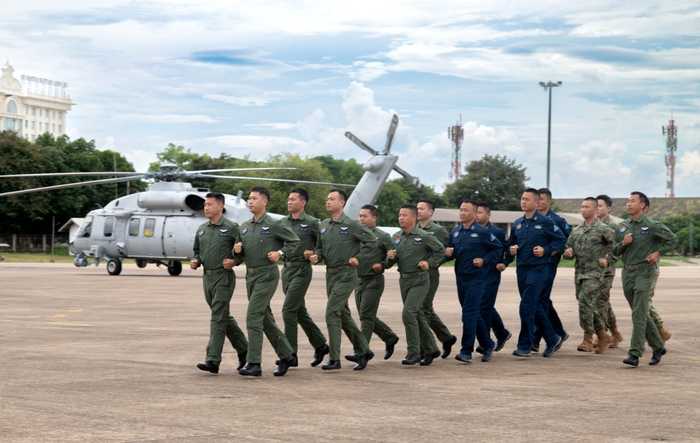
China's overseas basing model has advanced in steps. The 2017 logistics base in Djibouti was justified by anti-piracy, peacekeeping and evacuation requirements. At Ream Naval Base in Cambodia, construction and regular Chinese naval use accumulated before the April 2025 opening of a joint logistics and training center. Brian Hart of the Center for Strategic and International Studies says Ban Keun resembles that incremental Cambodian approach: build practical cooperation, normalize presence, then leave room for capability to grow.
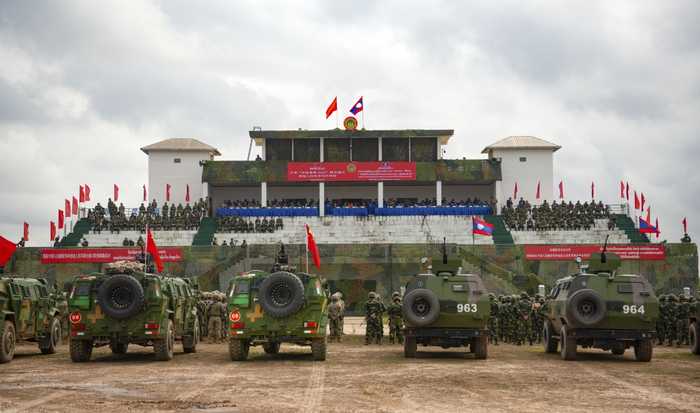
The groundwork in Laos was already visible. Friendship Shield exercises in 2023 and 2024 brought Chinese troops, vehicles, helicopters and logistics units into the country. The 2024 exercise involved more than 1,200 personnel from both sides, including over 300 Chinese troops, according to China's Ministry of National Defense. Training covered joint defensive operations, airborne assaults, drones, engineering and battlefield support.
Economic dependence deepens the relationship. China is Laos's largest creditor and financed the railway linking Kunming with Vientiane, a transformative transport corridor that also bound the landlocked country more tightly to its northern neighbor. The Institute for the Study of War cited $13 billion in Chinese investment across 933 Lao projects from 1989 through 2023 and estimated Laos's 2024 debt exposure to China at $10.5 billion, roughly 82 percent of gross domestic product.
Debt does not automatically purchase a base, and Laos retains agency. Vientiane gains infrastructure, pilot training and a military partnership it could not easily finance alone. But financial asymmetry affects bargaining power. A government dependent on Chinese credit and trade has fewer comfortable ways to refuse a request framed as the next stage of an existing partnership.
Lima Site 44: a runway with a Cold War echo
The site carries historical weight. Ban Keun was built over or near Lima Site 44, one of the airstrips used during the covert U.S. war in Laos in the Vietnam era. The physical setting has changed — commercial satellite imagery reviewed by Reuters showed construction beginning on farmland in late 2025 — but the reuse is symbolically sharp. Ground once tied to American covert air power now anchors an acknowledged Chinese military aviation presence.
The symbolism should not replace analysis. Geography, road and rail access, proximity to Vientiane and available land matter more operationally than historical irony. Yet the reversal captures a wider regional shift: Washington's old infrastructure footprint is history; Beijing's is being poured in concrete.
Who gains, who worries and what critics see
Beijing gains access without a giant footprint
China gains a practical demonstration of defense diplomacy in a country receptive to deeper ties. Collin Koh of Singapore's S. Rajaratnam School of International Studies describes such facilities as showcases for cooperation with “amenable countries.” The model is politically cheaper than a sprawling American-style installation: local flags remain prominent, the host government keeps formal sovereignty and the initial mission appears limited.
It also gives the PLA experience. Overseas operations depend on customs clearance, fuel contracting, maintenance, communications, medical support and command arrangements as much as runways. Training missions let personnel rehearse those systems in peacetime.
Vientiane gains capability — and accepts dependence
Laos operates fewer than 40 aircraft, most of them helicopters, transports and trainers rather than a modern combat fleet. Its pilots have long trained abroad in China, Russia and Vietnam. A domestic academy reduces that burden, improves continuity and gives the Lao military access to facilities well beyond what its budget would ordinarily support.
The tradeoff is strategic dependence. Training syllabi, maintenance practices, spare parts and communications links can lock a small service into its larger partner's ecosystem. A jointly run academy may improve Lao capacity while making its air force more Chinese in doctrine and logistics.
Thailand, Vietnam and Washington lose strategic comfort
Thailand is a U.S. treaty ally and shares a long border with Laos. Thai Defense Ministry spokesman Rear Admiral Surasant Kongsiri called the facility a sovereign Lao decision while saying Bangkok would monitor it closely. That is diplomatic restraint, not indifference. Regular PLA aviation access just across the Mekong adds a new variable to Thai air-defense planning.
Vietnam's concern may be sharper. Hanoi has deep party-to-party and military ties with Laos, but it also competes with China in the South China Sea and has watched Beijing's influence in Cambodia expand. Nguyen Khac Giang of the ISEAS–Yusof Ishak Institute said Vietnam has serious grounds for concern. James Char of Nanyang Technological University argued the base reinforces China's status as the regional hegemon.
For the United States, the loss is not a single runway but strategic warning time. The Pentagon previously identified 22 countries where China was thought to be considering facilities; Laos was not on that list. Ban Keun therefore exposes the limits of tracking only announced negotiations or familiar port projects.
What the numbers say — and what they do not
Commercial imagery described by Reuters shows a paved runway of about 6,560 feet, or 2,000 meters, with a parallel taxiway, apron, five hangars at the northern end and new support buildings. Construction began in late 2025 and reached inauguration in less than a year. That is a meaningful tempo for converting farmland and an old airstrip footprint into an operational complex.
A 2,000-meter runway can support trainers, helicopters and many tactical or transport aircraft, depending on weight, weather, altitude and required safety margins. It is long enough to create options; it is not, by itself, evidence that fighters or heavy transports are based there. Hangar dimensions, fuel storage, hardened protection, munitions facilities, radar, communications and the tempo of actual flight operations will reveal more than runway length alone.
The base-count comparison requires similar discipline. Calling Ban Keun China's third overseas military base captures the acknowledged network — Djibouti, Ream and now Laos — but it understates China's broader access agreements and port relationships while overstating how equivalent the three facilities are. Djibouti is a mature PLA support base. Ream is a joint naval center with sustained Chinese ship presence. Ban Keun opens as a training and aviation complex. “Three” is a useful marker of expansion, not three interchangeable installations.
Carl Thayer, a veteran Southeast Asia analyst, expects light aircraft and trainers for now and says the opening is not a crisis. That is the appropriate near-term baseline. Laos's fleet size, lack of disclosed Chinese combat aircraft and the stated academy mission all point toward limited initial operations. The strategic case rests on scalability, not proof of a present fighter deployment.
What happens next: five signals to watch
First, aircraft type. Regular trainer and helicopter activity would reinforce the declared mission. Rotations of PLA transports, surveillance aircraft or fighters would mark a different level of access. A temporary visit matters less than recurring deployments supported by maintenance crews.
Second, infrastructure. Fuel farms, protected storage, expanded aprons, hardened shelters, air-defense systems or longer runways would indicate preparation for higher-tempo or more sensitive missions. Ban Keun's next construction phase may be more revealing than its opening ceremony.
Third, personnel. Beijing has not said how many Chinese service members will live or work at the center. A small instructor detachment is different from a standing support force with security, intelligence and command elements.
Fourth, legal access. The decisive terms are unlikely to appear in public slogans: who approves deployments, whether Chinese units can use the field during a regional contingency and how joint command works. Even without a permanent fighter squadron, assured contingency access would carry military value.
Fifth, replication. Kurlantzick's warning that China will not build one overseas air base and stop is plausible because the template is deliberately compact. Countries already accustomed to Chinese training teams, equipment and infrastructure finance are the likeliest candidates. The next site may also arrive under the vocabulary of a school, logistics center or joint facility rather than “base.”
Three scenarios for the China military base in Laos
In the most limited scenario, Ban Keun remains what Beijing says it is: an academy supporting a small Lao fleet, with Chinese instructors rotating through and no permanent combat presence. It still improves China's relationships and overseas-operating experience, but the regional military balance changes only at the margin.
In a middle scenario, the center becomes a flexible logistics hub. PLA transports and helicopters use it during exercises, disaster relief or evacuations, and surveillance or communications assets visit periodically. There may be no dramatic basing announcement, yet access becomes routine and the threshold for future deployments falls.
In the highest-impact scenario, new infrastructure and political agreements make Ban Keun capable of hosting combat aircraft during a crisis involving the South China Sea or Taiwan. That would complicate regional planning and intensify pressure on Laos. Nothing publicly disclosed proves this outcome is imminent. The physical option now exists in a way it did not before.
The prudent conclusion sits between dismissal and alarm. Ban Keun is not yet evidence of a Chinese fighter wing in Laos. It is evidence that Beijing has crossed a threshold: the PLA Air Force now has an acknowledged overseas home, established through training ties and incremental construction. Strategy often advances before the hardware that makes it obvious.
Sources
- Reuters, September 30, 2026 — satellite-imagery findings, construction timeline, site history, official statements and analyst interviews.
- AFP via Focus, October 1, 2026 — inauguration, regional reactions and the aviation academy's stated role.
- Institute for the Study of War, October 2, 2026 — Chinese investment, debt exposure and regional power-projection context.
- AFP via Peninsula Times — assessments from regional analysts and the facility's declared mission.
- SOFX — military aviation and basing context.
Reporting cutoff: October 3, 2026 at 4:30 a.m. PDT. No Chinese or Lao authority had publicly specified the center's personnel strength or assigned aircraft. Assessments of future deployments and regional effects are Signal Post News analysis, not confirmed government plans.