SK hynix record quarter and the AI memory shortage
Seoul / Revenue past 100 trillion won for the first time, an 80 percent operating margin, HBM4 shipping in earnest — and a warning that the memory shortage now runs to 2030: SK hynix’s third quarter redraws the economics of the AI build-out
Track it live: Live markets tracker
The SK Hynix record earnings HBM4 story is, at its simplest, a story about a ceiling being removed. SK hynix reported third-quarter revenue of 104.6155 trillion won — roughly $78.9 billion — the first time in the company’s history that a single quarter has crossed 100 trillion won. Revenue rose 32 percent from the previous quarter and 328 percent from a year earlier. Operating profit reached 83.3338 trillion won, up 38 percent quarter on quarter and 632 percent year on year, for an operating margin of 80 percent — a figure that would be extraordinary for a software company and is close to unheard of for a business that manufactures physical chips in billion-dollar factories. A year ago the same margin was 47 percent. Both lines cleared the market’s already-lofty expectations: LSEG consensus had looked for revenue of 98.34 trillion won and operating profit of 76.72 trillion won.
Numbers like these do not come from a normal semiconductor cycle. They come from a shortage — specifically, from the fact that the artificial-intelligence build-out has turned high-bandwidth memory from a component into a chokepoint. Every advanced AI accelerator that ships from Nvidia and its rivals needs stacks of HBM soldered beside it, and SK hynix, the company that industrialised HBM first and still leads the market, is the supplier the entire industry queues in front of. The third quarter is what that queue looks like when it is converted into an income statement: pricing power, sold-out capacity and a product mix tilted almost entirely toward the most advanced memory money can buy.
HBM4 arrives — and is already taking over
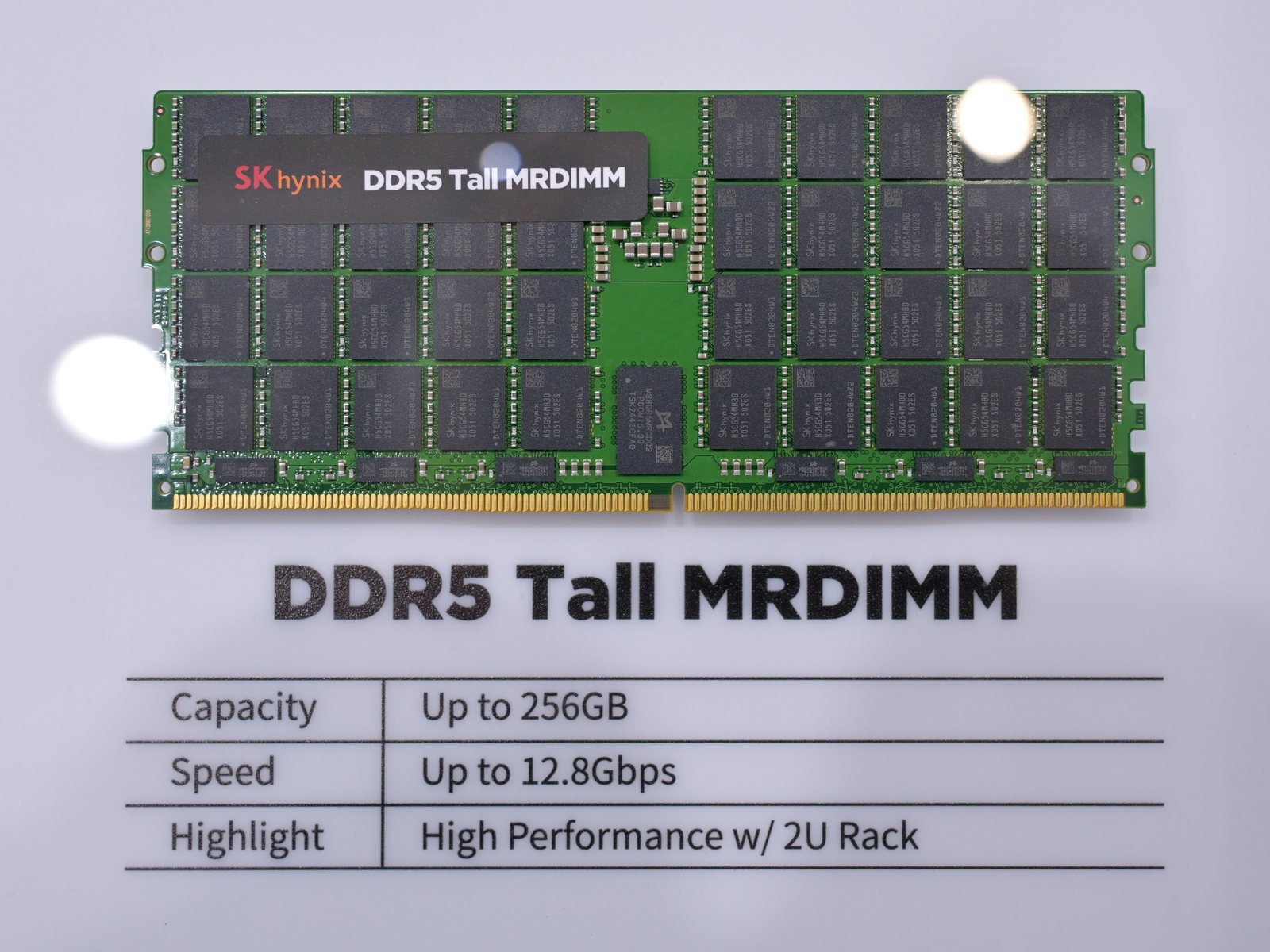
The quarter’s hinge product is HBM4, the newest generation of high-bandwidth memory. SK hynix said HBM4 shipments began in earnest in the third quarter, and it expects HBM4 volumes to pass those of its predecessor, HBM3E, as early as the fourth quarter — a strikingly fast generational handover in an industry where transitions usually take the better part of a year. The ramp is anchored at the company’s M15X fab in Cheongju, which is reaching full capacity and is purpose-built for the HBM production lines that advanced packaging demands. When a memory maker says a new generation will overtake the old one within a quarter of volume shipments starting, it is describing customers who have already qualified the parts, already written the purchase orders and are, in effect, waiting at the loading dock.
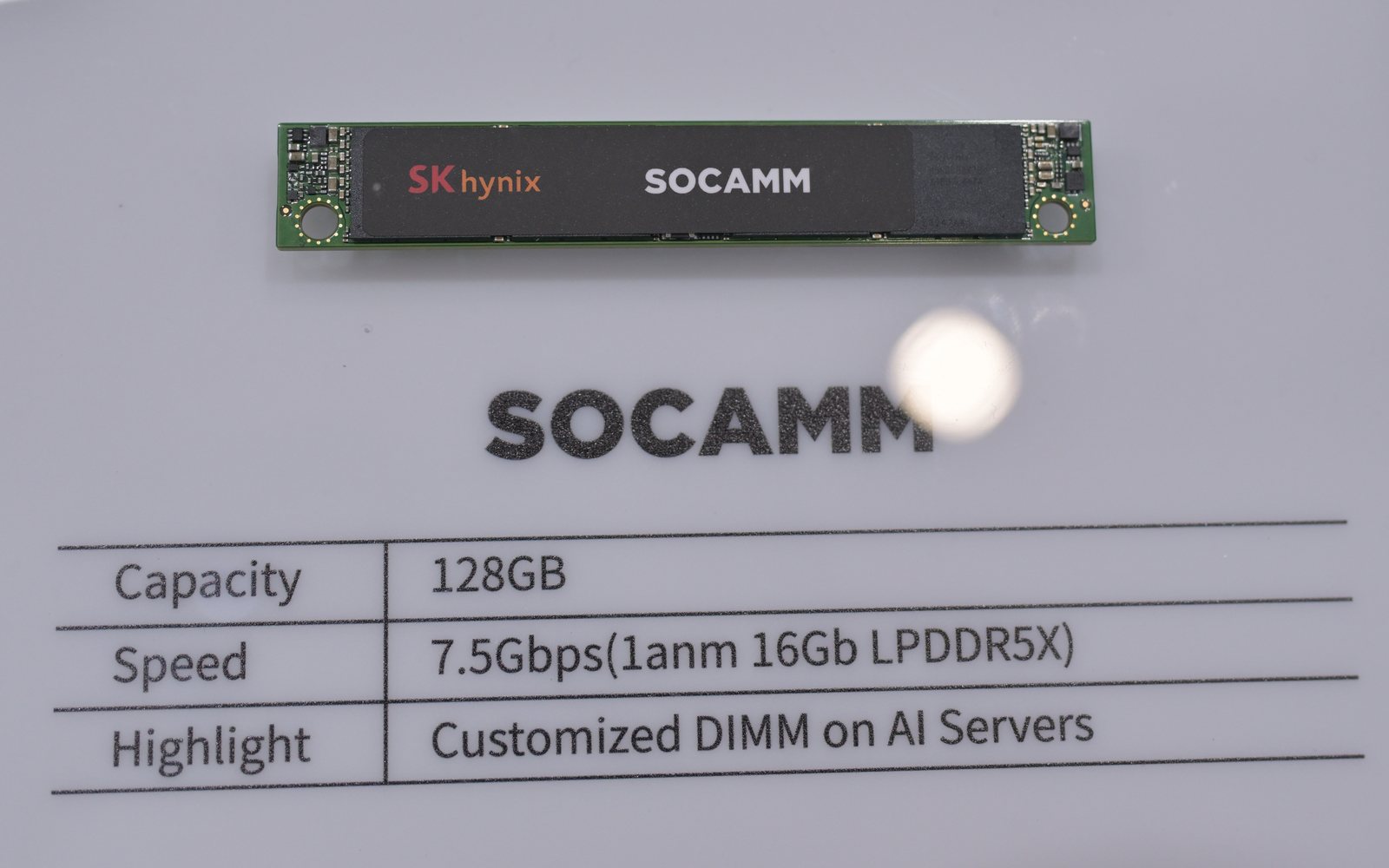
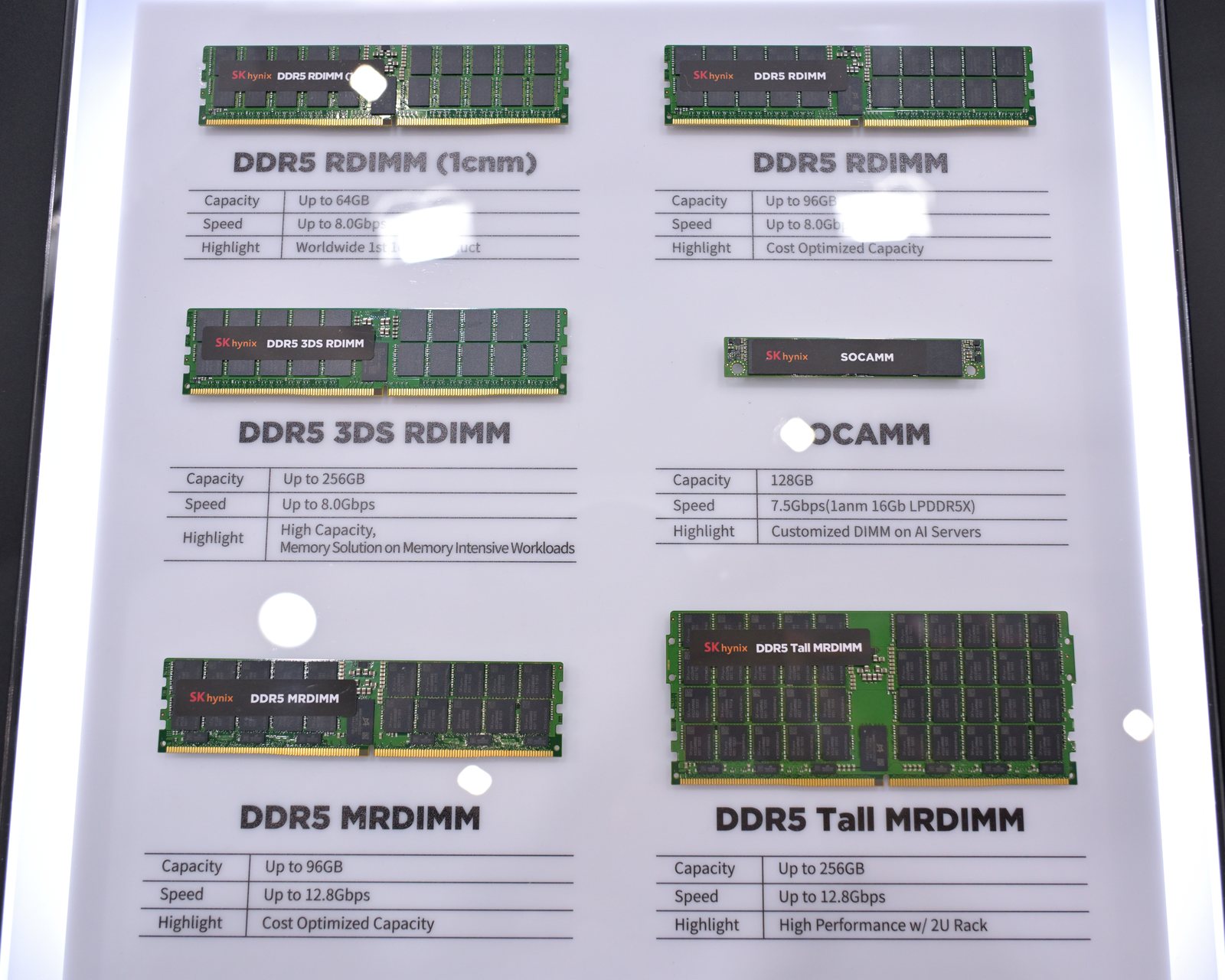
The conventional-memory business told the same story in a different register. Shipments of server DDR5 — the workhorse memory of the data-centre CPU fleet that surrounds the accelerators — rose more than 40 percent from the previous quarter. Average selling prices climbed across the board: DRAM prices rose by a high-20s percentage quarter on quarter, and NAND flash prices by a mid-20s percentage. Price rises of that size, in both major memory families at once, are the signature of a market in which buyers have stopped negotiating and started securing. As Signal Post News reported in its analysis of the AI power and memory shortfall, the constraint on the AI race has been migrating from chips to everything around the chips — power first, and memory right behind it. SK hynix’s quarter is the memory half of that argument, stated in won.
The shortage now runs to 2030
If the results were the headline, the guidance was the story investors will still be trading next year. SK hynix said it expects the memory shortage to persist until 2030 — pushing the industry’s scarcity horizon years beyond the rolling “through next year” language memory makers usually offer. The company disclosed that long-term supply agreements with 14 customers already cover more than half of its planned 2027–28 capacity, and that its DRAM and HBM output is effectively sold out through 2029. Read that again with a buyer’s eyes: the world’s leading HBM supplier has, on its own account, committed the majority of two future years of production and sold essentially everything it can make for three. Customers are not spot-buying memory in this market; they are annexing it, years in advance, at prices agreed in a seller’s market.
That visibility cuts two ways, and both matter. For SK hynix, multi-year contracted demand converts a famously cyclical business into something closer to an annuity: the company can plan fabs, hiring and shareholder returns against an order book rather than a forecast. For the rest of the technology industry, it means the AI build-out’s memory bill is now a fixed, escalating cost line through the end of the decade. Hyperscalers that cannot secure HBM allocations will find their accelerator deployments throttled no matter how many GPUs they can buy; smaller AI labs and consumer-electronics makers, who buy what is left after the giants’ long-term deals are served, face the shortage in its rawest form — higher prices for DRAM and NAND, or simply no supply. A shortage that lasts until 2030 is not a spike. It is a restructuring of who gets to build, and at what margin.
The honest complication: net profit fell 58 percent
One line in the release moved the other way, and it deserves an explanation rather than a gloss. Net profit came in at 39.7756 trillion won, down 58 percent from the previous quarter, even as operating profit hit a record. The gap between those two lines is the difference between the business and the bookkeeping around it. Operating profit measures the factories: chips sold, at record prices, against their costs. Net profit additionally absorbs non-operating items — and SK hynix attributed the drop to foreign-exchange movements and factors tied to its stake in Japan’s Kioxia, the flash-memory maker in which it holds a major investment. Exchange-rate swings and valuation effects on that holding can add or erase tens of trillions of won between the operating line and the bottom line without a single chip changing hands, and a quarter in which the year-ago and prior-quarter comparisons were flattered by such gains will mechanically show a steep net decline when they normalise.
The distinction matters for how the quarter should be read. Cash generation follows the operating business, and by that measure this was the strongest quarter in the company’s history. The balance sheet underlines it: SK hynix closed the quarter holding 114.5 trillion won in cash against just 15.8 trillion won of borrowings — a net cash position of nearly 100 trillion won for a company that, within living memory of the last memory downturn, was the industry’s financial weak link. The Kioxia stake, notably, was also the source of the quarter’s generosity to shareholders: half of the third-quarter dividend is a special payment funded from gains on that investment, which is the same asset whose valuation swings depressed the net-profit line. Both things are true at once, and any account of this quarter that mentions only one of them is incomplete.
A 100-trillion-won promise to shareholders
SK hynix used the release to convert a windfall into a commitment. The company said it expects shareholder returns of roughly 100 trillion won for full-year 2026 — more than 30 trillion won in dividends and more than 60 trillion won in share buybacks, amounting to over half of its free cash flow. The third-quarter dividend alone is set at 20,000 won per share, half of it the special dividend paid from the Kioxia gains, and a new 20 trillion won buyback programme comes on top. For a South Korean market that has spent two years pressuring its champions to close the “Korea discount” with exactly this kind of payout discipline, the scale is the message: SK hynix is not merely having a good year, it is distributing like a company that believes the earnings power is structural.
One strategic loose end was tied off in the same announcement. The company said it has dropped its review of an initial public offering for Solidigm, its U.S.-based NAND and enterprise-SSD subsidiary acquired from Intel. In a market where NAND prices just rose by a mid-20s percentage in a single quarter and enterprise storage demand rides the same AI wave as everything else, keeping Solidigm whole — rather than listing it into the rally — reads as a decision to retain full exposure to a business whose value is compounding inside the group. It also removes a long-running question mark that had hung over the stock, which rarely hurts a results-day reception.
Seoul’s verdict: hynix up a tenth, the KOSPI up with it
The market’s response was immediate and broad. SK hynix shares jumped about 10 percent in Seoul on Wednesday, and the rally did not stop at one stock: the benchmark KOSPI rose about 6.7 percent on the day, with Samsung Electronics — SK hynix’s great domestic rival, and the other name every HBM allocation fight runs through — climbing around 9 percent as investors re-rated the whole Korean memory complex on the shortage-to-2030 guidance. Moves of that size in an index of the KOSPI’s weight are rare outside crises and their resolutions; Wednesday was the mirror image of a crash day, a national market repricing upward because two of its companies sit astride the AI era’s scarcest input. The session also sharpened the question hanging over Samsung, whose HBM programme has spent two years chasing SK hynix’s lead: in a market sold out through 2029, even the number-two supplier’s capacity is suddenly worth far more than it was.
Why this matters
An 80 percent operating margin rewrites what a memory company is. Memory has been the canonical commodity business for four decades: brutal cycles, margins that swung from thin to negative, and survivors defined by cost rather than pricing power. A quarter at 80 percent — up from 47 percent a year earlier, on revenue that grew 328 percent — is what happens when a commodity becomes a bottleneck. The closest parallels are not in semiconductors but in any market where one supplier’s product is a non-substitutable input to a much larger industry’s growth: the pricing power migrates to the chokepoint, and it stays there until capacity or a rival catches up. SK hynix’s guidance says neither happens before 2030.
Sold out through 2029 changes everyone else’s planning. When the leading supplier’s DRAM and HBM are effectively committed years ahead, with 14 customers’ long-term agreements covering over half of 2027–28 capacity, access to memory becomes a strategic asset allocated by contract rather than a purchase made by procurement. That advantages the hyperscalers who signed early and big, and it quietly raises the drawbridge against everyone else — a dynamic Signal Post News has tracked in the AI supply chain, from the contract manufacturers converting AI demand into shipments to the power market’s 32-gigawatt shortfall. The AI race is increasingly a race for secured inputs: power, packaging and now, explicitly, memory until 2030.
The returns programme is a governance event, not just a payout. Roughly 100 trillion won in a single year — north of 30 trillion in dividends, north of 60 trillion in buybacks, over half of free cash flow — from a Korean chipmaker would have been unthinkable in the last cycle, when every spare won was hoarded against the next downturn. Paying out at this scale, while simultaneously telling investors the shortage runs to 2030, is management underwriting its own guidance with cash. If the cycle turns early, the buybacks will look mistimed; if it does not, this is the quarter the Korea discount on SK hynix began to close for good.
What happens next
The next test arrives quickly. Fourth-quarter numbers will show whether HBM4 volumes have indeed passed HBM3E, as guided, with the M15X fab in Cheongju at full capacity — the single most falsifiable claim in this release, and therefore the one analysts will grade first. Watch, too, for the terms of the next round of long-term agreements: with more than half of 2027–28 capacity already committed, the remaining allocations are the scarcest negotiating chips in the industry, and their pricing will set the memory cost curve for AI systems shipping in 2028. Samsung’s response — its own HBM4 qualification progress and any capacity announcements — will determine whether this remains a one-company bottleneck or becomes a two-company oligopoly with slightly softer edges. And in Seoul, the follow-through question is political as much as financial: a KOSPI that can rise 6.7 percent on a memory maker’s earnings is a market whose fortunes are now visibly concentrated in the AI trade, with all the opportunity and all the exposure that concentration brings. The shortage, on SK hynix’s own telling, has four more years to run. The industry has just been told to plan accordingly.
Sources
- SK hynix, third-quarter 2026 earnings release, October 28, 2026: revenue of 104.6155 trillion won, operating profit of 83.3338 trillion won (80 percent margin), net profit of 39.7756 trillion won; HBM4 shipments and M15X Cheongju ramp; DRAM and NAND pricing; shortage guidance to 2030; 14-customer long-term agreements; shareholder-return programme and Solidigm decision. news.skhynix.com
- CNBC, October 28, 2026: reporting on the results against LSEG consensus (revenue 98.34 trillion won; operating profit 76.72 trillion won) and the Seoul market reaction, including SK hynix’s roughly 10 percent rise. cnbc.com
- Aju Business Daily, October 28, 2026: reporting on the dividend of 20,000 won per share, the new 20 trillion won buyback, cash of 114.5 trillion won against borrowings of 15.8 trillion won, and the KOSPI’s roughly 6.7 percent rise with Samsung Electronics up around 9 percent.
Note: won figures are as reported in SK hynix’s release; the dollar figure for revenue (about $78.9 billion) is as reported in market coverage of the release. Quarter-on-quarter and year-on-year comparisons are the company’s reported figures; consensus figures are LSEG estimates as reported by CNBC.