India record 406 run chase ODI
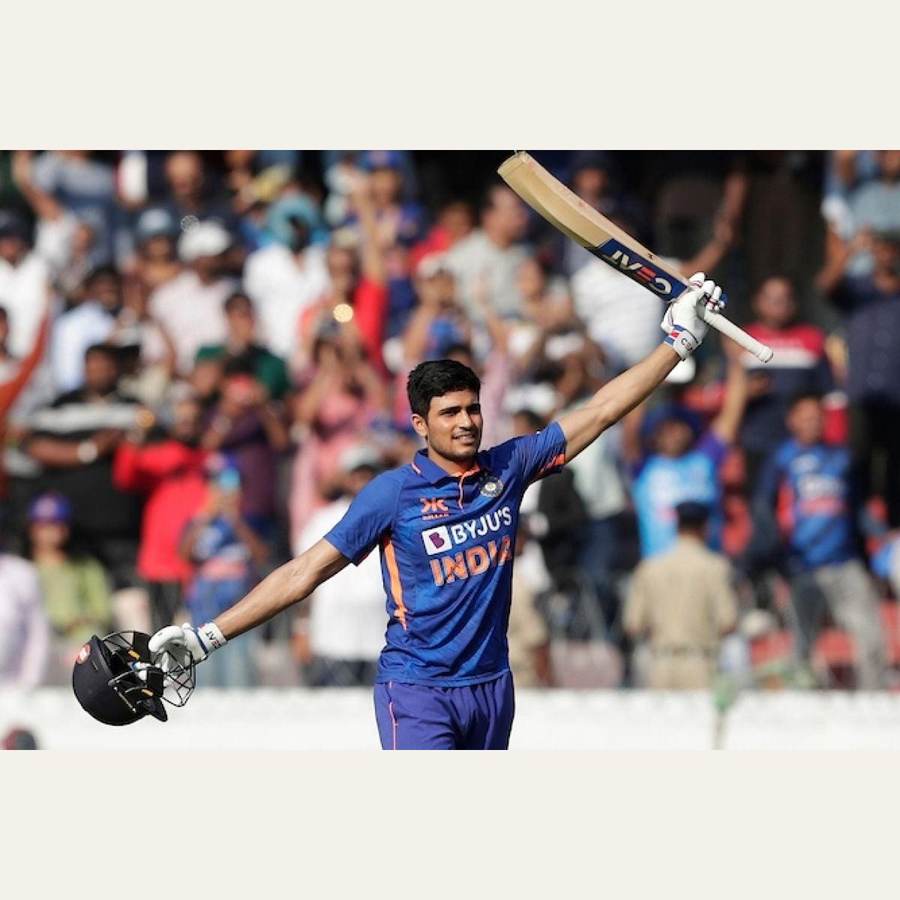
GUWAHATI — The India record 406 run chase ODI was not merely a pursuit completed; it was a boundary erased. West Indies made 405 for 7, their first score beyond 400 in one-day internationals, behind centuries from John Campbell, Shai Hope and Amir Jangoo. India answered with 406 for 2 in 43.3 overs. Captain Shubman Gill finished unbeaten on 223 from 133 balls, Rohit Sharma made 101 from 75, and a target that should have demanded a perfect night was overtaken with eight wickets and 39 balls still unused. India won the second ODI at the Barsapara Cricket Stadium and took an unassailable 2-0 lead in the three-match series.
The arithmetic alone is disorienting. India had never successfully chased more than 359 in an ODI; that mark came against Australia in Jaipur in 2013. On Wednesday, the team added 47 runs to its national record and did so at 9.33 runs per over. Only South Africa’s 438 for 9 against Australia in Johannesburg in 2006 remains above it among successful men’s ODI chases. Yet even that comparison understates the authority of this performance. South Africa got home with one ball left and one wicket standing. India crossed the line before the 44th over and lost only two batters.
Gill’s 223 was an innings built for a chase, not a scorecard
Gill reached his hundred in 62 balls and his double hundred in 117, the fastest ODI double century on record. He finished with 26 fours and eight sixes. Those 34 boundaries produced 152 runs, leaving 71 to be found through running, strike rotation and the less photogenic work of keeping a chase alive. That distribution matters because a 400-plus target is not conquered by highlights alone. It requires pressure to be prevented from accumulating between them.
His 223 not out became the highest individual score in an ODI chase and the highest by a captain in the format. It is the third-highest ODI score overall, behind Rohit’s 264 and Martin Guptill’s unbeaten 237. Gill is now only the second batter after Rohit to own multiple ODI double hundreds, and only the second after Glenn Maxwell to make one while chasing. The record list is crowded with context, but the central achievement is simple: no batter had previously carried a pursuit this large with an innings this large.
The physical cost supplied the human edge. Gill batted through cramp and neck pain after spending the afternoon in the field. “I think every part of my body is cramping right now,” he said after the match. The remark was not theatre; Guwahati’s heat had already forced India to absorb a West Indies innings conducted at nearly eight runs an over. Gill’s method was to divide the impossible into manageable passages. He did not chase 406 in one act. He won the powerplay, protected the partnership and repeatedly reset the target until it became ordinary enough to reach.
The fastest ODI double hundred, measured properly
The 117-ball double century is the headline record, but pace should be read alongside responsibility. Gill had to score quickly without surrendering his wicket because India’s middle order could not be asked to recover from an early collapse while maintaining a required rate above eight. His strike rate of 167.66 solved both demands at once. He was the accelerator and the insurance policy.
That is why the innings belongs in a different category from a double century made while setting a total. Batting first permits a player to discover the ceiling as the innings unfolds. Chasing 406 removes that luxury: the scoreboard announces the minimum from ball one. Gill’s unbeaten finish matters as much as the 223. He stayed until Ruturaj Gaikwad nudged the winning run, leaving no late handoff and no final-over jeopardy.
Rohit’s 101 made the impossible feel scheduled
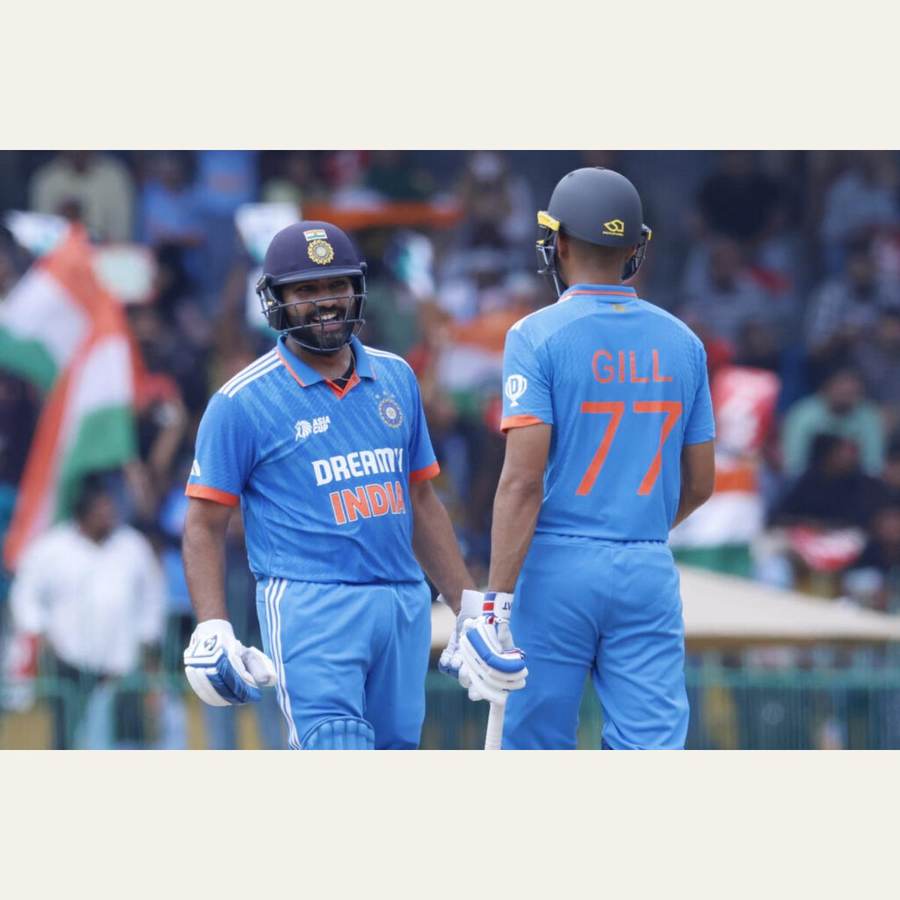
Rohit’s century was not a supporting cameo. His 101 from 75 balls included ten fours and six sixes, and he crossed 12,000 ODI runs while setting the tempo of the pursuit. The opening stand reached 255 in 26.2 overs. By the time Jayden Seales trapped Rohit lbw, India needed 151 from 141 balls — still a substantial chase, but no longer an assault on mathematical credibility.
The partnership’s strategic achievement was refusing the target any quiet overs. In a normal chase, an over of three singles is harmless. At 406, it compounds the burden on every over that follows. Rohit and Gill treated boundary options as a renewable resource: pace on the ball, gaps behind square, straight hitting when the bowlers overcorrected. Their scoring did not depend on one bowler disintegrating. It came from making every defensive adjustment expensive.
Rohit’s milestone also framed a generational handover without forcing one. The veteran who owns the highest ODI score shared a record stand with the captain who had just become the fastest to 200. Gill did not need Rohit to recede for his own authority to grow. The innings worked because experience and succession were additive, not competitive.
Virat Kohli then made 29 from 19 balls, ensuring West Indies could not turn one wicket into a pause. Gaikwad’s unbeaten 31 completed the job beside Gill. Three days after Kohli’s unbeaten 139 and 15,000-run milestone powered India through the first ODI, the second match showed that this batting order does not have a single chase architect. It has several, and Wednesday belonged overwhelmingly to Gill.
West Indies did almost everything a batting side can do
West Indies’ 405 for 7 was not careless excess waiting to be exposed. It was the highest ODI total in the country’s history, surpassing the 389 made against England in 2019. Campbell attacked from the start and made 101 from 68 balls. Hope supplied the innings’ structure with 104 from 94. Jangoo turned the closing stages into a launchpad with 114, while Roston Chase and Shamar Joseph carried the total beyond 400.
Three centuries in one ODI innings had happened only five times before. The sixth should have guaranteed control of the night. Instead, it created one of cricket’s crueler statistical pairings: West Indies simultaneously produced a national batting landmark and absorbed the largest successful chase India has ever completed.
The defeat should not be misread as proof that 405 was inadequate. It was inadequate only against an innings that broke several individual records and an opening stand that removed most of the target before the middle order appeared. On another surface, or against an attack with more new-ball control, West Indies’ total wins comfortably. Guwahati exposed a modern ODI truth: a flat pitch can turn even historic run-making into no more than par if the defending side cannot generate early wickets.
Kuldeep Yadav’s 2 for 65 looks better after the chase
Every Indian bowler conceded heavily, but Kuldeep Yadav’s 2 for 65 from ten overs had hidden value. He became the second-quickest Indian to 200 ODI wickets and was the only specialist who consistently threatened to interrupt West Indies’ accumulation. On a day when the match produced 811 runs in 93.3 overs, an economy rate of 6.5 was not damage; it was resistance.
The figures also expose the difference between wicket-taking and containment in extreme batting conditions. India could not control West Indies through economy alone. What Kuldeep offered was a chance to alter who was at the crease, break combinations and deny one set batter another over. His two wickets did not prevent 405, but they helped stop the total from climbing even higher. In a match decided with 39 balls left, that sounds academic. Before Gill and Rohit started batting, every prevented run mattered.
What the record says about modern ODI cricket
This was not simply evidence that bats have improved or boundaries have shrunk. The deeper shift is informational. Elite chasing teams now treat required-rate pressure as a planning problem. They know which overs to target, how many boundary balls a surface is likely to yield and when to preserve a matchup rather than a batter’s aesthetic rhythm. A 406 target still requires rare execution, but it no longer arrives without a model for attacking it.
India’s chase also shows how quickly a record target can lose psychological power. West Indies carried a 405-run scoreboard into the interval. Twenty-six overs later, after the 255-run stand, the same number had become a series of routine required rates. That reversal is the defining image of the night: not panic, not desperate slogging, but a giant total steadily reduced until it looked like a normal assignment.
There is a warning here for administrators and bowlers. If pitches, field dimensions and regulations leave bowlers without enough methods to disrupt a set batter, the spectacle can become one-directional. Wednesday remained compelling because a record chase was at stake and because Gill’s endurance supplied genuine jeopardy. But the format’s long-term balance cannot depend on cramps being the most dangerous opponent. ODI cricket is richest when a score of 405 creates tension, not a presumption that the team batting second has the better conditions.
Winners, losers and the selection consequences
Winner — Shubman Gill: A captain is judged not only by tactical decisions but by whether he can own the hardest passage of a match. Gill did. The unbeaten finish converts a spectacular score into a leadership statement.
Winner — Rohit Sharma: His 12,000-run milestone arrived inside a 101 that mattered tactically. He did not merely accompany the record innings; he gave it the start that allowed Gill to finish without gambling every ball.
Winner — India’s 2027 planning: Gill, Rohit and Kohli have now supplied centuries across the opening two matches. The immediate selection problem is abundance: how to preserve experience, empower the captain and still create enough opportunities for the next group before the World Cup. Kohli has already framed 2027 as his final tournament, which makes every successful handover mechanism more valuable.
Winner — West Indies’ top order: Campbell, Hope and Jangoo did not lose credibility because the total was chased. Three centuries and a national-record 405 prove the batting can create winning positions against elite opposition.
Loser — the West Indies attack: A 400-plus total should permit fields and plans designed around wickets. Conceding 255 before the first breakthrough meant there was no pressure reserve left. The bowlers were chasing the game long before India reached the target.
Loser — the old definition of safety: For decades, 300 was daunting and 350 nearly decisive. India have now moved their own successful-chase record to 406. Captains batting first can no longer assume a landmark total is self-defending on a true surface.
What happens next
The third ODI is scheduled for Saturday, October 3, with India already holding the series. That creates a familiar temptation to call the remaining match a dead rubber. It is not. India can test combinations without surrendering the competitive standard that produced two emphatic chases. West Indies must decide whether to change personnel, alter new-ball lengths or introduce more pace-off bowling before batters settle.
Gill’s recovery will matter more than another record hunt. His post-match cramps and neck pain were the bill for a full day in the field followed by 133 balls of high-intensity batting. India have little to gain by treating durability as proof that recovery is optional. The captain has already supplied the series-defining innings.
The longer view belongs to the World Cup cycle. India’s top three are producing milestones at a rate that can obscure an important question: who absorbs the next difficult chase if one of them fails? Wednesday did not answer that because Gill and Rohit were too good to permit the test. The next development step is not finding a way to improve a 406 chase. It is ensuring the side has several ways to survive when such perfection does not arrive.
For now, Guwahati deserves to stand without qualification. West Indies reached territory the team had never occupied. India followed them there, passed them and kept walking. Gill’s 223 was the largest engine, Rohit’s 101 the ignition, and the 39 unused balls the detail that turns a record win into a warning for every ODI attack that follows.
Sources
- Reuters — Gill smashes fastest ODI double ton as India beat West Indies in run-fest
- Associated Press report republished by HFG Insider — Gill and Rohit power India to a record 406-run chase
- Livemint — India vs West Indies second ODI result and scorecard detail
- ICC — Records fall as India and West Indies contest the ODI series
- ESPNcricinfo — India vs West Indies, second ODI scorecard and match record
- Cricketnmore — archival Gill double-century photograph source
- Sportzwiki — archival Rohit Sharma and Shubman Gill photograph source
Reporting basis: Match result, innings figures and records were cross-checked against Reuters, the Associated Press report, Livemint and the cited match authorities. Photographs are clearly labeled archival and do not depict the September 30, 2026 match. Analysis is Signal Post News’s. Signal Post News did not have a reporter at Barsapara Cricket Stadium.