Politics / Europe — The Serbia election results 2026 delivered the verdict two years of street protests had been building toward. Aleksandar Vučić conceded defeat on election night, telling supporters that the student-led Student List had won the snap parliamentary election and would take a clear majority in the 250-seat National Assembly. The concession, made before any final results were certified and based on his own camp’s sample of the count, closes a Serbian Progressive Party era that began in 2012 — subject to the Republic Electoral Commission’s final count, which had not been published as this article went live.
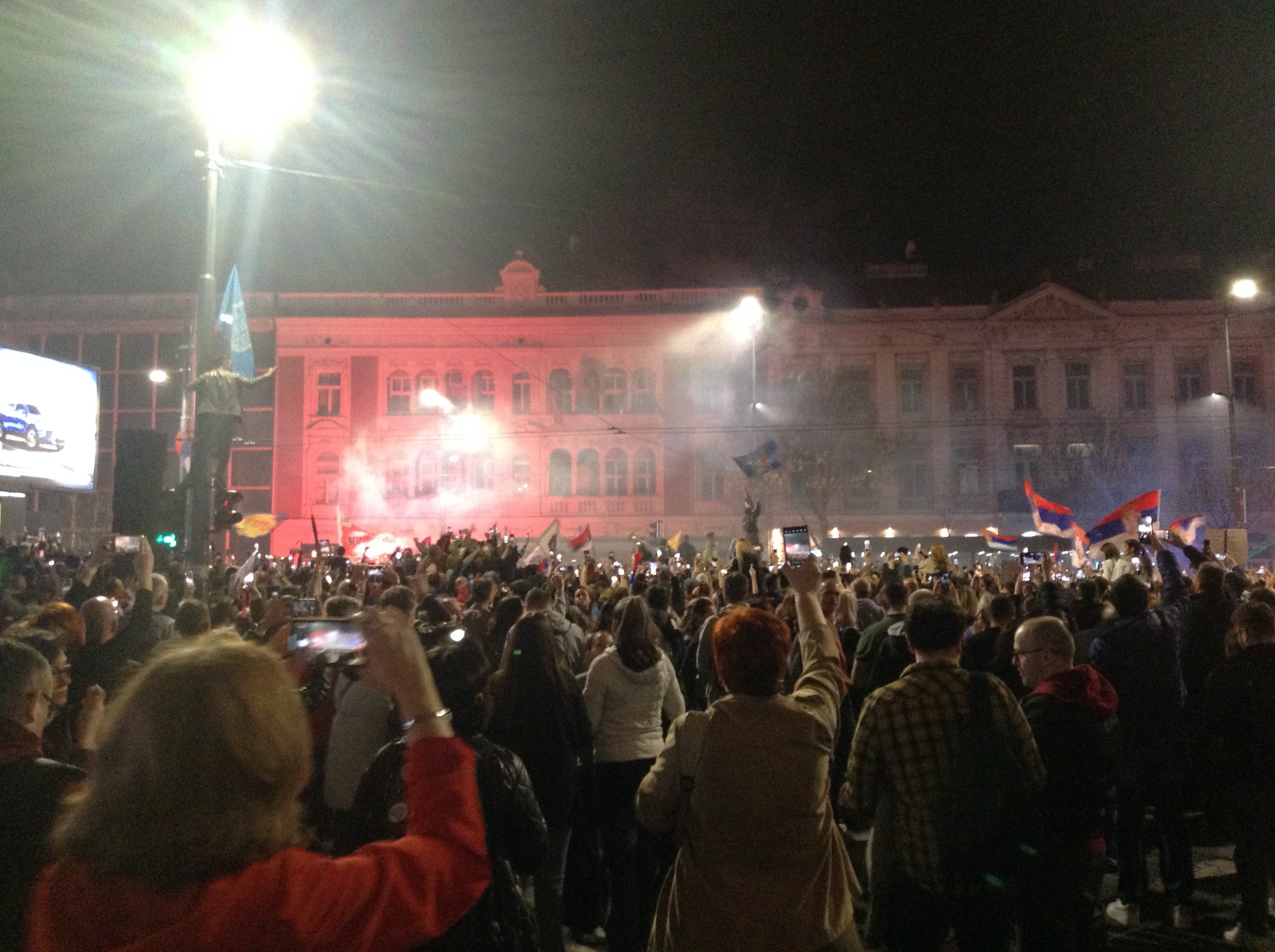
BELGRADE — The Serbia election results 2026 produced, before midnight on election night, the sentence that two years of marches, blockades and faculty occupations had been demanding: the incumbent conceded. Aleksandar Vučić, who has led Serbia since becoming prime minister in 2014 and president in 2017, told supporters at his party’s election-night gathering that the student-led Student List had beaten his Serbian Progressive Party (SNS) and its “United Serbia” coalition in Sunday’s snap parliamentary election — a concession delivered roughly an hour and a half after polls closed, on the basis of a sample count, before the Republic Electoral Commission had published final results. Supporters of the Student List poured onto the streets of Belgrade and other cities in celebration, honking horns and chanting that Vučić was gone, the Associated Press reported via CNN. Every seat projection in this article is preliminary and attributed; the certified result belongs to the electoral commission, and it had not been issued when this article was published.
Vucic concedes defeat: “The Student List has won”
Vučić did not wait for the official count, and he did not hedge the headline. “We still do not have final results, on the basis of a sample … it is clear that we have lost these elections, the Student List has won, they will have between 135 and 140 seats and we will have 105, no one else has entered parliament,” he said, in remarks reported by Reuters. A concession from the losing incumbent, in his own words and on his own party’s numbers, is the strongest evidence short of certification that the result will stand: Vučić controls the state apparatus that runs the count, and he chose to announce his defeat from its early returns rather than contest them.
The concession came with conditions and with blame. Vučić said he would not flee the country and would not appeal the result in court, explaining that he wanted to avoid unrest and clashes in the streets. But he attributed the loss to Serbia’s independent media and to alleged interference by unnamed European countries and an “American deep state,” the AP reported — the same foreign-hand framing he had used against the student movement throughout the campaign, when he denounced it as a foreign-led attempt to unseat him. He had campaigned, as CNN noted, with the endorsement of Russian President Vladimir Putin. None of those claims changes the arithmetic he himself announced: on his own sample, Vucic loses election night, and his list finishes a distant second.
Serbia parliamentary election results by the numbers — all of them preliminary
Serbia’s 6.4 million voters were electing all 250 seats in the National Assembly, where 126 seats make a majority. Three separate counts circulated on election night, and they agree on the shape of the result while differing in detail — which is exactly why this article attributes every figure rather than merging them into a single false precision.
Vučić’s own projection, announced in his concession, put the Student List at between 135 and 140 seats and his list at about 105. The CESID/Ipsos projection, the most widely carried parallel count, put the Student List at about 138 seats and the SNS-led list at about 104, on a vote share of roughly 52 percent. CRTA, the domestic election-monitoring group, published a preliminary estimate of 51.47 percent for the Student List against 40.42 percent for the “United Serbia” coalition. The Times reported the same broad split — the Student List at about 52 percent to the SNS’s 39.3 percent, translating to roughly 2.2 million votes against 1.7 million. The small gaps between those figures are the ordinary distance between a sample count, a projection and a preliminary estimate on a fast-moving night; none of them is the certified result.
Turnout was reported as exceptionally high. European officials described record numbers, and published estimates during the count varied — roughly 65 percent to nearly 70 percent, depending on the source and the hour — so this article reports the range as it was given rather than a single figure. What is not in dispute is the direction: after nearly two years of protest, Serbians voted in numbers that officials in Brussels themselves characterised as historic. Vučić’s remark that “no one else has entered parliament” refers to lists subject to the 3 percent threshold; national-minority lists, which are exempt from that threshold, were projected to hold a small number of seats, which is why the two big lists’ projected seats do not sum to 250.
Who won Serbia election — and what has not been decided yet
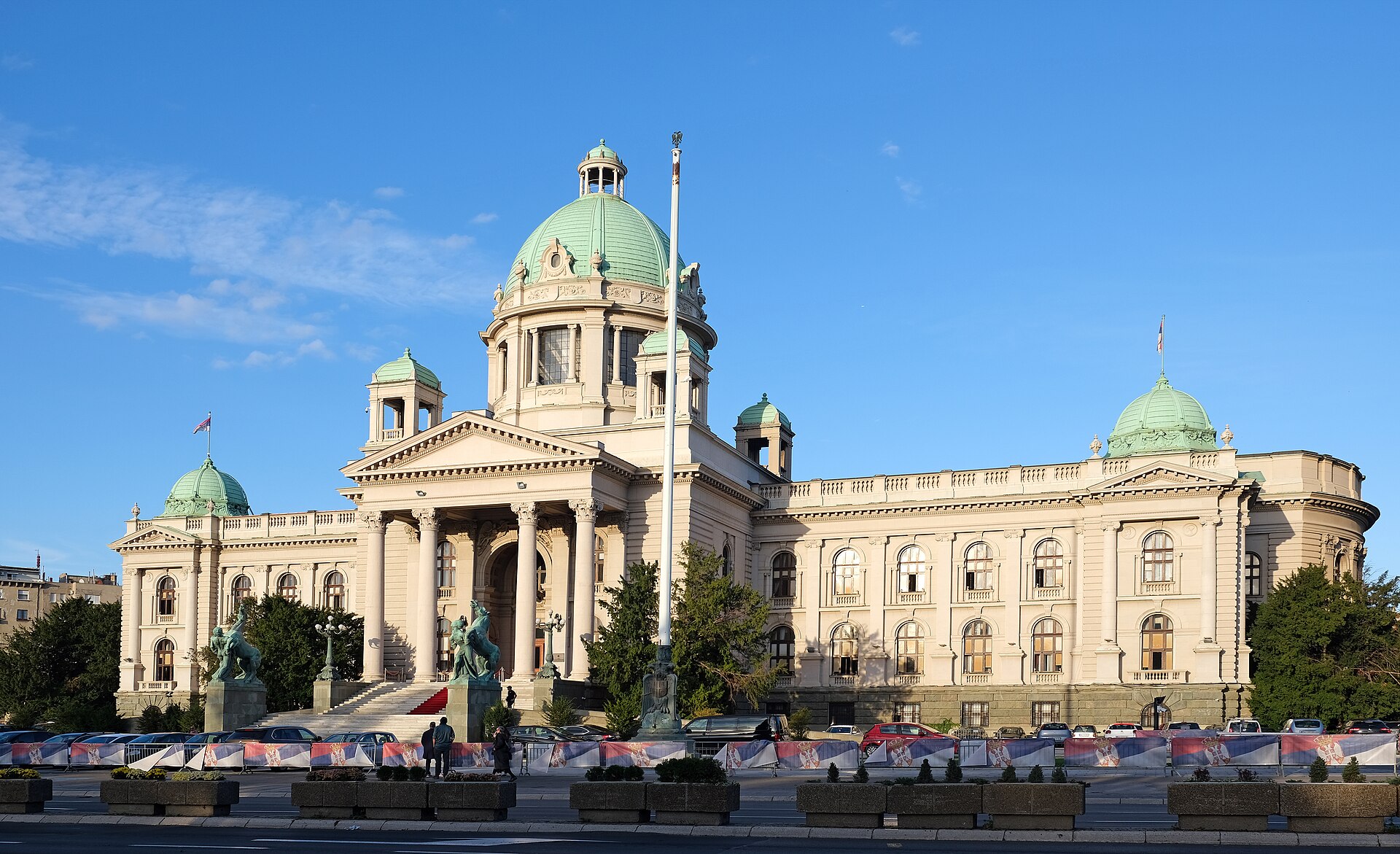
The direct answer, on the evidence of election night, is the Student List: its victory was announced not by its own headquarters but by the president it defeated, and every independent projection published during the count pointed the same way. What has not happened yet is certification. The Republic Electoral Commission must complete and certify the count, and the final seat allocation — including the exact division between the two large lists and the minority representatives — will only be fixed then. Vučić’s promise not to appeal removes the most likely source of a post-election legal fight, but projections have moved before in the region, and Signal Post News will update this article when the certified Serbia parliamentary election results are published.
From a collapsed canopy in Novi Sad to a winning list
Every account of this result starts in the same place as the campaign did: Novi Sad, November 1, 2024, when the concrete canopy of the city’s recently renovated main railway station collapsed and killed 16 people. The disaster became, for much of Serbia, the defining image of a governing style — public construction shadowed by corruption allegations, institutions that answered to the ruling party rather than the public. Students began by blocking traffic in silence for the dead. Within weeks they were blockading university faculties across the country, and the Novi Sad protest movement grew into the largest sustained challenge of the Vučić era: marches that drew hundreds of thousands, a door-to-door organisation built in student plenums, and a demand that began with accountability for the collapse and widened into a case against corruption and creeping authoritarianism itself.
Vučić answered, in September, with the instrument incumbents use when they want to reset a crisis on their own timetable: a snap election. It was the gamble this site traced through the autumn — first in our report on Vučić’s resignation as president and his bid to return as prime minister, when he stepped down on September 27 to lead the SNS list himself, and then through the final week, when the only published poll put the students ahead and Slavija Square filled for a rally the movement called “Victory Calling,” in our pre-election report on the snap vote. The SNS has held power since 2012; Vučić has personally led the country since 2014. Sunday’s vote was therefore not a routine mid-cycle contest. It was a referendum on fourteen years of one political machine — called by the machine’s owner, and lost by him.
Why this matters
Start with the simplest fact: Serbia is about to have its first government since 2012 that is not built around Aleksandar Vučić. Governments across Europe have fallen to opposition parties for a decade; what happened in Serbia is rarer. A protest movement with no party machine, no leader in the conventional sense and a candidate list deliberately drawn from outside professional politics — professors, doctors, engineers, farmers, actors, headed by a cardiology professor — converted street mobilisation into a parliamentary majority at its first attempt. The movement’s wager was institutional: that courts, prosecutors, broadcasters and universities had to be freed from party control before any other policy argument mattered. Voters, on the preliminary numbers, endorsed that wager over the most formidable electoral machine in the western Balkans.
The result also redraws the region’s geometry. Serbia is the largest state in the western Balkans and the hinge of Europe’s unfinished business there: a formal EU candidate whose accession has stalled, a traditional Russian ally that has refused sanctions on Moscow, and a major recipient of Chinese investment, including the infrastructure programme that renovated Novi Sad station. Vučić balanced those three directions for a decade and made himself indispensable to all three capitals. His defeat removes the balancer. What replaces that balancing act — and whether a movement that campaigned on domestic institutions even wants one — is the largest open question the election leaves behind.
Who benefits, who loses
The winners are obvious and less obvious. The Student List wins power, and with it the chance to test whether its programme — an independent judiciary, freed media, anti-corruption enforcement, an end to the patronage network that tied public jobs to party loyalty — can survive contact with government. The European Union wins a Serbian result it can finally engage with: Brussels spent years criticising democratic backsliding in Belgrade while working with the man responsible for it, and now faces a prospective government whose stated agenda reads like the EU’s own accession conditions. The losers are equally concrete. The SNS loses the state it has run since 2012 and the patronage economy built around it, even though a projected bloc of roughly 105 seats makes it a large opposition rather than a spent force. And Vučić personally loses the specific bet he placed in September: he gave up the presidency to win back the premiership, and on his own concession the premiership is gone too. Russia, which endorsed him, loses its most reliable partner in the region — though, as the next section sets out, how much it loses depends on choices the new majority has not yet made.
Serbia EU accession after election: Brussels congratulates, Moscow’s endorsement fails
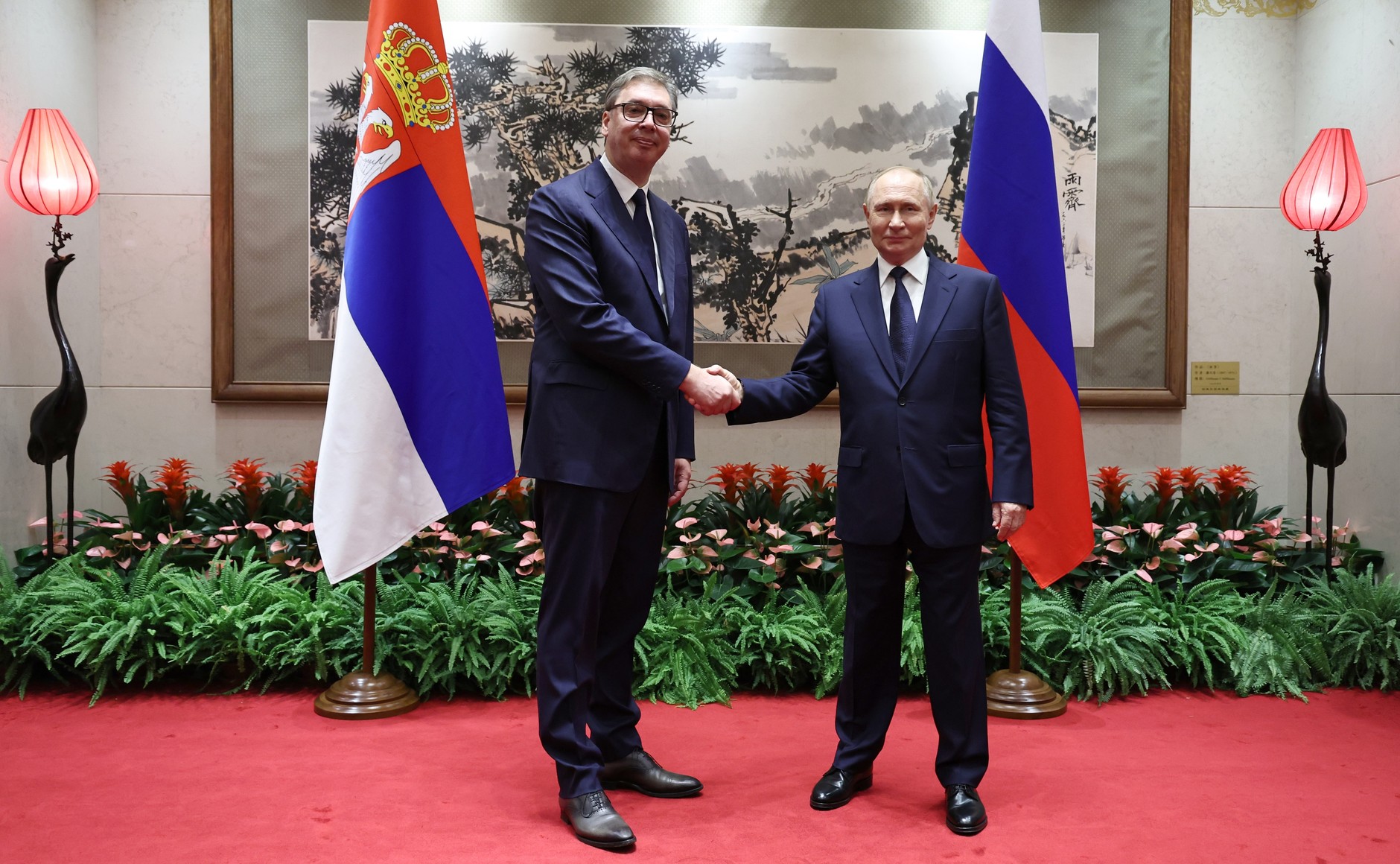
The first international reactions arrived within hours and lined up on one side. European Commission President Ursula von der Leyen congratulated the Student List on X, said the people of Serbia had turned out in record numbers to shape their country’s future, and said the EU stands ready to support reforms on rule of law, media freedom and the fight against corruption and to work together to advance Serbia’s future in the European Union, Reuters reported. EU Enlargement Commissioner Marta Kos wrote: “Serbia has raised its voice. After nearly two years of protests for democracy, the rule of law and the fight against corruption, the citizens of Serbia turned out to vote in historic numbers.” Council of Europe Secretary General Alain Berset congratulated the Student List, welcomed Vučić’s acceptance of the result and his commitment to a peaceful democratic transition, and offered the Council’s support.
Read those statements closely and they are more than courtesies: they are a price list. Rule of law, media freedom, anti-corruption, strong democratic institutions — the congratulations name, item by item, the chapters on which Serbia’s EU accession has been stuck for years. Brussels is signalling that a government elected on precisely that platform will be met halfway, quickly. The unspoken half of the bargain is harder. During the campaign, the Student List was criticised — including by pro-European opponents of Vučić — for its limited detail on EU accession, on Kosovo, and for saying it would not introduce sanctions on Russia. Winning an election on domestic reform does not answer any of those questions, and a movement that united voters who want EU membership with voters who want nothing to do with it will eventually have to choose. Serbia EU accession after election is now a live process again, but it is a process with conditions the new majority has yet to price in.
What critics on both sides say
Critics of the result, starting with Vučić himself, argue the election was decided by forces outside Serbia: hostile independent media, unnamed European states, an “American deep state.” That account has to carry the weight of an awkward fact — the concession and the seat projection came from Vučić’s own sample, announced by Vučić himself, and he has promised not to test the result in court. Supporters of the student movement hear the foreign-interference claim as the last reflex of a leader who spent years describing every domestic critic as a foreign agent. Critics of the movement, from a different direction, ask whether political amateurs can run a frontline Balkan state: whether a list assembled in plenums can staff ministries, manage a budget, negotiate gas contracts and handle Kosovo. The movement’s candidates have an answer with genuine force behind it, delivered on election night by Radomir Saicic, a University of Belgrade chemistry professor and Student List candidate, quoted by The Times: “Tonight is a victory of courage over fear, and of faith that Serbia can and must be different.” Both critiques will now be tested against the same evidence: the government the movement actually forms.
What happens next: a Serbia new government without a party machine
The sequence from here runs through certification first. The Republic Electoral Commission completes the count; the preliminary projections in this article are replaced by certified Serbia election results 2026 figures; and only then does the constitutional machinery of government formation begin, with the new National Assembly convening and a mandate to form a government following. On the projected numbers, the Student List would not need a coalition partner to govern — but a majority on paper is not a government. The movement must convert a 250-name list, chosen for credibility rather than administrative experience, into a cabinet, a programme and a chain of command. It has pointedly declined, throughout the campaign, to say that its list leader would automatically become prime minister, and it named no prime minister on election night. This article does not name one either, because the movement has not: who leads the Serbia new government is its first real decision, and it has not been announced.
Three risks stand between the celebration and a functioning government. The first is the count itself: projections are not results, and although Vučić’s concession and his no-appeal pledge sharply reduce the risk of a disputed transition, the certified figures will fix the majority’s exact size and with it its room for internal dissent. The second is the state the movement inherits: analysts warned before the vote that a student-led government pursuing institutional reform would meet strong bureaucratic resistance from a public administration staffed through fourteen years of SNS patronage, with short-term instability a real possibility. The third is Vučić himself. He remains the leader of a party projected to hold about 105 seats and the most experienced politician in the country, now in opposition for the first time in his career — a role he has never played and has not yet described. He resigned the presidency in September to make this bid; whether he leads the SNS from the opposition benches, rebuilds for a comeback, or steps back from the front line is unannounced and, as of publication, genuinely unknown.
What can be said is what the night itself established. A movement that began with students standing in silence for sixteen people killed under a collapsed canopy has, in under two years, organised itself into the projected majority of a national parliament, against an incumbent who controlled the timing of the election, most of its television coverage and the machinery of the state — and the incumbent has conceded, on the record, before the final count. However the formation talks go, Serbian politics now runs through a door that was closed for fourteen years. It is open.
Sources
- Reuters, October 25, 2026: “Serbia’s Vucic concedes defeat to student led movement in parliamentary election” — Vučić’s concession and full quotation, his seat projection of 135–140 against 105, the September snap election, the Novi Sad canopy collapse and sixteen deaths, and Vučić’s tenure as prime minister from 2014 and president from 2017. https://www.reuters.com/world/europe/serbias-vucic-concedes-defeat-student-led-movement-parliamentary-election-2026-10-25/
- Reuters, October 25, 2026: “Reactions to election victory of Serbia’s Student List” — statements by Marta Kos, Ursula von der Leyen and Alain Berset, as quoted in this article. https://www.reuters.com/world/reactions-election-victory-serbias-student-list-2026-10-25/
- Associated Press reporting via CNN, October 25, 2026: “Serbia’s leader concedes defeat to student-led movement in seismic political shift” — 6.4 million voters and the 250-member parliament, Putin’s endorsement and the foreign-led denunciation, the blame placed on independent media, unnamed European countries and an “American deep state,” election-night celebrations in Belgrade, and vote totals of about 2.2 million against 1.7 million. https://www.cnn.com/2026/10/25/europe/serbian-strongman-vucic-concedes-defeat-to-student-led-movement-intl-latam?cid=external-feeds_iluminar_meta
- CESID/Ipsos projection and CRTA preliminary estimate, as reported during the election-night count and carried in the reporting above: Student List about 138 seats and the SNS-led list about 104 (CESID/Ipsos); vote shares of 51.47 percent and 40.42 percent (CRTA). All projections are preliminary; the Republic Electoral Commission had not certified final results at publication.
- The Times, October 25–26, 2026: Student List at about 52 percent to the SNS’s 39.3 percent, and Radomir Saicic’s election-night statement, as quoted in this article.