Politics / Europe — Serbia votes on Sunday, October 25, in a snap parliamentary election that has become a referendum on twelve years of Aleksandar Vučić. The only poll published this month puts the student-led list ahead of his ruling bloc, 44.5 percent to 42.7 percent — the first time an opposition list has led a national survey in more than a decade — and on Thursday night the movement filled Belgrade’s Slavija Square for a final rally it called “Victory Calling.”
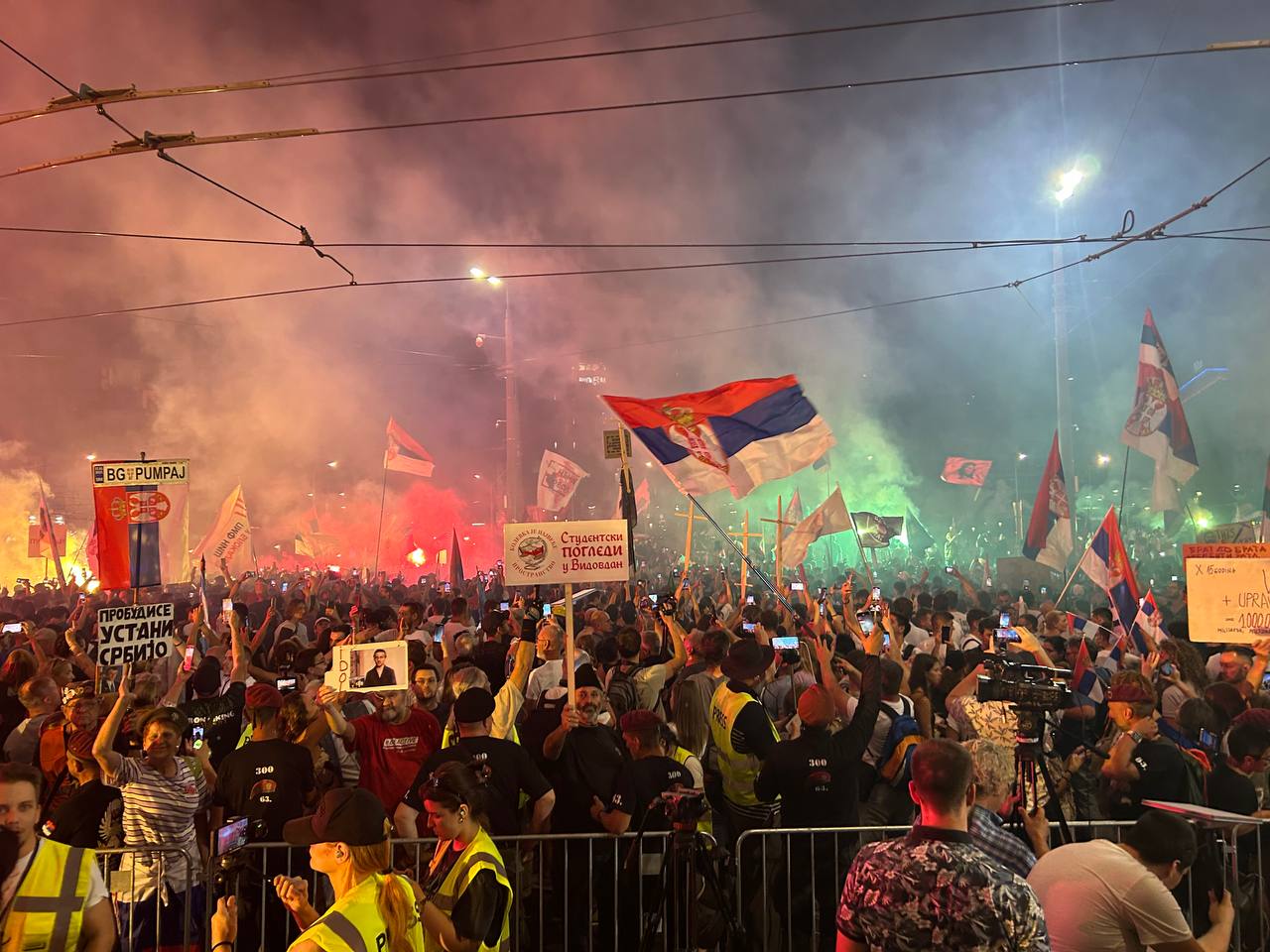
BELGRADE — The Serbia election on October 25 was not supposed to be close. Snap parliamentary elections in Serbia are usually a weapon of the incumbent: called early, fought on terrain the ruling party controls, and won by the machine that Aleksandar Vučić has built since his Serbian Progressive Party (SNS) took power in 2012. This one is different. The only poll published this month, by New Serbian Political Thought (NSPM) on October 20, showed the student-led candidate list edging ahead of Vučić’s SNS-led “United Serbia” list with 44.5 percent of the vote to 42.7 percent, Reuters reported — although betting odds still favour Vučić. Election silence is now in force across the country until polling stations close at 8 p.m. on Sunday, and 6,450,523 registered voters will choose between a leader who has dominated Serbian politics since 2014 and a movement that, two years ago, did not exist.
The closing day of campaigning, on Thursday, October 22, staged the contrast in a single evening. Supporters of the student-backed list packed Belgrade’s central Slavija Square for the final rally of the “Student List – Students Win,” the Associated Press reported: AP put the crowd in the hundreds of thousands, filling several blocks around the square, while the Beta news agency put it at tens of thousands — a gap this article reports as the agencies gave it, because crowd estimates in Serbia have become a political argument of their own. The rally, called “Victory Calling,” capped a multi-day march in which students walked to the capital from the east, west and north of the country, with columns converging on Slavija from six directions across Belgrade. Candidates set out what they promised to change from October 26, the day after the vote, including a judiciary and prosecution free from political pressure and education and healthcare equally available to all. “Serbia deserves freedom, justice and responsibility,” said actor Tihomir Stanić, a candidate on the list, and at the end the candidates walked across the stage holding copies of Serbia’s constitution. Vučić held his own closing rally the same day at a sports hall in New Belgrade.
Serbia election by the numbers: 250 seats, 18 lists and a 1.8-point gap
The mechanics matter because the race is close enough for them to decide it. Serbia is electing all 250 seats in the National Assembly; 126 seats are needed for an outright majority. A total of 18 electoral lists, featuring 2,418 candidates, are competing, including nine lists representing national minorities, according to the Republic Election Commission (RIK). Voting runs from 7 a.m. to 8 p.m. on Sunday at 8,392 polling stations, including 93 abroad in 37 countries. The electoral threshold for entering parliament is 3 percent of the vote; national-minority lists are exempt from it and enter under a natural threshold instead.
That threshold is where the NSPM numbers turn dangerous for both camps. In the NSPM survey — a telephone poll of 1,050 respondents, conducted September 25 to October 5, with the 18.3 percent of respondents who were undecided or refused to answer excluded from the list percentages — every list except the top two sits below the bar: Ivica Dačić’s “Factor of Stability” list at 2.9 percent, “European Serbia” at 2.7 percent and the “Authentic Right” at 2.5 percent. If that pattern held on Sunday, the votes cast for sub-threshold lists would be redistributed in effect to the two leaders, and the 1.8-point gap between the Student List and United Serbia could either harden into a majority or dissolve entirely depending on which small lists scrape over 3 percent. Polls also disagree with each other: a September survey by Faktor Plus gave the governing coalition a clear lead of 48.6 percent to 37.1 percent. The honest summary, two days out, is that Serbia has one poll showing an opposition lead for the first time in over a decade, one older poll showing the government comfortably ahead, and betting markets siding with the incumbent’s machine.
How a collapsed station canopy built an election challenger
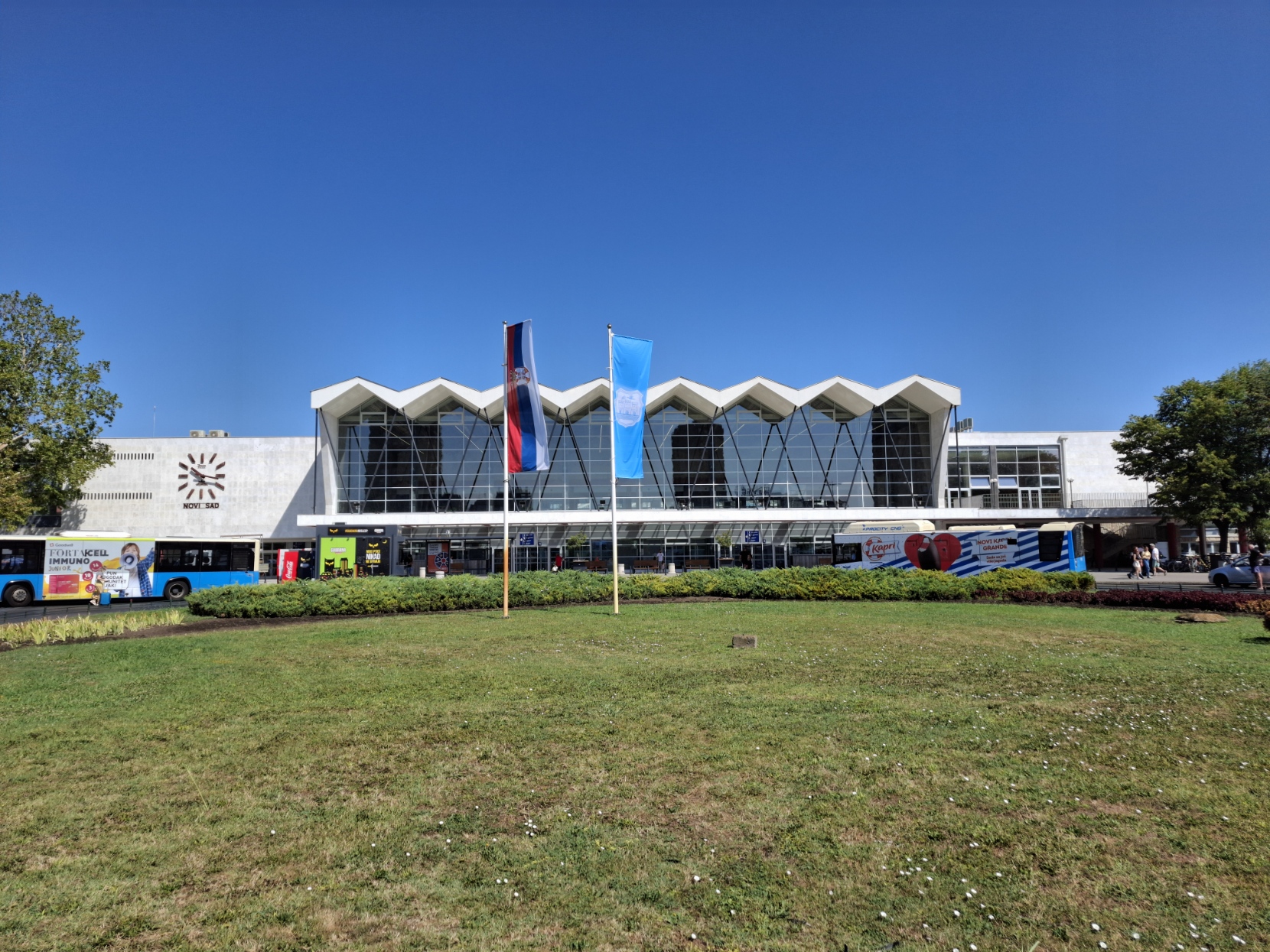
Every account of this election starts at the same place: Novi Sad, November 1, 2024, when the concrete canopy of the city’s recently renovated main railway station collapsed onto the pavement below, killing 16 people. The station had been rebuilt between 2021 and mid-2024 with support from China’s Belt and Road Initiative. For many Serbians, the disaster condensed a decade of grievances — corruption in public construction, captured media, institutions that answer to the ruling party — into a single, undeniable image. Students began by blocking traffic for one minute for each person killed. Within weeks they were blockading university faculties across the country.
The movement’s growth was methodical rather than spontaneous, as Reuters found in interviews with a dozen students and teachers: a countrywide door-knocking campaign, peaceful marches, a tightly controlled media message, and a constant rotation of public faces to protect individuals from government smear campaigns. In late January 2025, then prime minister Miloš Vučević, a close Vučić ally, resigned a day after tens of thousands blocked one of Belgrade’s main junctions, joined by farmers on tractors. In March 2025 the students led hundreds of thousands through Belgrade in the biggest anti-government march in a generation, under a symbol anyone in Serbia now recognises: a red handprint, for the blood protesters say is on the government’s hands. On the first anniversary of the collapse, students walked from Belgrade to Novi Sad and were fed by villagers along the way. Ahead of Sunday’s vote, student groups have trained on election fraud and plan to have teams present at polling stations.
The list itself is deliberately unusual. Under the movement’s internal rules it does not include current students among its candidates; its 250 names were built through plenary sessions and consist of doctors, engineers, professors, farmers and actors — and, as Reuters noted, even a popular rapper. It is headed by Ilija Srdanović, a cardiology professor, although the movement has said that does not necessarily mean he would become prime minister if it wins. “The energy is unstoppable,” Srdanović told the BBC. “We are political amateurs, but we are experts,” said Milica Jovanović, an assistant professor and candidate, in the same BBC reporting. The platform is institutional rather than ideological: eradicate corruption, reform the media, break the state’s patronage network, free the judiciary. Vučić, for his part, resigned as president on September 27 to lead the SNS list and bid to return as prime minister — the gamble this site covered when he made it, in our report on Vučić’s resignation and prime-minister bid — and he campaigned at a tempo no challenger could match on television, with 129 live TV appearances in August alone, alongside rallies and TikTok videos of his own.
Why this matters
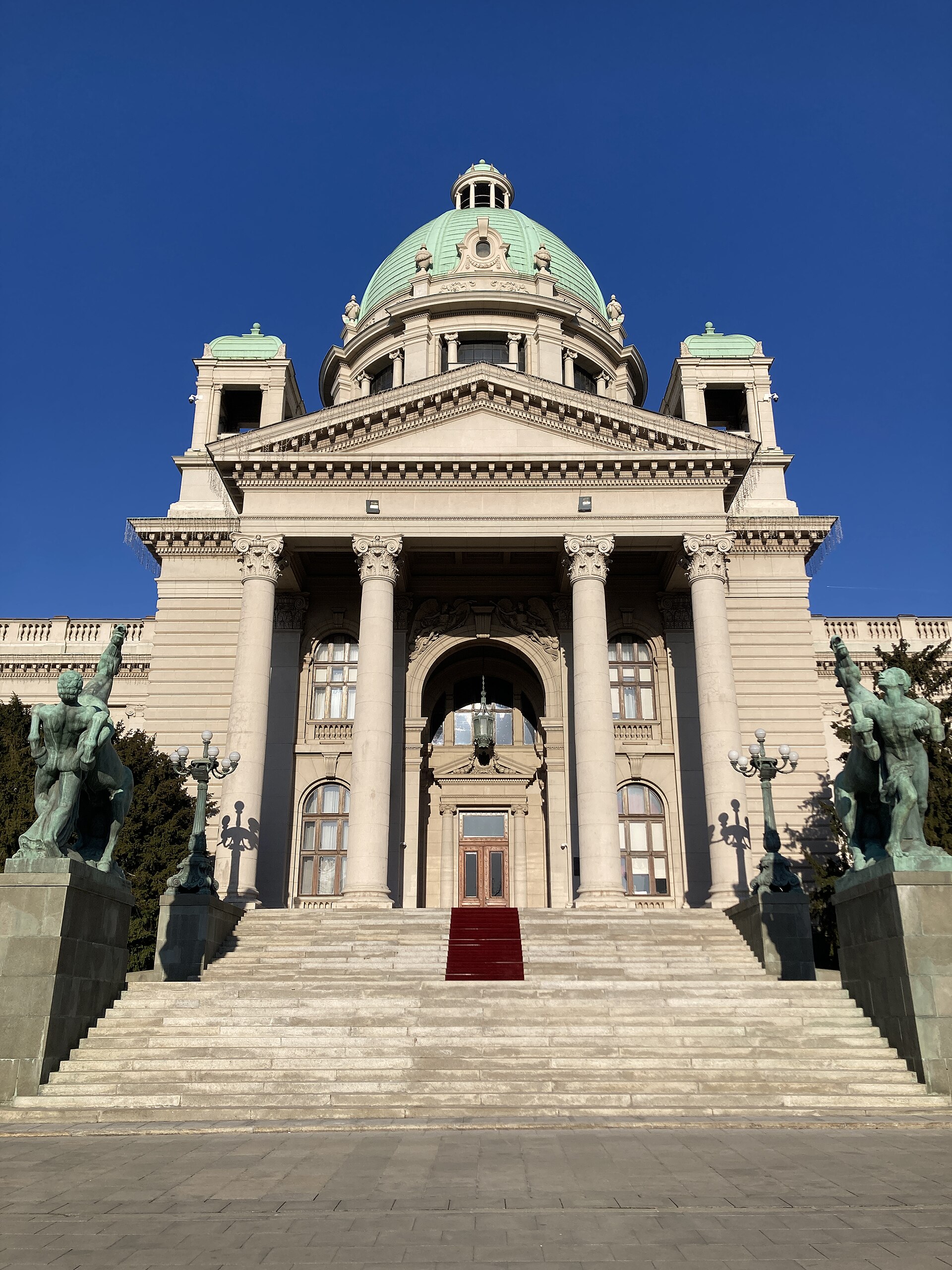
Serbia is the largest country of the western Balkans and the hinge of Europe’s unfinished business in the region. It is formally a candidate to join the European Union, with the accession process stalled; it refuses to impose sanctions on Russia, its traditional ally and principal supplier of natural gas; and it takes major investment from China, including the infrastructure programme that renovated Novi Sad station. Vučić has balanced those three directions for a decade, and every chancellery in Europe has learned to work with him. A student-led government would be the first Serbian government since 2012 not built around him — and nobody, including its own candidates, can say with confidence what its foreign policy would be. The list has been criticised, including by pro-European opponents of the government, for its silence on EU accession and Kosovo, and for saying it would not introduce sanctions on Russia.
That ambiguity cuts both ways, and it is the deepest reason this election matters beyond Serbia. The movement’s wager is that institutions come first: that a country cannot have a real foreign policy, a real economy or a real EU path while courts, prosecutors and broadcasters answer to one party. Its critics’ counter-wager is that amateurism is a luxury a frontline Balkan state cannot afford. “The protests changed the society. It showed people they are not alone,” Florian Bieber, professor of Southeast European history and politics at the University of Graz, told Reuters. Helena Ivanov of the Henry Jackson Society told the BBC that the students have mobilised the public in a way traditional opposition parties never managed — which is precisely why this is Vučić’s hardest election since he came to power. Serbia is also not an isolated case: across Europe this autumn, street movements fed by living costs, jobs and education have strained incumbent governments, as the mass protests in France showed again this month. Serbia is simply the place where the street has gone furthest — all the way onto the ballot, at the top of a poll.
The pressure question: what a BIRN investigation found five days before the vote
One late-campaign story will follow whoever wins into Sunday. An investigation by BIRN, the Balkan Investigative Reporting Network, published on October 20, documented more than 150 testimonies from public-sector employees who said they were pressured to sign pledges to vote for the SNS and attend its rallies, with some reporting threats of transfers or dismissal. At the Republic Geodetic Authority, employees said the pressure intensified after a new acting director arrived in August, including the deployment of a party “commissar” to collect signatures. Election observers from the OSCE’s ODIHR and reports by the European Commission have flagged such practices in Serbia since 2014 and 2017 respectively, and a 2022 survey by the election-monitoring group CRTA found 14 percent of Serbs reporting pressure to vote for a specific party. The SNS machine’s ground strength is the main reason betting odds favour Vučić despite the poll: in a close race, a ruling party’s control of public employment, local media and transport on election day is worth points that no survey fully captures. The government and the authorities have repeatedly denied allegations of corruption, violence against protesters and attempts to discredit the opposition, and Vučić has accused foreign agents from Croatia and Montenegro of financing the student movement — a claim the students dismiss.
What happens next: three scenarios for Sunday night
Scenario one: the machine holds. Vučić’s list finishes first, Dačić’s Socialists clear 3 percent and re-enter parliament as a coalition partner, and Serbia gets a government much like the last one, with Vučić as prime minister. The student movement then faces the question every protest movement dreads: whether a defeated list holds together in opposition, or dissolves back into the faculties it came from.
Scenario two: the students finish first without a majority. On the NSPM pattern this is the single most likely outcome — a Student List plurality short of 126 seats, with every sub-threshold list’s votes wasted and minority lists holding the balance. Coalition talks would test the movement’s discipline immediately: its whole appeal is refusing the old parties’ bargains, yet governing would require exactly such a bargain. Consultancy Teneo, in an analyst note this week, predicted a student-led government “would pursue broad reforms to tackle corruption, overhaul key public institutions and companies, and dismantle patronage networks,” but warned that “strong bureaucratic resistance could generate short-term institutional instability.”
Scenario three: a disputed night. With polls this far apart, fraud-training teams at polling stations, and a documented pressure campaign in the public sector, a narrow result either way carries a real risk of competing victory claims on Sunday night. Watch the RIK’s count, the parallel counts by domestic observers, and whether the election silence that began this week holds once the first projections circulate. Europe has already seen this autumn how quickly a close, surprising result can reorder a country’s politics, in Latvia’s October election; Serbia’s version would be louder.
What is already settled, before a single ballot is counted, is the fact that defines this election: a movement born at a collapsed station canopy, organised in student plenums and carried door-to-door by volunteers, has forced the strongest politician in the Balkans into the closest race of his career. Aleksa Simić, the Belgrade political-science student who joined the first blockades, told Reuters what changed for him at the start: “For the first time, I had a sense of belonging to a community. I realised that my voice mattered.” On Sunday, Serbia finds out how many voters decided theirs did too. Polls open at 7 a.m. local time; this article will be followed by full results coverage on election night.
Sources: Reuters (October 21, 2026 — “As Serbia votes, students emerge as greatest threat to Vučić’s long rule”: NSPM poll 44.5% to 42.7%, movement history, Srdanović list, Teneo note, Bieber quote, Vučević resignation, betting odds); Associated Press via Vijesti/Blic reporting (October 22–23, 2026 — Slavija Square final rally “Victory Calling,” AP crowd estimate of hundreds of thousands, march columns, Stanić quote, constitution copies, Vučić New Belgrade rally); Beta news agency (crowd estimate of tens of thousands, as carried in the same AP report chain); BBC reporting via Geneva Times/Zot coverage (October 22–23, 2026 — Srdanović and Jovanović quotes, Ivanov assessment, Vučić’s 129 August TV appearances); Republic Election Commission (RIK) via RKS News and Srpske Novine (6,450,523 registered voters, 18 lists, 2,418 candidates, 8,392 polling stations including 93 abroad in 37 countries, 3 percent threshold, election silence until polls close 8 p.m.); NSPM via Beta/Danas (poll methodology: telephone, n=1,050, fieldwork September 25–October 5, 18.3 percent undecided excluded; Dačić 2.9%, European Serbia 2.7%, Authentic Right 2.5%); Faktor Plus September poll via IBNA (government lead 48.6% to 37.1%); BIRN investigation (October 20, 2026 — 150+ testimonies of public-sector vote pressure; OSCE ODIHR and European Commission findings; CRTA 2022 survey, 14 percent).