School bomb threat hoax: up to 300 schools in Northern Ireland reported receiving the same threatening email on Monday morning, October 19, 2026, with similar messages sent to schools in Scotland — and police in both places say the threats are not credible, no devices have been found anywhere, and the email that emptied classrooms from Lambeg to Glasgow originated from outside the UK.
One email, hundreds of schools
BELFAST — Start with the scale, because the scale is the story. The Police Service of Northern Ireland (PSNI) said on Monday that up to 300 schools in Northern Ireland had reported receiving the same emailed message, containing what the force called a generalised threat. The PSNI said the email originated from outside the UK, that officers believe similar emails were received by some schools elsewhere across the UK, and that checks carried out at schools found nothing untoward. No device has been found anywhere, and no arrests had been announced by the time of reporting.
Two figures are circulating for the Northern Ireland total, and they should not be merged. The PSNI figure is "up to 300" schools reporting receipt of the message. Separately, the Education Authority — which runs most schools in Northern Ireland — was cited locally at 160: DUP councillor Jonathan Craig said the authority told him 160 schools received the same threat. The gap is most likely a counting difference — police reports versus schools confirmed on a fast-moving morning — but as of Monday the two figures stand side by side, unreconciled.
What is not in dispute is the sequence. The email arrived as schools opened. The Education Authority confirmed it was aware of the threat. Some schools closed for the day; many more evacuated, checked their buildings with police support, and began reuniting children with parents called back from work.
Eight-fifty in the morning at St Colman's
The human version of the morning is best told by Stephen Baine, principal of St Colman's Primary School in Lambeg, on the edge of Lisburn in County Antrim. The email arrived at about 8:50am — in his words, the busiest time of the school day. The PSNI advised treating the threat as a worst case. St Colman's did: roughly 400 pupils and 80 staff were evacuated, and parents collected the children within 30 to 40 minutes. Checks of the school were completed, and the principal said the school had been told by both the PSNI and the Education Authority that the threat is a hoax. He hopes to reopen as normal tomorrow.
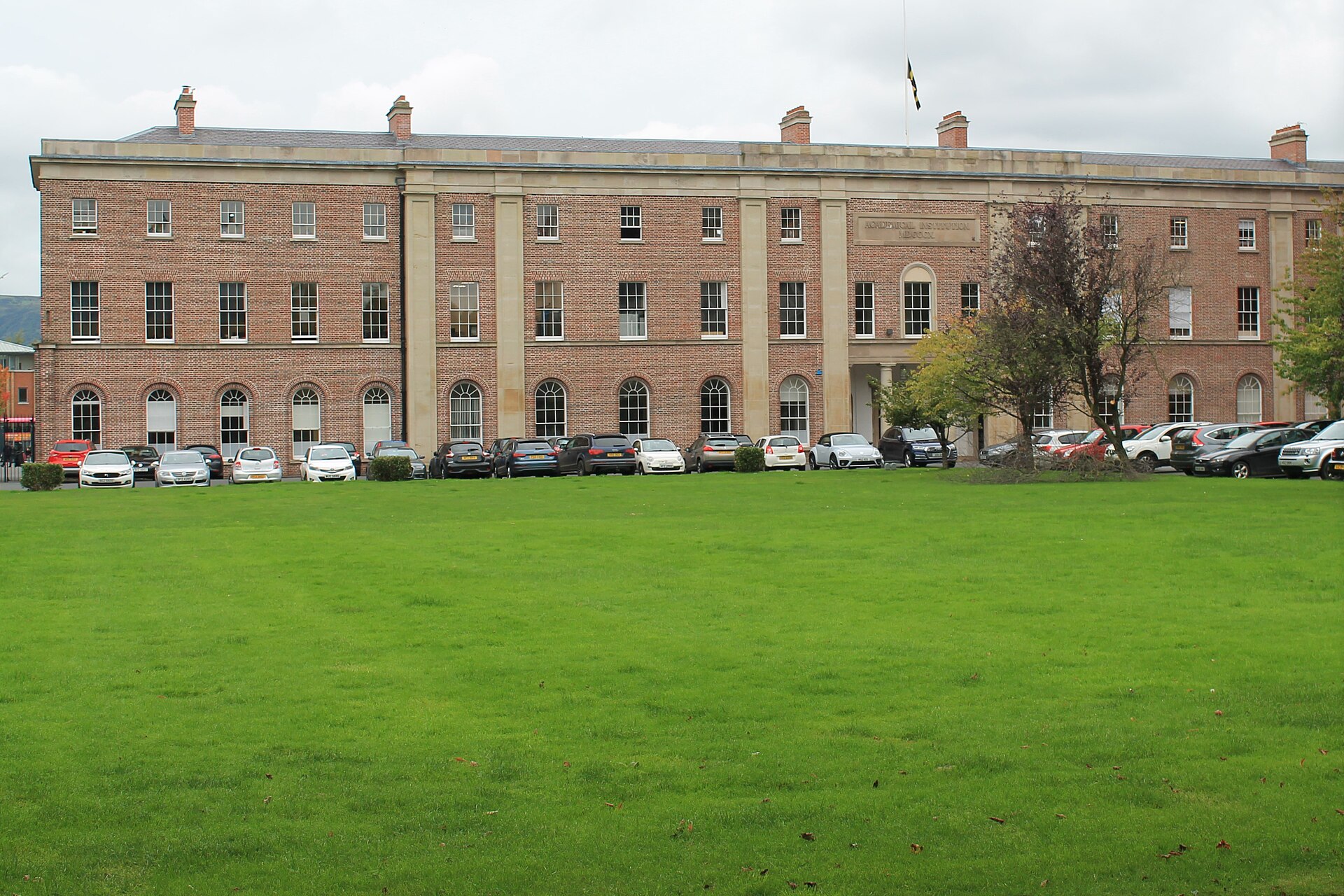
In Belfast, pupils at the Royal Belfast Academical Institution — Inst, one of Northern Ireland's best-known schools — were evacuated "fire drill style" and kept outside until police confirmed it was safe, according to Belfast Live's reporting. The machinery of evacuation worked, because schools drill for it. What no drill can remove is the decision at the top of it — the head teacher who must choose, in minutes, between a morning of chaos and a risk, however small, that this time the email is telling the truth.
The minister's account, and the police's caution
The political account of the email's contents came from Stormont's education minister, Paul Givan, who described the message in stark terms. In the minister's account, the email came from people he described as "Islamists," threatening Sharia law and claiming viable devices had been placed in schools, and was signed off "Allahu Akbar." Givan was equally clear about the official assessment: the threat is not regarded as viable. He condemned the disruption.
Two things about that account deserve care. First, attribution: the wording and sign-off are the minister's account of a message police are still examining; the PSNI's own public description is narrower — a generalised threat, origin outside the UK. Second, content is not credibility. A threat can carry an ideological signature and still be a hoax; indeed, a frightening signature is often the point — it is what guarantees the evacuation. Nothing in Monday's police response suggested officers believed any device existed.
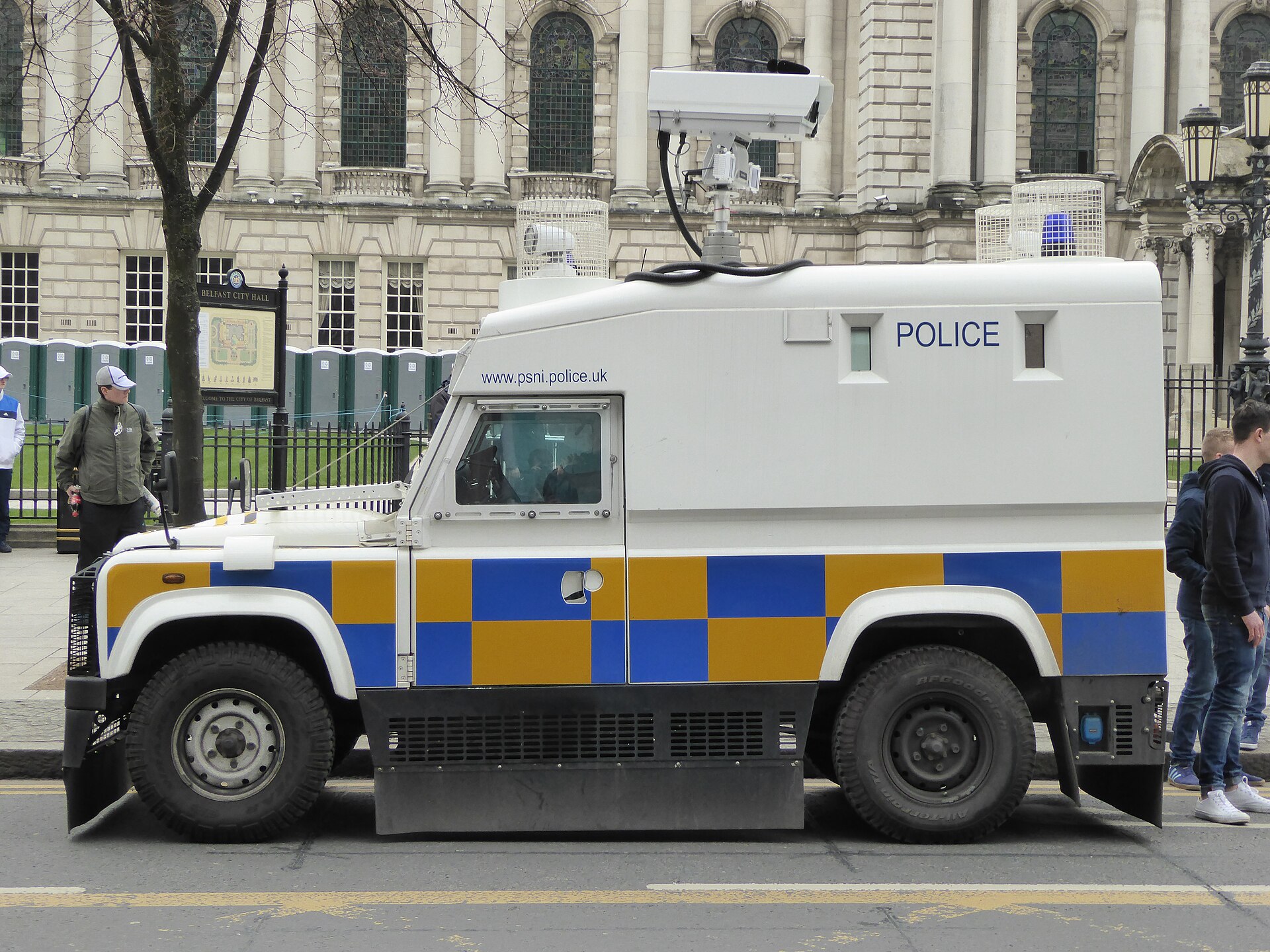
That voice was Assistant Chief Constable Ryan Henderson, who said the PSNI takes the matter very seriously, understood the concern and disruption in communities, and put the risk to the public as low at this stage; the force is working with the Department of Education and the Education Authority to reassure the public, and enquiries are ongoing.
Scotland: hoax, evacuations, reopenings
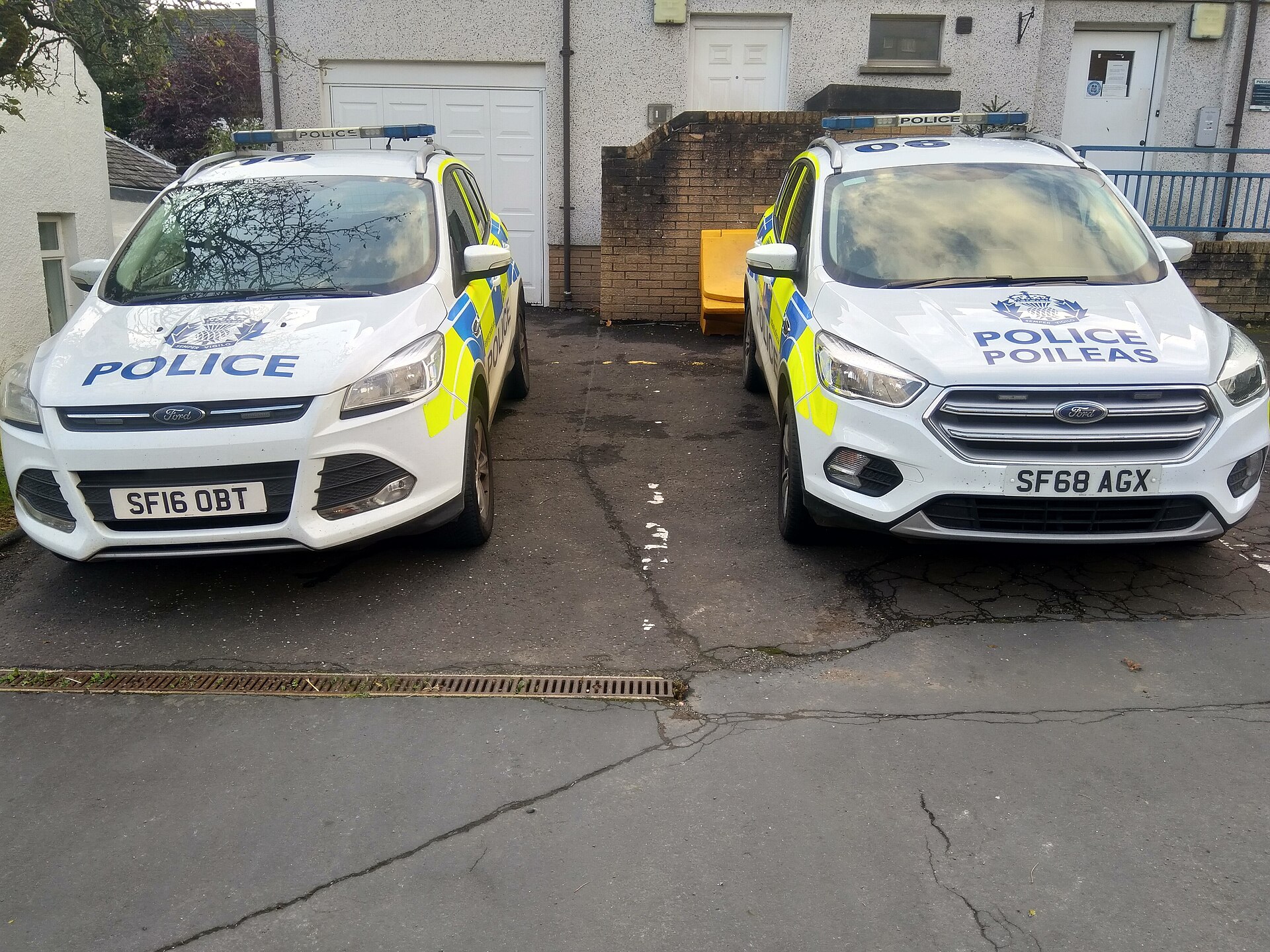
The same morning brought the same decision to Scotland. Police Scotland said it is aware of threatening messages sent to a number of schools across Scotland and is treating them as a hoax, with officers investigating. Some schools around Glasgow were evacuated on Monday morning and have since reopened. The Scottish Government has been informed.
The Scottish disruption came with a wrinkle that limited it: some Scottish pupils were still on holiday, and in some areas Monday was an in-service day, with only teachers in the building. A threat wave landing in a holiday week empties staffrooms rather than classrooms — but every head teacher was answering the same email. Police Scotland has not put a number on how many Scottish schools received the messages, and has announced no devices, no injuries and no arrests.
Why this matters
A hoax bomb threat is the cheapest form of mass disruption ever devised, and Monday's email is a nearly perfect demonstration of the economics. The sender's costs are close to zero: one message, sent from outside the country, copied to hundreds of addresses that schools publish on their own websites so parents can reach them. The costs land everywhere else — on 400 children standing outside St Colman's, on parents who left work to collect them within the half hour, on officers who checked buildings, on teachers who will spend tomorrow restoring a normal week — multiplied by hundreds of schools in two nations at once. The attacker does not need the threat to be believed. The attacker only needs it to be un-ignorable, and where children are concerned, every threat is un-ignorable by design.
That asymmetry is why the response question is harder than it looks. It is tempting to say schools should stay open once police assess a threat as low-risk — and in Scotland, where buildings were checked and reopened within the morning, something like that model operated. But the assessment arrives after the email, not before it, built school by school, check by check. A head teacher deciding at 8:50am does not have the assistant chief constable's mid-morning conclusion; she has an inbox, a building full of other people's children, and advice to treat it as the worst case. Any protocol asking schools to wave threats away in real time asks principals to carry a risk that, if it ever went wrong once, would be unforgivable. Which is why the hoax always wins the morning — the only contestable ground is how much of the day, and the week, it wins afterwards.
What we know, and what we do not
Known: a single emailed message with a generalised threat reached schools across Northern Ireland on Monday morning — up to 300 by the PSNI's count, 160 by the figure Councillor Craig attributed to the Education Authority; similar messages reached schools in Scotland and, police believe, elsewhere in the UK; the email originated outside the UK; searches found nothing untoward anywhere; no devices, no injuries, no arrests announced. Not known: who sent it; whether the UK messages came from the same sender as the European waves of the past fortnight; how many UK schools in total received it; and whether the ideological wording described by the minister reflects the sender's actual motive, a borrowed costume, or a deliberate false flag. On Monday evening, the disruption is fully documented and the author is not documented at all.
A pattern that crossed Europe first
Monday's email did not arrive in a vacuum, and the timeline matters — the lookalike incidents stacking up across Europe are last week's news, not this morning's, and keeping them separate is what separates a pattern from a panic. Last week, around October 14, a similar emailed bomb-threat wave hit more than 150 schools in Hungary, coinciding with a public-sector strike day; Hungarian reporting dwelt on how hard such messages are to trace, pointing to disposable accounts and VPNs, and debated precedents in Czechia, Slovakia and Serbia where foreign involvement has been suspected — debated, note, not established.
Days later, on October 15 and 16, schools in Limerick, in the Republic of Ireland, were threatened; Gardaí investigated, and schools closed briefly or stayed open during checks. And Serbia, which has endured repeated emailed school bomb-threat waves in recent years, saw the pattern again earlier this month, around October 9, with evacuations in Leskovac, Novi Sad and Belgrade — every one false. Serbian officials have previously framed such waves as hybrid-warfare pressure; that is their framing, offered as context for how governments in the region talk about these mornings, not as a verdict on who sent Monday's email.
Read together, the fortnight describes a technique travelling faster than any investigation into it: an emailed threat, an untraceable origin, a school system forced to respond at full seriousness, and a sender never in the building, the city, or — on the PSNI's account — even the country. Whether the waves are connected by one actor, by copycats, or simply by headlines teaching the method is what police in several countries are now trying to establish.
The tracing problem
Why is the sender so hard to find? The ingredients named in Hungarian reporting on last week's wave — disposable accounts, VPN masking, infrastructure outside the jurisdiction — are the standard anatomy of these campaigns, and Monday's message fits the outline: the PSNI said it originated from outside the UK, which puts the key evidence beyond a domestic force's fastest powers. Cross-border requests work, but at the speed of legal process, not of a school morning. And attribution has a second trap: a hoax email's content is evidence of what the sender wanted readers to think, not of who the sender is. An ideological signature can be genuine, imitated, or planted — investigators in the Czech and Slovak cases have held all three open, and the discussion there about suspected foreign involvement remains, as of now, discussion.
The investigation is not hopeless — a campaign that mails hundreds of schools generates hundreds of copies of the evidence. But answers take weeks or months; the next copycat email can arrive tomorrow.
What happens next
The immediate next step is banal and important: school as normal. St Colman's hopes to reopen tomorrow; Glasgow's evacuated schools have already reopened; and every normal day shrinks the hoax's return on its one email. In Northern Ireland, the PSNI's enquiries continue alongside the Department of Education and the Education Authority, and the two unreconciled figures — up to 300 schools, or 160 — should converge as the authority completes its count. In Scotland, Police Scotland's investigation runs in parallel; the open question is whether the UK messages are treated as one investigation or several.
The policy question underneath will outlast the week. Serbia, after repeated waves, moved toward a standardised response protocol — a pre-agreed ladder of checks and decisions, so the burden of the 8:50am choice does not rest on one principal's judgement alone. Monday made the case for something similar in the UK: hundreds of schools, two police forces, two education systems, one email — and a response improvised, bravely and successfully, school by school. The sender of the next email is counting on exactly that improvisation. A protocol that is fast, uniform and boring is the one constructive thing a morning like this can produce.
Related coverage: The bomb threat that emptied New York's Chrysler Building · MI5's chief on Iran, Russia and hybrid threats · Ireland's teachers and the work-to-rule dispute
Sources
- Press Association wire, October 19, 2026, as carried by multiple UK outlets — PSNI: up to 300 schools in Northern Ireland reported the same emailed generalised threat; email originated outside the UK; similar emails believed received by some schools across the UK; checks found nothing untoward. Education Authority aware; the 160-school figure attributed to the authority via Cllr Jonathan Craig.
- Stormont Education Minister Paul Givan, at Stormont, October 19, 2026 (as reported) — his account of the email's contents and sign-off; the threat not regarded as viable; condemnation of the disruption; some schools closed.
- PSNI Assistant Chief Constable Ryan Henderson, October 19, 2026 (as reported) — matter taken very seriously; community concern understood; risk to the public low at this stage; working with the Department of Education and the Education Authority; enquiries ongoing.
- St Colman's Primary School, Lambeg — principal Stephen Baine (as reported): email about 8:50am; PSNI advice to treat as worst case; about 400 pupils and 80 staff evacuated; parents collected children within 30–40 minutes; checks completed; told by PSNI and the Education Authority it is a hoax; hopes to reopen tomorrow.
- Belfast Live, October 19, 2026, via the Irish Sun — Royal Belfast Academical Institution pupils evacuated "fire drill style," kept outside until police confirmed it was safe.
- Police Scotland, October 19, 2026 (as reported by Sky News, Classic FM and others) — threatening messages to a number of Scottish schools treated as a hoax; officers investigating; some Glasgow-area schools evacuated Monday morning and since reopened; Scottish Government informed; some pupils on holiday, some areas on in-service days.
- Context reporting — Hungary: emailed threats to 150+ schools around October 14, 2026, on a public-sector strike day; tracing difficulties (disposable accounts, VPNs); debated Czech/Slovak/Serbian precedents. Republic of Ireland: Limerick school threats, October 15–16, 2026, Gardaí investigating. Serbia: emailed school-threat waves earlier in October 2026 (around October 9; Leskovac, Novi Sad, Belgrade; all false) and in previous years; Serbian officials' hybrid-warfare framing.