Lead
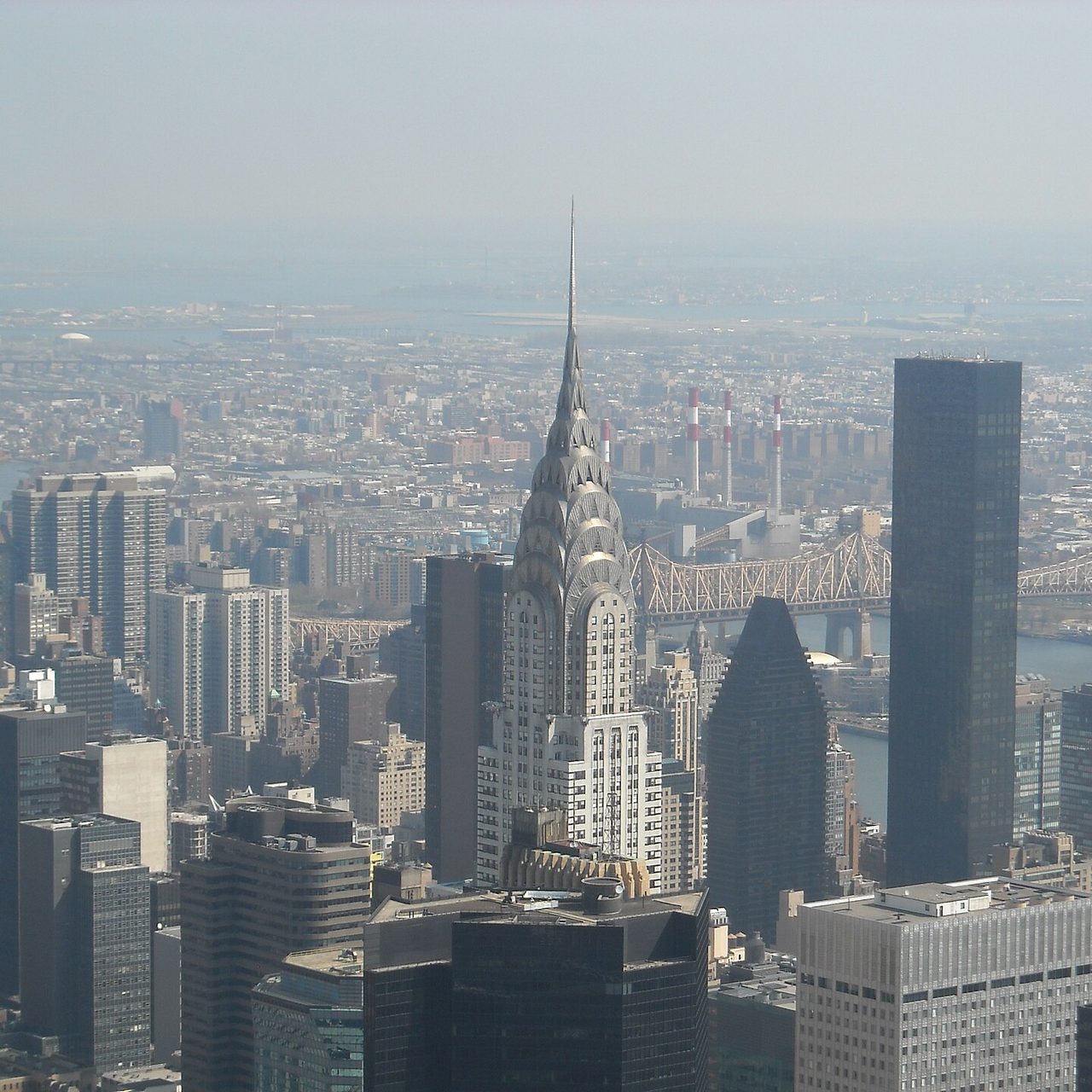
The Chrysler Building, the Art Deco skyscraper at 405 Lexington Avenue in Midtown Manhattan, was evacuated on the afternoon of Tuesday, September 22, after a possible bomb threat prompted a major police response. The New York Police Department shut down 42nd through 44th Streets between Second and Lexington Avenues — the blocks surrounding the 1,046-foot tower — and urged the public to avoid the area while officers investigated what the NYPD described as a suspicious package.
Reuters began livestreaming the scene Tuesday afternoon, showing NYPD Emergency Service vehicles and officers deployed on the streets outside the landmark. According to Fox5NY, the NYPD said the closure covered the streets between Second and Lexington from 42nd to 44th Street, putting the frozen zone just south of the United Nations headquarters, where world leaders are gathered this week for the UN General Assembly. As of publication, police had not said what the package was, where exactly it was found, or whether the threat was credible. No injuries had been reported.
What happened
The first widely visible public alert came Tuesday afternoon when Reuters posted to Threads, about 2:04 p.m. Pacific time (5:04 p.m. Eastern), that the Chrysler Building had been evacuated "due to possible bomb threat," linking to a live YouTube stream titled "LIVE: Chrysler Building in New York evacuated due to possible bomb threat." The stream, carried on Reuters' official YouTube channel, showed a heavy police presence in Midtown East, with NYPD Emergency Service units and officers visible on the street outside the building.
Fox5NY reported that the NYPD attributed the street closures to the discovery of a suspicious package in Midtown East and asked people to stay clear of 42nd through 44th Streets between Second and Lexington Avenue. The station described the story as breaking and said it was not yet known what the nature and origin of the suspicious device was.
The Chrysler Building sits at the corner of 42nd Street and Lexington Avenue — squarely inside the closed-off perimeter. The United Nations headquarters on First Avenue at 46th Street lies only a few blocks to the northeast, and the evacuated tower is in the heart of one of the most security-sensitive stretches of Manhattan during General Assembly week, when dozens of heads of state and government are in the city.
Why it matters
A bomb scare at the Chrysler Building is significant on two counts: the target and the timing. The Chrysler is one of the world's most recognizable skyscrapers — a symbol of New York alongside the Empire State Building and the former World Trade Center. A credible threat against it, even an unconfirmed one, triggers the full weight of the NYPD's counterterrorism and bomb-squad apparatus, and any evacuation of a 77-story office tower ripples through one of the busiest commercial districts on earth.
The timing adds pressure to the response. The threat landed while Manhattan's East Side was already under heightened security for the week's diplomatic events, with street closures, motorcade movements and a visible police presence routine in the district; a bomb threat in the same area layers a real investigation on top of that posture. Each block closed costs commuters, workers and businesses time and money in one of Manhattan's busiest commercial districts.
How the NYPD handles the hours after the initial alert also matters for public confidence. New York has lived through decades of threat response — from the 1993 World Trade Center bombing to the post-9/11 era — and the city's standard practice is to treat every suspicious package as potentially serious until bomb technicians clear it. False alarms and unfounded threats are common; the procedure is designed to err on the side of evacuation.
Background: the building and the city's security posture
Completed in 1930, the Chrysler Building was designed by architect William Van Alen for automaker Walter P. Chrysler. Its 77 stories rise to 1,046 feet including the celebrated steel spire, and it briefly held the title of the world's tallest building until the Empire State Building overtook it in 1931. The terraced crown, decorated with stainless-steel arches modeled on automobile ornamentation, made it the defining example of Art Deco skyscraper design and a designated New York City landmark. The tower has been continuously occupied by office tenants since the Great Depression.
New York's police department routinely closes blocks of Manhattan for suspicious packages and phoned-in threats, and several recent precedents show how these incidents typically play out. In December 2018, the NYPD evacuated CNN's offices at the Time Warner Center in Columbus Circle after a phoned-in bomb threat; police issued an all-clear the same night after determining the threat was not substantiated. Weeks earlier, in October 2018, a package containing an explosive device addressed to former CIA director John Brennan was discovered at that same CNN bureau, part of a nationwide wave of mail bombs sent to prominent political figures — none of which detonated.
The pattern in such cases is consistent: evacuation first, a methodical search by the NYPD Bomb Squad and Emergency Service Unit, street closures to create a safe perimeter, and then either an all-clear or an escalation if a device is found. The department rarely releases details about the threat itself while the investigation is active.
The numbers in context
The closed zone spans three street blocks — 42nd, 43rd, and 44th Streets — between Second and Lexington Avenues, according to police. That includes one of Manhattan's busiest commercial intersections, 42nd Street and Lexington Avenue, adjacent to Grand Central Terminal and the Grand Central–42nd Street subway station, one of the busiest transit hubs in the United States.
The Chrysler Building itself stands 1,046 feet tall across 77 floors — a scale that makes any full evacuation a major logistical operation. The UN headquarters sits less than half a mile north of the evacuated tower. Officials have not linked the threat to the United Nations or to any diplomatic event.
That geography helps explain the size of the police response: in Midtown Manhattan, even a single-block closure during the evening rush affects transit, delivery traffic, and emergency-vehicle routing across the surrounding grid. The evacuation came on the same day President Donald Trump addressed the UN General Assembly. Officials have not connected the threat to that address, to the Assembly session, or to any motive; no such link has been announced.
What is still unknown
Several core facts remained unconfirmed at publication. Police had not said when the threat was first reported, how it was received — a phone call, a found package, or another means — or where exactly the suspicious item was located. The NYPD had not announced an all-clear, had not said whether the Bomb Squad found any device, and had not characterized the threat as credible or a hoax. No injuries had been reported in any account, and no arrests had been announced.
It is also not known whether the incident is connected to the broader security posture around General Assembly week or is an isolated event. Authorities had not publicly linked the threat to any person, group, or motive, and any such linkage would be speculative at this stage.
What happens next
The immediate next steps follow standard NYPD protocol. Bomb Squad technicians will search the building and the surrounding area, likely with the assistance of explosive-detection dogs and, where warranted, robotic equipment. If no device is found, the department typically issues an all-clear and reopens the streets in stages, allowing evacuated occupants to return. If a device or credible threat is identified, the perimeter stays in place while investigators work — and the FBI's Joint Terrorism Task Force would normally become involved in determining the threat's origin.
New York law treats false bomb threats seriously: making a terroristic threat or falsely reporting an incident is a criminal offense, and prosecutions follow when the source is identified. In past hoax cases, the NYPD has pursued charges once investigations conclude.
For now, the practical advice from police stands: avoid 42nd through 44th Streets between Second and Lexington Avenues, expect transit and traffic delays around Grand Central and Midtown East, and rely on official NYPD and city channels for updates rather than unverified social-media claims. Signal Post News will update this story as officials release confirmed information.
Sources and reporting notes
- Reuters official YouTube live feed, Sept 22, 2026: "LIVE: Chrysler Building in New York evacuated due to possible bomb threat"
- Fox5NY, Sept 22, 2026: NYPD says suspicious package found in Midtown East; 42nd–44th Streets between Second and Lexington shut down
- Reuters Threads post, Sept 22, 2026 (~2:04 p.m. PDT): first widely visible public alert of the evacuation
Reporting cutoff: September 22, 2026, 2:30 p.m. PDT. The exact time the threat was reported to police, the means by which it was received, the location and nature of the suspicious package, the evacuation's full scope, and the investigation's outcome had not been confirmed by officials at publication. The Chrysler Building's address, architect, completion date, height, and landmark status are established public facts. The December 2018 Time Warner Center evacuation and the October 2018 mail-bomb packages are documented precedents cited for context only.