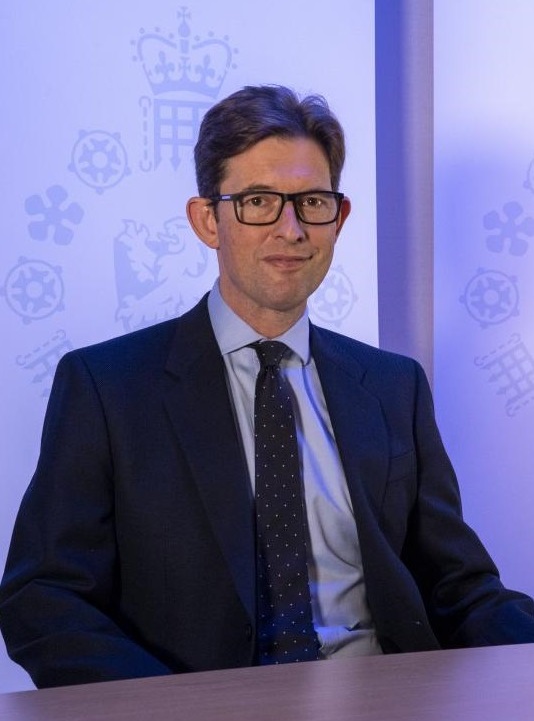
MI5 chief McCallum Iran Russia hybrid threats: in his annual threat speech, Sir Ken McCallum said hostile-state activity against Britain has quadrupled in a decade — and that his service now spends more on it than it did during the Cold War.
UK security / MI5 chief warns Iran is aiming at harder targets as Russia wages hybrid war

Russia is "aggressor number one" against Britain and is escalating "hybrid" warfare carefully calibrated to stay below the threshold that would trigger a direct NATO response, MI5 Director General Sir Ken McCallum said on Tuesday in his annual speech on the threats facing the United Kingdom. Iran, he said, is subcontracting violence on British streets through criminal proxies — and has begun, in the year's most significant shift, to aim at harder targets such as military sites. Both Russia and Iran deny any involvement in hostile activity in Britain, and McCallum's speech is an assessment by Britain's domestic security service, delivered at its Thames House headquarters, rather than a court finding. But the numbers he attached to it describe a workload his organisation has not carried in a generation.
Track it live: live wars and conflicts tracker
State threats, McCallum said, have quadrupled over the last decade. MI5 now devotes more resources to countering hostile states than it did during the Cold War, and its state-threat and terrorism missions are now of roughly equal scale. That single comparison frames the speech: the post-Cold War assumption that Britain's security service would mostly chase terrorists and lone actors is over, replaced by what McCallum presented as a long contest with states that have learned to act through other people's hands.
Russia: fewer spies, more proxies
McCallum's account of Russia began with a British success and its unintended consequence. Since Russia's full-scale invasion of Ukraine, about 1,000 Russian officials have been expelled from embassies across Europe and beyond, dismantling much of Moscow's traditional covert footprint. Deprived of its own officers, he said, Russia now relies on native volunteers and criminal proxies to do its work — people recruited, often online and often for money, to carry out arson, sabotage, surveillance and violence. He pointed to an attempted drone attack on a cargo plane at a German airport and a cyber attack on Polish energy infrastructure as examples of the pattern: deniable, disruptive, and kept deliberately short of the conventional conflict that would unite NATO against Moscow.
The strategic logic he described is attrition by nuisance. Russia's military progress in Ukraine has been minimal and, in his words, horrifically costly, and unsettling Ukraine's allies at home is a cheaper way to apply pressure than battlefield gains. His verdict on the proxy turn was pointed: a great power with the strategic upper hand, he argued, does not need to pay criminals to light fires. The counter-argument, made consistently in Moscow, is denial itself: Russia rejects involvement in hostile acts in Britain and other Western countries, and treats Western expulsions and accusations as part of the confrontation rather than a response to one. No independent public evidence was presented with the speech for the specific German and Polish examples; they stand as the assessment of Britain's security service, echoing similar conclusions published by other European agencies.
Iran: subcontracted violence, harder targets
The Iran section of the speech described a campaign that has grown in both volume and ambition. Iran, McCallum said, is using criminal proxies in Britain to target opposition activists and dissidents, Iranian media organisations and Israeli sites. Operations connected to Iran have produced more than 50 arrests in the United Kingdom over the last 12 months, many of them aimed at Jewish communities, including a wave of arson and sabotage attacks. The method mirrors the Russian one — cut-outs instead of officers, so that Tehran can deny direction — but the target list, running from community institutions to, increasingly, the state itself, is what has changed.
"The year's major shift," in McCallum's summary, is "Iranian ambitions to come at harder targets, like military sites." That phrase carries weight because of what it implies about intent: plots against dissidents and community targets are intimidation; activity directed at military installations is preparation of a different kind, closer to the opening moves of a conflict than to harassment. Tehran rejects the accusation of malign activity in Britain, including any involvement in the Fairford incident discussed below, and denies directing plots against dissidents or Jewish and Israeli targets. Britain's position, restated on Tuesday, is that the arrests and disrupted plots speak for themselves — though the prosecutions arising from them, where they proceed, will be the forum in which the evidence is actually tested.
Fairford: the question he would not answer
Hovering over the speech was the incident McCallum pointedly declined to discuss. On Monday, Prime Minister Andy Burnham said Tehran was "highly likely" behind a suspected plot against RAF Fairford in Gloucestershire, the air base used by US bombers carrying out strikes on Iran. The suspected plot prompted a major security alert and led President Donald Trump to withdraw American planes from the base. Asked about Fairford on Tuesday, McCallum said he could not address it directly because of the live investigation and the risk of prejudicing future prosecutions — but he added that the incident is not unique, that there have been other examples in the United Kingdom and around the world, and that those behind such plots would meet an unflinching response from the British state.
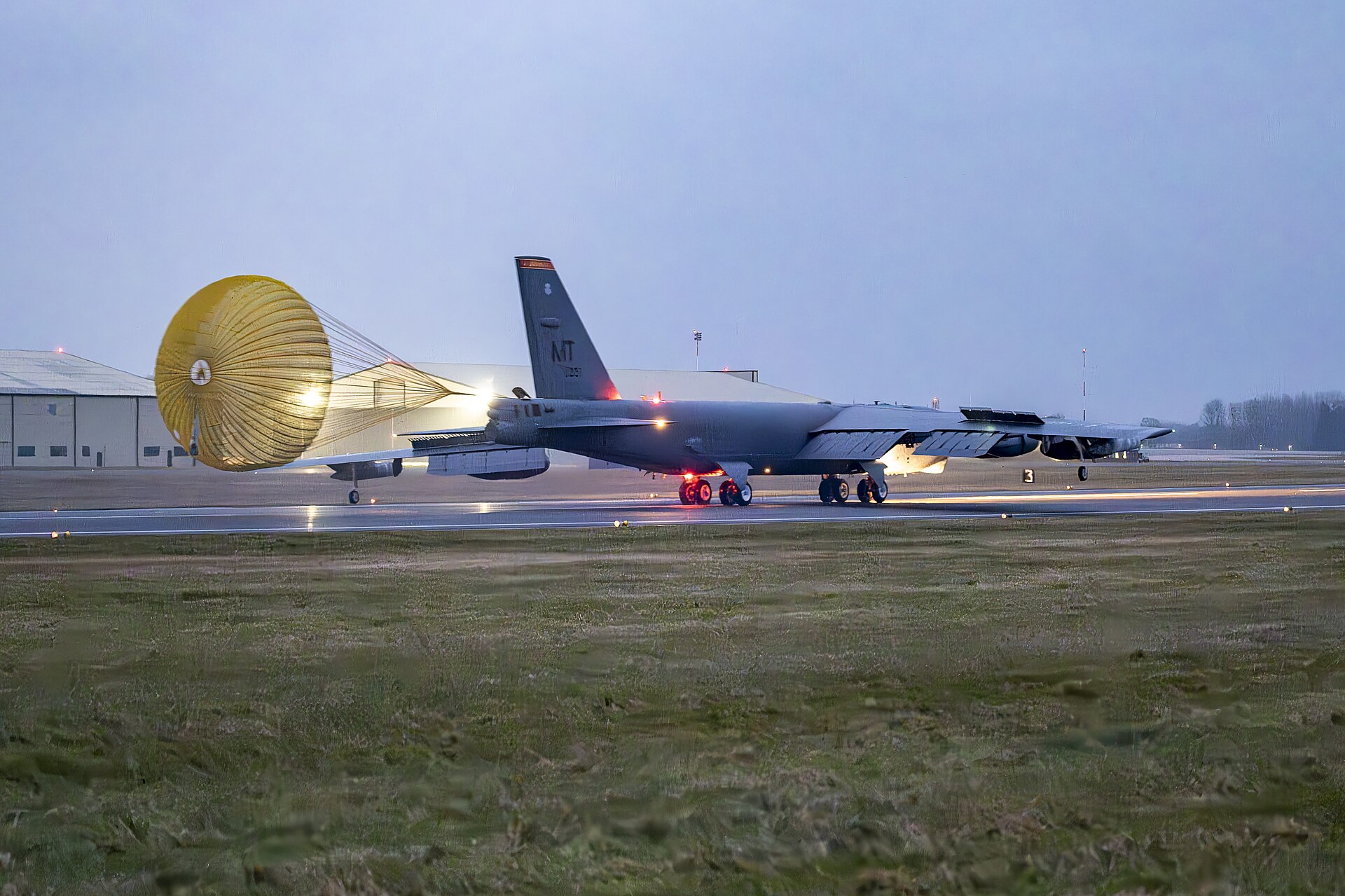
Signal Post News has covered the Fairford sequence in detail, from the prime minister's attribution and sanctions response to the arrest of a British-Iranian man in Westminster in connection with the alleged plot. The important discipline, which McCallum's refusal to comment itself underlined, is that suspicion, attribution and proof are three different things. The British government has attributed; Iran has denied; the criminal process, where charges exist, will decide what can be proven. McCallum's "not unique" remark, deliberately unspecific, was the speech's way of telling the public that Fairford should be understood as one instance of the pattern he was describing, not as an isolated scare.
The third actor: artificial intelligence
The most quoted passage of the speech may prove to be the one about neither Russia nor Iran. AI, McCallum said, is "supercharging the cybersecurity contest" between attackers and defenders, producing tailored propaganda aimed at individuals, and MI5 has already caught attackers using it to improve their reconnaissance and methods. AI-enabled drones add a further challenge. His greatest concern about misuse, however, was biological: that terrorists could use AI assistance to develop bioweapons, or even to create novel pathogens — a risk he described as not yet realised, but the one to which he attached the greatest weight.
Beyond misuse, he raised the technology itself: "human history has given us no experience of facing an actor which is smarter than we are... This is genuinely novel." Coming from the head of a service whose professional habit is understatement, the line was a marker of how far the debate inside Western security agencies has moved — from AI as a tool that makes existing threats faster, to AI as a category of risk in its own right. Reporting of the speech also described new institutional machinery being built inside MI5 to assess AI threats, and it is notable that the annual speech, which in past years led on Islamist terrorism and then on state threats, now treats machine intelligence as a standing third pillar of the threat picture.
The rest of the picture, and what it costs
The speech was not only about Moscow, Tehran and machines. McCallum also pointed to a significant increase in extreme right-wing terrorism, linked in his account to anti-immigration and anti-Muslim grievance tipping into terrorist intent, and to the continuing espionage threat from China. The breadth matters because it explains the resource argument running underneath the whole address: a service whose state-threat caseload has quadrupled while its terrorism mission has not shrunk is a service asking — of government, and of the public — to be funded and staffed for a permanently higher tempo. He presented the heightened alert level as the new normal, planned for on the basis that these risks will endure, whatever happens in Ukraine: a long-haul contest, not an emergency with an end date.
Why this matters beyond Britain
McCallum's description of hybrid warfare is not a British peculiarity; it is the operating picture across Europe and North America. The proxy model — expelled intelligence officers replaced by recruited criminals, gig-economy vandals and online volunteers — challenges legal systems built for a world of spies and soldiers: the person who sets the fire may have no ideology, no handler they have met, and no knowledge of who ultimately paid them. The Iranian shift toward military sites raises a sharper question for every country hosting US forces in the Iran conflict: at what point does subcontracted sabotage against a base become an act of war, and who decides, when the hand that lit the fuse was hired through a phone? And his AI warning lands in legislatures far from London that are still drafting their first rules for the technology.
Both accused states reject the speech's premises. Russia denies hostile activity in Britain and across the West; Iran denies directing violence in Britain and rejects the Fairford attribution. Those denials are part of the record and are stated here as McCallum stated his case. What cannot be denied is the arithmetic in the middle of the speech — a quadrupled state-threat caseload, more resource than the Cold War required, more than 50 Iran-linked arrests in a single year — because those are measures of MI5's own activity, not of anyone's intentions. Britain's spy chief has described the world as he says it now is: two states working through other people's hands, and a technology that may one day work through no one's. The prosecutions, the expulsions and the funding decisions of the next year will show how much of that description the rest of the state acts on.
Related coverage: Burnham attributes the RAF Fairford plot to Iran's IRGC as sanctions follow · British-Iranian man arrested in Westminster over the Fairford Iran plot