U.S. · Nuclear Safety · South Carolina
Savannah River Site emergency: a fire in a single room at the Savannah River National Laboratory triggered an “unfiltered ground-level radiological release,” a Site Area Emergency declaration and an FAA airspace closure — and officials say there is no indication of any consequence beyond the site’s boundaries.
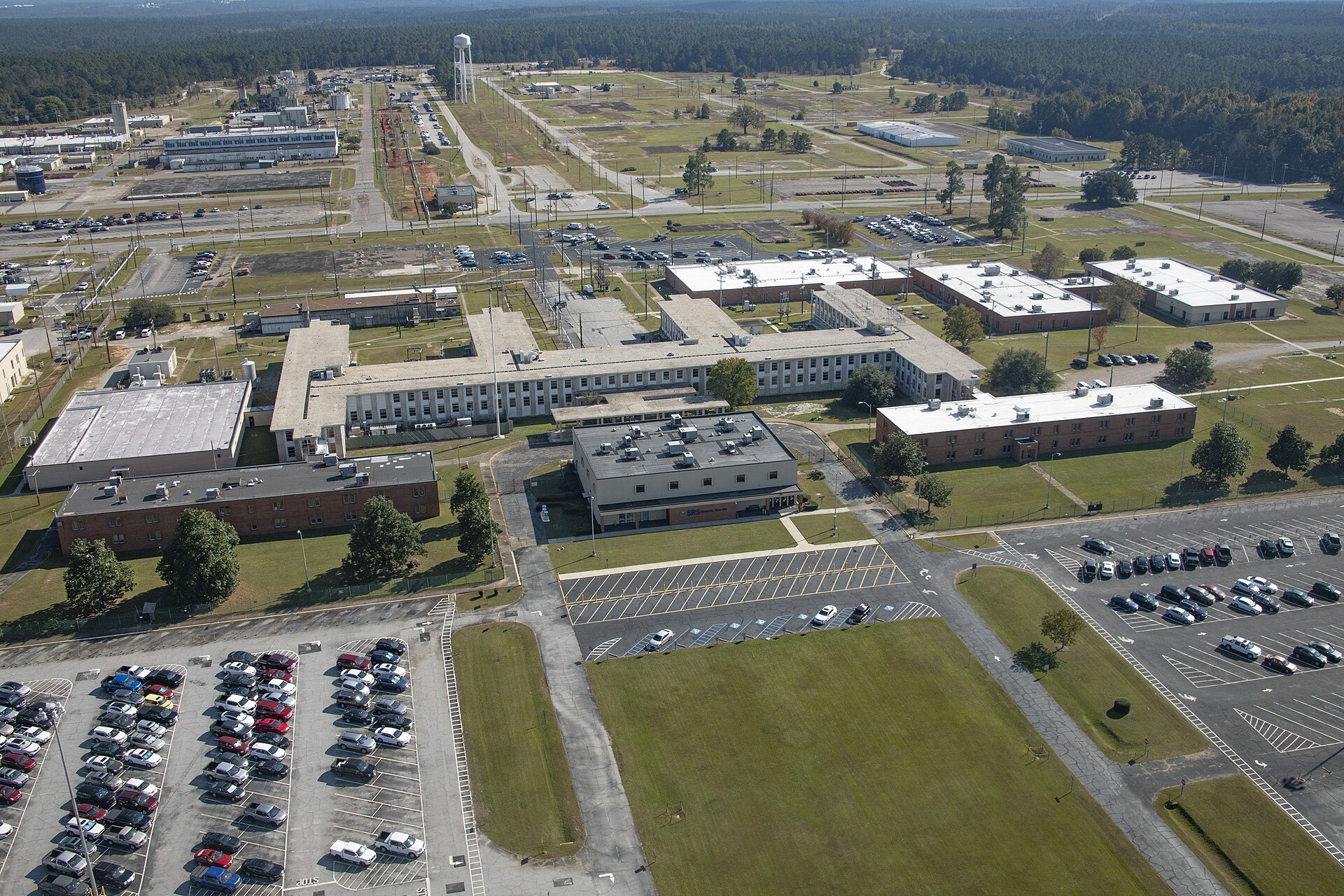
AIKEN, South Carolina — The Department of Energy’s Savannah River Site declared a Site Area Emergency on Wednesday, October 28, 2026, after a fire in a single room at the Savannah River National Laboratory, in the site’s A Area. Site officials told WRDW that there had been an “unfiltered ground-level radiological release” from the fire. The fire has been extinguished.
The words in that first official account deserve to be read carefully, because they contain both the seriousness of the event and its limits. A radiological release described as “unfiltered” and “ground-level” means radioactive material escaped the laboratory’s normal containment and filtration path at ground level, rather than being captured by filters or discharged through a monitored stack. That is a real event, and it is why the site reached for the second-highest rung on its emergency ladder. But the same officials were equally specific about what has not been found: no contamination has been reported outside the affected facility, and no protective actions have been recommended for anyone off the site.
The site’s own first formal statement, News Release #1, published on its public information page at 6:21 p.m. Eastern Time, put it this way: “at this time, there is no indication of a consequence beyond the Savannah River Site boundaries.” Nothing in the verified record supports anything more alarming. There has been no meltdown, no explosion and no report of deaths or injuries. There has been a fire, now out, in one room of one laboratory, a release whose size and composition are not yet public, and a large, deliberate emergency response. This article keeps those proportions.
The airspace closure, and what “nuclear incident” means in an FAA notice
The element of Wednesday’s response most likely to alarm a casual reader is the one that sounds the most dramatic: the Federal Aviation Administration issued a Temporary Flight Restriction closing the airspace over the Savannah River Site, and the notice cited a U.S. government “nuclear incident.” That phrase travelled fast on social media, stripped of its context. It needs its context back.
“Nuclear incident” in an FAA notice is standard hazard wording — the pre-written category language the agency uses when it restricts airspace around a federal nuclear facility during a declared emergency. It is a label for the type of site and the reason for the closure, not a finding that a nuclear accident of any particular severity has occurred. Airspace is closed around declared emergencies at sensitive federal sites as a matter of routine precaution: it keeps sightseeing aircraft, drones and news helicopters out of the way of responders, and it removes any chance of an aircraft complicating monitoring or security while officials establish what happened. The closure is evidence that the emergency declaration was made and taken seriously. It is not, by itself, evidence about the size of the release.
The same pattern — a technical phrase escaping into public view without its technical meaning — has shaped nuclear scares before. The gap between what officials say and what the public hears is widest in the first hours, which is precisely why the measured parts of Wednesday’s record matter: the fire is out, the release is described as confined in its effects to the affected facility, and the site’s own statement reports no indication of consequences beyond its boundaries.
What happened on the ground, late Wednesday afternoon
The declaration came late Wednesday afternoon, Eastern Time. Emergency dispatch traffic recorded the declaration at 5:07 p.m. ET, at classification SAE 1.3, with winds reported from the east at about 8.8 miles per hour; one published report gives a declaration time of 5:39 p.m. ET, and because the sources differ, the exact minute should be treated as unsettled until the site publishes its own timeline. Wind direction is not a decorative detail in a radiological event: a ground-level release travels with the wind, and an easterly wind carries material toward the western side of the site — one of the first facts responders use when they decide where to monitor and whether anyone off-site needs to act. On Wednesday, officials’ answer to that second question was no.
Inside the fence, the response followed the script written for exactly this classification. Employees in A Area sheltered in place behind barricades for about 30 minutes, and were then allowed to leave. Entrances to the site were closed to incoming traffic. Rail, river and air traffic in the vicinity were restricted, WRDW reported via WFB News — a precaution with real geography behind it, since the site sits on the Savannah River, which forms the South Carolina–Georgia border, and rail lines and the river are working transport corridors, not abstractions.
What is not yet known is a list the site will have to answer in the days ahead: what caused the fire, what material was released and in what quantity, and whether anyone was hurt. On Wednesday evening, none of those questions had a public answer. Cause, material released and injuries were all, in the careful language of the first reports, not immediately known — and no deaths or injuries had been reported by any source.
The emergency ladder: Alert, Site Area Emergency, General Emergency
To judge Wednesday’s declaration, it helps to know the scale it sits on. The Department of Energy classifies emergencies at its nuclear sites on a rising ladder. The lowest rung is an Alert: an event that has reduced, or could reduce, the level of safety at a facility, where any release is expected to stay small and confined near the site. Above that sits a Site Area Emergency — the classification declared on Wednesday. A Site Area Emergency means an event has caused, or is likely to cause, a major failure of the systems meant to protect workers and the public; releases can be expected near the site, but are not expected to cross the site boundary in amounts requiring protective action off-site. The top rung, a General Emergency, is reserved for events involving actual or imminent substantial core damage or a loss of control of a facility, where releases can reasonably be expected to exceed protective-action guidelines beyond the boundary — the classification that triggers sirens, sheltering and evacuation recommendations for neighbours.
Wednesday’s event was declared at the middle rung, not the top one, and everything officials said afterwards was consistent with that placement: a serious failure inside one facility, a release at ground level, and monitoring that found no call for action beyond the fence. The ladder exists so that a declaration is information rather than theatre: it tells surrounding counties, the states of South Carolina and Georgia, and federal agencies exactly which playbook to open. On Wednesday, the playbook that opened was the contained one.
A Cold War weapons site, now a cleanup and research reservation
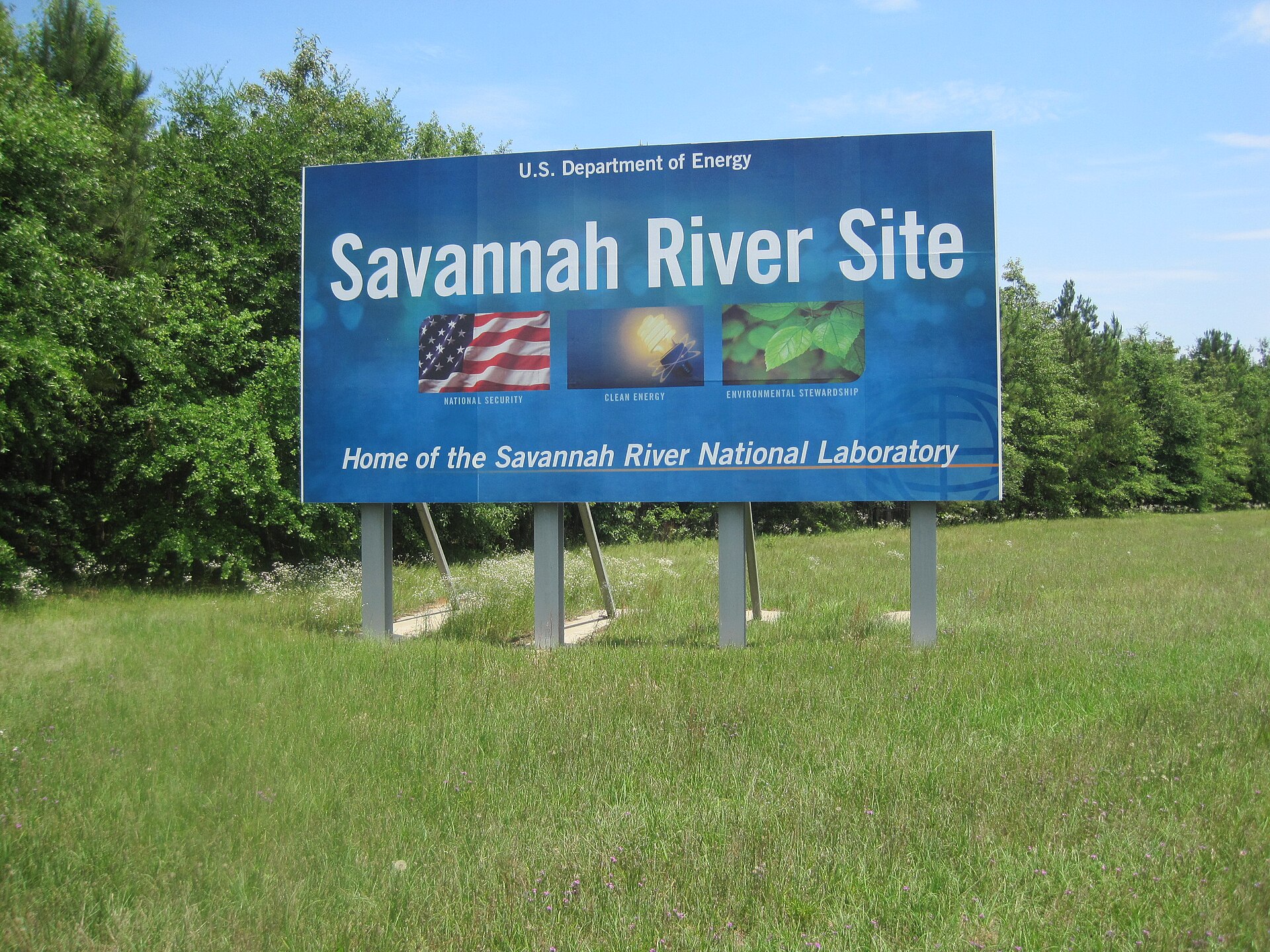
The Savannah River Site is not a power plant. It generates no electricity, and its ~310 square miles of pine forest and swamp along the Savannah River in western South Carolina were set aside in the early 1950s for a different purpose: producing the plutonium and tritium at the heart of the United States’ nuclear weapons during the Cold War. Its reactors and separation plants made materials for the arsenal for four decades, and the work left behind one of the most complex environmental legacies in the federal system — high-level waste in underground tanks, contaminated facilities awaiting demolition, and groundwater plumes that will be managed for generations.
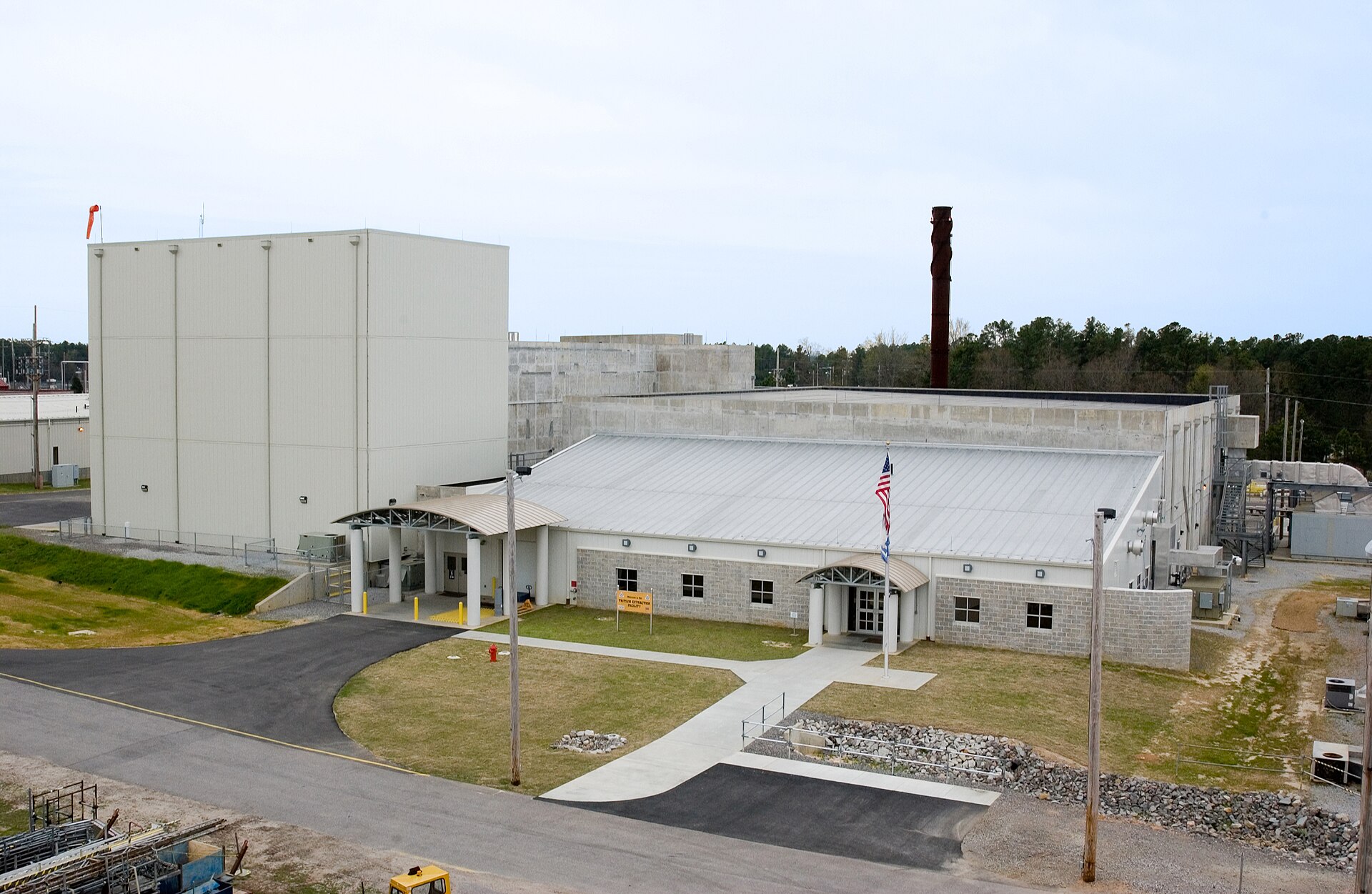
Today the site’s missions are nuclear materials management, environmental cleanup and research. The Savannah River National Laboratory, where Wednesday’s fire occurred, is the Department of Energy’s environmental-management laboratory — the lab whose scientists work on the cleanup itself: waste treatment, materials disposition, environmental remediation and the science of handling exactly the substances the site was built to make. A fire there is therefore not a fire at a random federal building. It happened inside the institution charged with understanding this site’s hazards better than anyone, which is one reason the response was swift, formal and public.
Why this matters
The first reason this matters is the simplest: the United States runs a network of ageing Cold War nuclear sites whose hazards did not retire when the Cold War did. The materials at Savannah River — tritium, plutonium, high-level waste — are measured in half-lives, not news cycles, and the buildings that house them are, in many cases, older than the people who work in them. A single-room fire that produces an unfiltered release is, on Wednesday’s evidence, a contained event. It is also a reminder that containment is a daily achievement of maintenance, monitoring and people, not a permanent property of a place. The plutonium economy of the last century keeps surfacing in the news in smaller ways too — from legacy contamination to criminal cases like the Massachusetts man who pleaded guilty to selling Russian plutonium by mail — because the materials themselves are still here, still dangerous, and still demanding competent custody.
The second reason is about trust, and it cuts in officials’ favour this time — with a caveat. The early record of this event is unusually disciplined: a named classification, a named phenomenon (“unfiltered ground-level radiological release” is not public-relations language; it is a technical admission that the normal filtered pathway was bypassed), a numbered news release with a plain statement of what monitoring had and had not found, and no protective actions recommended beyond the fence. Compare the information environment around genuinely dangerous nuclear situations, such as the repeated drone attacks near the Zaporizhzhia nuclear plant, where every statement arrives contested. At Savannah River, the problem on Wednesday was not contested facts but frightening vocabulary — and vocabulary, unlike radiation, can be corrected in real time, as this article is attempting to do.
The caveat is the part of the record that is still blank. A release described but not quantified leaves the public doing arithmetic it cannot finish. What material, how much, and over how long are the questions that determine whether Wednesday is remembered as a footnote or a scandal, and they are precisely the questions the site has not yet answered. The credibility the site banked with a prompt, technical first statement will be spent or confirmed by the speed and specificity of the follow-up: monitoring results with numbers, a cause, and an accounting of any doses to workers. South Carolina and Georgia residents who live downwind of a 310-square-mile nuclear reservation are owed that arithmetic, and history suggests they will ask for it.
What happens next
The immediate questions are procedural. The FAA restriction will stay in place for as long as the site and the agency judge it necessary; its lifting will be one of the clearest public signals that the emergency phase is over. The site owes a sequence of follow-up releases: confirmation of what monitoring off the facility, and off the site, actually measured; the identity and quantity of the material released; the fire’s cause; and the condition of the room and its systems. A Department of Energy investigation into a fire with an unfiltered release at its environmental-management laboratory is a near-certainty, and its findings will be read closely in Aiken County and across the river in Georgia.
For now, the verified record is narrow, and it should stay narrow until officials widen it with facts. A fire broke out late Wednesday afternoon in a single room of the Savannah River National Laboratory and is out. Site officials reported an unfiltered ground-level radiological release from that fire. A Site Area Emergency — the middle rung of the DOE ladder — was declared; workers sheltered briefly and went home; the FAA closed the airspace under standard “nuclear incident” wording; and the site’s first formal statement reports no indication of consequences beyond its boundaries and recommends no protective action for anyone off-site. No deaths or injuries have been reported. What was released, and why the room caught fire, are questions for the releases that follow.
Sources: Savannah River Site, News Release #1, published on the site’s public information page (public.srs.gov), Wednesday, October 28, 2026, 6:21 p.m. ET — the Site Area Emergency, the fire at the Savannah River National Laboratory, and the statement that “at this time, there is no indication of a consequence beyond the Savannah River Site boundaries”; WRDW News 12 (Aiken/Augusta), reporting site officials’ account of an “unfiltered ground-level radiological release,” the extinguished fire, the absence of reported contamination outside the affected facility, the sheltering of A Area employees, gate closures and rail, river and air restrictions (via WFB News); Savannah River Site emergency announcement via @SRSNews, October 28, 2026; Federal Aviation Administration, Temporary Flight Restriction notice for the Savannah River Site, October 28, 2026; emergency dispatch traffic as reported Wednesday evening (declaration recorded 5:07 p.m. ET, classification SAE 1.3; one published report gives 5:39 p.m. ET — the exact minute is unsettled). No deaths or injuries had been reported by any source at publication.