Jacob Miller plutonium guilty plea

The Jacob Miller plutonium guilty plea closes one of the strangest nuclear smuggling cases in American history. Jacob D. Miller, 44, of South Hadley, Massachusetts, pleaded guilty this week to importing plutonium from Russia and selling it — along with the highly toxic metal thallium — to customers across the United States and abroad, shipping the radioactive material through the U.S. mail in violation of federal hazardous-materials law.
Miller pleaded guilty to five federal counts: being a felon in possession of ammunition, being a felon in possession of explosive materials, importing nuclear material without lawful authority, mailing hazardous materials, and possession of child pornography. He was arrested on April 9, 2025, indicted by a grand jury on April 17, and has remained in federal custody ever since. U.S. District Court Judge Mark G. Mastroianni scheduled sentencing for January 21, 2027.
Why this matters
Plutonium is not a substance that is supposed to travel by post. It is a radioactive metal that can fuel nuclear weapons, and it is a deadly poison if inhaled, ingested, or absorbed through an open wound. Federal law treats it accordingly: importing nuclear material without authority and mailing hazardous substances are serious felonies, each carrying up to 20 years in prison. That this material moved through the ordinary mail stream — past letter carriers, sorting facilities, and delivery trucks — for more than four years is the fact that gives this case its weight.
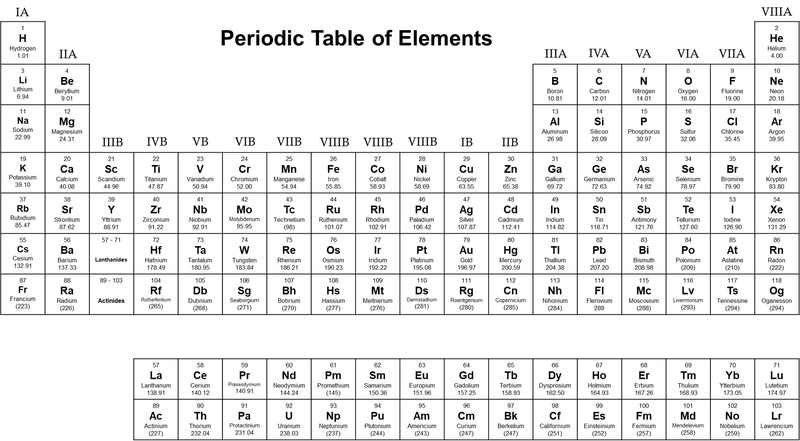
The case also exposes an uncomfortable gap between the nuclear regulatory world and the internet marketplace era. Miller did not run a clandestine lab or a dark-web operation. He ran a business with a name — “Collect The Periodic Table” — sold through a mainstream third-party retailer, and advertised his plutonium openly as a “Cold War Era Detector Source” supposedly derived from Soviet smoke detectors. The brazenness is part of the story: the scheme worked, prosecutors say, for 51 months, reaching roughly 67 buyers, before the April 2025 search of his home ended it.
There is a public-safety dimension that goes beyond one defendant. Every package Miller mailed put postal workers and anyone handling the parcel at risk, and every buyer who received plutonium by mail now holds radioactive material obtained outside every safeguard the nuclear regulatory system was built to provide. The guilty plea answers what happened; the harder question — how many similar sellers are operating right now — remains open.
How the scheme worked
According to the U.S. Attorney’s Office for the District of Massachusetts, Miller imported plutonium from Russia and arranged for it to be mailed to his residence in South Hadley, a town just outside Springfield. From there, he sold samples through his business, Collect The Periodic Table (CTPT), both directly and through the online marketplace Bonanza.
Between December 30, 2020, and March 31, 2025, Miller sold plutonium to approximately 67 customers in the United States and abroad, prosecutors said. He shipped the material through the U.S. Postal Service even though its hazardous nature prohibited it from being sent that way. He also sold thallium — an extremely toxic heavy metal that is odorless, tasteless, and slow-acting — to 71 customers across the country.
The marketing was disarmingly ordinary. An affidavit cited by prosecutors said Miller’s website advertised “Plutonium (Cold War Era Detector Source),” purporting that the material came from Soviet-era smoke detectors, which historically used tiny amounts of radioactive material. Whether every sample matched that description is beside the legal point: none of it was his to import or mail, and as a convicted felon he was barred from possessing the ammunition and explosive materials investigators later found alongside it.
A two-decade paper trail
Miller’s guilty plea did not come out of nowhere. Prosecutors described what they called a “long-standing and unlawful obsession with explosives, dangerous chemicals and radioactive substances dating back to at least 2002.” That year, a search of his residence turned up what authorities described as an apparent rocket launcher, a pipe bomb, and video of Miller setting off improvised explosive devices.
On February 9, 2004, Miller was convicted in Massachusetts state court of possessing child pornography and possessing an explosive device. A decade later, in 2014, the Massachusetts Radiation Control Program sent him a cease-and-desist letter over the alleged sale of depleted uranium on eBay — an early warning that his element business was crossing regulatory lines. Neighbors told investigators they watched him use black powder “to ignite a fireball and detonate a dishwasher in his backyard” in 2023.
Each episode, viewed alone, might look like the record of an eccentric hobbyist. Viewed together, prosecutors argued, they form a pattern: a man repeatedly warned, repeatedly undeterred, escalating from fireworks-grade mischief to the international movement of weapons-usable nuclear material.
The charges and the plea
The five counts Miller admitted break down into three baskets. First, the nuclear counts: importing nuclear material without lawful authority and mailing hazardous materials — the core of the plutonium scheme. Second, the felon-in-possession counts: ammunition and explosive materials, which Miller was barred from holding because of his 2004 felony convictions. Third, possession of child pornography, after investigators found child sexual abuse material on his laptop and cell phone — material authorities said he had accessed as recently as the day before the April 2025 search.
The April 8, 2025, search of Miller’s South Hadley home recovered a half-dozen rifles, bottles of explosive powder, ammunition, hazardous chemicals, and plutonium. Miller’s attorney, Charles Dolan, did not respond to requests for comment when the plea was announced. The pleas were entered under an agreement with the U.S. Attorney’s Office; because of his prior felonies, the nuclear-material count and the child-pornography count can each carry up to 20 years in federal prison.
U.S. Attorney Leah Foley, whose office prosecuted the case, said Miller “imported plutonium from Russia and arranged for it to be mailed to him at his residence,” then resold it for more than four years. The sentencing hearing before Judge Mastroianni on January 21, 2027, will determine how much of the maximum the court imposes — and whether the sentences run consecutively.

Two views of the case
The prosecution’s case
For the government, this is a straightforward story of a repeat offender who exploited regulatory blind spots. The charges stack cleanly: the importation was unlawful, the mailings were unlawful, the possession of weapons and explosives was unlawful for a felon, and the child sexual abuse material added a further felony. Prosecutors emphasized the duration — 51 months of sales — and the breadth — 67 plutonium buyers plus 71 thallium buyers — as evidence of a commercial operation, not a hobby gone wrong. The 2002, 2004, and 2014 incidents serve as proof that Miller knew exactly which lines he was crossing.
The gaps this exposes
For regulators and postal-security experts, the case raises harder questions. How did plutonium cross the border from Russia repeatedly without interception? How did dozens of radioactive parcels move through the U.S. mail stream undetected for years? The answers likely involve the sheer volume of international parcels, the difficulty of screening for small quantities of radioactive material, and the fact that Miller’s “cold war detector source” framing gave the shipments a veneer of legitimacy. None of that excuses the conduct — Miller has now admitted his guilt — but it suggests the system’s defenses were thinner than the public might assume. Expect this case to be cited the next time Congress or the Postal Service debates screening requirements for inbound international parcels.
What happens next
Sentencing on January 21, 2027, is the next milestone. With two counts carrying up to 20 years each, Miller faces a potentially decades-long federal sentence, though judges weigh guidelines, acceptance of responsibility — the guilty plea helps him there — and the specific facts of each count. Federal prosecutors will likely argue for a sentence reflecting the extraordinary danger of putting plutonium in the mail; the defense will likely emphasize the plea and whatever mitigating history it can assemble.
Beyond the courtroom, the case is already a reference point. It is that rare prosecution that touches nuclear nonproliferation, postal security, online-marketplace regulation, and felon-in-possession law at once. The DOJ’s press release frames it as a warning; whether it becomes a turning point depends on what regulators do with the gaps it revealed. For now, the throughline is simple: a man who sold pieces of the periodic table by mail is going to federal prison, and the plutonium is off the market.
Sources
- U.S. Department of Justice — Massachusetts Man Pleads Guilty to Illegally Importing and Selling Plutonium From Russia
- New York Post — Felon admits to importing radioactive material from Russia, illegally selling to dozens of US customers
- Fox News — Massachusetts felon pleads guilty after DOJ says he sold Russian plutonium to 67 customers