War · Middle East · Yemen · Saudi Arabia
Riyadh is no longer planning for a short war. Briefed by Saudi officials, Western officials now describe a campaign expected to run up to six more months — long enough, Riyadh hopes, for its Yemeni allies to win ground before any negotiation, even as the Houthis press toward Aden and the fighting reaches into Saudi daily life.
Track it live: Live wars tracker · Middle East map

RIYADH, November 18, 2026 — The Saudi Yemen campaign 2027 is now the working assumption in Riyadh. Saudi Arabia is preparing for its war against Yemen’s Houthis to stretch well into next year, doubling down despite battlefield setbacks in Yemen and attacks disrupting life at home, according to two Western officials briefed by Saudis on the plans, in a Reuters exclusive by Timour Azhari and Humeyra Pamuk. Saudi officials now foresee the campaign running for up to six more months, with the aim of seeing gains on the ground by the kingdom’s Yemeni allies before any negotiations with the Houthis begin, the officials said, speaking on condition of anonymity. A third source familiar with the Saudi plans confirmed the accounts. All three added a condition that could override the calendar entirely: a deal to end the wider Iran war could see the Yemen conflict draw down with it.
Gains first, talks later
The sequence is the strategy. On the officials’ account, Riyadh is not seeking an early truce from its current position; it wants the map changed first, and only then a negotiation. That ordering explains the otherwise paradoxical posture of a kingdom that has absorbed a season of setbacks and responded not by looking for an exit but by extending its horizon. Six months, in this telling, is not an estimate of how long victory takes. It is the window Riyadh is giving its allies to produce a battlefield fact strong enough to bargain from — and, implicitly, the deadline after which the current approach would have to be rethought.
Reuters describes the renewed conflict as the most active front in the wider Iran war, killing and wounding thousands and displacing hundreds of thousands of people in Yemen, while derailing Saudi efforts to draw in non-oil investment and host the global events on which its economic reinvention partly depends. That dual cost — Yemeni lives on one ledger, Saudi ambitions on the other — is the pressure under which the six-month plan has been written.
The American swing factor
One variable, in Riyadh’s view, could compress the whole timetable. The kingdom believes that U.S. offensive support for Saudi operations in Yemen — support that President Donald Trump’s administration has so far withheld — could change the tide, potentially allowing Saudi-backed forces to make the gains they want within weeks, the third source said. The distinction matters: Washington’s current posture, as described, stops short of the offensive backing Riyadh is seeking, and the gap between the two is, on this account, the difference between a six-month grind and a matter of weeks. A Saudi Foreign Ministry official declined to comment on the views as described. What Riyadh believes, and what Washington decides, are two different things — and this article treats the first as an attributed claim about Saudi thinking, not as a forecast.
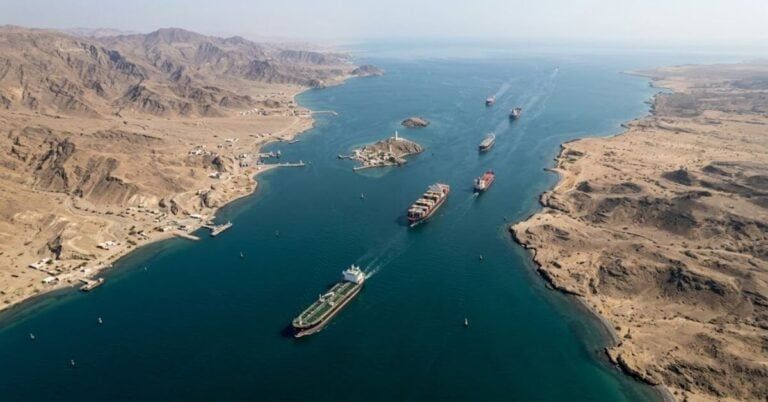
How the map turned against Riyadh
The six-month plan is being written from a position of loss, and the background explains why the losses sting. Saudi Arabia first entered Yemen in 2015 at the head of an Arab coalition, seeking to restore Yemen’s government after the Houthis seized the capital, Sanaa. The two sides fought to a bloody stalemate, and in 2022 they reached a ceasefire that held until the summer of this year. Since fighting restarted, the direction of travel has favoured the Houthis: they have seized the Red Sea coast and the strategic Bab el-Mandeb strait from Saudi-backed forces and encircled Taiz, the highland city above the government’s temporary capital, Aden.
The most recent turn was the sharpest. Yemeni government forces counterattacked last month and recaptured territory around the strait — then, over the past weekend, withdrew to protect Aden, in what amounted to a major setback. That November 15 redeployment from Dhubab and the strait area, covered by Signal Post News as government forces quit Bab el-Mandeb to defend Aden, was also reported by Al Jazeera and the BBC. Saudi and Yemeni forces are now reorganising around two ideas: protect Aden first, and potentially shift the offensive to eastern fronts, where they have made some advances or at least held their lines. The command structure is being rebuilt at the same time as the front: Saudi Arabia announced on Monday that it had replaced the commander overseeing the Saudi-led coalition, and Yemen’s government is also expected to reshuffle its military leadership, according to two people familiar with its plans.
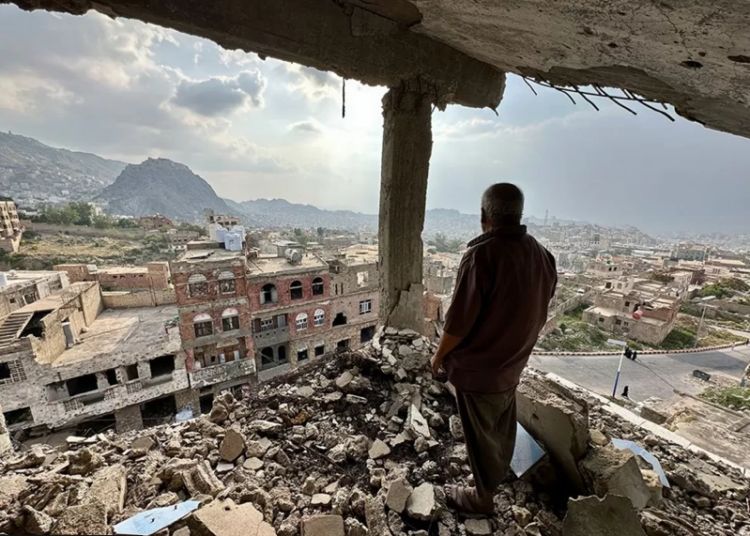
The war comes home
For months, Saudi Arabia sought to portray the renewed conflict as a Yemeni issue — a war happening elsewhere, to someone else. A series of high-profile attacks on Saudi cities has made that framing steadily harder to sustain. A Houthi attack last week smashed a gaping hole into the Riyadh headquarters tower of the state oil company Aramco — the strike Signal Post News documented as Houthi missiles were intercepted over Riyadh and debris damaged the Aramco tower. A string of deadly strikes on Riyadh’s airport has kept it closed to the majority of flights since October. The kingdom’s flagship FII investment conference was cancelled or postponed, and soccer’s AFC Asian Cup has been put off from January 2027 to the following December — two postponements that strike directly at the showcase calendar Riyadh uses to court the world.
The state’s own behaviour records the shift. Since last month, authorities have issued regular alerts ahead of attacks and more detailed statements afterwards — a public-warning rhythm that treats the threat as a standing feature of life rather than an aberration. The messaging has extended to mosques: at one of Riyadh’s bigger mosques last Friday, the imam devoted the entire sermon to the conflict, promising fighters “victory or martyrdom” and praying, “Oh Allah, guide their aim and steady their feet, and grant them victory over those who show them hostility.” A government preparing its public for sacrifice in the Friday sermon is a government preparing it for duration — which is, in the end, what the six-month horizon announced this week already said.
Why this matters
Analysis, labelled as such. First, the sequencing. A six-month horizon that places negotiations after battlefield gains tells mediators, allies and adversaries the same thing: there is no early-truce track to bid on, and any diplomatic effort that ignores the battlefield-first ordering will talk past Riyadh. Second, the coupling. All three sources linked Yemen’s drawdown to a wider Iran-war settlement, which means the Yemen timeline may be decided in a negotiation Yemen is not part of — a fact that cuts both ways, offering the fastest available exit and removing the exit from Yemeni and even Saudi hands. Third, the swing factor is in Washington. If the withheld U.S. offensive support is the difference between weeks and months, as Riyadh believes, then the most consequential Yemen decision of the next quarter may be taken in the White House rather than in Riyadh, Aden or Sanaa.
Fourth, the humanitarian ledger. For Yemen’s civilians, another six months extends one of the world’s worst humanitarian crises; Al Jazeera has put the number displaced since the ceasefire collapsed at about 300,000 people, a figure attributed here to its reporting. Fifth, the shipping ledger. Houthi control around Bab el-Mandeb — a chokepoint roughly 30 kilometres wide on the Asia–Europe route via Suez — keeps Red Sea risk, insurance costs and naval deployments elevated for as long as it lasts. Sixth, the Saudi ledger. The war now visibly taxes the Vision 2030 showcase — the FII conference, the Asian Cup, an open capital airport — that the kingdom uses to attract the non-oil investment its economic plan requires. A campaign extended to win negotiating leverage is simultaneously spending a different kind of leverage at home.
Who gains, who loses — and what critics say
The Houthis, on the current map, are the gainers: they hold coastline, a strait and the initiative, and every month of stalemate fought on Saudi nerves rather than Yemeni soil strengthens their claim to be a power that cannot be removed by force. Riyadh’s potential gain is narrower and conditional — time in which eastern-front advances or U.S. support might yet produce the stronger hand it wants before talks. The recognised Yemeni government gains protection for Aden but at the price of revealing how much of its territory that protection required abandoning. The clearest losers are civilians on both sides of the border: Yemenis facing displacement, encirclement at Taiz and a collapsing service economy, and Saudis living under air-raid alerts in a capital that was sold to the world as a rising global hub.
Critics of the extended timeline make two arguments, and both deserve stating plainly. The first is historical: a coalition that fought to stalemate between 2015 and 2022, critics say, has produced no evidence that six more months will yield the gains eleven years did not — and each extension has previously ended at a negotiating table reachable earlier at lower cost. The second is humanitarian: sequencing talks after gains, they argue, prices those gains in civilian displacement and hunger in the interval. Supporters of Riyadh’s position answer that negotiating from the current map would ratify the Houthis’ seizure of the strait and the encirclement of Taiz, rewarding the offensive that broke the ceasefire — and that a settlement signed from weakness would not hold. This article takes no side between those arguments; it notes only that the six-month clock now tests both of them against events.
The data in context
The numbers that frame the decision are these. Duration: up to six more months of campaigning, on the officials’ account, taking the war well into 2027. The compression claim: weeks, not months, if U.S. offensive support were granted — Riyadh’s belief, attributed, not a verified capability assessment. The chokepoint: Bab el-Mandeb, roughly 30 kilometres wide, carrying the Red Sea–Suez sea lane between Asia and Europe. The displacement: hundreds of thousands displaced in Yemen since the fighting restarted, on Reuters’ account, with Al Jazeera’s figure of about 300,000 displaced since the ceasefire collapsed. The home-front markers: Riyadh’s airport closed to the majority of flights since October; the FII conference cancelled or postponed; the AFC Asian Cup moved from January 2027 to December 2027. The war’s own chronology: intervention in 2015, stalemate, a 2022 ceasefire that held until the summer of 2026, and a renewed conflict now described by Reuters as the most active front in the wider Iran war.
What happens next
Four scenarios cover the plausible range, and they are not equally likely — but all four are live. First, the plan works as written: Aden holds, the eastern-front shift produces real gains, and Riyadh enters Yemen war negotiations in 2027 from a stronger position than it holds today. Second, Washington moves: the U.S. grants the offensive support Riyadh seeks, the tempo changes within weeks as the kingdom believes it would — with the escalation risk that Houthi strikes on Saudi cities intensify in reply, testing air defences and public endurance further. Third, the wider war decides: a deal to end the Iran war draws Yemen down with it, regardless of the local balance, and the six-month plan is overtaken by a settlement negotiated over its head. Fourth, the worst case: Aden itself comes under direct threat, the interim capital’s defence fails to hold the highlands above it, and the conflict forces a larger regional escalation that none of the current plans describe.
What to watch is concrete. The coalition and Yemeni command reshuffles — who takes the jobs, and whether the new commanders are defenders of Aden or organisers of an eastern offensive — will reveal the plan’s real centre of gravity. Any change in the U.S. support posture, in either direction, reprices every timeline in this article. And Houthi operations around Taiz and Aden will show whether the movement intends to besiege, to bargain, or to advance. Signal Post News will update this article as the reshuffles, the Washington decision and the Aden front clarify.
Sources
- Reuters, November 18, 2026 — “Saudis preparing for Yemen campaign to last well into 2027” (exclusive, by Timour Azhari and Humeyra Pamuk): two Western officials briefed by Saudis on the plans and a third source familiar with them, speaking on condition of anonymity, on the up-to-six-month horizon, gains before negotiations, the withheld U.S. offensive support and the Iran-war drawdown condition; the Saudi Foreign Ministry official declining to comment; the Aramco tower, Riyadh airport, FII and Asian Cup disruptions and the Friday sermon account.
- Al Jazeera, November 15, 2026 — reporting on Yemeni government forces redeploying from Bab al-Mandeb and Dhubab to defend Aden, and its figure of about 300,000 people displaced since the ceasefire collapsed.
- BBC reporting, November 15–16, 2026 — on Houthi claims around Bab al-Mandeb and the government withdrawal from the strait area.
- Photos: Aden aerial via Bawabatii; Bab el-Mandeb shipping via Marine Insight; Taiz via HRITC — each credited in its caption.