Saudi Arabia Houthi ceasefire
A day after Houthi missiles killed three at Riyadh's airport, a regional source told AFP that the kingdom will not bow to "military blackmail" — closing the diplomatic door just as a major offensive to retake Bab el-Mandeb appears imminent.

Saudi Arabia has ruled out any truce or ceasefire with Yemen's Houthis until the internationally recognized Yemeni government regains all the territory it has lost in recent weeks, a regional source told AFP on Friday — a hard-line position that arrives one day after Houthi missile attacks on Riyadh's King Khalid International Airport killed three people and set a parked Saudi airliner on fire. Riyadh, the source said, "will not bow to the Houthis' military blackmail."
The statement lands as the sharpest signal yet that diplomacy is giving way to escalation. On the same day the UN Security Council heard its envoy warn that Yemen has "fallen back into full-scale war," the kingdom is effectively telling the world that the next phase will be fought, not negotiated — at least until the map changes.
Track it live: follow the wars and conflict zones on our Live Global Trackers.
Why this matters: the diplomatic off-ramp just closed
Statements like this are not made for effect. When a government rules out a ceasefire through a sourced leak to a wire service rather than an official communiqué, it is usually doing two things at once: signaling resolve to its adversary, and preparing its public — and its allies — for what comes next.
What comes next, by every available indication, is a major Saudi-backed offensive. Reuters-sourced reporting this week described Saudi preparations for an assault aimed at breaking the Houthi chokehold on the Red Sea, with two options on the table: a narrowly focused operation around the Bab el-Mandeb Strait, or a broader offensive across multiple fronts including Al-Bayda, Marib, Taiz, and Al-Jawf. More than 100,000 Yemeni troops could be mobilized depending on the scale. The estimated launch window ranges from within a week to after the U.S. midterm elections in early November.
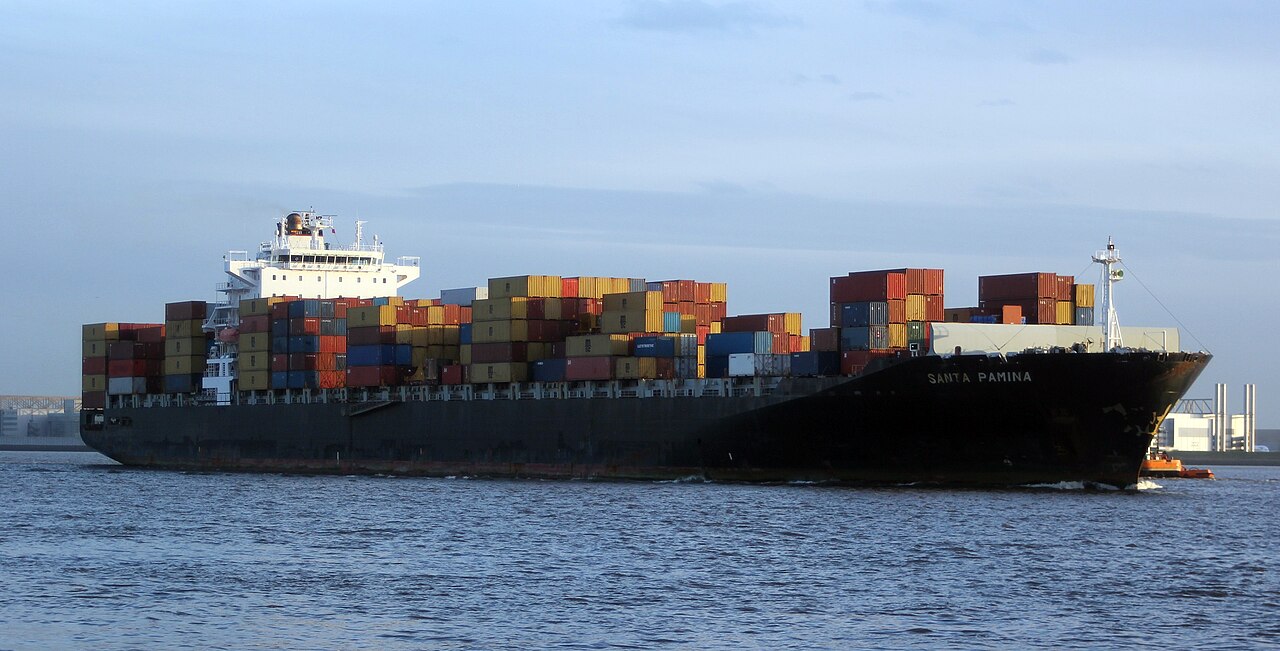
Riyadh's logic, as the source framed it, is that a ceasefire now would freeze the Houthis' gains in place — and hand them the leverage of Bab el-Mandeb, the strait through which roughly a tenth of the world's traded goods pass. The kingdom has concluded, in the words of Western diplomats quoted this week, that it "cannot enter new Yemeni peace negotiations with the Houthis while the militants remain in control of Bab el-Mandeb." In plain terms: negotiate from weakness, and you pay for it in territory.
The attacks that forced the statement
Thursday's assault on King Khalid International Airport was the most brazen Houthi strike on the Saudi capital in years. According to Saudi Arabia's General Authority of Civil Aviation, two attacks hit the airport: the first targeted airport facilities, the second struck a Saudia Airlines aircraft parked at a terminal. Three Saudi citizens were killed, including the plane's captain, whose death the national carrier confirmed with what it called "profound sadness." Reuters reporting, citing three people briefed on the matter, said the commercial aircraft caught fire and was heavily damaged — likely by shrapnel from an interception or another projectile.
The Houthis claimed the attack. Their military spokesman, Brigadier General Yahya Saree, said forces had targeted the airport with ballistic missiles, and also claimed strikes on Najran airport and the Khamis Mushait air base. Saudi Arabia said its air defenses intercepted and destroyed two Houthi ballistic missiles aimed at Riyadh and one heading for Khamis Mushait. The Houthis had warned global airlines "for the last time" about the consequences of operating in Saudi airspace before launching the assault.
The fallout was immediate and visible: Lufthansa, Air India, Air India Express, Akasa Air, and IndiGo suspended or cancelled Riyadh flights. Diplomats in the capital were told to shelter in place. Airport authorities advised travelers to check with airlines before departing. Normal operations resumed by Friday — but the images of thick black smoke over the kingdom's main international gateway had already traveled the world.
How we got here: from a four-year truce to September's lightning offensive
Yemen's war began in 2014 when the Houthi movement, formally Ansar Allah and backed by Iran, seized the capital Sana'a. A Saudi-led coalition intervened in 2015 on behalf of the internationally recognized government. The UN-brokered truce of April 2022 brought more than four years of relative calm — fighting never fully stopped, but the front lines barely moved, and diplomats quietly explored an exit ramp for Riyadh.
That equilibrium shattered in September 2026. The Houthis launched a rapid ground offensive along Yemen's Red Sea coastline, seizing the strategic port of Mocha near the Bab al-Mandeb Strait and positions along one of the world's most critical shipping corridors. They declared a naval blockade on Saudi-linked shipping in the Red Sea and Bab el-Mandab. In response, Saudi Arabia and government forces began airstrikes and, in early October, a ground counteroffensive aimed at reclaiming the coast. The Saudi-led coalition says it has since struck 82 "legitimate military targets," including missile facilities, command centers, and communications systems. Yemen's government declared a major counter-offensive this week, claiming to have pushed Houthi fighters out of strategic areas including Mocha.
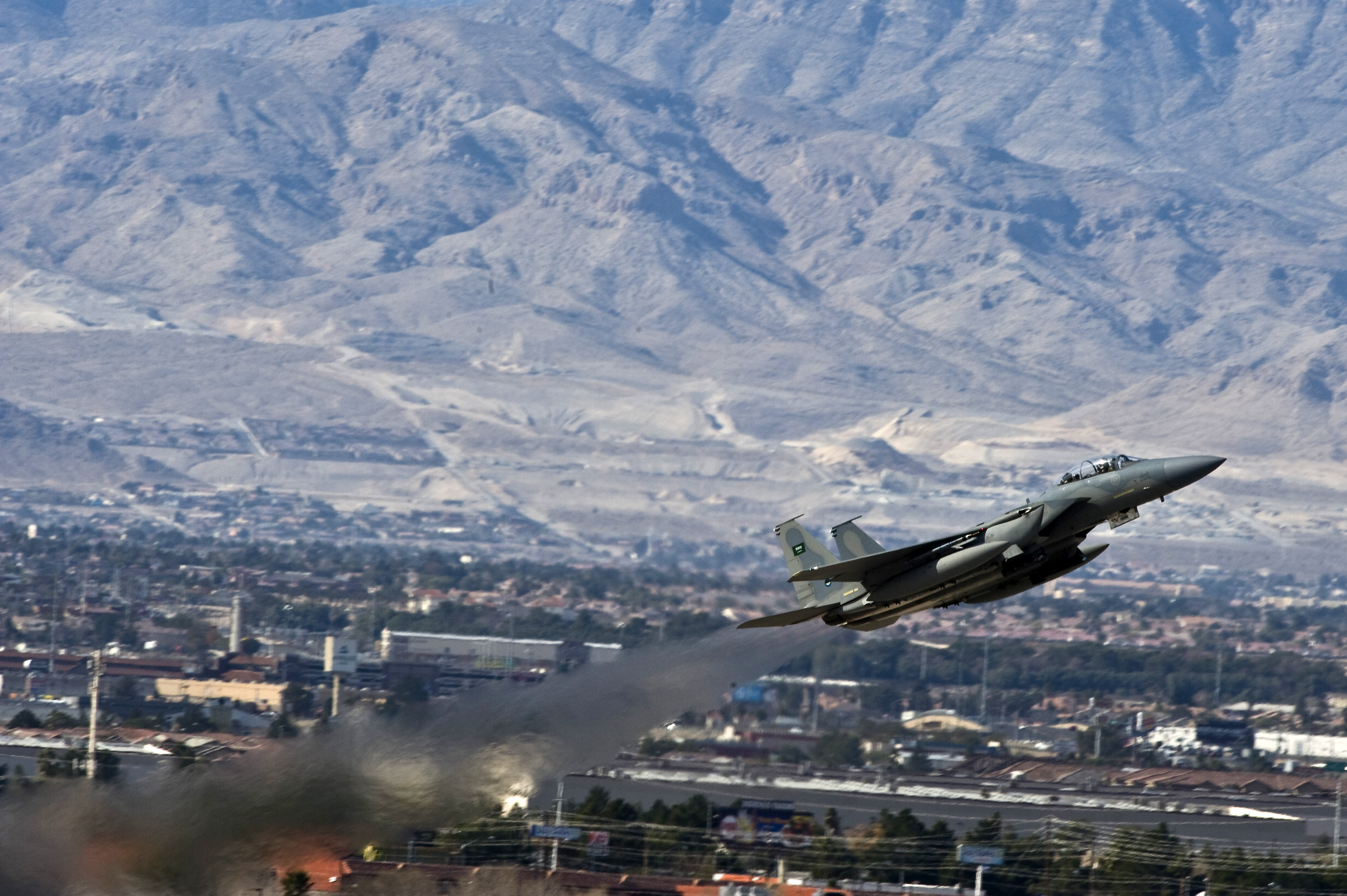
The Houthis insist they are holding their territory. Military sources from both sides contacted by AFP this week reported no major changes on the ground — and AFP itself noted that with the situation moving fast and journalists' access difficult, the competing claims have been impossible to independently verify. Readers should treat every territorial claim from either camp with that caveat attached.
Who benefits, who loses, what critics say
Riyadh's calculation: From the Saudi perspective, the September offensive changed the fundamental geometry of the war. The Houthis now hold — or claim to hold — leverage over the Red Sea corridor at precisely the moment the Strait of Hormuz has been constrained by the U.S.-Iran confrontation, making Bab el-Mandeb the essential alternative route for Saudi oil exports. A ceasefire that cements Houthi control of the strait would, in Riyadh's view, give an Iran-aligned movement a permanent chokehold on the kingdom's economic lifeline. The "no truce until territory is regained" position is therefore not posturing — it is the minimum condition under which Saudi Arabia believes it can negotiate without surrendering.
The Houthis' calculation: From the Houthi perspective, the missile campaign against Saudi targets — airports, air bases, energy infrastructure — is leverage, not terrorism. By demonstrating that they can strike the Saudi capital's airport, they are raising the cost of confrontation and, in their framing, forcing Riyadh to take their position seriously. Their September territorial gains were, in this reading, a deliberate attempt to enter any future negotiation from a position of strength. The risk for them is that the airport attack has hardened Saudi resolve in exactly the opposite direction — producing not concessions, but a public vow of no ceasefire.
The humanitarian angle: The people with the least leverage in this equation are Yemeni civilians. The UN's envoy told the Security Council on Friday that more than 200,000 people have been displaced in roughly five weeks, fighting is intensifying around Taiz, and aid agencies warn of surging cholera cases, rising child casualties, and deepening hunger. Every week of full-scale war compounds a crisis the UN has repeatedly called one of the world's worst. A ceasefire that freezes territorial lines would at least pause the displacement; Riyadh's position means the displacement will likely accelerate before it stops.
The critics: Skeptics of the Saudi position will argue that the kingdom has been down this road before. The 2015 intervention was supposed to rout the Houthis; a decade later they are stronger, better armed, and more deeply entrenched. Former U.S. ambassador to Saudi Arabia Michael Ratney, quoted in Reuters-sourced reporting this week, said he expected any new offensive to be "narrowly focused" and "certainly more modest in scope" than the 2015 operation — an implicit acknowledgment that maximalist aims have a poor track record. The counter-argument from Riyadh's camp: the 2015 operation sought to defeat the Houthis entirely; this one seeks something more achievable — restoring the pre-September status quo along the coast.
What the numbers actually imply
The figures circulating this week deserve careful reading. The coalition's claim of 82 "legitimate military targets" struck is a measure of airpower applied, not of strategic effect — airstrikes have been the coalition's primary tool for a decade, and the Houthis' missile and drone capabilities have grown, not shrunk, under bombardment. The 200,000 displaced in five weeks, by contrast, is a direct measure of ground-war intensity: that is a displacement tempo comparable to the worst phases of the 2015–2018 period.
The 100,000-troop figure for a possible offensive, if accurate, would make this one of the largest Yemeni government mobilizations of the war — but mobilization is not the same as effectiveness. Government-aligned forces have historically struggled with internal divisions and recruitment. The 2015 operation sought to defeat the Houthis entirely; this one seeks something more achievable — restoring the pre-September status quo along the coast.
And then there is the shipping math. With Hormuz constrained and Bab el-Mandeb contested, global energy markets are absorbing a double chokepoint squeeze. The U.S. Embassy in Riyadh warned American citizens this week that the conflict "could escalate further" — diplomatic language for: this is about to get worse before it gets better. Oil traders have already noticed.
What happens next: three scenarios
Scenario 1: The limited coastal operation (most likely, ~50%). Saudi-backed forces launch the narrow Bab el-Mandeb operation Ratney described — retaking Mocha and the strait's approaches, restoring maritime traffic, and then freezing the front. Riyadh declares the pre-September status quo restored and reopens talks from a position of strength. The Houthis absorb the loss, keep their inland strongholds, and return to missile diplomacy. This is the outcome Riyadh's statement is designed to enable: regain the territory first, negotiate second.
Scenario 2: The broad offensive (possible, ~30%). The multi-front option — Al-Bayda, Marib, Taiz, Al-Jawf in coordination with the coastal push — aims to roll back not just September's gains but years of Houthi consolidation. This would be the largest escalation since 2015, with correspondingly larger displacement and a real risk of drawing in Iran more directly. The U.S., facing midterm elections on November 3, would face pressure to either back or restrain its partner — an unenviable choice with oil prices on the ballot.
Scenario 3: The stalemate hardens (possible, ~20%). The offensive stalls, the Houthis keep the coast, and the "no ceasefire" position curdles into a frozen conflict with periodic missile exchanges — the 2022–2026 truce in reverse, with the Houthis holding the stronger hand. In this scenario, the Red Sea remains dangerous, shipping insurance stays elevated, and Yemen's humanitarian crisis deepens through another winter. The 200,000 displaced become 400,000.
Whichever scenario unfolds, Friday's statement has one immediate, concrete effect: it removes the ambiguity. For weeks, diplomats have parsed whether Riyadh still wanted an exit. Now the kingdom has answered, on the record, through AFP: no truce until the land comes back. The war's next chapter will be written on the battlefield first — and at the negotiating table only after.
Sources
- JFeed — "Saudi Arabia rules out Houthi ceasefire until Yemen government regains lost territory" (Oct 9, 2026) — jfeed.com (citing AFP)
- The Daily Express — "Saudi Arabia says three killed at airport as Yemen war expands" (Oct 9, 2026) — thedailyexpress.news (citing AFP)
- TBS News — "Saudis plan assault on Houthis to break Red Sea chokehold" (Oct 2026) — tbsnews.net (citing Reuters)
- Mint — "Saudi Arabia-Houthi conflict escalates: Airlines suspend Riyadh flights after attacks" (Oct 9, 2026) — livemint.com (citing Reuters)
- UN News — "Security Council LIVE: Yemen has fallen back into full-scale war, warns UN envoy" (Oct 9, 2026) — news.un.org
- Times of Earth (AFP) — "Deadly attacks by Iran-backed Houthis on Saudi airports highlight widening fallout from Yemen conflict" (Oct 8, 2026) — timesofearth.com