Saudi foreign minister Washington Rubio talks
Saudi foreign minister Washington Rubio talksPrince Faisal bin Farhan Washington visitSaudi Houthi escalation September 2026Marco Rubio Saudi Arabia meetingMBS US military help request HouthisTrump declined Houthi airstrikesUS intelligence targeting support Saudi ArabiaSaudi Yemen Houthi conflictRed Sea Houthi attacksFaisal bin Farhan Rubio meeting
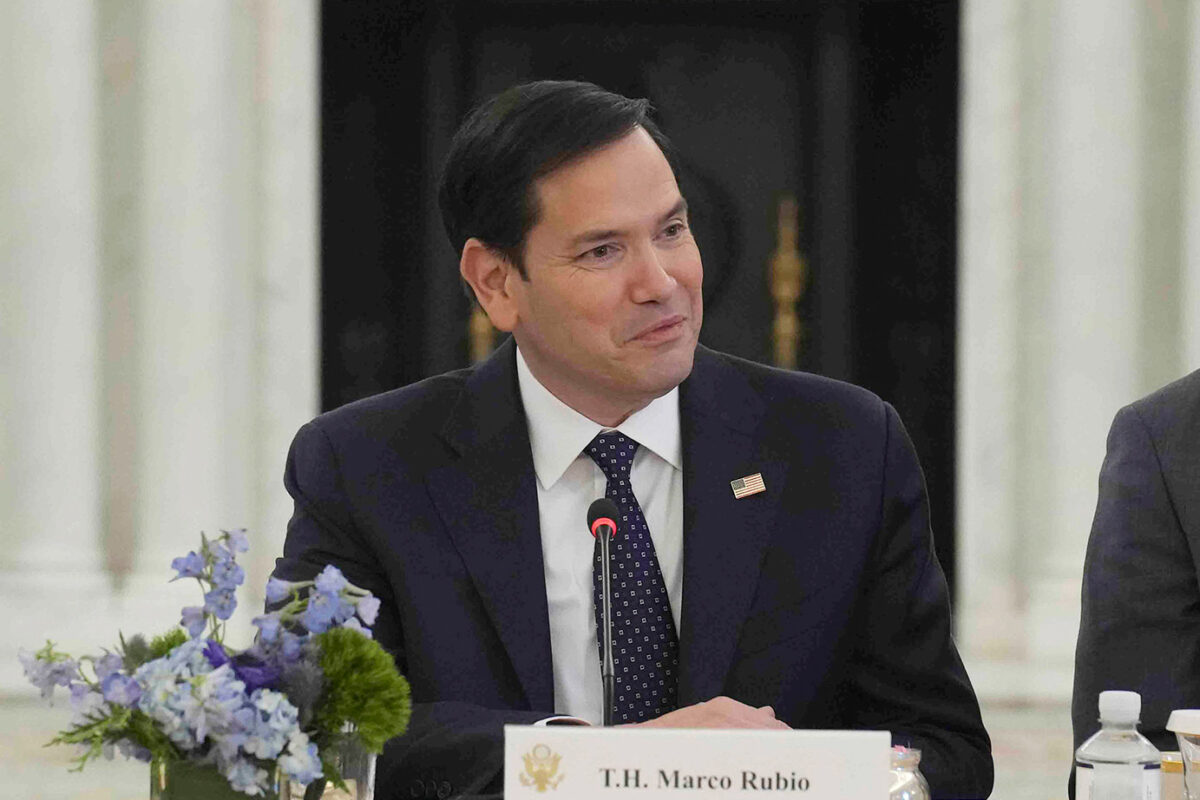
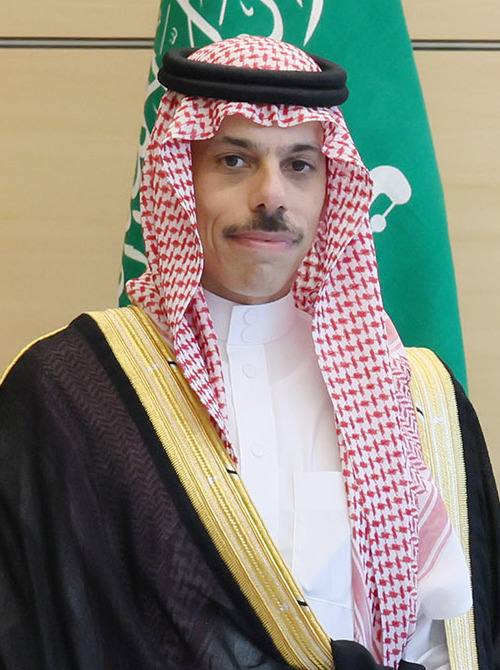
WASHINGTON — Saudi foreign minister Washington Rubio talks moved to the center of the regional security debate on Monday after Prince Faisal bin Farhan arrived in the U.S. capital for meetings with Secretary of State Marco Rubio. The Saudi state news agency announced the visit and said the two officials would discuss bilateral relations and key regional and international developments, according to Reuters. That deliberately broad agenda arrives with one urgent question beneath it: how much help will Washington provide as Saudi Arabia confronts renewed Houthi attacks without committing U.S. forces to another direct Middle East campaign?
The visit has been announced, but its outcome has not. No joint communique had been issued at publication, and neither side had publicly detailed a negotiated package. That distinction matters because the most consequential part of the discussion is still being shaped. Reuters reported, citing sources, that Crown Prince Mohammed bin Salman sought U.S. military help this month against the Iran-backed Houthis. Washington declined to launch strikes, the report said, while agreeing to provide intelligence and targeting support.
That is not a clean refusal and not a declaration of war. It is a calibrated middle position that can strengthen Saudi operations while keeping American aircraft and missiles out of the first line of attack. The Faisal bin Farhan Rubio meeting is therefore a test of whether that middle line is durable—or merely the temporary posture before the next major strike forces both governments to decide again.
What was announced—and what was not
The Saudi state news agency's account establishes the visit and the stated subjects: bilateral ties, regional developments and international issues. Reuters, in reporting by Jana Choukeir from Dubai, carried that announcement and placed it against the recent Saudi request for U.S. military assistance. SRN News also carried the Reuters wire, providing a second published carrier of the account.
The language does not establish that Rubio and Prince Faisal reached an agreement, that the United States promised new weapons, or that an operational plan has already been approved. It also does not show that direct U.S. strikes are back on the table. Any claim about a final package would run ahead of the available record. The public facts support a narrower conclusion: Riyadh has sent its foreign minister to Washington while the two governments are negotiating how to respond to a worsening threat.
The timing gives the talks greater weight than a routine diplomatic call. This is the first top-level Saudi visit to Washington since the Trump administration declined the crown prince's reported request for direct strikes. It is also Rubio's first major Saudi-file moment as secretary of state under the present escalation. His task is to reassure a longstanding partner without erasing the boundary the administration has drawn around American combat.
Why the Prince Faisal bin Farhan Washington visit matters
For Riyadh, the security bargain is measured less by treaty language than by performance during a crisis. Saudi leaders want to know whether U.S. sensors, intelligence networks, weapons supply chains and political backing will still function when missiles and drones approach Saudi cities or energy infrastructure. Washington wants the partnership to deter attacks without creating an automatic mechanism by which every Houthi launch becomes an American military decision.
Those objectives overlap, but they are not identical. Saudi Arabia seeks visible protection because visibility strengthens deterrence. The United States may prefer assistance that is effective but less publicly escalatory. Intelligence sharing, warning data and targeting support fit that preference: they can materially improve Saudi operations while allowing Washington to say that Saudi forces remain responsible for their own defence.
The tension is credibility. Support that is too quiet may not deter the Houthis or reassure Saudi leaders. Support that is too expansive may draw Washington into target selection, battle-damage assessment and follow-on operations in ways that make the distinction between partner assistance and co-belligerence harder to sustain. The meeting is significant because both sides need the same package to send different messages—to Riyadh, that the alliance works; to the region and the American public, that the United States is not opening another war.
The Saudi Houthi escalation in September 2026
The immediate backdrop is a renewed exchange that has reached beyond Yemen's internal front lines. On September 26, Saudi Arabia said it intercepted two Houthi drones over Riyadh. Earlier September attacks reached toward Riyadh and Yanbu, while the Red Sea remained exposed to Houthi pressure on shipping. Signal Post News has reported separately on the Saudi interception over the capital; those events are context for Monday's diplomacy, not new claims from the Washington visit.
The longer history makes restraint difficult to maintain. The Saudi-led coalition entered Yemen in 2015. A UN-brokered truce in 2022 reduced major cross-border fighting even after its formal terms lapsed, but the following years did not produce a durable political settlement. The 2023–2026 period brought renewed Houthi drone and missile attacks, continuing danger to Red Sea shipping and fresh pressure on Saudi territory.
Riyadh's exposure is strategic as well as military. Vision 2030 depends on confidence in Saudi cities, transport corridors, industrial zones and investment destinations. An attack does not have to halt the national economy to impose costs; repeated alarms can increase risk perceptions, complicate insurance and make every high-profile project part of the security conversation. Saudi officials consequently have strong reasons to treat air defence as economic policy.
What U.S. intelligence and targeting support can enable
“Intelligence and targeting support” can sound administrative, but operationally it can be decisive. Intelligence support may include earlier warning of launches, a clearer picture of where mobile systems are operating, analysis that separates military assets from civilian activity, and information that helps defenders decide which incoming threats require scarce interceptors. Targeting support can help a partner identify, prioritize and validate military objectives before an operation.
Such assistance can make Saudi action faster and more precise. It can also reduce uncertainty when commanders are deciding whether a site is genuinely linked to an attack. Those are defensive benefits. Yet the same information may enable strikes beyond immediate interception, including action against launchers, storage sites or command nodes. Once intelligence feeds a partner's target cycle, Washington has influence over how force is used—but it also acquires responsibility for the quality of the information and the foreseeable consequences of using it.
This is why the reported U.S. position is both restraint and escalation. President Donald Trump's team refused the reported request to launch Houthi airstrikes, avoiding direct American combat at a politically sensitive moment with midterm elections approaching. At the same time, deeper U.S. intelligence support raises the effectiveness of Saudi operations and may be read by the Houthis as American participation. The military footprint can remain small even as the strategic footprint grows.
How the middle path compares with earlier U.S. policy
The approach recalls earlier phases of the Saudi Yemen Houthi conflict, though the policy context has changed. During the Obama administration, Washington provided refuelling and intelligence support to the Saudi-led campaign. That model demonstrated how assistance short of direct strike leadership can still become central to a partner's air operations and politically controversial when civilian harm mounts.
In 2021, President Joe Biden announced an end to U.S. support for “offensive operations” in Yemen while maintaining defensive cooperation with Saudi Arabia. Subsequent policy again hardened toward the Houthis as attacks on shipping and regional targets expanded, including renewed designation measures. The recurring problem is definitional: a radar track used to intercept a drone is plainly defensive; information used to hit a launcher after it fires may be described as defensive deterrence by one government and offensive targeting by another.
Rubio's challenge is not simply to select a label. It is to set operational boundaries that commanders can apply under time pressure. A workable package would need clear rules about what intelligence can be shared, what targets may be supported, how civilian-risk assessments are conducted and what happens if Saudi forces request American action during an unfolding attack.
Who gains and who loses from Washington's middle line
Riyadh gains capability but not the public guarantee it sought. Better warning and targeting can improve defence and retaliation, while the absence of direct U.S. strikes leaves Saudi leaders carrying the visible burden. If the support works, the kingdom can claim operational autonomy. If attacks penetrate, critics can argue that Washington offered partnership without sufficient protection.
The Houthis gain room to test thresholds. A refusal of U.S. strikes may be read as evidence that Washington wants to avoid direct escalation. That does not make restraint cost-free for the group: improved Saudi intelligence can threaten launch networks and reduce the effectiveness of attacks. But ambiguity can invite probing—smaller launches, deniable operations or pressure on shipping designed to stay below the level that would trigger an American response.
Iran can impose pressure at comparatively low direct exposure. The Houthis are backed by Tehran, and their campaign creates a second arena alongside the Strait of Hormuz standoff. The strategic question is whether Iran is using the Yemen front to stretch U.S. attention, air-defence capacity and alliance management across two connected theaters. Signal Post News's Iran and UN General Assembly live coverage tracks the parallel Hormuz diplomacy.
U.S. defence and intelligence agencies gain influence without deploying a large combat force. Information-sharing deepens interoperability and gives Washington visibility into Saudi decisions. The downside is entanglement: the more essential U.S. systems become to an operation, the less convincing it is to describe the United States as merely observing.
Oil markets and Red Sea shippers lose predictability. Each new interception, warning or strike can reprice the possibility of damage to energy routes and commercial vessels. The effect is not limited to any single cargo. Shipping decisions reflect expectations about repeated exposure, the availability of escorts and the chance that conflict will spread between the Red Sea, Saudi infrastructure and Hormuz.
France gains leverage from an existing military role. France is already deploying personnel to Yanbu for Houthi defence, as Signal Post News reported. That presence gives Paris a stake in the outcome and gives Riyadh an additional partner. It can also pressure Washington: a limited American posture becomes more conspicuous when an ally has personnel on the ground.
Riyadh's case—and the counterargument
Saudi Arabia's case for stronger American involvement begins with alliance credibility. Riyadh is a major U.S. security partner facing attacks by a movement armed and backed by Iran. Saudi leaders can argue that the requested help is not an invitation to restart Yemen's civil war but a response to cross-border attacks on a partner's capital, population and infrastructure. Visible American support, in this view, could deter further launches and prevent a larger conflict.
The counterargument is that direct U.S. strikes could widen the war without removing the Houthi capability that produced it. The movement has survived years of bombing and operates within Yemen's complex political and civilian landscape. American action could strengthen the Houthis' claim that they are confronting the United States, invite retaliation against U.S. forces or shipping, and make diplomatic de-escalation harder. It could also recreate familiar questions about civilian harm, legal authority and open-ended commitment.
Both arguments contain a real risk. Underreaction can encourage further attacks and weaken deterrence. Overreaction can give a local and regional conflict a larger American center of gravity. Intelligence support is attractive precisely because it appears to split the difference. Monday's talks must determine whether that split is operationally stable or whether it postpones the same choice until after a more damaging event.
Four routes after the Marco Rubio Saudi Arabia meeting
Managed escalation through a larger defensive package appears the most immediately compatible with the reported positions. Rubio could offer expanded intelligence, earlier warning, targeting assistance, air-defence coordination and accelerated support without authorizing U.S. strikes. This would preserve Trump's boundary while giving Prince Faisal something concrete to take home. It would not end the conflict; it would try to control its temperature.
A major Houthi strike could force a rapid reconsideration. If an attack causes severe damage in a Saudi city or hits infrastructure with broad regional consequences, the political cost of restraint may rise sharply. Washington could then face demands for direct action, while the Houthis and Iran would have to judge whether escalation strengthens their leverage or provokes a coalition they sought to avoid. This is a contingency, not a prediction.
An Oman- or UN-supported diplomatic channel could create an off-ramp. The 2022 truce showed that negotiated reductions in violence are possible even without a final settlement. A new channel might focus first on halting cross-border launches and protecting shipping rather than resolving every part of Yemen's war. Its weakness is enforcement: each side would need confidence that restraint is reciprocal and that breaches carry consequences.
The Yemen file could be linked to the wider U.S.–Iran and Hormuz negotiation. A broader arrangement might trade de-escalation across several fronts rather than treating each attack separately. Linkage can create bargaining room, but it can also turn Saudi security into a token in a larger negotiation and give Tehran incentives to maintain pressure until it receives concessions elsewhere.
What to watch next
The first signal will be the language after the meeting. A joint statement emphasizing air defence, maritime security or intelligence cooperation would indicate a managed package. Silence would not prove failure, because sensitive intelligence arrangements are rarely described in full, but an absence of any public reassurance would be notable after a visit carrying this much expectation.
The second signal is operational. Watch whether Saudi interception performance changes, whether U.S. officials describe new coordination, and whether Houthi attacks shift from the capital toward shipping, Yanbu or other targets. The third is diplomatic: any movement through Oman or the United Nations would suggest that military support is being paired with an off-ramp rather than treated as the entire strategy.
The central judgment should remain modest until the governments speak. Prince Faisal is in Washington, the agenda includes bilateral and regional issues, and Reuters reports that the United States rejected direct strikes while agreeing to intelligence and targeting support. Everything beyond that is still negotiation. The visit matters because it may define the limits of the U.S.–Saudi security bargain before events on the ground define them instead.
Sources
- Reuters — “Saudi foreign minister arrives in Washington for talks with Rubio,” reporting by Jana Choukeir
- SRN News — Reuters wire report on Prince Faisal's arrival and agenda
Reporting note: The visit and agenda were announced by the Saudi state news agency and reported by Reuters. No joint communique had been issued at publication. The reported U.S. response to the Saudi request is attributed to Reuters sources.