Trump endorses Netanyahu again: a second Truth Social endorsement lands on the same Sunday night that Israel's army chief is reported to have resisted an Iran order, two days before Israel's October 27 election.
Trump endorses Netanyahu again. On Sunday evening, two days before Israel's parliamentary election, President Donald Trump posted a second endorsement of Prime Minister Benjamin Netanyahu on Truth Social — "When you go to the Polls please remember that Bibi [Netanyahu] has been an outstanding Warrior Prime Minister!" — and closed with the mission the two men share: "Vote for Bibi Netanyahu for Prime Minister; we have to finish the job that we started!" The post landed in the middle of the most turbulent night of Israel's campaign: within the same Sunday-evening news cycle, Israel's Channel 12 reported that IDF Chief of Staff Lt. Gen. Eyal Zamir had resisted a directive from the political echelon for a military action that security officials said would trigger a rapid escalation into confrontation with Iran, demanding an in-depth discussion and formal authorization first. Netanyahu denied any confrontation. Israel votes on Tuesday.
Track it live: the Iran war tracker follows the military standoff behind this election in real time.
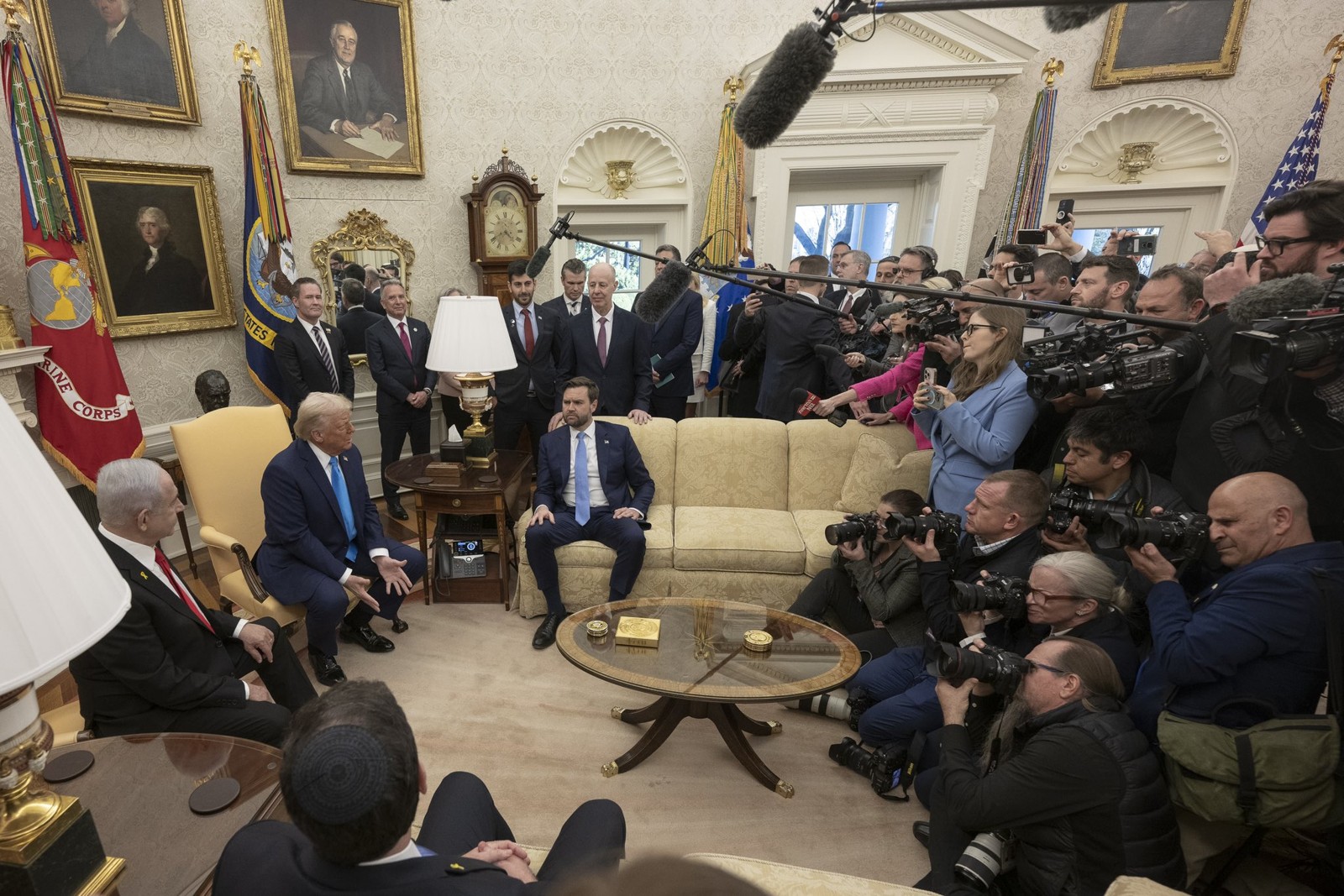
A second endorsement, seven days after the first — and after Netanyahu asked for more
Sunday's post was a renewal, not a new letter. The Jerusalem Post reported that Trump "endorsed Prime Minister Benjamin Netanyahu for the second time on Sunday evening in a Truth Social post," quoting the new message: Netanyahu has been "an outstanding Warrior Prime Minister," the two leaders have a strong relationship after "winning together" in Operation Midnight Hammer and Operation Epic Fury, and Israelis should vote for him because "we have to finish the job that we started." Haaretz, in its report of the same post, said Trump was reposting his endorsement and touting the pair's joint successes, saying U.S. attacks had crippled Iran's military and economy, prevented it from acquiring nuclear weapons and eliminated its leadership. Israeli coverage framed the repost with a phrase from the post itself: "For those who didn't see."
The first endorsement had come only last Sunday, October 18 — a long Truth Social letter giving Netanyahu Trump's "Complete and Total Endorsement," calling him a "Great Warrior Prime Minister" and warning that "if Israel has the wrong Leader, which would be anyone other than Bibi, America will have to do this work ourselves, and I am not inclined to do so." A sitting U.S. president publicly endorsing a candidate in an Israeli election was already without modern precedent. Doing it twice in seven days is something else again — and, on the reporting, it did not happen by accident.
Earlier on Sunday, the Jerusalem Post had reported that Netanyahu had intensified his efforts to secure additional support from Trump. According to an Axios account carried in that reporting, Netanyahu and Trump spoke twice over the previous three days; Netanyahu suggested possible wording for new endorsements and proposed that Trump speak directly with Israeli journalists to reiterate his support. Two American sources confirmed to the Post that Netanyahu and his supporters within Trump's inner circle were increasing the pressure. "We have never seen Netanyahu like this before," one said. "He is showing signs of political desperation." Netanyahu's side disputes the account: a spokeswoman for his Likud party, Neta Molcho, said the prime minister did not ask Trump to support his campaign in recent days or before the first endorsement, and the White House did not respond to questions about the matter. What is not disputed is the sequence: the requests were reported on Sunday, and the second endorsement arrived on Sunday evening.
The same night: a reported order, a chief of staff's refusal to move without paper, and a denial
The endorsement was not the only Sunday-night story out of Jerusalem — and the other one explains the pressure behind it. Israel's N12 (Channel 12) reported Sunday evening that Netanyahu and IDF Chief of Staff Lt. Gen. Eyal Zamir had clashed over a military action that could renew the conflict with Iran days before the election. According to the report, Zamir recently received a directive from the political echelon to carry out an action which security officials told N12 would "trigger a rapid escalation into a confrontation with Iran." Because of the sensitive nature of the action, Zamir requested an in-depth discussion and formal authorization before moving forward. Sources familiar with the details told N12 that Zamir and other senior IDF leaders are concerned the political echelon may be trying to exploit the front with Iran ahead of the elections for political gain. France 24 carried the same report internationally on Sunday night, describing "an extraordinary confrontation at the top of Israel's leadership, just two days before the election," in which Zamir "reportedly fears government instructions could trigger an immediate military escalation and has demanded written authorisation."
Netanyahu denied the report late on Sunday night. Appearing on Channel 14's The Patriots, he said "there is no confrontation" and that "someone is trying to obscure the fact that Zamir himself had said Iran was attempting to interfere in the elections." The prime minister has also warned in recent days that Iran could attack Israel to disrupt Tuesday's vote. The action at the center of the report has not been named, no document has been published, and the N12 account rests on anonymous security sources — every element of it is contested, and Signal Post News is reporting it as a report, with the denial attached, because of who is making the claims and how close the vote now is.
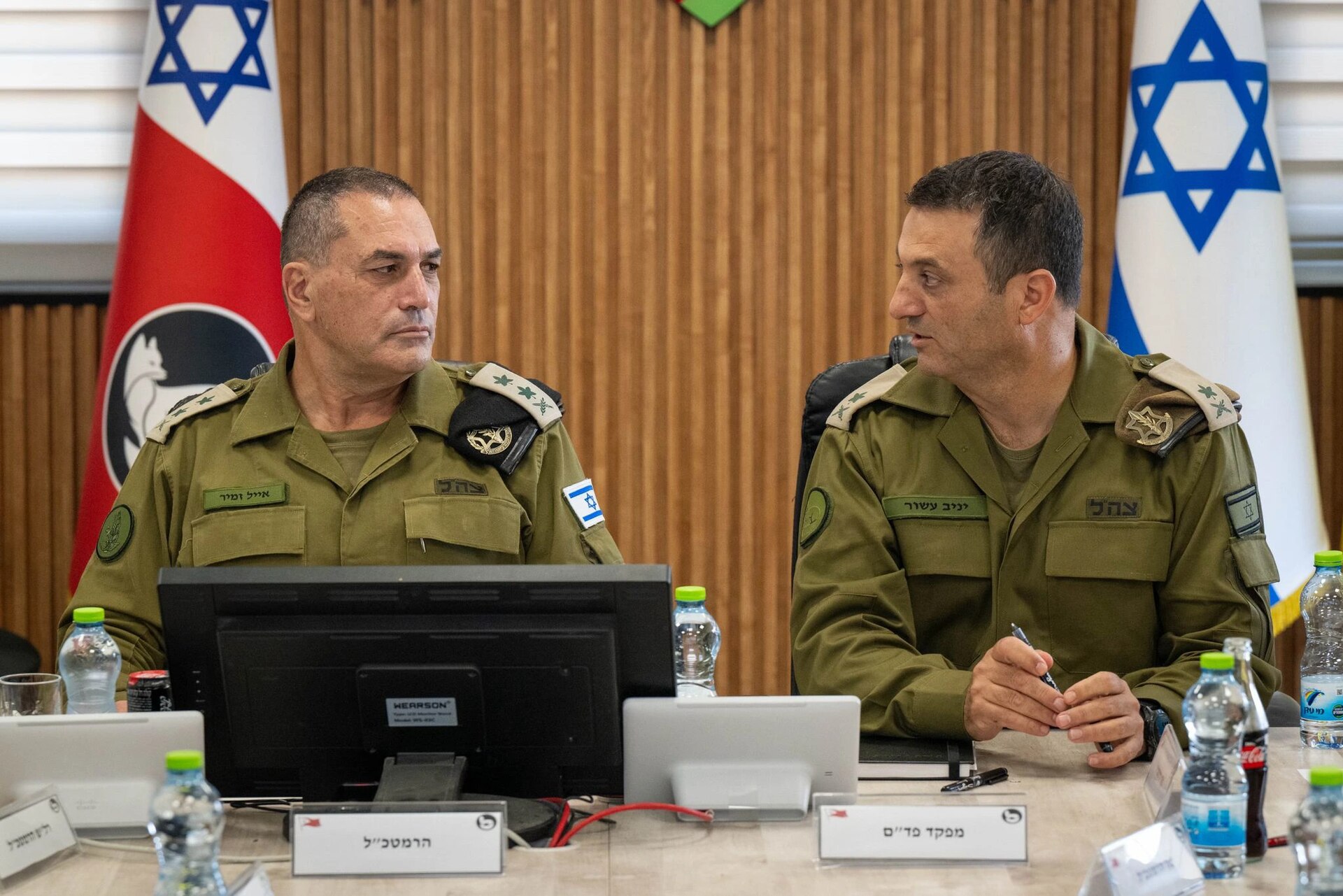
Why Zamir's caution is structural, not personal
The Jerusalem Post's account adds the context that makes the reported clash legible. Zamir, on its reporting, has kept Israel on a war footing against Iran if necessary — but has viewed "necessary," before Election Day, in a limited fashion: he has been ready to strike Iran if Iran were preparing to strike Israel, or if Trump initiated a new round of fighting with full U.S. backing for offensive and defensive operations. Beyond that, his instinct has been that a strike is justified if Iran rebuilds its nuclear and ballistic-missile capabilities too fast — which, on the current assessment, it has not yet done — or if a strike formed part of a considered strategy to compel Tehran into nuclear concessions. The request for formal authorization and a full discussion, the Post noted, could serve to clarify the government's intentions and ensure any action had a clear legal and strategic basis. It also described "new lows" in the Netanyahu–Zamir relationship — a striking turn, because Netanyahu chose Zamir to lead the military: Zamir had been his personal military secretary and was known for an aggressive approach to warfare. The two have since rubbed each other raw — Netanyahu by refusing to draft ultra-Orthodox men into the IDF and letting Defense Minister Israel Katz politicize key military appointments; Zamir by slowing the Gaza war in late 2025 and pressing the prime minister on conscription.
And Zamir is not the only brake. The Post's analysis noted that Trump and Zamir have, at different points during the election season, acted as constraints on Netanyahu's approach to a renewed conflict with Iran — Trump by blocking a multi-day bombing campaign Netanyahu had ordered prepared for the October 10 weekend, as Signal Post News reported in its coverage of Trump blocking Netanyahu's Iran strike plan, and by pledging on October 8 that the U.S. would not attack Iran before the November 3 midterms.
The opposition's answer: "my eyes are on you"
Israel's opposition leaders did not wait for Tuesday. Gadi Eisenkot — the former IDF chief of staff whose centrist Yashar party is Netanyahu's principal challenger, and who in the October 18–19 polling cited by the New York Post (Maariv, Channel 12, Channel 13 and Kan) had Likud running behind Yashar — said on Sunday night that he supports Zamir's decision to be cautious and warned Netanyahu against putting his political interests above the state's. "Netanyahu, my eyes are on you," Eisenkot said. "The man, on whose watch the greatest disaster in the nation's history occurred, refuses to grasp that Israel's security is not a political plaything; that the lives of Israeli citizens and IDF soldiers are not to be treated with reckless disregard; and that the State of Israel is not his private property." He added: "I have full confidence in IDF Chief of Staff Eyal Zamir and the IDF commanders, who act with professional responsibility and an absolute commitment to the nation's security. We will not allow the IDF to be turned into a tool for Netanyahu's political survival campaign." Holding the election on schedule, Eisenkot said, is a "cornerstone of Israel's national resilience": "In two days, the citizens of Israel will put an end to this era of reckless, lawless governance and restore responsibility, a sense of statehood, and the security of Israel. I give you my word."
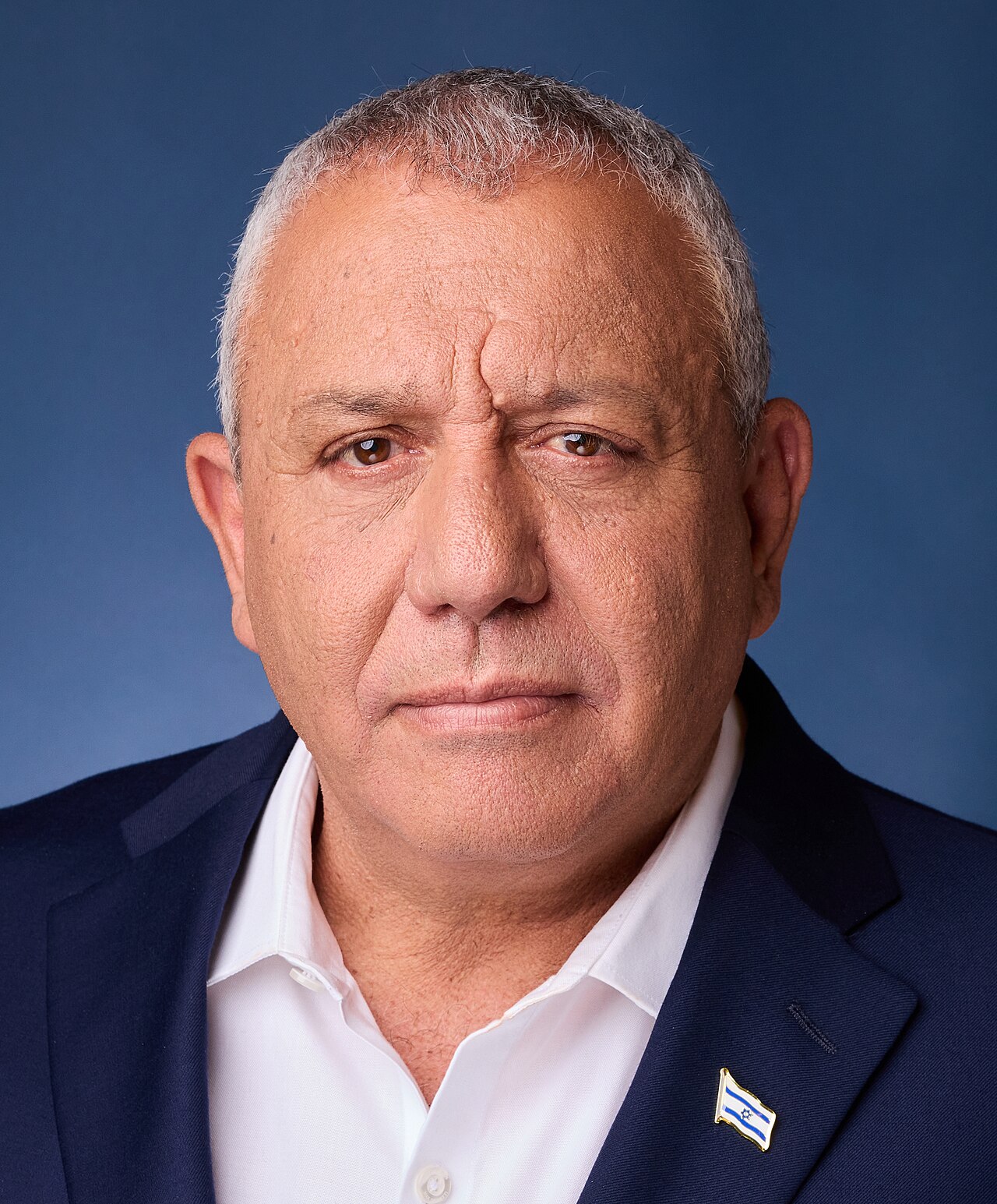
The Democrats party chair Yair Golan echoed the support in a Sunday-night post on X, saying he wholeheartedly backs Zamir for "standing firm on his professional duty": "It is forbidden to allow any military action that lacks a clear security need, a strategic purpose, and a responsible action plan behind it." Yisrael Beytenu head Avigdor Liberman went further, calling Netanyahu's reported attempt to "drag Israel into military action in order to prevent the elections" an act of "betrayal of the state and its security," and adding: "The duty of the chief of staff is to prevent the political use of the IDF and to safeguard the lives of IDF soldiers, not endanger them because of the prime minister's fear of losing the elections." Opposition leader Yair Lapid, in remarks reported by the Times of Israel, wrote that Netanyahu "wants to bring about an escalation and conflict with Iran just to postpone the election." Netanyahu's camp rejects all of it; his own public line on Sunday night was the denial, and a warning about Iranian interference — two claims Israelis will now weigh alongside the ballot itself.
In Washington, the same fork in the road — stated out loud on Sunday morning
Hours before the endorsement post, Trump had described his own Iran decision in the plainest terms yet. "It's getting to be decision time," he told Fox News' Sunday Morning Futures, in an interview reported by Bloomberg. "I have a decision to make: Do I finish it off, which would be very easy to do, or do I make a deal? That's all. We don't play games." Bloomberg reported that Trump has suggested U.S. strikes on Iran could resume after the November 3 midterm elections, and that he has sent additional forces toward the region. On Saturday he had kept both doors open in a single breath — of a possible attack, "there's a possibility I will," and "there's also a possibility we'll have a nice, big, beautiful agreement" — while ruling out a strike on Sunday itself. Tehran answered on Sunday in the register it has used all month: Foreign Minister Abbas Araghchi said in a televised address, as the Times of Israel reported, that "whether there is war or not, our policies remain the same," and that "the routes in the Strait of Hormuz will not be the same as the previous ones"; Parliament Speaker Mohammad Bagher Ghalibaf told a session in Tehran, in remarks carried from the ISNA agency, that America, "through miscalculations and waging war against Iran, stepped into a quagmire," adding: "We will not be intimidated."
Read together, Sunday's three strands are one story. The endorsement tells Israeli voters that the Iran mission is unfinished and that only Netanyahu can finish it with Washington. The Sunday-morning interview tells Americans the decision — deal or finish it off — comes after November 3. And the reported clash in Jerusalem is about whether any piece of that mission may start before Israelis vote on October 27. The two elections, nine days apart, are now the twin clocks on the same war.
The final polls: a race with no majority in it
The last surveys of the campaign, published October 22–23 before Israel's pre-election polling blackout, explain both men's urgency. In the final Kan 11, Channel 12 and Channel 13 polls, Eisenkot's Yashar was the largest party in three of four surveys — 22, 23 and 22 seats to Likud's 20, 21 and 19 — and in all three, Netanyahu's bloc stood at 50 seats, the opposition bloc at between 52 and 56, and the Arab parties at 14 to 16. One survey broke the pattern: i24 News / Direct Polls put Likud ahead, 26 seats to Yashar's 21, with Netanyahu's bloc at 59 — a result from a different methodology that Israeli analysts treat as an outlier rather than a late shift. CNN's election explainer also cited a Channel 14 poll putting Likud at 30 seats and Eisenkot at about 20, while noting that Eisenkot led Netanyahu head-to-head when voters were asked who is more suitable to serve as prime minister.
The number that governs everything is 61 — the seats needed for a majority in the 120-seat Knesset — and no poll gives either bloc that number. The Arab parties are the arithmetic kingmakers, and both camps insist they will not rely on them, which is why coalition talks could run for days or months after Tuesday's count. That is the landscape onto which Sunday's interventions landed: Trump's endorsement, and Netanyahu's own nuclear-image post, arrive with his bloc at about 50 seats — leverage in a deadlocked race, not a coronation.
Why this matters
Start with the endorsement's mechanics. A second endorsement is not twice the endorsement; it is a different instrument. The October 18 letter was an event. The October 25 repost is a drumbeat — Trump signaling that his backing is not a one-day headline but a standing feature of the final 48 hours, timed, on the Axios reporting, after the candidate's own team asked for more of it and even proposed its wording. If that reporting is right, the line between an ally's support and a foreign campaign's messaging operation has effectively dissolved: the most powerful man in the world is, in a limited but real sense, taking copy suggestions from a candidate in someone else's election. Voters who resent that may punish it — Eisenkot made exactly this argument after the first endorsement, saying Israel's elections are an internal matter for its citizens — and voters who fear Iran more than they resent Washington may reward it. Either way, the precedent compounds: Hungary, Argentina, and now Israel twice in a week have normalized the sitting U.S. president as a participant in allied democracies' campaigns.
Then consider what the endorsement is priced in. Trump did not endorse a platform; he endorsed a war partnership — Midnight Hammer, Epic Fury, "finish the job that we started." The currency of the backing is a future military decision that Trump himself says he has not yet made: deal, or finish it off. An Israeli voter choosing Netanyahu on Tuesday is therefore also, whether they see it that way or not, voting on the probability of a resumed U.S.–Israeli campaign against Iran after November 3 — and an American voter on November 3 is voting in the shadow of a commitment an American president made to a foreign electorate first. That inversion — the foreign audience hearing the war pledge before the domestic one votes — is the genuinely new thing about Sunday night.
The Zamir report matters on a different axis: the paper trail. A chief of staff who asks for an in-depth discussion and formal, signed authorization before an escalatory action is not refusing an order — he is pricing it. He is making sure that if the action proceeds, its ownership is unmistakably political, documented, and defensible, and that if it is electoral in motive, that motive will have to be written down by the people who hold it. Democracies build exactly this kind of friction into civil–military relations for exactly this kind of moment: the final days of a campaign, a war on pause, a leader whose political survival and whose military options point in the same direction. Whether N12's account is complete or not, the fact that it was published, and that the prime minister felt it necessary to deny it on television the same night, tells you the friction is real even if the details are fought over. Netanyahu's denial is itself data: "there is no confrontation" is what a leader says when the appearance of one, 48 hours before polls open, is nearly as costly as the thing itself.
Finally, the numbers underneath the drama. Israel's Knesset has 120 seats; a government needs 61. Netanyahu is not defending a majority — he is chasing one, against a challenger who is himself a former chief of staff and who has built his campaign on the claim that the incumbent politicizes the army. A story in which the sitting chief of staff is reported to be resisting the prime minister's Iran directive is, in that specific race, the opposition's entire argument arriving as news. That is why the reactions came within hours, in escalating language — "political plaything," "betrayal of the state" — and why the endorsement, arriving the same evening, reads as the counter-move: if the domestic story is that Netanyahu is reckless with the army, the American story is that he is indispensable to the alliance. Tuesday's count will say which story Israel believed. The background to how Israel reached a vote dominated by the army, the alliance and October 7 is traced in Signal Post News' earlier reporting on Israel's October election and the October 7 reckoning, and the U.S. defense secretary's unannounced trip sits inside the same endgame in our coverage of Hegseth's unannounced Israel visit.
What happens next
The next 48 hours run on Jerusalem time. Campaigning ends, Israelis vote on Tuesday, October 27, and exit polls land Tuesday night; coalition arithmetic — who can assemble 61 — will take longer than the count. Three things to watch. First, whether the reported Iran directive moves at all before the vote: any Israeli military action, any Iranian move, or any postponement talk would convert a reported clash into the election's deciding event, which is precisely what the opposition accuses Netanyahu of wanting and precisely what Zamir's reported caution is built to prevent. Second, whether Trump posts a third time — the pattern of the week (a letter, then a repost after being asked) suggests the endorsement is a dial his campaign and Netanyahu's will keep turning up as Tuesday approaches. Third, Washington's clock: Trump's own framing puts the deal-or-finish-it decision after November 3, which means whoever wins in Jerusalem on Tuesday will form a government inside the same fortnight in which the U.S. president decides whether the war resumes. The winner in Israel will not have the luxury of a honeymoon; he will have a phone call.
The endorsement was only half of Netanyahu's Sunday-night message: he also amplified an AI-generated image of a nuclear blast over Tel Aviv as a warning to voters — see our report on Netanyahu's AI nuclear image over Tel Aviv.
Sources
- The Jerusalem Post, Oct 26, 2026 (01:38 Israel time): "Trump Reaffirms Support for Netanyahu, Urges Israel and US to 'Finish the Job'" — second Sunday-evening Truth Social endorsement; "outstanding Warrior Prime Minister"; "winning together" in Operation Midnight Hammer and Operation Epic Fury; "Vote for Bibi Netanyahu for Prime Minister; we have to finish the job that we started!" Read via syndication.
- Haaretz, Oct 25, 2026 (23:37 Israel time), via Scoop aggregation: "Trump renews Netanyahu endorsement, urges Israelis to reelect him" — reposting the endorsement, Trump touted joint successes and said U.S. attacks had crippled Iran's military and economy, prevented it from acquiring nuclear weapons and eliminated its leadership.
- The Jerusalem Post, Oct 25, 2026: "Report: Benjamin Netanyahu, Eyal Zamir clash over Iran military 'action' before elections" — N12's account (unnamed directive; action would "trigger a rapid escalation into a confrontation with Iran"; in-depth discussion and formal authorization requested; IDF leadership concern over electoral exploitation), Netanyahu's Channel 14 denial ("there is no confrontation"), and the full Eisenkot, Golan and Liberman reactions. Read in full via syndication.
- France 24, Oct 25, 2026: "Report: IDF chief pushes back on Netanyahu's order" — extraordinary confrontation two days before the election; Zamir demanded written authorisation; Netanyahu denies; Iran-disruption warning noted.
- Bloomberg, Oct 25, 2026 (19:34 UTC): "Trump Says Decision Nearing on Iran: Deal or 'Finish It Off'" — Sunday Morning Futures interview; strikes could resume after the Nov. 3 midterms; additional forces sent.
- The Jerusalem Post, Oct 25, 2026 (earlier report): Netanyahu pressing Trump for further public backing — Axios account of two calls in three days, proposed endorsement wording and Israeli-journalist interviews; two American sources ("signs of political desperation"); Likud spokeswoman Neta Molcho's denial that Netanyahu asked for support; White House no response.
- Associated Press, Oct 18–19, 2026, and the New York Post, Oct 18, 2026: the first "Complete and Total Endorsement," the "wrong Leader" passage, and the Maariv/Channel 12/Channel 13/Kan polling putting Likud behind Eisenkot's Yashar.
- Final pre-election polls, October 22–23, 2026: Kan 11, Channel 12 and Channel 13 seat projections (Yashar 22/23/22; Likud 20/21/19; Netanyahu bloc 50; opposition bloc 52–56; Arab parties 14–16); i24 News / Direct Polls outlier (Likud 26, Yashar 21, Netanyahu bloc 59).
- CNN, October 2026: election explainer citing the Channel 14 poll (Likud 30, Eisenkot about 20) and Eisenkot's head-to-head lead on suitability for prime minister.