France deploys troops Saudi Arabia Yanbu

PARIS — France deploys troops Saudi Arabia Yanbu is the blunt strategic summary of President Emmanuel Macron’s September 24 announcement: French soldiers, radar systems and defensive systems will be sent to protect the kingdom’s Red Sea oil hub under an arrangement finalized with Saudi authorities. Macron said the purpose was to defend a site vital to energy supply, not to join the war.
The distinction is essential, but it is not self-enforcing. Macron disclosed neither the number of personnel nor a deployment timetable. He said any dispatch of Rafale fighters would depend on developments, while noting that French aircraft were already in the region. Saudi Arabia had made no public comment on the French announcement at the reporting cutoff.
France is therefore making a limited commitment with unusually large consequences. The mission could improve Saudi warning time, strengthen point defence around pipelines, terminals and refineries, and reassure oil markets. It could also expose French troops to Houthi missiles and drones, invite pressure to widen the mission, and turn an attack on a protected base into a decision point for Paris.
Why this matters
Yanbu is not merely another Saudi port. It is the western end of the East–West Pipeline, the roughly 1,200-kilometre, or 750-mile, line built in the early 1980s to move crude from the kingdom’s eastern oil fields to the Red Sea. Public reporting puts its capacity at as much as 7 million barrels a day, including roughly 2 million barrels used by domestic refineries. That makes the corridor one of the world’s most important pieces of oil-market redundancy.
When shipping through the Strait of Hormuz is disrupted by war or the threat of attack, Saudi Arabia can send crude across the peninsula and load tankers at Yanbu. The route does not replace Hormuz: most Gulf export capacity, including much of Saudi production, still depends on eastern infrastructure, and tankers departing Yanbu must navigate the Red Sea and Bab al-Mandab. But it can preserve several million barrels a day of potential export capacity and reduce the market’s dependence on a single chokepoint.
That is why defending Yanbu can have effects far beyond Saudi Arabia. A credible shield may lower the risk premium built into fuel prices, protect European and Asian refiners from another supply shock and preserve Saudi flexibility. Macron argued that easing pressure on chokepoints could affect pump prices immediately. Yet a defensive deployment also makes France a more visible party in the security architecture around the conflict, even if it does not fire a weapon.
From Yemen’s 2014 rupture to a regional missile campaign
The present crisis grew out of Yemen’s civil war, which began in its current form in 2014 when the Houthi movement seized Sana’a and drove the internationally recognized government from the capital. A Saudi-led coalition intervened in 2015. Years of airstrikes, ground fighting, blockade conditions and political fragmentation created one of the world’s gravest humanitarian emergencies without producing a durable military settlement.
A U.N.-brokered truce in 2022 sharply reduced cross-border attacks and major fighting. It expired without being converted into a comprehensive settlement. Negotiations continued, but Yemen remained divided, armed and vulnerable to renewed escalation. The gap between a de facto pause and a peace agreement is now visible: the military networks, missiles, drones and command structures survived the truce.
The current round widened again in July, when Houthi forces imposed what they described as a naval blockade and stepped up attacks linked to Red Sea traffic and Saudi pressure. Houthi officials have presented operations as retaliation and deterrence; those are their claims, not independently established facts. Saudi Arabia and its partners describe the campaign as a threat to civilian infrastructure, shipping and regional energy supply.
The Saudi-led coalition said it intercepted six ballistic missiles aimed at Taif and the Yanbu area. The Houthis separately claimed strikes on Riyadh, Yanbu and Saudi Aramco facilities, and Jizan. Their claimed Riyadh strike had no Saudi confirmation and triggered no reported civil-defence alert. Those absences do not prove that nothing was launched, but they are important limits on what can responsibly be reported as fact.
A separate Houthi attack damaged the Yasref refinery at Yanbu and forced a shutdown, according to reporting cited by Macron’s announcement. The strategic pattern is clear even where individual claims remain contested: the conflict has moved from the Yemeni battlefield toward the nodes that allow Saudi Arabia to export energy and sustain military operations.
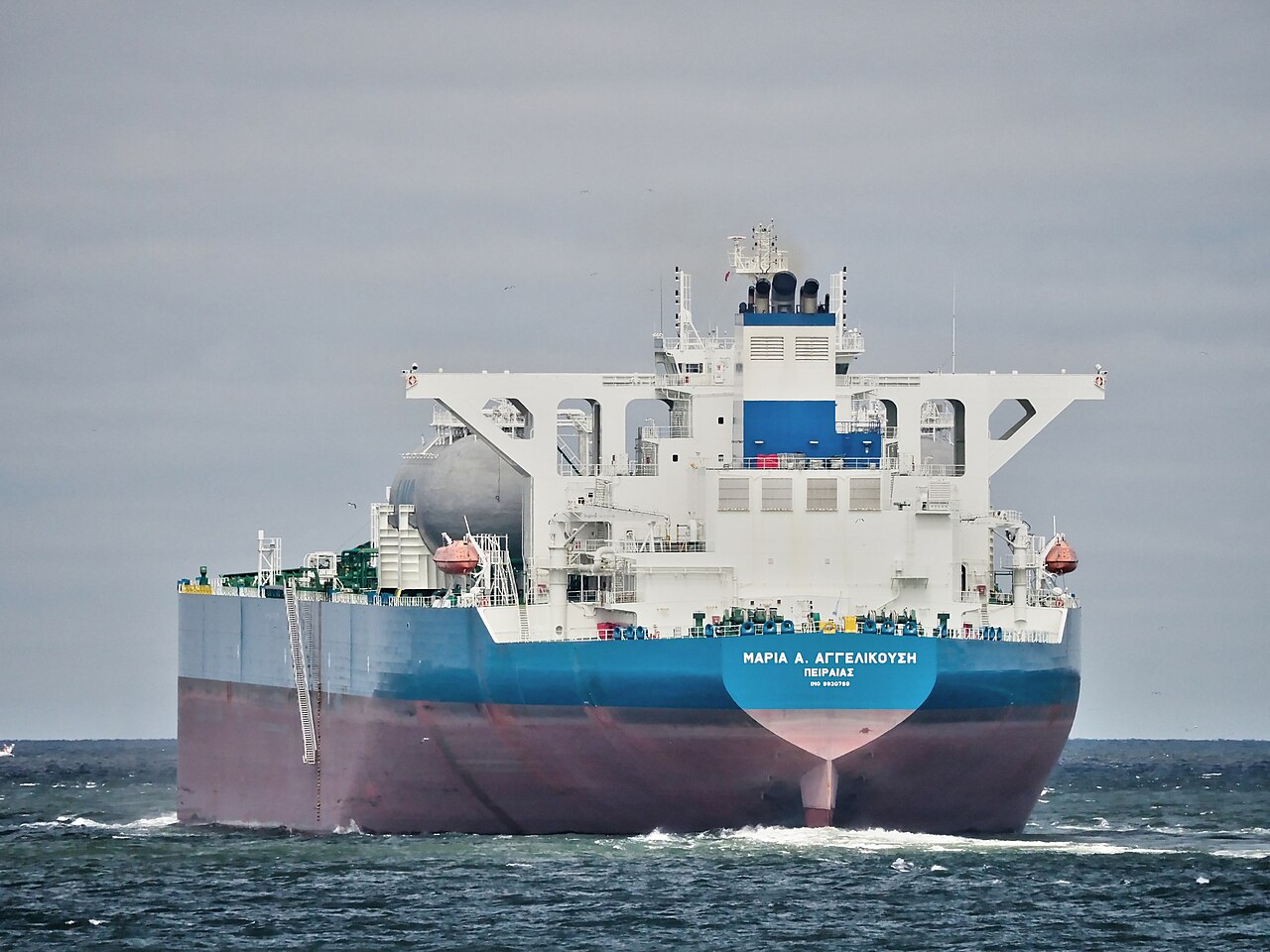
The pipeline was the workaround—until it became a target
Before the latest attacks, the East–West Pipeline was the obvious answer to a Hormuz crisis: move oil west, load it at Yanbu and avoid the strait. The system cannot fully substitute for normal Gulf flows, but it can blunt a disruption and buy governments time. Its value rose further as the Iran war and shipping disruption around Hormuz made redundancy a matter of near-term supply rather than abstract contingency planning.
That logic was damaged on September 11. Drone attacks shut the line after Riyadh blamed an Iraqi militia. Saudi engineers were reported to be rebuilding flows, but tanker loadings at Yanbu had not resumed at the reporting cutoff. The attack demonstrated that a bypass is useful only if every link—from pumping stations to storage, refinery units, air defence and loading berths—remains available.
Yanbu is less exposed to Iranian coastal forces than terminals inside the Gulf, but it is closer to the Houthi missile-and-drone theatre and to the southern Red Sea. Hormuz concentrates risk at a narrow maritime gate; the East–West route distributes risk across a long land corridor and a western port. That is strategically better than having no alternative, but it is not immunity. It replaces one concentrated vulnerability with several defendable—and attackable—nodes.
Signal Post News previously examined how the East–West Pipeline and Yanbu change the global oil equation. The French deployment is the operational follow-through to that analysis: Paris is not defending an ordinary industrial site but the infrastructure that makes Saudi diversification away from Hormuz physically possible.
A defensive mission with mission-creep risk
The strongest case for the Macron Saudi Arabia defense deal is narrow and practical. Radar can extend warning time. Point-defence systems can protect specific installations. French personnel can help connect sensors, command posts and interceptors. A tightly written mandate could reduce the likelihood that Saudi aircraft or French forces are used for strikes inside Yemen while still making the port harder to hit.
Britain has already made a related but distinct choice. Its deployment of one RAF Voyager to support Saudi defensive sorties, analyzed in our report on British tanker support for Saudi air defence, increases patrol endurance without publicly assigning British aircraft to attack targets in Yemen. France’s mission is more fixed to the ground and to Yanbu, but both commitments rely on the same proposition: that military support can remain defensive as the conflict around it intensifies.
Jean-Luc Mélenchon challenged that proposition and called for parliamentary scrutiny under Article 35 of the French Constitution. His warning was straightforward: soldiers stationed in a war theatre may become belligerents if their base is attacked and France responds. The criticism does not establish that escalation is inevitable, but it identifies the central political risk. A missile intercepted over Yanbu fits a defensive mandate. A missile that kills French personnel could create public and military pressure for retaliation, target expansion or a longer deployment.
There are also practical questions Macron’s announcement did not answer. Which French systems will deploy? Who controls engagement decisions? Will French radar tracks be shared for operations outside the defended zone? Are Saudi units responsible for the final intercept? What happens if a launch site is identified in Yemen? Mission creep often begins not with a new political declaration but with a tactical request that appears necessary to protect the original force.
Who benefits—and who absorbs the losses
Saudi Arabia gains additional defensive capacity, political backing from a major European military power and a signal to oil customers that Yanbu will not be left exposed. The kingdom also gains room to rebuild pipeline flows without relying only on its own interceptors. The cost is a greater foreign military footprint and a deeper dependence on external partners at a moment when Riyadh has tried to preserve diplomatic flexibility.
France gains influence with Riyadh, a visible role in energy security and an opportunity to demonstrate that European power can protect infrastructure beyond Europe. French defence companies may also benefit if the emergency mission develops into longer-term radar, interceptor or command-and-control cooperation. The downside is direct exposure: French troops become potential targets, and French credibility becomes tied to the performance of a defence network facing relatively inexpensive drones and missiles.
Oil importers gain if the mission helps restore Yanbu loadings and lowers the chance that both Hormuz and the Red Sea alternative fail at once. Consumers could benefit through lower risk premiums. But the benefit disappears if deployment signals persuade markets that the conflict is expanding faster than defenses can contain it.
The Houthis lose some freedom to threaten Yanbu if French sensors and interceptors improve the defensive picture. They may nevertheless gain a new political narrative: an additional Western power can be portrayed as entering the war. That does not make the portrayal accurate, but it may aid recruitment, alliance messaging or justification for further attacks.
Iran faces a mixed calculation. A better-defended Yanbu reduces the leverage created by Hormuz disruption and complicates allied pressure through regional armed groups. At the same time, a visible European military presence offers Tehran an argument that Western states are militarizing the conflict. Iran can benefit from pressure on Saudi export routes without openly directing any particular Houthi action; it also risks a wider coalition forming around the defence of energy infrastructure if attacks continue.
Saudi restraint and Iran’s next calculation
Riyadh’s immediate public silence matters. The agreement was finalized with Saudi authorities, according to Macron, but no Saudi statement had clarified the mission’s rules, duration or relationship to ongoing operations. The kingdom has incentives to accept help while avoiding language that makes the deployment look like a new offensive coalition.
Saudi leaders must also balance three goals that do not fit neatly together: protect infrastructure, deter Houthi attacks and avoid returning to the open-ended Yemen intervention of the previous decade. A foreign defensive shield can support all three if it works. If attacks continue, however, the question will shift from whether to protect Yanbu to whether protection alone is enough.
Iran’s calculus turns on that threshold. Tehran has long benefited when partners can impose costs without triggering direct state-to-state war. A disciplined French mission may deny some operational gains while preserving an off-ramp. A French retaliatory strike, by contrast, would let Iran and the Houthis argue that Europe had crossed from defence into combat. The strategic contest is therefore not only over interception rates; it is over who defines the mission after the first serious test.
Our broader analysis of Saudi expectations, Houthi pressure and Iran’s regional leverage explains why this ambiguity is useful to some actors and dangerous to others.
Four scenarios now shape the next phase
1. A narrow, successful shield. France deploys a modest number of specialists with radar and point-defence equipment. Saudi units retain operational control, Yanbu loading resumes, and attacks either fail or become less frequent. This is Macron’s preferred outcome: a limited mission produces a large energy-security effect without combat expansion.
2. A European air-defence coalition. Britain’s Voyager, French systems and contributions from other European states evolve into a coordinated defensive network covering Saudi and Red Sea infrastructure. Shared warning data and layered interceptors could raise effectiveness, but command arrangements, cost sharing and the boundary between defence and offensive support would become politically contentious.
3. Rafales move forward. If the threat worsens, Macron could deploy Rafale fighters already in the region or send additional aircraft. Combat air patrols would expand the defended envelope and could help against some drones or cruise missiles. They would also be expensive, dependent on tanking and basing, and more likely to face demands to suppress launch sites rather than merely intercept incoming threats.
4. Deterrence fails and French troops are hit. A successful strike on the French detachment would pose the hardest question. Paris could reinforce, retaliate, reduce its footprint or seek a broader coalition response. Each option carries a different signal. Reinforcement may deter further attacks but deepen commitment; withdrawal may reduce exposure but encourage pressure on other sites; retaliation risks direct entry into the conflict.
Houthi deterrence is therefore not a simple contest of missile versus interceptor. The group may judge that even an unsuccessful launch forces expensive defensive activity and political debate. France may judge that denying damage is enough. Saudi Arabia may want the option to strike launch infrastructure. Those different objectives can coexist only while the mission’s rules remain clear.
What to watch next
The first indicators will be concrete: the number and type of French systems, the size and legal status of the troop contingent, the command relationship with Saudi forces, and the date Yanbu tanker loadings resume. A public Saudi statement would clarify whether Riyadh defines the arrangement as temporary emergency assistance or the beginning of a wider partnership.
Operationally, watch for verified interception data rather than claims alone; repairs to the East–West Pipeline and Yasref; changes in insurance and tanker scheduling; any Rafale movement; and evidence that other European states are preparing air-defence contributions. Diplomatically, the key measure is whether France pairs protection with a renewed effort to turn the failed 2022 truce process into a settlement.
The deployment can defend a port. It cannot by itself settle Yemen’s war, secure every kilometre of pipeline or remove the risks at Hormuz and Bab al-Mandab. Its success will be judged by whether it buys space for energy flows and diplomacy—or merely adds another flag to a battlefield whose boundaries keep expanding.
Sources and reporting notes
- The Wall Street Journal — Macron’s deployment announcement, pipeline dimensions and capacity, and the possible Rafale decision.
- The War Zone — military context for the Yanbu defence package.
- InvestingLive — energy-market and deployment context.
- Boursorama / AFP — French political reaction and Macron’s stated defensive purpose.
- Le Figaro — Macron’s interview, fuel-price argument and wider policy context.
- Middle East Forum Observer — background on Yanbu’s strategic promise and vulnerabilities.
Reporting basis: Fixed September 24, 2026 snapshot. Houthi strike accounts are described as claims unless separately confirmed. The reported Riyadh strike had no Saudi confirmation and no civil-defence alert. Macron announced no troop number or timetable, and no public Saudi comment had been reported. Capacity figures describe maximum infrastructure capability, not confirmed current flows.