Saudi Coalition Orders Sanaa Fuel Station Evacuation as Houthis Threaten Aramco
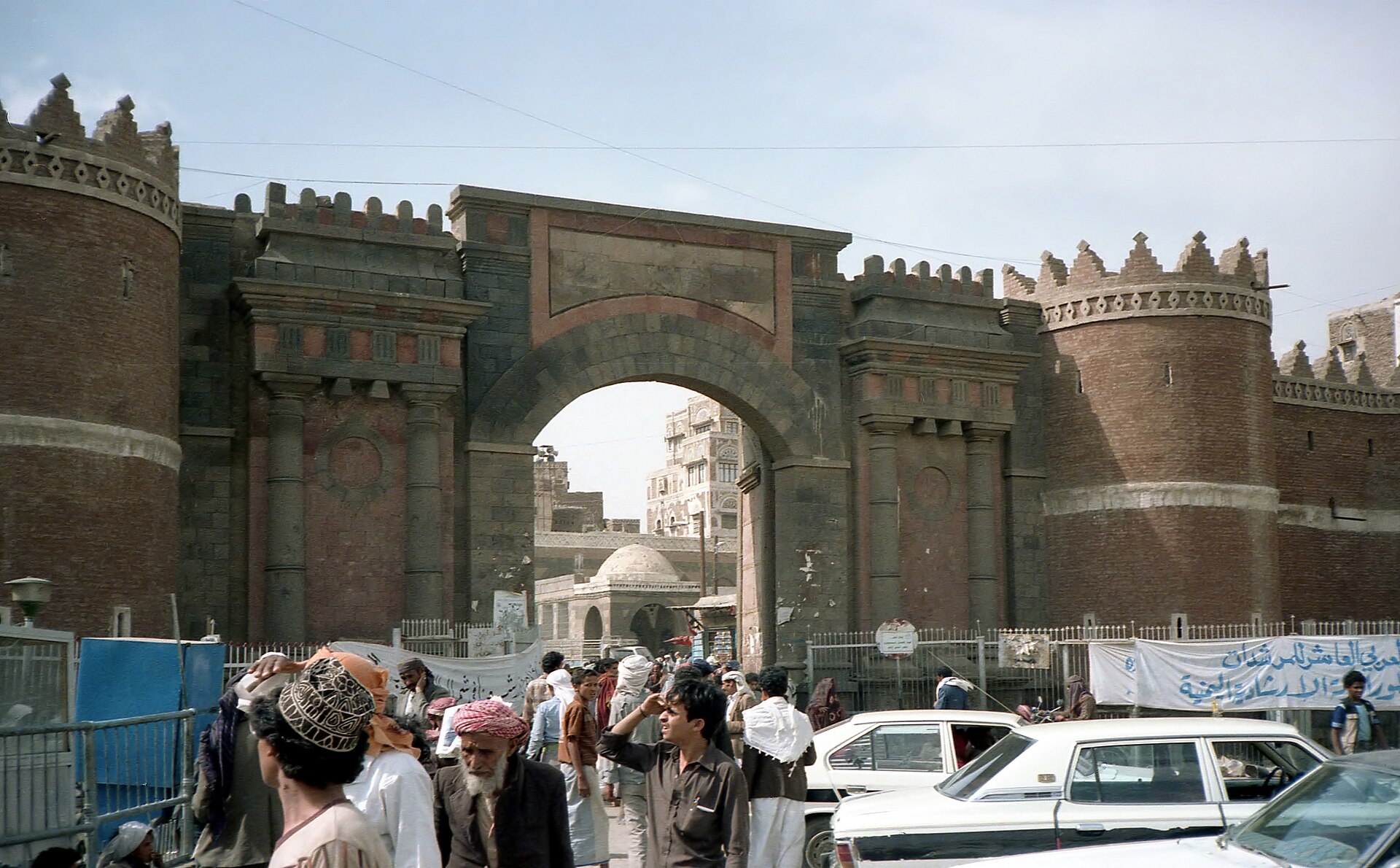
Saudi coalition Sanaa evacuation orders do not arrive often, and they do not arrive quietly. On Tuesday the coalition's joint forces command urged civilians to leave the area around the Yemen Petroleum Company's Al-Sabahah central station — named as the Yemen Oil Company's Sabah central station in wire reporting — for their own safety, identifying the site on an illustrative map ahead of what it called a planned military operation. The coalition gave no timing and no further detail about what it intends to hit, or what it believes is at the site. That silence matters, and it is one of the things that cannot be verified from the public statements alone.
Track it live: Live war tracker — follow the Yemen fighting, the wider Middle East and other active conflicts as they develop, including the Middle East conflict map.
The Houthi reply came from military spokesman Yahya Saree, who warned that strikes on Sanaa would be met with a harsh and painful response in Riyadh. In the same breath, the movement warned employees and civilians near Saudi Aramco facilities to evacuate and stay away, describing the facilities as legitimate targets. Both sides, in other words, spent Tuesday pointing at the other side's energy infrastructure and telling civilians to move. Neither side's claims about the other's sites can be independently confirmed at this stage — what is confirmed is the exchange itself, reported by Reuters and regional outlets from both directions.
A day that began with drones over Riyadh
The evacuation order was the second coalition announcement of the day. Earlier on Tuesday, coalition and Saudi defence spokesman Major General Turki Al-Malki said three drones had been destroyed north of Riyadh. He did not say who launched them or whether there was damage. Hours earlier, residents of the Saudi capital had heard air raid sirens and explosions on Monday evening, and the Houthis said they had fired a ballistic missile toward King Khalid International Airport — the airport that has now been shut since Saturday's attack, in which at least 12 people were killed and more than 300 wounded, with some later reporting putting the death toll at 13. Our earlier coverage traced how that strike unfolded at Riyadh's airport terminals and why the closure has since been extended to October 17, with cancellations across Saudi airports running at 46.4 percent on Monday, according to aviation analytics firm Cirium.
Inside Yemen, the night had already been loud before the evacuation order landed. Houthi-run Al-Masirah television reported airstrikes it blamed on Saudi Arabia against the Red Sea island of Kamaran, the Qanawis district northwest of Hodeida, and Jawf province, which borders Saudi Arabia, and said Houthi forces had shot down a Saudi drone over Saada province, the movement's northern stronghold. Saudi Arabia did not immediately comment on those reports. On Monday, airstrikes the Houthis also blamed on Saudi Arabia hit two districts of Sanaa around midnight; a spokesman for the Houthi-run health ministry said a strike on a salt factory in the Hamadan district killed one man and wounded eight people, and that a separate strike on a house wounded a woman and three children. Those casualty figures come from the Houthi-run ministry and have not been independently verified; Saudi Arabia did not comment on them either.
How the two capitals got here
Yemen's war has run for more than a decade, but the current spiral is only weeks old. Last month the Houthis seized strategic territory along Yemen's Red Sea coast, strengthening their grip on the approaches to the Bab el-Mandeb strait. Saudi Arabia responded with airstrikes, backing for a Yemeni government counteroffensive, and — according to reporting this week — a request for American assistance, which drew its own warning on Monday when Houthi political bureau member Mohammed al-Bukhaiti told AFP the United States would face a swift response if it joined the fight; we covered that warning and the Saudi request when it was made. Since Saturday, the airport attacks on Riyadh have changed the conflict's centre of gravity: the Houthis are striking the Saudi capital's civilian infrastructure directly, and the coalition is answering inside the Houthi capital in kind.
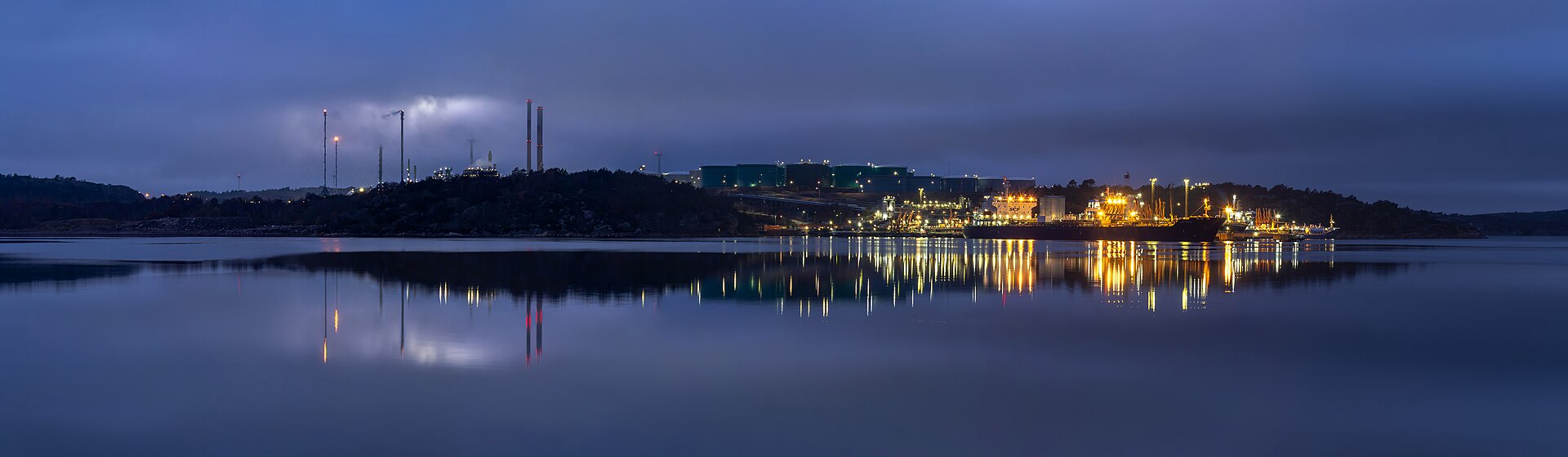
On the ground, the humanitarian ledger keeps growing underneath the exchange of warnings. The International Organization for Migration has recorded 217,303 people displaced since the fighting escalated on Yemen's west coast, more than half of them in Taiz governorate — the city the Houthis largely encircled on October 4, cutting most supply routes from government-held areas, as residents described in our Taiz siege coverage. A central fuel station in Sanaa is not an abstraction in that context: in a country where diesel and cooking gas are already running short in besieged cities, fuel infrastructure is civilian lifeline and military asset at the same time, which is precisely why striking it is such a consequential signal.
Why this matters
First, the target selection is the story. An evacuation order is a public, documented, advance announcement — the coalition is not denying a strike after the fact, it is pre-announcing one and attaching a map. That does two things at once: it reduces, though it cannot eliminate, the risk to civilians near the site, and it turns the strike into a demonstration. Everyone watching — in Sanaa, in Riyadh, in Washington — is meant to understand that the coalition is willing to hit fuel infrastructure in the middle of the enemy capital, openly. The Houthi answer mirrors the logic exactly: name Aramco's facilities, tell the workers to leave, and make the threat itself the message. When both sides start issuing evacuation warnings for each other's energy sites, the warnings become a form of deterrence theatre layered on top of a real bombing campaign — and deterrence theatre only works if both sides believe the other might actually follow through, which is what makes it dangerous.
Second, compare the numbers with where this war sat a year ago. For most of the period since the 2022 truce, cross-border strikes between the Houthis and Saudi Arabia had largely stopped, even as the Red Sea shipping crisis burned on. In the space of four days, the conflict has produced the deadliest attack on Saudi soil in more than a decade, a capital-city airport closed for at least a week, a 46.4 percent cancellation rate across a G7-scale aviation market, schools in Riyadh moved online, and now a pre-announced strike on a fuel station in Sanaa. That is not an escalation ladder being climbed rung by rung; it is several rungs being taken at once, by both sides, in public. Readers tracking the energy side of that spiral can follow live oil price forecasts alongside the war tracker.
Third, there is the question neither statement answers: what is actually at the Al-Sabahah station? The coalition has not publicly said whether it considers the site a military fuel depot, a launch or storage location, or something else, and the Houthis have not addressed the site's use at all beyond threatening retaliation. Fuel stations in a capital city serve ambulances and bakeries as readily as military trucks. Until the coalition states its case — or until the strike happens and its effects can be assessed — the honest position is that the purpose of the operation is unproven, and both governments' characterisations should be read as claims, not findings.
Who benefits, who loses
The coalition gains a visible answer to the airport attacks at a moment when the Saudi government is under domestic pressure to show that the capital can be defended and avenged; a pre-announced, map-published operation is designed to be seen. The Houthis gain if the exchange stays symmetrical: every Saudi strike on Sanaa they can answer, or credibly threaten to answer, against Riyadh reinforces their central claim that Saudi Arabia can no longer fight in Yemen from a safe position — the argument Bukhaiti made explicitly this week. The clear losers are civilians in both capitals, who are now being told by two armed forces to plan their lives around evacuation warnings, and Yemen's displaced, whose fuel, food and medical supply chains run through exactly the infrastructure being named. Regional aviation and energy markets lose too: an airport closed to October 17 and Aramco facilities publicly designated as targets are risks that insurers and airlines price immediately, whether or not another missile is ever fired.
Critics of the coalition's approach — including humanitarian organisations that have spent the week calling for de-escalation — make a point that the evacuation format itself raises: a warning reduces legal and moral exposure for the striker, but it does not restore the fuel, the jobs or the supply chain a destroyed station represents, in a city already short of all three. Critics of the Houthis make the mirror-image point about Aramco and the airport: naming civilian-adjacent infrastructure as a legitimate target, and striking an international airport, are escalations no warning can launder. Both critiques can be true at once, and the reporting above does not require choosing between them.
What happens next
The immediate watch is mechanical. Does the coalition strike the Al-Sabahah station, and if so, what does it say afterwards about what was there? Does the Houthi response, if it comes, aim at Aramco facilities, at Riyadh's airport again, or at Red Sea shipping — each of which sends a different signal about how far the movement is willing to go? And does the United States, having been warned off on Monday and asked for help by Riyadh in the same news cycle, step in, step back, or try to broker the pause that neither capital is currently offering? A fourth signal is quieter: whether the evacuation-warning format spreads. If pre-announced strikes on named energy sites become the grammar of this war, every fuel depot, port and power station in Yemen and western Saudi Arabia becomes a potential headline with a map attached — and civilians in both countries will be living by warnings issued by the other side's spokesman. For now, Sanaa is waiting on a strike that has been announced but not explained, and Riyadh is waiting to see whether the answer to it arrives by missile. Both waits are the story.
Sources
Reuters (Oct 13, 2026), Saudi-led coalition orders evacuation of Yemen oil facility in Sanaa ahead of operation — the evacuation order for the Sabah central station, Saree's warning, the Aramco warning, the Red Sea coast background and the Riyadh airport closure. Gulf Business (Oct 13, 2026), Saudi coalition orders evacuation of Sanaa oil facility ahead of strike — the Al-Sabahah naming, Al-Malki's three drones north of Riyadh, and the absence of timing or detail from the coalition. Associated Press (Oct 13, 2026), Houthi rebels say multiple airstrikes targeted them in Yemen — the overnight Kamaran, Qanawis, Jawf and Saada reports, the missile claim toward King Khalid airport, and Monday's Sanaa strikes with the Houthi-run health ministry toll. IOM displacement update via ReliefWeb (Oct 12, 2026) — 217,303 displaced, 55 percent in Taiz governorate.