Drone Attack Sinks Ship Off Bulgaria, 11 Sailors Missing
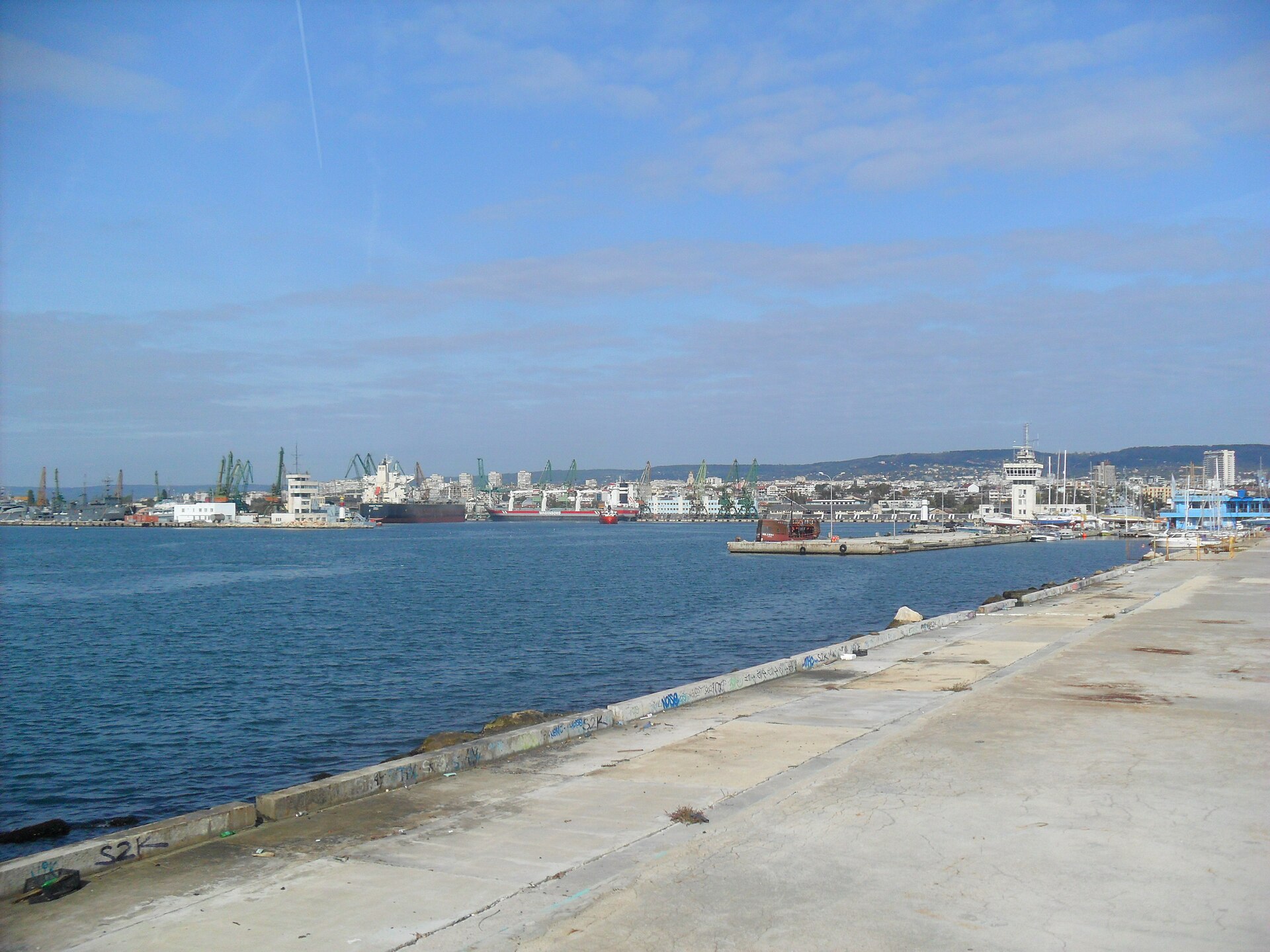
Drone attack sinks ship Bulgaria is, for the second time in seven days, the plain summary of a night in the western Black Sea. According to Bulgarian officials cited by Reuters, the Chelsea 3 was hit at about 1:30 a.m. local time, roughly 18 nautical miles off Byala, by three drones. Its crew — seven Ukrainians and eight Azerbaijanis — were all rescued and taken to Varna; five received medical treatment and none was reported seriously injured. The HS Dignity, sailing under the flag of Guinea-Bissau, sank off Krapets, further north. Five of its crew were rescued; 11 sailors were still missing on Tuesday as a search-and-rescue operation continued. Bulgarian media initially named a different vessel in connection with the sinking, and officials themselves were careful to separate what is confirmed — two ships hit, one sunk, 11 people unaccounted for — from what is not.
Track it live: Live war tracker — follow the fighting in Ukraine and other active conflicts as they develop, including the Ukraine war map.
Prime Minister Rumen Radev called the attacks unacceptable in a televised address and convened Bulgaria's security council. His formulation matters, and he chose it carefully twice over: Bulgaria does not have clear and conclusive evidence attributing the drones to either side, he said, but the outcome of the attacks benefits Russia — and on that basis he would summon the Russian ambassador for a meeting on Tuesday. Radev said he had informed NATO allies and the European Union and was seeking support both for an investigation to establish where the drones came from and to strengthen Bulgaria's air and maritime surveillance. There was no immediate comment from Moscow on Tuesday's incidents; after meeting Radev later on Tuesday, Russian ambassador Eleonora Mitrofanova said she had no information from Russia's Defence Ministry about attacks on commercial vessels in the Black Sea, but did not rule out that they could be a provocation by a third party, according to the Bulgarian government.
The reactions, and what each one carefully does not say
European Commission President Ursula von der Leyen condemned the attacks on X, calling the Black Sea another front of escalation in Russia's war and saying those responsible should be held accountable — a condemnation that named the war, if not a culprit for this specific night. Ukraine's foreign minister, Andrii Sybiha, went further, describing the strikes as a deliberate disregard for civilian lives and arguing that Russia is attacking the sea lane that global food security depends on. NATO Secretary General Mark Rutte said the alliance would keep working closely with its Black Sea allies and noted that NATO has already strengthened its posture along the eastern flank. Read together, the three statements form a ladder: Brussels condemns, Kyiv attributes, NATO reassures. None of them presents evidence, because on Tuesday there was no public evidence to present — debris from the October 6 attacks could not be recovered either, which is why that investigation never settled the drones' origin.
One week, two sinkings: how the pattern changed
Seven days ago, on October 6, drones hit two merchant ships in Bulgaria's exclusive economic zone: the Togo-flagged Alfa Watan sank and the grain ship Able was damaged, in what we covered as the first reported strike of its kind in a NATO member's waters. Ukraine blamed Russia for that attack; Russia denied involvement, its embassy in Sofia said the Alfa Watan was not among the ships its drones targeted, and Moscow's defence ministry said an investigation was needed to establish where the drones came from. That exchange — accusation, denial, no debris, no verdict — is exactly where the October 6 case still sits.
What changed on Tuesday is not the evidence; it is the repetition. A single unexplained sinking can be filed, diplomatically, as an anomaly. Two sinkings of civilian cargo ships in the same stretch of sea in eight days is a pattern, and patterns are what insurers, shipowners and navies price and plan around. The human arithmetic has also darkened: the October 6 sinking killed nine Syrians and one Egyptian, according to wire reporting, and Tuesday's has left 11 more sailors — reported to be mostly Syrian, with three Egyptians — missing at sea. The missing are not confirmed dead, and this article does not treat them as such; but every hour a search runs in October water narrows the odds, which is why Bulgarian officials led with the rescue numbers rather than the diplomacy.
Why this matters
First, geography. These ships were not sunk off Odesa or in a declared war zone; they went down 15 to 18 nautical miles off the coast of Bulgaria, a NATO and EU member that shares no border with either belligerent. The western Black Sea is the corridor Ukraine's grain and cargo trade was rerouted through after the collapse of the old corridor arrangements — hugging the coasts of Romania and Bulgaria precisely because those waters were supposed to be safer. An attack pattern that follows shipping into that corridor attacks the rerouting logic itself: if the coastal lane is no longer reliably safer than the open sea, there is no third route.
Second, the attribution gap is now a strategic fact in its own right. Drones that arrive at night, from over water, leaving no recoverable debris, give every government involved a usable story: Kyiv and Brussels can point to who benefits, Moscow can deny and demand an investigation it knows may never conclude, and Sofia can summon an ambassador while honestly conceding it cannot prove the case. Radev's "benefits Russia" formulation is the sound of a NATO government building a political response on inference because evidence is unavailable. That may be justified — the inference is not unreasonable — but readers should see the seam: inference is doing the work that wreckage and telemetry would normally do, and each unanswered attack makes the next inference easier to draw and harder to check.
Third, compare the cost curve. A one-way attack drone costs a tiny fraction of a cargo ship, its cargo, a search-and-rescue operation, a security-council session and the insurance repricing that follows across an entire sea. War-risk premiums for Black Sea transits have spiked after every previous escalation in this war, and two sinkings in a week is precisely the input those markets react to — some owners will pay, some will wait, and some cargo, including grain, will simply not move. The crews absorbing that risk are overwhelmingly not nationals of either belligerent: Ukrainians and Azerbaijanis on one ship Tuesday, Syrians and Egyptians on the other. The Black Sea war's merchant casualties are becoming, disproportionately, third-country sailors who had no government at the table when the drones were launched.
Who benefits, who loses
If the drones are Russian — unproven, and stated here only as the attribution Kyiv asserts and Sofia leans toward — the benefit is pressure on Ukraine's export economy and on NATO's sense of control over its own littoral, at minimal cost and with plausible deniability intact. If they are not, the benefit still accrues to whoever wants the coastal corridor feared. The losers are easier to name and do not depend on attribution: 11 missing sailors and their families; the rescued crews, five of them treated for injuries and burns; shipowners and grain buyers facing another repricing; and Bulgaria, which has now twice in a week had a war it is not fighting arrive inside its search-and-rescue zone. Ukraine loses either way — its own ship was hit, its sailors were aboard, and its export corridor is the target-rich environment in question. That is the context for the wider week as well: while the Black Sea burned, the energy-ceasefire argument between Washington, Kyiv and Moscow was still unresolved, as our coverage of Russia's strikes and the ceasefire dispute sets out — the war is escalating on the water while its diplomats argue over the land and the grid.
What happens next
The immediate questions are concrete. Does the search find the 11 missing sailors, and does Bulgaria's investigation recover anything — a drone fragment, a telemetry trail — that the October 6 case never produced? Does NATO convert Rutte's reassurance into visible assets: more maritime patrol aircraft, more surveillance, an escorted-corridor conversation that allies have so far avoided? Does Russia answer the ambassador's summons with the same denial it issued last week, or with silence? And does a third ship get hit — because the difference between "two incidents" and "a campaign" is, in the end, a third night. Shipowners will not wait for the diplomatic answers; the first repriced insurance contracts and the first quietly cancelled transits will be the earliest honest signal of what the Black Sea corridor is worth now. For the 11 families waiting on the search off Krapets, none of those signals will arrive soon enough to matter.
Sources
Reuters (Oct 13, 2026), reporting from Sofia — two cargo ships hit by drones overnight off Bulgaria, one sunk, 11 sailors missing; the Chelsea 3 rescue and crew nationalities; Prime Minister Radev's televised address, the Russian ambassador summons and the reactions of Ursula von der Leyen and Andrii Sybiha. CNN (Oct 13, 2026), Several sailors missing after drone strike sinks merchant vessel near Bulgarian waters — the HS Dignity's flag and sinking off Krapets, Radev's investigation appeal and NATO Secretary General Mark Rutte's statement. Marine Insight (Oct 13, 2026), Two ships hit by drones off Bulgaria, one sinks in second such attack in a week — the 1:30 a.m. timing, the medical-treatment figures and the October 6 background, including Russia's earlier denial.