Saudi Arabia Houthi airport attack
Saudi Arabia Houthi airport attackHouthi missile Riyadh airportKing Khalid airport attackAbha airport strikeSaudi GACA Houthi attacksHouthi attacks Saudi airports October 2026Mecca defence pactYemen war Saudi Arabia escalationTurki al-Maliki missile launcher
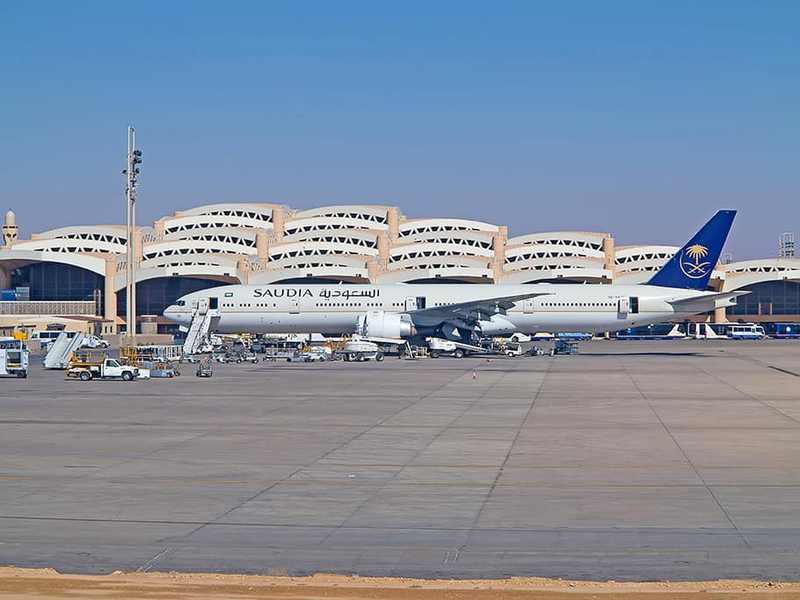
RIYADH — The General Authority of Civil Aviation, or GACA, has confirmed that Houthi attacks struck two Saudi international airports on successive days, killing three people and wounding 36. The first hit Abha International Airport on Tuesday, October 6; the second struck King Khalid International Airport in Riyadh on Wednesday, October 7. Material damage was reported at both sites, and emergency teams were deployed. The Houthi military spokesman, Yahya Saree, claimed responsibility for both attacks.
The casualty list shows why this is not only a Saudi security story. Those killed were a Moroccan woman, an Algerian woman and a Sudanese resident. The wounded included Saudi citizens and residents from Bangladesh, the Philippines, Egypt and Pakistan. Civilian aviation hubs concentrate an international workforce by design; when they become targets, the human cost crosses borders immediately.
What Saudi Arabia officially confirmed
Abha airport strike: two women killed, 28 wounded
GACA said Tuesday's Abha airport strike killed two women — one Moroccan national and one Algerian national — and wounded 28 people. The injured included Saudi citizens and residents from Bangladesh and the Philippines. The authority said the airport sustained material damage and that emergency teams responded.
Abha serves the Asir region in southwestern Saudi Arabia, much closer to Yemen than Riyadh. That geography has long made southern Saudi infrastructure vulnerable to cross-border missiles and drones. What changed this week was the scale of the civilian toll and the fact that the violence did not stop at the southern frontier.
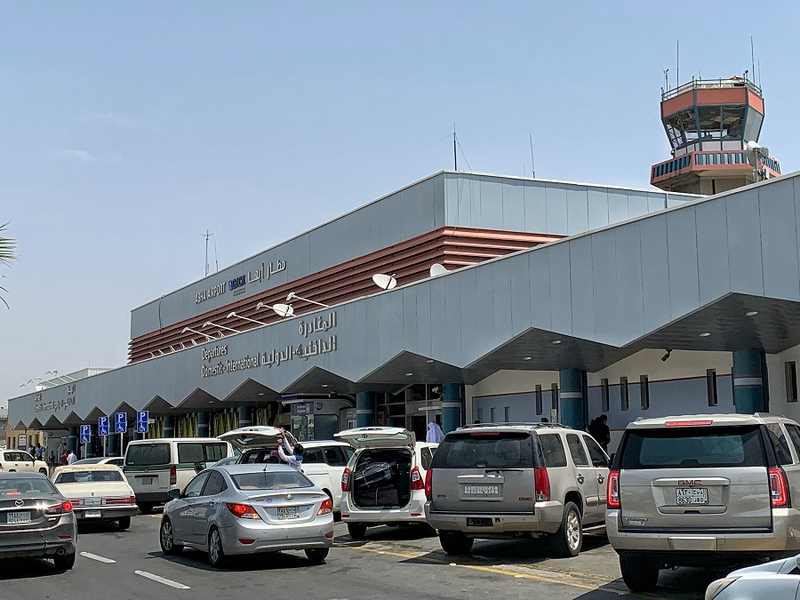
Houthi missile Riyadh airport attack: one killed, eight wounded
On Wednesday, the Houthis said they fired a ballistic missile at King Khalid International Airport. Saudi authorities confirmed the King Khalid airport attack killed one Sudanese resident and wounded eight people: five Saudi citizens, two Egyptian residents and one Pakistani national. The airport also suffered material damage.
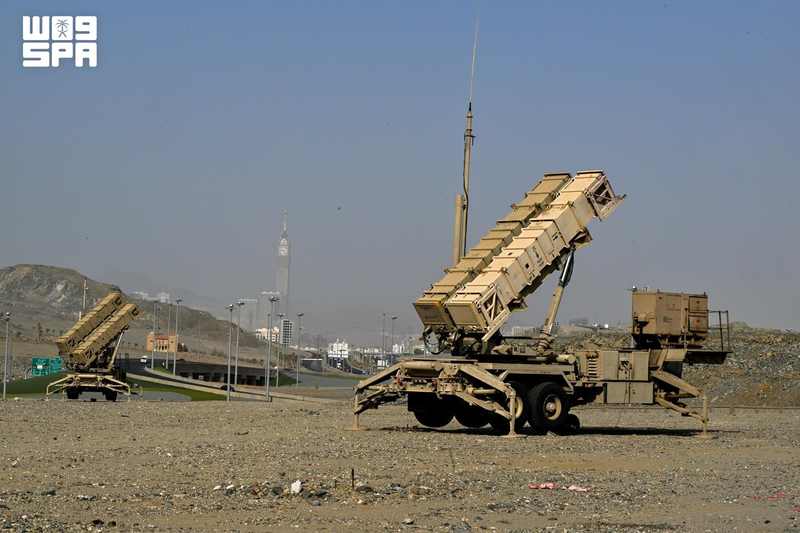
Saudi coalition spokesman Maj. Gen. Turki al-Maliki said Saudi forces destroyed the ballistic-missile launcher used in the Riyadh attack. He also warned that preparations were underway for “another imminent attack.” That warning matters because it frames the incident not as a closed episode but as part of an active campaign in which launch sites, air defenses and civilian flight operations are moving on the same clock.
Separately, Houthi missiles and drones targeted Aden International Airport in Yemen. A Yemenia Airways flight arriving from Cairo was diverted to Jeddah. The diversion illustrates the widening aviation footprint: even when an aircraft is not hit, the threat can close an approach, alter a route and push passengers into a different country.
Why this matters
Saudi Arabia's public confirmation of a successful Houthi ballistic-missile strike on the capital's main international airport is an escalation marker. Riyadh has often been cautious about acknowledging which Houthi claims translated into successful hits. This statement fixes the event in the public record: a missile reached the kingdom's most important political city, struck its principal international airport, killed a foreign resident and wounded eight people.
The location changes the strategic meaning. Abha is an exposed southern gateway near the Yemen theater. King Khalid International Airport is part of Riyadh's national and global connectivity — a hub used by residents, business travelers, diplomats, migrant workers and pilgrims. A strike there tests not just border defense but the kingdom's promise that its core cities remain open, predictable and investable despite the war next door.
The acknowledgment also narrows the space between claim and consequence. Airlines, embassies and insurers do not have to decide whether to treat the Houthi statement as propaganda alone; they now have a Saudi government confirmation, a casualty count and reported damage. That can change risk models even if flight schedules continue.
Saudi GACA Houthi attacks put foreign workers at the center
All three people killed were foreign nationals or residents, and many of the wounded came from abroad. That profile reflects the composition of Saudi airport labor and travel, but it also creates diplomatic consequences beyond Riyadh. Morocco, Algeria, Sudan, Egypt, Pakistan, Bangladesh and the Philippines all have citizens or residents named in the toll.
The numbers — three killed and 36 wounded — are not the largest casualty count of the Yemen war. Their significance comes from place, timing and identity. Earlier cross-border attacks often focused on border towns, military targets or energy sites; this week's confirmed toll was concentrated at two functioning civilian airports. The victims were people moving through ordinary transport infrastructure, not combatants on a front line.
The US State Department and US Embassy in Riyadh warned American citizens to exercise heightened vigilance because of Houthi threats to airports and airspace. European aviation safety authorities also warned airlines. Such advisories do not automatically mean a shutdown, but they can lead carriers to recalculate routes, crews, fuel loads, insurance and turnaround plans. Repeated warnings can become an economic cost long before a formal airspace closure.
How the Yemen war reached Saudi soil
The Houthi movement controls much of northern Yemen, including Sanaa, and has spent years developing missile and drone capabilities that can reach across the Saudi border. The Saudi-led intervention in Yemen began in 2015 in support of the internationally recognized government. Cross-border attacks and Saudi airstrikes have repeatedly tied the two sides' security calculations together.
The latest phase has intensified around the Bab el-Mandeb, the narrow passage between the Red Sea and Gulf of Aden. Saudi-backed Yemeni forces have launched Operation “Dawn of Yemen,” seeking to change the balance along the western coast and around the strategic waterway. The Houthis' airport campaign gives them a different kind of pressure: if Saudi-backed forces threaten Houthi positions in Yemen, the movement can threaten civilian infrastructure deep inside the kingdom.
Mecca defence pact activation raises the ceiling
The attacks came days after Pakistan publicly confirmed that its troops were stationed in Saudi Arabia under the newly activated Mecca defence pact. Turkey has also announced military deployments. The pact is intended to strengthen collective defense, but its activation also expands the number of governments with forces and reputations tied to what happens next.
For Riyadh, Pakistani and Turkish support can reinforce air defense, logistics and deterrence. For the Houthis and their Iranian backers, the deployments can be used to argue that the war is widening and that Saudi Arabia depends on outside military help. For Islamabad and Ankara, the challenge is to support Saudi defense without being pulled into an open-ended campaign inside Yemen.
Who benefits, who loses — and what critics say
Houthi leverage and Iranian pressure
The Houthis gain leverage when they demonstrate that civilian airports in both southern Saudi Arabia and the capital are within reach. The message is designed for more than Riyadh: it speaks to airlines, foreign investors and governments that rely on Saudi security. Iran, which backs the Houthis, benefits from pressure on a US partner and from forcing Saudi Arabia to divide attention between Yemen, air defense and broader regional commitments.
But the Houthis also assume risk. Civilian deaths, especially among foreign nationals, can harden international opinion and give Riyadh a stronger case for retaliation or expanded defensive support. A campaign that demonstrates reach can simultaneously produce the coalition the movement wants to deter.
Civilian air travel, foreign workers and oil markets lose
The immediate losers are the dead and wounded, their families, and travelers whose safety now depends on a fast-moving military contest. Foreign workers face a particular burden because many cannot easily change jobs, cities or travel plans when security alerts rise.
Airlines and airports absorb costs through diversions, delays, additional fuel, altered crew schedules and higher insurance premiums. Oil markets lose certainty. Neither attacked airport is an oil installation, but the same long-range systems that can threaten Riyadh aviation also raise questions about refineries, pipelines and export infrastructure. Traders tend to price the possibility of disruption before any barrel is actually lost.
The critics' argument
Supporters of the Saudi response argue that destroying launchers and activating allied defenses are necessary to protect civilians; restraint without credible defense, they say, invites more strikes. Critics answer that deeper coalition involvement and retaliatory operations can widen the war, increase civilian harm in Yemen and create new incentives for the Houthis to strike symbolic targets. Both arguments depend on the next sequence of events: whether additional attacks are intercepted, land, or stop.
Turki al-Maliki missile launcher claim — what is known
Al-Maliki said Saudi forces destroyed the launcher used in the Riyadh strike. That is the coalition's account, and independent verification of the launcher destruction was not provided in the cited reports. The same caution applies to operational claims from every side: the Houthis' statement establishes what they say they fired; GACA's statement establishes the Saudi-confirmed casualties and damage; analysis should not collapse those separate categories.
The warning of another imminent attack is more actionable than rhetorical. It means Saudi authorities believed they had information suggesting further launch preparations. That can trigger a cycle of preemptive strikes, higher alert levels and temporary aviation restrictions even if no second projectile reaches its target.
What happens next
Scenario one: coalition retaliation intensifies
The most direct path is expanded Saudi-led strikes against missile sites, storage areas and launch crews in Yemen. Pakistani or Turkish systems may reinforce surveillance and interception inside Saudi Arabia without crossing into Yemen. That would preserve the pact's defensive framing while giving Riyadh more capacity to protect airports.
Scenario two: deployments broaden the war
If attacks continue or casualties rise, pressure will build for Pakistan and Turkey to do more than defend Saudi territory. Any move toward direct operations in Yemen would deepen the Yemen war Saudi Arabia escalation and complicate both countries' relations with Iran. It would also test how narrowly the Mecca defence pact is interpreted.
Scenario three: aviation risk becomes the battlefield
The Houthis may calculate that intermittent threats to airports produce strategic effect without requiring constant successful strikes. Airlines could respond by avoiding particular approaches, reducing overnight operations or diverting during alerts. The US could tighten its posture around diplomatic facilities and aviation security while stopping short of direct intervention.
Oil implications
Oil prices will be most sensitive to evidence that the campaign is moving from airports toward energy infrastructure or that Bab el-Mandeb shipping faces sustained disruption. A single airport strike can lift a risk premium; repeated attacks on multiple classes of infrastructure could turn that premium into a broader supply concern. The key distinction is between fear of disruption and actual lost output.
What to watch now
Watch four indicators: whether GACA announces operational limits at Riyadh or Abha; whether Saudi Arabia confirms another attempted strike; whether Pakistani and Turkish deployments remain defensive; and whether coalition retaliation targets only launch infrastructure or expands into a wider air campaign. Also watch airline notices rather than social-media rumors. A route change, cancellation pattern or formal safety bulletin is a stronger measure of real aviation disruption than an unverified claim.
The central fact is no longer disputed by the Saudi government: two international airports were hit, three people were killed and 36 were wounded. The strategic question is whether that confirmation becomes the peak of this week's escalation — or the baseline for the next one.
Sources
- CNN — reporting on the attacks, Saudi confirmation, casualties and regional military context.
- The Wall Street Journal — casualty totals and the widening Houthi campaign against Saudi airports.
- Reuters — the Houthi ballistic-missile claim, Saudi response and aviation-security implications.
- Gulf Business — GACA's confirmed breakdown of fatalities, injuries and airport damage.
Reporting note: Casualty and damage figures are attributed to Saudi authorities. Houthi and coalition military claims are identified as claims unless independently confirmed.