Kramatorsk attack kills heating workers: three employees of the city's heating company were among four people killed in Russian strikes on the frontline city on Tuesday, the regional governor and Ukraine's Energy Ministry said.
World / They were out making sure a frontline city would have heat this winter. By the end of Tuesday, three of them were dead — and Kramatorsk had been attacked three times in a single day.
Track it live: Ukraine war map — live front-line and strike tracker
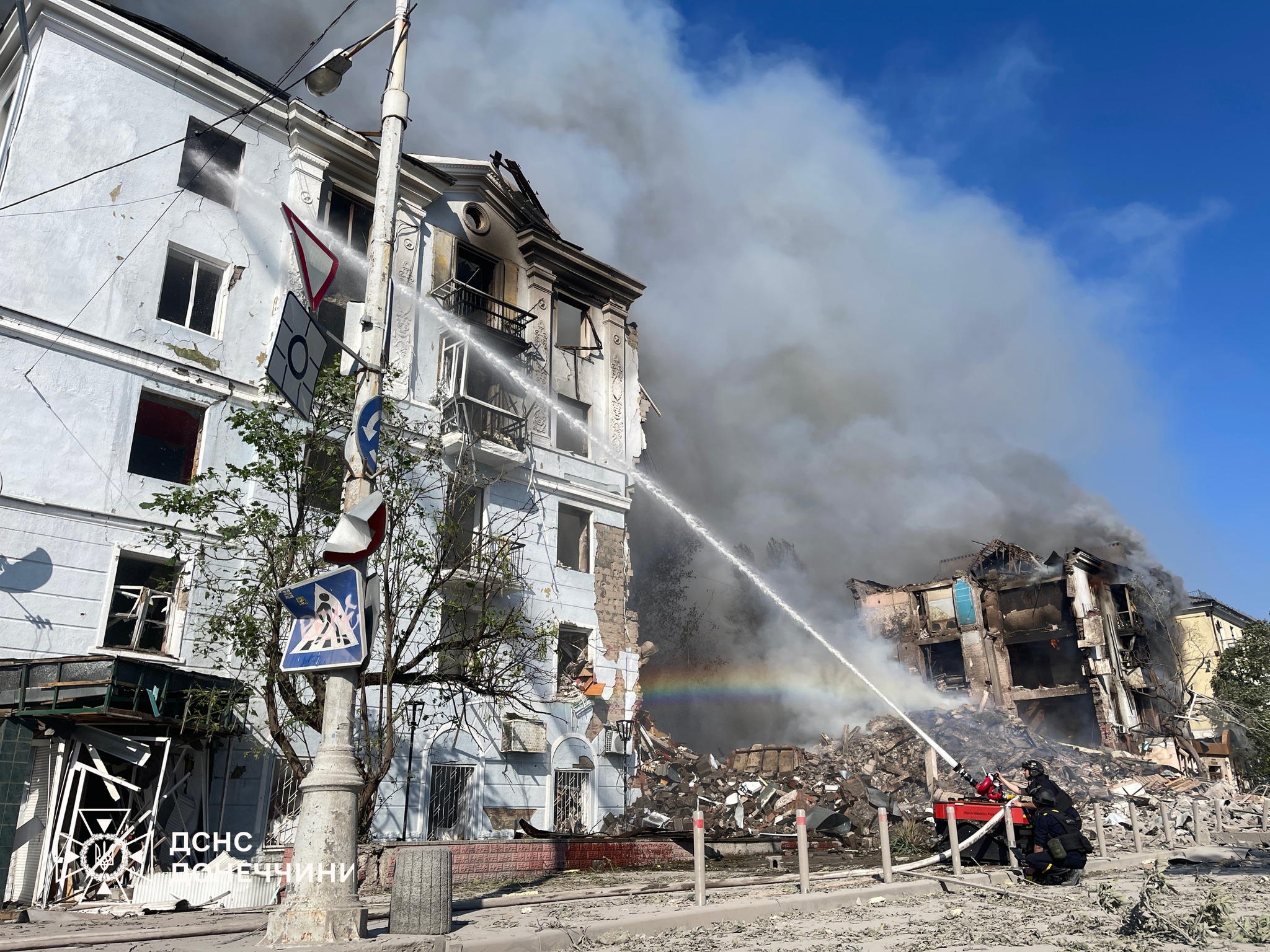
What happened on Tuesday
Kramatorsk, a city in the northern Donetsk region that has served as a rear hub for Ukrainian forces and a home for residents who have stayed through more than four years of full-scale war, was attacked three times during the day on Tuesday, Governor Vadym Filashkin said on social media, in remarks reported by AFP. In one strike, three guided aerial bombs hit a residential area of the city, according to Ukraine's Energy Ministry. The men killed in that strike worked for Kramatorskteploenergo, the municipal heating company, and were inspecting the network ahead of the heating season. "They were carrying out their duties, providing heating services to residents of a frontline city," the ministry said in a statement on Telegram.
A fourth person was killed in a separate attack by an FPV drone — the small, pilot-guided drones that both sides now use in large numbers against vehicles and individuals near the front. Six people were wounded across Tuesday's attacks, Filashkin said. Ukrainian outlet UATV, reported by 112.ua, put the damage at a minimum of 15 apartment buildings, two educational institutions, and administrative and utility buildings, with two vehicles also hit. Neither report described any military target in the areas struck, and no Russian statement on the Kramatorsk attacks had been reported by Tuesday evening. Russia's Defence Ministry did issue a separate claim on Tuesday — that its forces had struck cargo vessels at the port of Reni and logistics hubs in western Ukraine, which it said were being used for military purposes — but that claim concerned different locations, and Reuters noted the ministry's account could not be independently verified.
Why this matters
The deaths of the three heating workers matter beyond one city's casualty count, because of what the men were doing when the bombs fell. Ukraine is entering its fifth winter of full-scale war with an electricity and heating system that Russia has attacked in waves every cold season. This October, Ukrainian officials say, that campaign has widened: Deputy Energy Minister Artem Nekrasov said on Tuesday that Russia had struck energy facilities in seven regions in a single night, including previously untargeted western regions, and the grid operator Ukrenergo reported new outages across 12 regions on Tuesday morning. Against that backdrop, the work of checking whether a frontline city's heating network will survive the winter is not routine maintenance — it is part of the same contest as the strikes on power plants. A heating network that cannot be inspected cannot be repaired, and a city that cannot be heated in January cannot be lived in, whatever the front line's position on a map.
That is the analytical weight of Filashkin's accusation, and it should be read as an accusation: Ukraine says Russia is deliberately making civilian life unsustainable in the cities it has not captured. Russia has repeatedly said its long-range strikes target military and military-linked infrastructure, and it has denied intentionally targeting civilians. No independent investigation of Tuesday's Kramatorsk strikes had been published by Tuesday evening, and the specific aim point of the guided bombs cannot be established from the reporting available. What can be established is the effect, because it is documented by both the regional governor and the Energy Ministry: three civilian utility workers dead at their workplace task, six people wounded, and at least 15 residential buildings damaged in a city whose remaining residents depend on exactly the network those workers were checking.
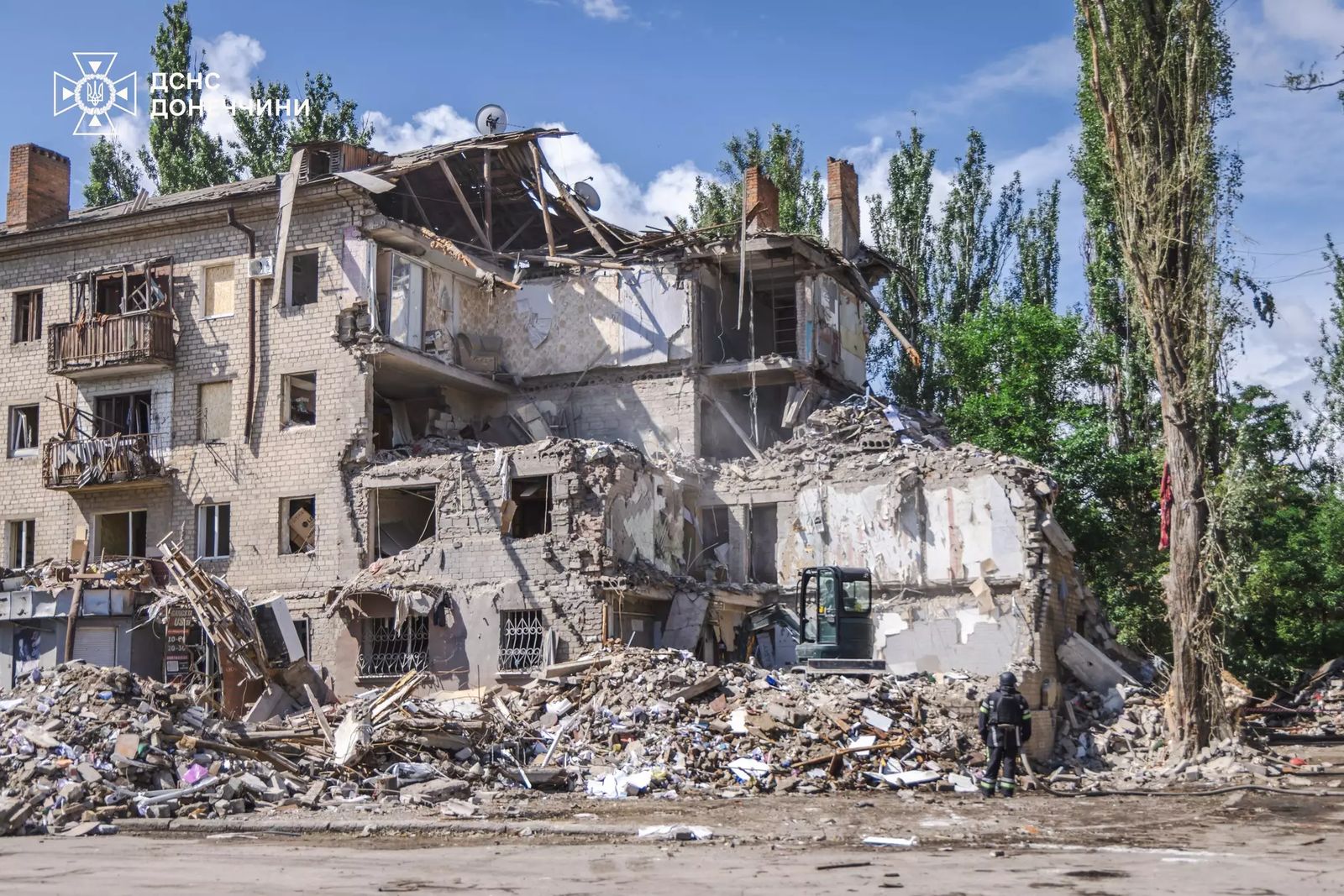
A city that has absorbed this before
Kramatorsk is one of the "fortress belt" cities of northern Donetsk Oblast — alongside Sloviansk, Kostiantynivka and Druzhkivka — that Ukraine has fortified and Russia has sought to pressure as its ground offensive grinds westward. The city has been struck repeatedly throughout the war. Its railway station was hit in April 2022 during a civilian evacuation, in one of the deadliest single attacks of the war's first months. Earlier this month, a glide-bomb strike on a Kramatorsk bus stop killed dozens — this site's coverage of that attack is here: Kramatorsk Bus Stop Bombing Kills 33 in Russian Attack. Tuesday's strikes were smaller in toll but similar in method: guided aerial bombs, released by aircraft outside the range of most Ukrainian air defences, are the weapon Ukrainian officials most often cite in attacks on the fortress-belt cities, because their size — typically carrying hundreds of kilograms of explosive — lets a single bomb gut a residential block.
Tuesday in Kramatorsk was also one piece of a wider day of strikes across Ukraine. In Chabany, near the Kyiv–Odesa highway, a Russian drone killed three people and wounded four as cars burned, the Kyiv regional prosecutor's office said, in reporting carried by Reuters. In Khmelnytskyi region, two women were killed overnight, Ukrainian officials said. And the overnight wave that hit a warehouse in Obukhiv district and energy facilities across the west is tracked in this site's Ukraine War Day 1700 briefing. Read together, the day's pattern — a western energy grid under expanding attack, commuter roads near the capital hit at rush hour, and a frontline city's heating crews killed at work — is the October campaign Ukrainian officials describe: pressure on the systems that keep cities functioning, applied simultaneously at the front and hundreds of kilometres behind it. President Volodymyr Zelenskyy said on Sunday that Russia had attacked Ukraine's energy, oil and gas sectors 76 times in the week since US President Donald Trump announced a halt to attacks on energy infrastructure — a claim set out in Zelenskyy: Russia Struck More Than 15 Energy Facilities. Moscow has not accepted Kyiv's characterisation of the campaign.
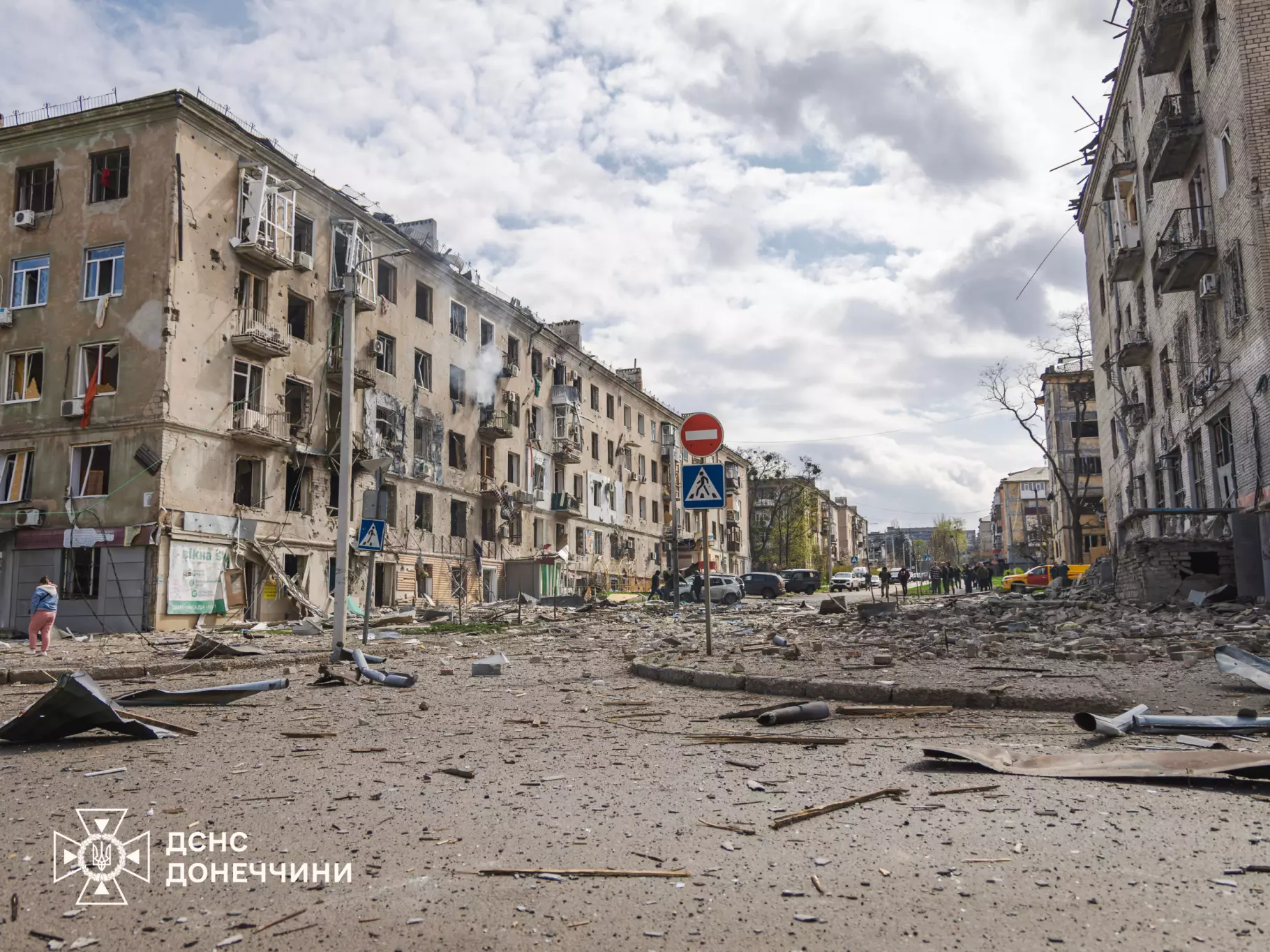
The numbers in context
Four dead and six wounded is, by the grim arithmetic of this war, a mid-sized toll for a single city in a day — and that is precisely why the composition of the toll matters more than its size. Three of the four dead were not caught at home or on a road; they were a work crew performing a scheduled, civilian, winter-preparation task for a named municipal company, Kramatorskteploenergo. Utility workers have become a distinct casualty class in this war: Ukraine's grid operator has said security problems are hampering repair crews' efforts to fix damaged equipment, and every energy facility struck this month creates work that someone must do outdoors, on a predictable schedule, in places Russia has already shown it can hit. The damage figures tell the same story from the other side — 15 apartment buildings and two schools damaged by three bombs and a drone means the blast effects were spread across ordinary city blocks, not concentrated on a single point.
What happens next
Three things will decide whether Tuesday's strike is remembered as an incident or as a marker. First, the heating season itself: Kramatorsk's network checks will either resume — with crews accepting the risk Filashkin described — or slow, in which case the strike will have achieved a delay no further bombs need to enforce. Second, the wider October energy campaign: Ukrainian officials say it is expanding west and intensifying ahead of the cold season, and each new regional outage figure from Ukrenergo will test that claim. Third, diplomacy: the strikes landed on the same day Zelenskyy met US envoy Steve Witkoff in Oslo for talks both sides called constructive, and a day before Witkoff is due to carry a security-guarantees document to Russian leaders in St. Petersburg. Ukraine's position, stated by Zelenskyy in Oslo, is that attacks like Tuesday's are why guarantees must be strong; Russia's stated position is that its strikes serve military aims and that Kyiv must accept a settlement. The heating workers of Kramatorsk were not part of that argument in life. In death, both sides will use them in it — which is a reason to keep the documented facts, and only the documented facts, at the centre of the record.
Sources
AFP, October 20–21, 2026 — Governor Vadym Filashkin's account of the three attacks on Kramatorsk, the heating-company strike, the FPV drone death and the six wounded; Ukraine Energy Ministry statement naming Kramatorskteploenergo and the three guided aerial bombs (via Jawawa). Read the AFP report. UATV via 112.ua, October 20, 2026 — the toll of at least four dead including three municipal workers, six injured, and damage to at least 15 apartment buildings, two educational institutions and utility facilities. Read the 112.ua report. Reuters, October 20, 2026 — Russia's expanded strikes on energy facilities in western Ukraine (Nekrasov, Ukrenergo's 12-region outages, DTEK Odesa), the Chabany highway drone strike killing three, and the Russian Defence Ministry's Reni vessel claim. Read the Reuters report.