Kramatorsk bus stop bombing
Kramatorsk bus stop bombingKramatorsk strike October 2026Russian glide bomb KramatorskDonetsk fortress belt strikesUkraine bus stop attackKramatorsk casualties todaySloviansk transit haltRussia demands Donetsk cessionUkraine power grid strikes October 2026

KRAMATORSK, Ukraine — The Kramatorsk bus stop bombing killed at least 33 people and wounded 18 on Thursday morning, according to Ukrainian authorities, after a Russian guided bomb struck a street near a bus stop where two city buses were carrying passengers. The figures are official Ukrainian counts and could change as identification and hospital reporting continue.
President Volodymyr Zelenskyy described the location as a bus stop. Emergency officials said the blast ignited two buses and the surrounding area. Oleksandr Honcharenko, head of Kramatorsk's military administration, said small Russian drones then hindered rescue operations. That allegation, like the casualty count and weapon identification, comes from Ukrainian authorities; independent investigators had not yet published a full reconstruction.
The toll moved rapidly. Initial reports counted 12 dead and 14 wounded; later updates put the deaths at 30 before authorities reported at least 33. The progression is not evidence of contradictory events. It is the familiar, grim pattern after a mass-casualty blast: crews reach more victims, hospitals update outcomes and fragmented records are reconciled.
What is known about the Kramatorsk strike
Two buses, a transit shutdown and follow-on drone danger
Police said two city buses were operating on the street when the weapon struck. Ukrainian emergency services reported fires in both buses. Regional governor Vadym Filashkin accused Russia of choosing a target that could produce many civilian casualties and ordered public transport stopped in both Kramatorsk and nearby Sloviansk. Municipal officials said there were no military targets at the location.
Moscow offered no immediate comment on this specific strike. Russia's standing position is that its forces do not target civilians. That denial and the Ukrainian allegation should both be recorded, but neither substitutes for an independent inquiry into the weapon, aim point, military context and precautions taken.
Zelenskyy said Ukraine would respond and urged a wider international reaction. He shared partially blurred footage of the aftermath on social media, but Signal Post News could not independently verify a stable official post URL suitable for embedding at publication time. The article therefore does not reproduce the video.
Separate Russian drone strikes in Kyiv on Thursday morning killed three people and wounded 14, according to Mayor Vitali Klitschko. Those casualties are distinct from the Kramatorsk count and should not be combined with it.
Why this matters
Why a bus stop changes the meaning of pressure on a city
A bus stop is not simply a point on a transit map. In a city under recurring attack, it is where civilians still attempt ordinary life: traveling to work, reaching medical care, collecting supplies or beginning an evacuation. When public transport itself becomes unsafe, the damage spreads beyond the blast radius. Routes stop, drivers stay home, older residents lose mobility and the city's ability to absorb another emergency declines.
The immediate losers are the passengers, their families and the emergency workers sent into a scene where drones were reportedly still active. The wider loss falls on Kramatorsk's civic resilience. A suspension intended to protect people also isolates neighborhoods and raises the cost of remaining in the city.
Why Kramatorsk is central to the Donetsk fortress belt
Kramatorsk, home to roughly 150,000 people before the full-scale war, is a major Ukrainian-held administrative and logistics hub in Donetsk. It sits within the line of urban strongholds often called the fortress belt, alongside Sloviansk and other cities that anchor Ukraine's remaining defenses in the region.
Russia has demanded that Ukraine cede the portion of Donetsk it still controls as a condition for ending the fighting. Kyiv refuses, arguing that surrendering fortified territory would reward invasion and expose the next cities to attack. Battlefield gains by Russian forces in the region have slowed this year, which makes pressure on the systems sustaining Ukrainian-held cities strategically relevant even when a single strike does not alter the front line.
From Moscow's perspective, pressure on a logistics center may be intended to weaken Ukraine's capacity and bargaining position. From Kyiv's perspective, attacks that kill civilians at transit points demonstrate why territorial concessions made under fire would be unsafe. Both governments have incentives to frame the same event for diplomacy. The verifiable core remains narrower: civilians were killed beside public transport, service was suspended and no Russian account of a target had been issued.
Background: the glide-bomb campaign reached deeper into city life
Russian glide bomb attacks on Kramatorsk escalated in 2026
Glide bombs are typically Soviet-era gravity bombs adapted with wings and satellite-guidance kits. The conversion allows an aircraft to release a heavy explosive payload from farther away than an unguided drop, potentially keeping the launch platform beyond some short-range Ukrainian defenses. They are less expensive than many cruise missiles and carry enough explosive force to devastate buildings or streets.
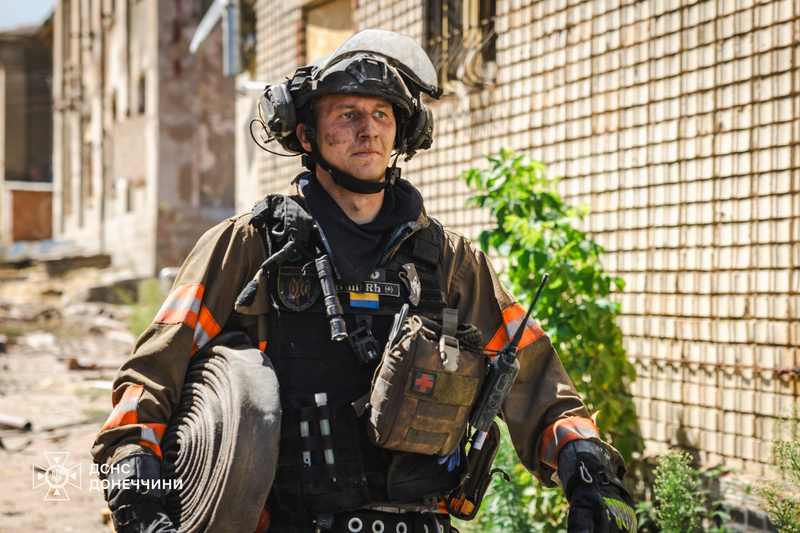
The weapon's operational value helps explain its increasing use against near-frontline cities. Local officials said as many as nine glide bombs hit Kramatorsk in one day in late August. That number is not a forecast of future frequency, but it shows the city can face concentrated salvos rather than occasional isolated attacks.
For Ukraine, the defense problem is layered. Long-range air defenses may threaten aircraft before release, but those systems and interceptors are scarce. Once a bomb is in flight, the response window can be short. Electronic warfare, warning networks, hardened shelters and dispersal all matter, yet none offers complete protection to people waiting for a bus.
The October 7 power-grid barrage set the timing
The Kramatorsk attack came one day after a massive Russian air assault across Ukraine that primarily targeted the power grid. Dozens were reported killed, including victims of a strike in Pryluky, while emergency outages affected Kyiv. The sequence places city transport and national energy infrastructure under pressure just as colder weather approaches.
It would be premature to claim the two days were controlled as a single tactical operation without military evidence. Strategically, however, the effects converge. Grid disruption reduces heat, communications and industrial output; repeated urban bombing strains transit, repair crews and public confidence. Together they can raise the cost of holding territory without requiring rapid ground advances.
Reading the numbers without losing the people
Why 12 became 30 and then 33
The casualty sequence — 12 dead and 14 wounded, then at least 30 dead, then 33 dead and 18 wounded — illustrates why early counts should carry timestamps and attribution. First reports measure what responders can confirm under dangerous conditions. Later figures incorporate hospitals, identification teams and additional searches. The final number may still move.
At 33 reported deaths, the strike ranks among the largest single attacks in Ukraine in 2026. That comparison describes scale, not intent. A high toll does not by itself prove the target selected or the lawfulness of the attack, but it sharply raises the importance of preserving evidence and examining whether feasible precautions were taken.
The city's pre-war population of about 150,000 provides another kind of context. Kramatorsk is large enough to be a regional center but small enough for a mass-casualty attack to touch schools, workplaces and neighborhoods through overlapping family networks. Nine bombs in one August day and a lethal October bus-stop strike also show why a monthly or annual total can obscure the psychological force of concentrated events.
Who benefits, who loses and what critics say
Coercion can produce leverage — or harden resistance
If the purpose of sustained strikes is coercion, the potential beneficiary is the side that converts civilian disruption into negotiating leverage. Russia could calculate that transport stoppages, depopulation and winter outages will increase pressure on Kyiv to discuss territorial concessions. Yet coercion is not guaranteed to work. Mass-casualty attacks can harden public resistance, accelerate foreign military support and increase diplomatic costs for Moscow.
Ukraine benefits diplomatically when allies see the human consequences of insufficient air defense, but that is not a gain comparable to the loss of life. Kyiv also bears a responsibility to communicate casualty figures carefully, protect sensitive evidence and avoid turning uncertainty into certainty before an investigation is complete.
Critics of Russia will point to the location, the two buses and alleged drone activity around responders as evidence of a pattern of attacks harming civilians. Critics of Ukraine's wartime messaging will ask for independent forensic proof, precise coordinates and evidence about any military activity nearby. Those questions are legitimate. They should clarify what happened rather than erase the confirmed civilian toll.
What happens next
Winter may bring parallel attacks on cities and the grid
The first scenario is escalation: repeated glide-bomb and drone strikes on fortress-belt cities paired with longer-range attacks on power generation and transmission. The warning signs would be recurring transport suspensions, more evacuation appeals, sustained emergency outages and attacks on repair crews or infrastructure routes.
A second scenario is uneven pressure rather than a continuous surge. Russia may conserve aircraft, drones and missiles, intensifying attacks around battlefield or diplomatic moments. That would make any single quiet week a weak signal. Trends over several weeks — weapons used, targets hit, restoration time and civilian movement — will matter more.
A third scenario is partial adaptation. Ukraine could improve local warning, disperse transit, reinforce shelters and secure more interceptors. Zelenskyy has appealed to NATO members for additional air-defense capacity and asked the United States to expand satellite support, including Starlink-related access that Kyiv says could help locate Russian launch systems. The operational effect of any such change would depend on technical limits, policy controls and whether support arrives at scale.
International response and the risk of a strike-response cycle
UN human rights chief Volker Türk called the manner and scale of recent attacks reprehensible. The immediate international response could include demands for investigation, additional air-defense commitments and new sanctions. Whether those measures change Russian calculations is uncertain; previous rounds have imposed costs without ending the air campaign.
Zelenskyy's promise of a response also raises the prospect of a strike-response cycle. Ukraine may target launch sites, air bases, logistics or military infrastructure inside occupied territory or Russia. Moscow could answer with further massed attacks. The distinction between military targets and civilian systems will remain central, and each side's claims require independent scrutiny.
For Kramatorsk, the next practical questions are more immediate: when buses can run, whether rescue workers can operate without drone interference, how quickly victims are identified and whether residents receive credible shelter and evacuation options. The larger diplomatic argument will continue, but a city's survival is measured in functioning routes, lights that stay on and people who can move without becoming targets.
Sources and verification
Casualty figures, the weapon description and allegations about follow-on drones are attributed to Ukrainian authorities. Moscow had not commented on this specific strike at publication time and denies targeting civilians.
- New York Post, October 8, 2026 — updated toll, buses, rescue conditions and transport suspension.
- CNN, October 8, 2026 — emergency-service account, final reported toll and evacuation appeal.
- The Times, October 8, 2026 — glide-bomb context, fortress-belt campaign and city population.