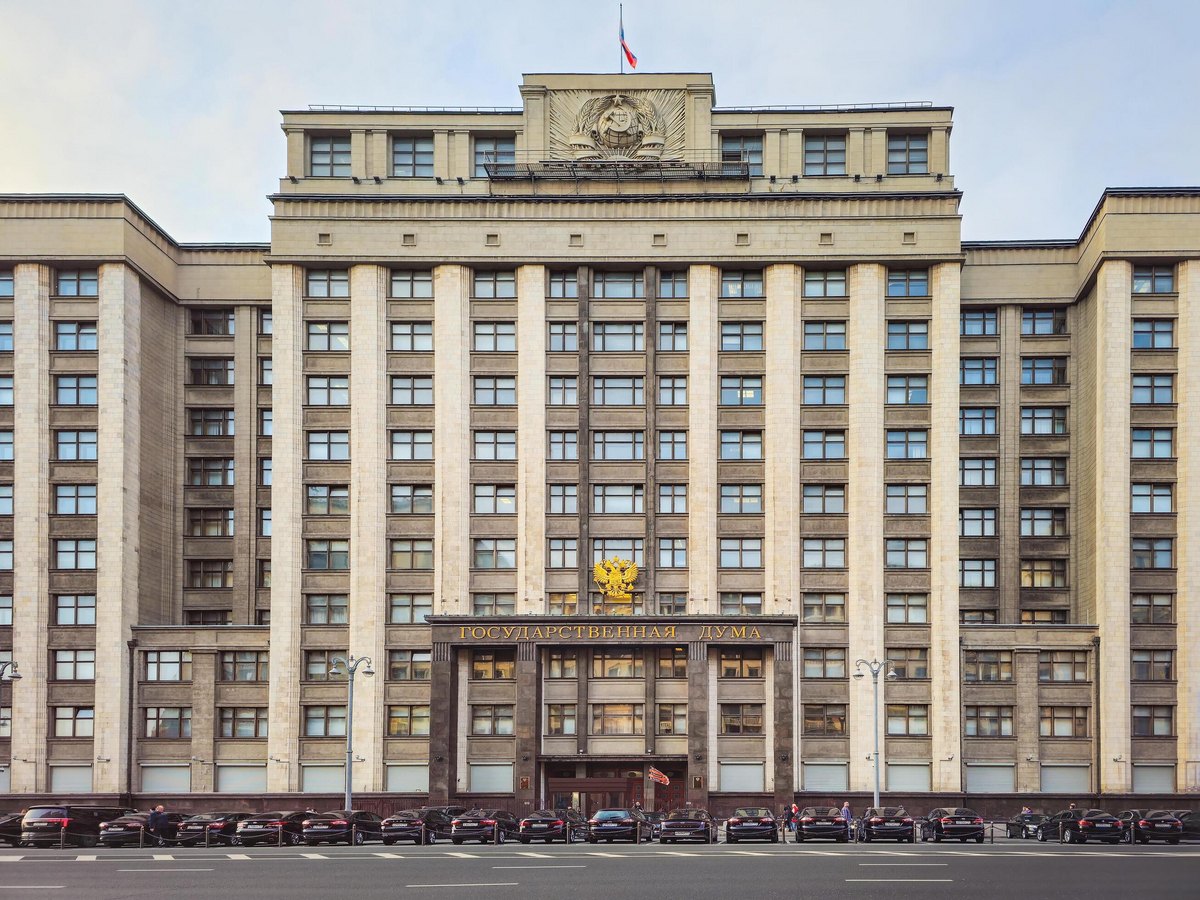
Russia election 2026 results gave the Kremlin more than an ordinary parliamentary win. United Russia secured 57.83% of the party-list vote and was projected to take 355 of the State Duma’s 450 seats after three days of voting from September 18 to 20. That is nearly four seats in every five, comfortably above the two-thirds threshold needed for constitutional legislation and beyond the party’s previous record of 343 seats in 2016.
The vote was Russia’s first Duma election since the February 2022 full-scale invasion of Ukraine. It unfolded across 11 time zones, amid a restricted opposition field, voting in Russian-occupied parts of Ukraine and a major Ukrainian drone attack that reached Moscow. Official turnout was about 59.32% among more than 111 million eligible voters.
The result supplies President Vladimir Putin with a simple political picture: a larger parliamentary majority during a long war. It does not, by itself, establish that 57.83% of Russians support every aspect of that war or every future Kremlin decision. Elections measure choices that are actually available. In this contest, the liberal Yabloko party was removed from the national ballot by Russia’s Supreme Court, many anti-war candidates were barred, jailed or driven abroad, and the remaining parliamentary parties largely operate within the boundaries of the system.
That distinction is the essential one. This was a consequential election because it distributes real legislative power, committee chairs, budgets and elite positions. It was not a free-standing referendum on the war conducted under conditions of open competition. The Kremlin will use the size of the victory as evidence of national unity; critics will argue that the structure of the contest made a sweeping pro-government outcome highly likely. Both frames must be attributed rather than smuggled into the result as fact.
The result, decoded
- United Russia
- 57.83% of the party-list vote; 355 of 450 projected seats
- Communist Party
- 13.81%
- LDPR
- 8.98%
- New People
- 7.96%
- A Just Russia–For Truth
- 4.96%
- Official turnout
- Approximately 59.32%; more than 111 million eligible voters
Half of the Duma’s 450 members are elected from national party lists and half from single-member constituencies. United Russia’s 57.83% therefore did not need to equal 78.9% of the popular vote to produce 355 seats. The party’s dominance in district races amplified its list performance: reporting based on preliminary official results put it ahead in roughly 208 to 209 of the 225 single-member constituencies.
This is the central piece of electoral arithmetic. The party-list result was a clear majority, eight points higher than United Russia’s 49.8% in 2021. The constituency sweep then converted that advantage into a supermajority. Opposition votes divided among several parties, while the strongest governing-party candidate in each district needed only to finish first. A mixed electoral system can reward breadth of organization and incumbency more heavily than the national percentage alone suggests.
The Communist Party remained the largest parliamentary opposition force at 13.81%, but far behind United Russia. The nationalist LDPR took 8.98%, New People 7.96%, and A Just Russia–For Truth 4.96%. Together they preserve the appearance of a multi-party chamber. On central questions of state power and the war, however, these parties have generally not functioned as a unified alternative government. Their presence creates debate at the margins more readily than a credible path to replacing the Kremlin’s governing bloc.
Why this matters
A constitutional majority matters even when the presidency already dominates Russian political life. It means United Russia can pass ordinary legislation without bargaining outside its own ranks and can support constitutional measures without relying on another party. It controls the institutional timetable: which bills advance, how oversight hearings are framed, who leads committees and how quickly presidential priorities become law.
In wartime, that control touches conscription rules, military spending, taxation, censorship, veterans’ benefits, regional transfers, industrial policy and the regulation of strategic infrastructure. The election did not announce a new mobilization, tax increase or peace initiative. It did reduce the parliamentary friction that could slow any such measure if the Kremlin chooses it. The mandate is therefore best understood as capacity, not a specific order.
The number 355 also matters inside the elite. Parliamentary seats are rewards and career ladders. A larger governing faction can accommodate regional leaders, security-linked constituencies, business interests and veterans without conceding meaningful agenda control. It can absorb disputes within United Russia rather than allowing them to become contests between parties. For Putin, that is useful precisely because the war has redistributed money, prestige and risk across the state.
Internationally, Moscow can point to turnout and the vote share as evidence that sanctions, battlefield losses and drone attacks have not fractured domestic authority. Ukraine and many Western governments are likely to reject that interpretation, especially because voting was conducted in occupied Ukrainian territory and because opposition competition was restricted. The institutional fact and the legitimacy argument are separate: United Russia will command the Duma; whether the election demonstrates broad, freely expressed wartime consent remains disputed.
From the 2021 majority to a wartime record
United Russia entered the election with a formidable apparatus. It had held a supermajority after the 2021 contest, when it won 49.8% of the party-list vote, and it benefited from incumbency across federal and regional government. The 2026 result lifted its list share by about eight percentage points and its projected seat count above the 343 won in 2016, setting a party record.
The political environment had also changed radically. Since February 2022, laws against “discrediting” the armed forces and spreading what authorities classify as false information about the military have narrowed public criticism. Prominent opponents have been imprisoned, excluded or forced abroad. Independent media have faced legal and operational pressure. These conditions do not tell analysts how every voter privately thinks, but they do change what can be organized, advertised and safely said during an election.
Yabloko illustrates the difference between the existence of dissent and its conversion into national representation. The party opposed the war but was removed from the national party-list ballot by the Supreme Court shortly before voting. Some Yabloko-linked candidates remained in individual races, yet there was no nationwide anti-war list through which voters could aggregate that position. Supporters of the authorities describe legal exclusions as enforcement of election and security rules. Critics see them as the removal of the only registered national party willing to challenge the war openly.
The election also incorporated voting in Russian-held Donetsk, Luhansk, Kherson and Zaporizhzhia. Moscow says those regions joined Russia after 2022 referendums and treats their residents as participating in a domestic federal vote. Ukraine, the United Nations General Assembly and most governments do not recognize the annexations; Ukrainian officials and rights groups characterize voting under occupation as illegal and coercive. Reporting from the occupied areas described armed personnel near some polling and allegations of door-to-door pressure, claims that require attribution because independent access is limited.
Who won—and who lost
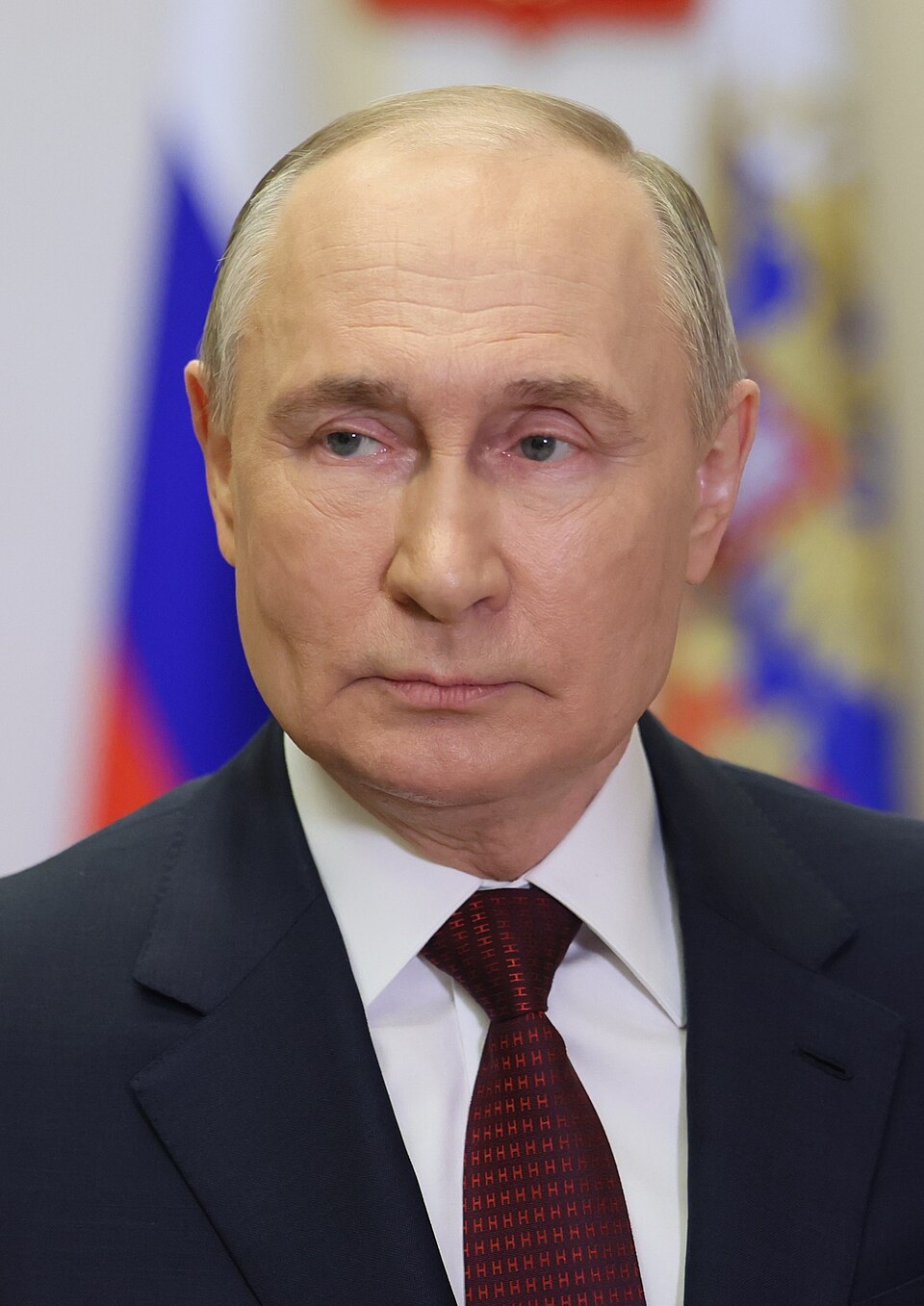
Putin won an argument about control. He was not a candidate for the Duma, but the election was organized around the durability of the system he leads. The result gives him a chamber that can present legislation as the work of a large elected majority rather than presidential command alone. That distinction is politically valuable at home, even if the real balance of power remains presidential.
United Russia won room to manage the war. Its 355 seats provide redundancy. A handful of defections, absences or regional quarrels cannot endanger ordinary bills. The party can distribute committee posts and maintain discipline without negotiating from weakness. The gain is not ideological renewal; it is institutional insurance.
The systemic opposition preserved seats but lost leverage. The Communist Party remains visible, and the LDPR and New People can cultivate distinct brands, but none can threaten United Russia’s control. They may influence language, local spending or personnel, yet the governing faction does not need their votes for the central program.
Independent anti-war politics lost the national stage. Yabloko’s exclusion and the wider restrictions on candidates mean opposition to the war cannot be measured cleanly from the official party totals. Abstention, spoiled ballots, votes for permitted opposition parties and private disagreement are not interchangeable. Any confident claim that the result proves either universal support or universal fear goes beyond the available evidence.
Regional and occupied-area voters carry unequal risks. In Russia proper, the ballot offered limited competition inside a tightly managed system. In occupied Ukrainian territory, critics argue that the presence of armed authorities and dependence on occupation administrations make free consent impossible. Moscow rejects the occupation label and presents participation there as integration. The legal and political dispute will not be resolved by the published tally.
The drone shadow over the ballot
The final day of voting was punctured by a major Ukrainian drone attack on Moscow and other regions. Russian officials called it an attempt to disrupt the election. Reuters witnesses reported blasts in Moscow and smoke from the capital’s oil refinery; local authorities said a refinery facility was damaged. Ukraine did not immediately comment on the operation in the reporting reviewed for this article.
The casualty toll developed during the reporting cycle. Authorities ultimately said five people were killed: three in the Moscow region and two in Russian-held Kherson, including an election official. Earlier reports listed four deaths, which is why dated sourcing matters. These are figures from Russian regional and election authorities; independent verification in the affected areas was limited.
The attack did not prevent officials from completing the count, but it gave the Kremlin a powerful narrative frame. Security, voting and war were fused in the same weekend. Moscow could argue that citizens voted under external attack and still delivered a stronger mandate. That interpretation is politically potent without proving that the attack caused the result or that every United Russia voter endorsed escalation.
For Ukraine, deep strikes are intended to impose costs on Russia’s military-industrial and energy systems and to demonstrate that the war cannot be kept distant from major Russian cities. Yet attacks that kill civilians or coincide with voting also create messaging advantages for the Kremlin. Strategic effect and political effect can pull in opposite directions: damage to a refinery can pressure the state while the spectacle of attack reinforces demands for unity and security.
What does 57.83% actually mean?
It means United Russia won the official contest decisively. It means the party improved on 2021 and that its electoral machine remained effective after more than four years of full-scale war. It means the Kremlin can claim a numerical mandate stronger than the one it received at the previous Duma election.
It does not mean 57.83% of all eligible Russians voted for United Russia. Turnout was about 59.32%, so the party’s list vote corresponds to roughly one-third of the eligible electorate before accounting for the details of valid ballots and territorial reporting. That is normal election arithmetic, not a uniquely Russian defect, but it limits broad claims about the whole population.
Nor does it isolate motivation. A governing-party vote can express support for Putin, support for the war, preference for stability, dependence on local administration, approval of a constituency candidate, fear of alternatives or a calculation that no alternative can win. Surveys conducted in authoritarian settings face similar interpretive problems: respondents may be sincere, strategic, cautious or all three.
The strongest conclusion is institutional. United Russia received enough official votes, in the system that Moscow administered, to produce a record supermajority. The weakest conclusion would be psychological: that the tally reveals one unified private belief across Russia. Serious analysis should hold those two propositions apart.
A dated election timeline
- February 2022: Russia launches its full-scale invasion of Ukraine, beginning the wartime period that defines the 2026 campaign.
- September 2022: Moscow claims the annexation of Donetsk, Luhansk, Kherson and Zaporizhzhia after referendums rejected by Ukraine and not recognized by most governments.
- August 2026: Russia’s Supreme Court removes Yabloko from the national party-list ballot, according to reporting reviewed by Signal Post News.
- September 16: Putin frames participation as a demonstration of unity behind Russian forces and says residents of the annexed regions will vote for the Duma under Russia’s system.
- September 18: three-day voting opens across Russia’s 11 time zones; more than 111 million people are eligible.
- September 20: polls close as a large Ukrainian drone attack reaches Moscow, damages a refinery facility and causes deaths reported by Russian authorities.
- September 21–22: preliminary official results put United Russia at 57.83% and project 355 seats, a party record.
Four forward scenarios
Scenario 1 — The mandate becomes administrative continuity. The most restrained outcome is more of the same: budgets, defense production, veterans’ programs and security measures pass with little parliamentary resistance, while the Kremlin avoids a dramatic new initiative. The record majority is used mainly as proof of stability.
Scenario 2 — The majority underwrites a harder wartime state. If battlefield or economic pressure rises, the Duma can quickly approve tougher mobilization, revenue or information-control measures. The election itself did not order these policies. It gave the governing party the votes and political story needed to enact them if the presidency decides.
Scenario 3 — Economic strain moves conflict inside United Russia. Lower energy revenue, inflation, labor shortages or regional budget stress could create competition over who pays for the war. With opposition parties too weak to force a national bargain, the important disputes may occur within the governing bloc, ministries and regional administrations rather than across the chamber.
Scenario 4 — A future negotiation is sold as victory, not retreat. A supermajority can support escalation, but it can also ratify a settlement. If Putin later chooses negotiations, United Russia’s scale would help present compromise as the implementation of a strong mandate. The chamber is an instrument; its direction will depend on presidential strategy and the war’s course.
The immediate test is not whether the Duma can pass the Kremlin’s program. It can. The test is what program arrives: a budget designed for prolonged war, new rules for manpower and strategic assets, relief for regions bearing disproportionate costs, or legislation accompanying diplomacy. The 355-seat total answers the question of capacity. It does not answer the question of choice.
Related Signal Post News coverage
- Ukraine says its Moscow drone operation was its largest to date
- Putin’s infrastructure decree expands temporary state-control powers
- Ukraine says it struck the Bashneft refinery complex in Ufa
Reporting basis
- Reuters: final party shares, projected seats, turnout and comparison with earlier Duma results
- Reuters: political context, opposition restrictions and the wartime mandate argument
- Cruise TV News: results summary, election calendar, eligibility and Yabloko’s removal
- The Global Journal: record-seat projection and wartime context
- Cyprus Inform: Moscow drone attack, refinery damage and updated casualty reporting attributed to Russian authorities
- Associated Press via SRN News: voting system, eligible voters and pre-election political conditions
Reporting cutoff: September 22, 2026 at 9:11 PM PDT. Results are based on preliminary official figures reported after voting. Claims about interference, coercion, legitimacy and the purpose of the drone attack are attributed to the officials, governments or critics making them. This is a fixed reporting snapshot and does not update automatically.