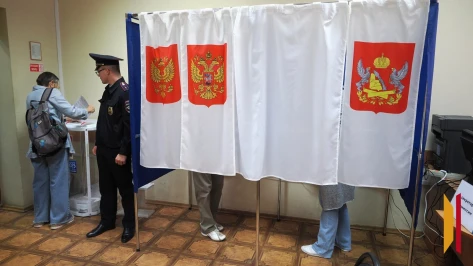
The vote behind the verdict
This is Russia’s first legislative election since the February 2022 invasion of Ukraine. United Russia entered with 310 seats, just ten above the 300 needed for a constitutional supermajority. Putin has cast the ballot as a test of wartime support, even though the managed field makes it less a conventional contest than a measure of mobilization, compliance and the state’s ability to convert presidential authority into a parliamentary mandate.
Why this matters
A two-thirds bloc can shape constitutional arrangements, appointments and the terms of future political competition. It also supplies imagery of consent at a moment when the human and economic costs of war remain central. If the Kremlin treats the result as a referendum, turnout, regional gaps and the relationship between votes and seats become evidence. The election cannot independently validate the war, but it can strengthen the government’s claim that opposition is marginal.
What the numbers mean
United Russia won 49.82% and 324 seats in 2021. An August VTsIOM reading put it at 37%, with the Communists at 11.6%. The gap suggests softer enthusiasm, yet Russia’s mixed system can turn a lower party-list share into overwhelming seats through district victories and fragmented opposition. Thirty-three regions authorized remote voting for 48.4 million voters, increasing convenience while intensifying questions about auditability and independent observation.
Winners, losers and critics
The presidential administration wins if it preserves the supermajority with a credible-looking turnout. Regional officials gain from predictable results. Yabloko, barred from the party-list ballot, illustrates how competition was constrained before voting began; anti-war voters lose an organized national vehicle. Critics will focus on exclusion and electronic opacity, while defenders will emphasize stability across eleven time zones. Neither participation nor a seat total alone resolves the legitimacy argument.
What happens next
Voting ends September 20 and results are expected September 20–21. Watch the gap between party-list share and seats, Moscow and St. Petersburg turnout, and whether electronic totals diverge from paper-heavy precincts. A result near 37% could still yield dominance but reveal erosion. A return to 2021-style margins would prompt stronger scrutiny. The longer-term test is whether officials use victory to adjust policy or to insist that no adjustment is needed.
The evidence test
This report separates the dated facts from the interpretation built around them. For “Russia Votes: Putin Frames Wartime Duma Election as a Barometer of Support for the Ukraine War,” the strongest evidence is specific: official decisions, published results, dated market or schedule figures, and reporting that identifies what is known. A headline can be directionally accurate while still overstating certainty. Readers should therefore distinguish a confirmed event from a forecast, and a forecast from a scenario. That discipline is especially important in world / russia, where a single update may change the practical outlook without changing the underlying structure.
What would change the conclusion
Good analysis should be falsifiable. The argument here would need revision if later primary records contradict the reported figures, if the timetable moves, or if the actors behave differently from the incentives described above. Pay particular attention to the vote behind the verdict, why this matters, what the numbers mean. These are not decorative subthemes; they are the mechanisms connecting the headline to consequences. An update that changes one of those mechanisms deserves more weight than a new quotation that merely repeats an established position.
Who has agency
Events are often described as if they happen to a passive public, but institutions, firms, officials, workers, consumers and communities make choices within constraints. The powerful can set rules and timing; less powerful groups can adapt, organize, substitute or refuse. Evaluating agency prevents two errors: assuming leaders control every outcome, and assuming nobody can alter the path. In this story, the distribution of bargaining power matters as much as the most visible announcement, because implementation happens through many smaller decisions after attention moves elsewhere.
First-order and second-order effects
The first-order effect is the immediate change described in the headline. Second-order effects arrive through confidence, prices, staffing, regulation, supply chains, habits or institutional precedent. They are harder to measure and easier to exaggerate. The responsible approach is to identify the transmission channel and then look for evidence that it is operating. A plausible chain is not yet an observed result. This distinction keeps analysis useful without turning possibility into prediction, and it helps explain why some dramatic announcements fade while modest procedural changes compound.
The comparison problem
Numbers acquire meaning only against a baseline. The relevant comparison may be the previous year, a prior cycle, a peer institution, the size of the affected market or the share exposed rather than the headline total. Nominal levels can sound historic while representing a small percentage change; averages can conceal a few extreme observations. For this reason, the report uses comparisons to test scale instead of presenting figures as self-explanatory. When future updates arrive, compare like with like and preserve the original cutoff date.
What critics get right
Criticism is most useful when it identifies a missing mechanism, an excluded group or a cost shifted out of view. It is less useful when it simply predicts failure without conditions. Skeptics of the developments covered here are right to ask who verifies claims, who bears transition costs and whether short-term success can last. Supporters are right to ask what the realistic alternative would be. Holding both questions together avoids false balance: evidence can favor one conclusion while still acknowledging trade-offs and uncertainty.
Three scenarios, not one forecast
A base case assumes announced rules and schedules broadly hold. An upside case requires implementation to improve, uncertainty to fall and participants to respond constructively. A downside case begins when deadlines slip, trust weakens or a secondary shock compounds the first. Scenario thinking is not a way to avoid judgment; it clarifies which assumptions carry the conclusion. The most informative future report will identify which path is becoming more likely and why, rather than treating every new detail as a reversal.
The editorial judgment
The central conclusion is that the headline matters because it changes incentives, not because it guarantees an outcome. The facts reported today establish a new starting point. They do not erase history, settle criticism or make projections certain. Readers should keep the scale of the event in proportion, watch the actors with power to implement it and resist narratives built only from momentum. That is the difference between following a story and merely following its noise.
A practical reader checklist
For the next update, check five things in order: whether the date or deadline changed; whether an official document confirms the claim; whether the reported number is a level, a rate or a forecast; whether the people carrying the cost are the same people receiving the benefit; and whether implementation matches the announcement. Then compare the update with the baseline in this article rather than with the loudest social-media reaction. This method will not eliminate uncertainty, but it will make revisions visible and keep a developing story from being judged by an isolated moment.
How to follow the next update
Return to the dated facts in this report before treating a new headline as a changed story. For “Russia Votes: Putin Frames Wartime Duma Election as a Barometer of Support for the Ukraine War,” the decisive update will be one that changes implementation, scale or the distribution of costs—not another round of commentary about the same event. Check whether later reporting uses the same definitions and time period, whether it cites a primary record, and whether a projected effect has actually appeared. That approach preserves room for surprise while preventing a fast-moving news cycle from turning uncertainty into contradiction. We will revise the assessment when evidence changes the mechanism, not simply when attention moves.
Sources: Reuters voting report; CNN explainer; Reuters background. Figures and schedules are a fixed September 18, 2026 snapshot and do not update live.