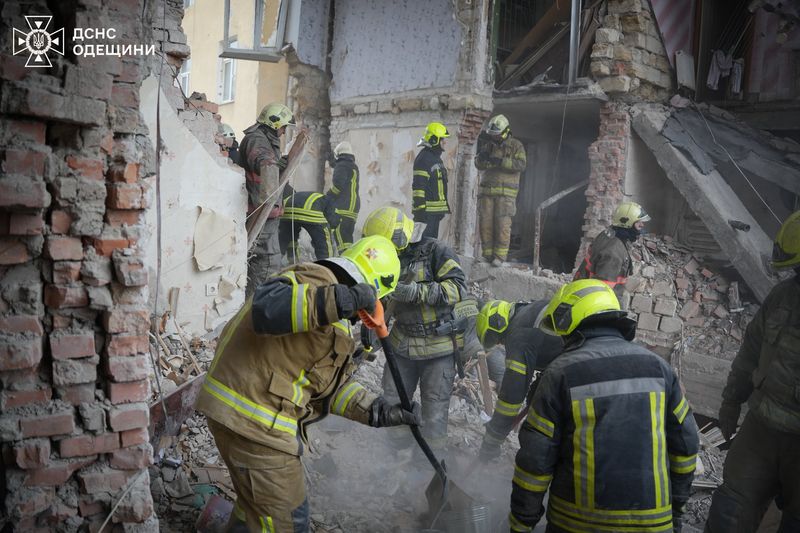
ODESA — Russian forces struck the centre of Odesa in three waves of attacks on Wednesday, November 18, killing four people, regional officials said on Telegram, in a daylight assault on the streets, homes and businesses of Ukraine’s main Black Sea port. The Odesa attack November 18 2026 left at least seven people injured, shattered the windows of residential buildings, cafes and shops, set a car ablaze and damaged several other vehicles, according to regional governor Oleh Kiper. All casualty figures in this report come from Ukrainian officials cited by Reuters and Ukrainska Pravda; they had not been independently confirmed at publication, and the toll rose repeatedly through the day as rescuers worked through the strike sites.
Track it live: Ukraine war map — live tracker · Live wars tracker
What happened: three waves against the city centre
The first wave, and a death in the street
The first reports from the city described a single person killed in the street. Ukrainian reporting later identified the first victim as a 19-year-old woman. Fires broke out at strike sites across the centre, and Ukrainian reporting described jet-powered drones used against the city centre — a detail attributed here to that reporting, not independently confirmed. What is established by both Reuters and Ukrainska Pravda, citing officials, is the shape of the damage: residential buildings hit, the windows of cafes and shops blown out, and vehicles burning or damaged on central streets in the middle of the working day.
Serhiy Lysak: the second strike hit a home and a school building
The second wave is the detail that defines this attack. Serhiy Lysak, head of Odesa’s city military administration, said a second strike damaged a residential building and an educational institution. Read in sequence, that means the follow-on strike landed while the response to the first was already under way — the pattern Ukrainian rescuers describe as the most dangerous feature of multi-wave attacks, because the second impact arrives when firefighters, medics and neighbours are concentrated at the first site. Lysak’s account, reported by Reuters, places a home and a school building at the centre of that second wave.
Oleh Kiper and the toll that kept rising
Governor Oleh Kiper’s updates on Telegram charted the day in numbers. The count moved from one person killed, to two, then to three — two women and a man, Kiper said — before Reuters reported the toll at four killed and at least seven injured. The Oleh Kiper Odesa strike updates also catalogued the material damage: broken windows in homes, cafes and shops, one car set on fire and several more vehicles damaged. A rising toll of this kind usually reflects the pace of rescue work rather than new strikes: each revision came as emergency crews reached deeper into damaged buildings.
Why this matters
Three things lift Wednesday’s attack out of the grim routine of this war’s strike diary. First, the target set: this was not the port’s industrial edge or a military site on the outskirts, but the commercial and residential centre of the city — cafes, shops, apartment buildings and an educational institution. Second, the method: three waves in daylight, with a second strike following the first response, compress the margin in which rescue is possible and raise the risk borne by the very people sent to pull survivors out. Third, the timing: the strikes landed a day before the November 19 Trump–Xi–Putin trilateral in Shenzhen, at a moment when Ukraine’s air defence and the war’s trajectory sit near the top of the diplomatic agenda. None of that proves the timing was chosen for the summit — no evidence in the reporting supports that claim — but it guarantees the images from Odesa’s centre will form part of the backdrop against which the Shenzhen meeting is read.
Context: a port city that has been hit all year
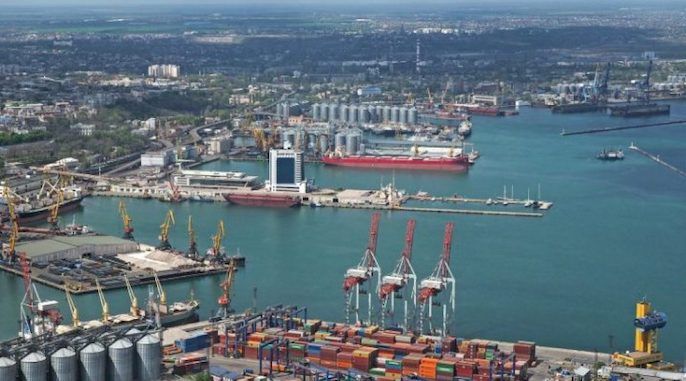
Odesa is Ukraine’s principal Black Sea port and the maritime outlet for its grain and much of its seaborne trade; its terminals, silos and energy infrastructure have made the wider region a standing target throughout the war, and the pattern continued through 2026. On the night of November 15, three days before Wednesday’s attack, Russian forces attacked the Odesa region and damaged civilian infrastructure, according to Ukrainska Pravda’s background reporting. An earlier overnight drone and missile barrage against the region, which killed one person, is covered separately by Signal Post News — a distinct event from Wednesday’s daytime strikes on the city centre, and the two should not be merged. Wednesday’s attack is nonetheless part of the same operational picture: sustained Russian pressure on the cities, ports and energy systems Ukraine needs to get through the winter.
An Odesa Black Sea port attack is never only local
Because Odesa anchors Ukraine’s Black Sea exports, every strike on the city is read in shipping and grain markets as well as in Kyiv. Wednesday’s reported targets were civilian streets rather than terminals, and no damage to port operations was reported by Reuters at publication. The implication is therefore indirect but real: repeated attacks on the port city raise insurance, crewing and security costs for the corridor, and they remind exporters that the infrastructure behind the terminals — power, rail, housing for the workforce — sits inside the same strike envelope as the quays.
The numbers, and what they imply
The Ukraine Odesa casualties today followed a sequence worth stating plainly, because it is data, not colour: one killed in the first official report; two; then three, identified by Kiper as two women and a man; then four killed and seven injured in the Reuters update at 10:41 UTC. Four revisions in a single day is the signature of strikes on occupied buildings in a dense centre — the dead are found as the rubble is cleared, not counted at the moment of impact. The three-wave structure compounds that arithmetic. If, as Lysak’s sequence indicates, a later wave struck while the first response was under way, then each successive wave threatens both the people trapped by the earlier one and the crews trying to reach them. That is the operational logic Ukrainian officials attribute to repeat-wave attacks, and it is why the wave count — three — matters as much as the weapon count, which officials had not published at the time of the Reuters report.

What officials say — and what has not been said
On the Ukrainian side, the record is the Telegram statements of Governor Oleh Kiper and city military administration head Serhiy Lysak, carried by Reuters and Ukrainska Pravda: the casualty figures, the damaged school building and homes, the burning cars. Ukrainian reporting added the description of jet-powered drones — the Russia drones Odesa centre detail — which remains an attributed claim, not a confirmed one. On the Russian side, Reuters reported no Russian comment at publication time, and this article notes that absence plainly rather than filling it: Moscow had not, in the reporting available, addressed the city-centre strikes, the civilian toll or the damaged educational institution. Critics of Russia’s campaign argue that daylight waves against a city centre are intended to terrorise and to strain rescue and air-defence capacity; supporters of Kyiv’s position make the same point in stronger legal language. Those are characterisations of intent, and they are labelled here as argument, not as established fact.
What happens next
Air defence over the south
The immediate Ukrainian ask is predictable because it is structural: more interceptors and short- and medium-range coverage for southern cities that sit minutes from Black Sea launch profiles. Allies agreed fresh air-defence support at the Ramstein-format meeting covered by Signal Post News this month; whether any of it is allocated to the Odesa axis, and how quickly, is the measurable test of Wednesday’s aftermath.
Scenario one: pressure through the winter
The base case, on the evidence of November so far, is repetition: further strikes on Odesa and the region’s energy and port infrastructure as temperatures fall, interleaved with mass drone nights across Ukraine. In that scenario, Wednesday is remembered as one entry in a campaign, and the policy fight stays where it is — over interceptor supply and production rates.
Scenario two: Shenzhen changes the weather
The alternative runs through diplomacy. If the November 19 trilateral produces even a limited understanding on strikes against cities or energy infrastructure, Odesa — struck the day before the leaders meet — becomes the obvious first test case of whether it holds. If it produces nothing, the attack’s timing will be cited by Kyiv’s supporters as evidence that pressure, not talks, is Moscow’s current language. Both readings are analysis; the fact underneath them is four dead in a city centre and a rescue operation that was still revising its count at dusk.
Read next: Russia’s 164-drone barrage: one killed in Odesa region · Komyshuvakha aid point bombing: toll rises to 53 · Ramstein: Britain and Germany rush air defence missiles to Ukraine
Sources
Sources: Reuters, “Russian attacks on Ukrainian city of Odesa kill four, officials say,” November 18, 2026 (published 10:41 UTC; three waves, four killed, seven injured, damage to homes, cafes, shops and vehicles, and the second-strike account); Ukrainska Pravda, November 18, 2026 reporting on the Odesa attack (toll progression through the day, the first victim identified in Ukrainian reporting, jet-powered drones described in Ukrainian reporting, fires at strike sites, and background on the November 15 attack on Odesa region); Governor Oleh Kiper, head of the Odesa regional military administration, statements on Telegram, November 18, 2026 (casualty updates and damage reports); Serhiy Lysak, head of Odesa’s city military administration, statements on Telegram, November 18, 2026 (second strike damaging a residential building and an educational institution). Casualty figures are as reported by Ukrainian officials and had not been independently confirmed at publication; Reuters reported no Russian comment at publication time.