Russia strikes Odesa port ship

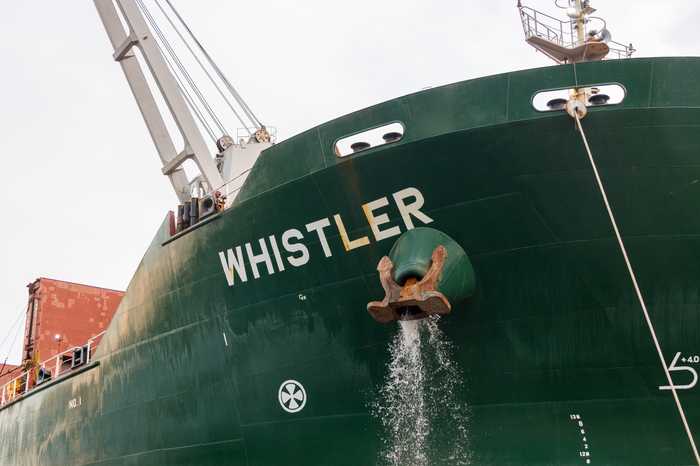
Russia struck a Liberian-flagged cargo ship in one of Ukraine's Black Sea ports in the Odesa region on Saturday, killing one person and injuring three others, according to Ukraine's sea ports administration. Thirteen more crew members were evacuated to safety. Russia's Defense Ministry later confirmed the attack, saying its forces had hit a maritime vessel it described as supporting Ukraine's armed forces — an unusually open admission that sets this strike apart from the silence that usually follows attacks on civilian shipping.
What happened on Saturday
Odesa port attack October 2026: the confirmed toll
On the morning of October 3, 2026, Ukraine's sea ports administration said on Telegram that a Liberian-flagged vessel had been hit in a Black Sea port in the Odesa region. One person was killed and three were injured; 13 other crew members were evacuated to safety, the administration said. Reuters carried the administration's account. Russia's Defense Ministry then confirmed the strikes, saying its forces had hit Ukrainian infrastructure and a maritime vessel allegedly used in support of the Ukrainian armed forces, and claiming the ship was carrying “dual-use goods” to the port of Odesa.
Pivnichnyi Bridge Kyiv drone strike and Hostomel drone attack
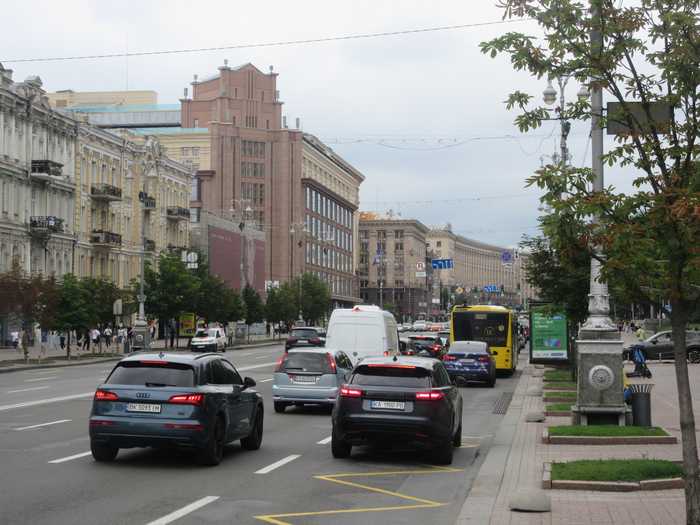
The ministry also confirmed overnight drone strikes on the Pivnichnyi road bridge across the Dnipro River in Kyiv and on a logistics center in Hostomel. In Hostomel, northwest of Kyiv, four people were injured in a Russian drone attack, Kyiv regional head Timur Tkachenko said on Telegram. Kyiv Mayor Vitali Klitschko said the Pivnichnyi Bridge had been attacked for a third consecutive day, blocking traffic from the Left Bank to the Right Bank and damaging the road surface and overhead trolleybus lines. Accounts of the wider Russia Ukraine overnight strikes were carried by Europe Says and The Istanbul Post.
The exchange was not one-sided: in Russia's Kaluga region, Governor Vladislav Shapsha said on Telegram that “several people” suffered minor injuries in a Ukrainian attack that damaged apartment buildings and private homes. Moscow claimed its air defenses intercepted 218 Ukrainian drones over Russian regions, Crimea, the Black Sea and the Sea of Azov — a figure presented as Russia's claim, which is difficult to verify independently.
Two accounts of one wrecked ship
Liberian-flagged cargo ship and the dual-use goods claim
The two sides describe the same vessel in irreconcilable terms. Ukraine's sea ports administration presents it as a civilian cargo ship, flagged in Liberia, struck while operating in a working commercial port. Russia's Defense Ministry presents it as a legitimate military target — a vessel carrying “dual-use goods” in support of Ukraine's armed forces. Neither account has been independently verified, and the cargo manifest has not been made public. What is established: a ship was struck, one person is dead, three are hurt, and Moscow — rather than staying silent — chose to own the attack publicly. That choice is itself part of the story.
Why this matters
Ukraine Black Sea ports face a wider commercial shock
Attacking the hull, not just the harbor, crosses a threshold. For months Russia has hit port infrastructure — cranes, warehouses, grain terminals. Striking a flagged merchant vessel inside a port tells every shipowner, charterer and insurer the same thing: the danger is no longer only to the cargo ashore but to the ship itself. The vessel flew Liberia's flag — one of the world's largest open registries, used by owners of many nationalities. When neutral flags start taking hits, the chilling effect spreads far beyond Ukrainian companies. Moscow's public confirmation sharpens the message further: this was not presented as an accident or left ambiguous, but claimed as deliberate policy against “dual-use” shipping. For Kyiv, the strike lands on the single most vulnerable artery of its wartime economy — the sea route that carries its grain and steel to world markets.
How we got here: from grain deal to blockade
Russia Ukraine grain exports and the Ukraine grain corridor
The Black Sea has been an economic battlefield since the first year of the war. The UN- and Türkiye-brokered Black Sea Grain Initiative (July 2022) briefly reopened a corridor for Ukrainian farm exports; when Russia withdrew in July 2023, it began striking Odesa's port and grain infrastructure within days — one wave reportedly destroyed some 60,000 tons of grain, according to food-security monitors at the time. Ukraine responded by opening its own coastal corridor, and shipping resumed under the shadow of Russian threats. This past summer, that fragile arrangement effectively collapsed: Russia renewed what amounts to a blockade of Ukraine's Black Sea ports, disrupting trade routes, reducing grain and steel exports, and dealing a heavy blow to the Ukrainian economy — now in the fifth year of war. The October 3 strike is the sharp end of that campaign: not a threat to shipping, but shipping actually burning.
Black Sea blockade Ukraine: the shorthand captures a commercial reality more than a formally declared legal status. If shipowners stay away because a merchant hull was hit, trade can contract without a navy announcing a conventional blockade.
The numbers in context
Seventeen people were directly caught up in the port attack: one dead, three injured, thirteen evacuated — a reminder that “a ship was struck” is shorthand for a workplace full of seafarers. On the wider overnight exchange, the figures need careful handling. Russia claims 218 Ukrainian drones intercepted in a single night across a vast area from Russian regions to the Sea of Azov. Ukraine's air force, for its part, recorded 3,177 Russian drone attacks through the first 29 days of September — up from 2,850 in August — an average of roughly 110 a day. In other words, Moscow's claimed single-night interception total is about double the average daily launch tempo Kyiv attributes to Russia across September. Both numbers come from belligerents with incentives to shape them; the trend they agree on is escalation. And in Kyiv, the Pivnichnyi Bridge has now been hit on three consecutive days — a sustained effort against the crossings that stitch the capital's two halves together.
Who wins, who loses — and what the critics say
If the aim is coercion, the logic is straightforward: every strike on a merchant hull raises war-risk premiums, and at some premium shipowners simply stop coming. The winners in that scenario are those applying the pressure; the losers are Ukrainian farmers who cannot get crops to market, steel plants cut off from export revenue, and grain importers in the Middle East and Africa who ultimately pay the price of risk. Crews — often Filipinos, Ukrainians, and other nationalities sailing under flags of convenience — absorb the physical danger. Kyiv's commuters absorb a different cost: with the Pivnichnyi Bridge damaged for a third straight day and other crossings restricted, a city of millions reroutes around war damage as a matter of routine.
Critics of the strikes call the targeting of civilian shipping a violation of the laws protecting merchant vessels; Moscow's defenders answer that “dual-use” cargo makes a ship a lawful target. Neutral observers — insurers, flag-state authorities, maritime lawyers — will be watching whether Liberia or other registry states lodge formal protests, because the legal and commercial fallout will be shaped as much in registries and courtrooms as on the water. Note, too, the political backdrop: Russia's president has publicly ruled out a ceasefire on long-range strikes, signaling this campaign is policy, not accident.
What happens next
Four scenarios are worth watching. First, corridor traffic thins: if owners and insurers judge Odesa too risky, sailings drop without any formal blockade declaration — the quiet version of a blockade. Second, retaliation: Ukraine has repeatedly answered strikes on its infrastructure with long-range drone campaigns against Russian targets, and the Kaluga damage shows that exchange is already running. Third, diplomacy through registries: a Liberian-flagged casualty gives Monrovia and other flag states standing to press Moscow, adding a multilateral irritant Russia may not want. Fourth, the grinding baseline: the bridge campaign widens, the port campaign continues, and the Black Sea stays a place where commercial shipping operates only at a price. Watch the insurance market first — war-risk premiums move faster than warships, and they will tell you before anyone else whether this strike worked.
Sources
Sourcing note: Casualty figures and descriptions of the vessel come from Ukraine's sea ports administration; Russia's Defense Ministry confirmed the strike but characterized the ship and cargo differently. The cargo manifest has not been made public, and Signal Post News has not independently verified either side's description of the cargo.