Kharkiv guided bomb strike
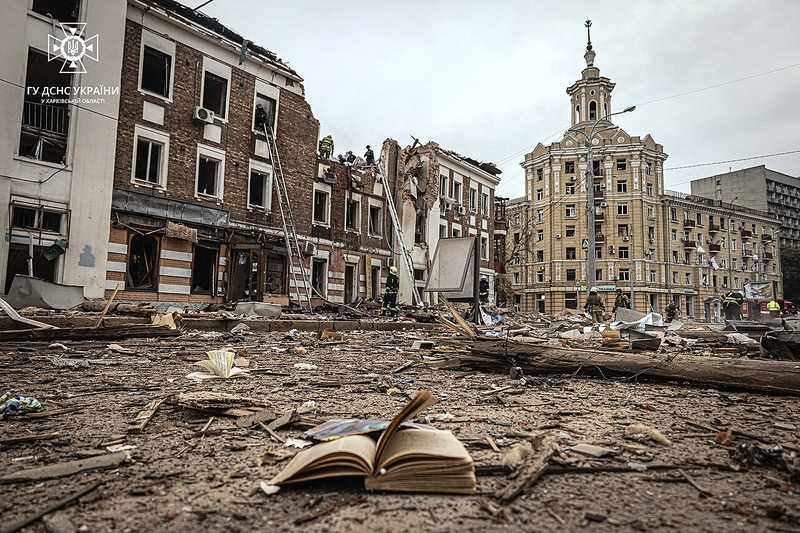
What is confirmed: Ukrainian regional authorities reported three deaths across Kharkiv and Sumy. Kharkiv's casualty count rose during the day from Mayor Ihor Terekhov's preliminary report of one dead and 26 injured to Syniehubov's later report of two dead and about 32 wounded. The Sumy regional military administration reported one dead and one injured. Russia had issued no comment on these specific attacks at the time of writing.
Russia Kharkiv strikes casualties rose as rescuers searched the debris
The first number out of a bombed city is almost never the final one. Terekhov wrote on Telegram that preliminary information indicated ballistic missiles carrying cluster munitions were used in the Kharkiv strikes. He described a very large affected area and said 15 apartment buildings, a business and an educational facility were damaged. His early tally was one person killed and 26 injured.
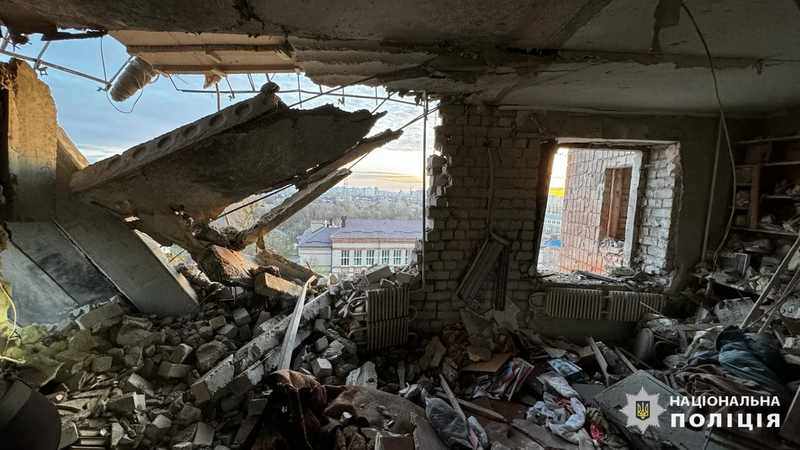
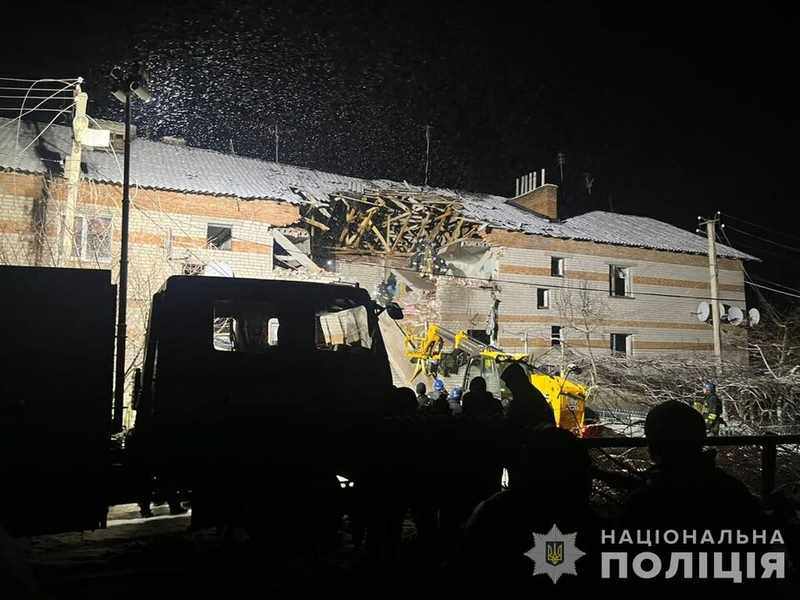
Syniehubov later reported that a guided-bomb strike had killed two and wounded about 32. Those figures should be read as an evolution, not a contradiction: the mayor's post captured an earlier rescue phase; the governor's update reflected more victims found or registered later. Reuters footage and photographs carried by international outlets showed wrecked private homes, streets filled with debris and rescue teams pulling trapped residents from rubble.
That sequence matters for readers comparing breaking-news alerts. A rise from 26 to roughly 32 wounded is not statistical noise to the families involved, but neither does it establish a different attack. It is the ordinary volatility of casualty reporting when crews are still opening collapsed rooms, hospitals are counting arrivals and local authorities are consolidating separate strike sites.
Terekhov Kharkiv Telegram report said cluster munitions widened the footprint
Terekhov's preliminary account adds a second layer of concern beyond the raw toll. Cluster munitions scatter multiple submunitions across a broad area, making their use in a dense city especially dangerous. They can strike people and buildings away from the main point of impact, and unexploded bomblets can remain hazardous after the immediate blast. The mayor's description has not been independently verified by Signal Post News; weapons identification in the first hours after an attack can change as specialists examine fragments.
The distinction between a guided bomb and a ballistic missile is also important. Ukrainian officials described elements of both in the night's reporting. That may reflect multiple weapons and strike points rather than one munition being described two ways. The responsible reading is not to collapse every explosion into a single technical claim, but to preserve what each official said and await forensic confirmation.
Why the Kharkiv guided bomb strike matters
The geography of Russia's autumn air campaign is widening. A day earlier, attention centered on the Southern Bridge Kyiv strikes, which suggested that major transport links in the capital were moving onto the target list. In Kharkiv, the defining risk is different: high-explosive weapons and alleged cluster payloads landing among private homes and apartment blocks.
For Moscow, combining drones, guided bombs and ballistic systems can force Ukraine to divide scarce air defenses between the capital, border cities, energy nodes and transport routes. Kharkiv sits close enough to Russia for warning times to be short. Sumy faces the same structural disadvantage. The military logic is saturation; the civilian consequence is that bedrooms, schools, small businesses and utility sites share the same urban battlespace.
Ukraine loses in three dimensions at once. It absorbs deaths and injuries, spends interceptors and emergency-service capacity, and must repair housing and power systems before winter. Russia can benefit operationally if repeated strikes pull Ukrainian air-defense units away from the front or make cities harder to sustain. Yet every civilian casualty also strengthens Kyiv's argument for more interceptors and deep-strike authority, creating political and reputational costs for Moscow.
Context: the September 28 Saltivka strike and an intensifying autumn campaign
The October 2 wave follows the September 28 Kharkiv guided-bomb strike in Saltivka, where Ukrainian authorities reported 22 people injured. The latest Kharkiv report is deadlier and, at about 32 wounded, larger by the injury count now available. That comparison is useful, but it is not final: both events were reported while assessments were still being updated, and later medical or forensic revisions can alter totals.
What is less volatile is the pattern. Russia is applying pressure to northeastern cities while also probing Kyiv's bridges and preparing for another winter contest over the energy system. Ukrainian officials have warned of plans to hit high-voltage switchyards serving nuclear generation; our earlier analysis of the reported Russia winter blitz plan explains why a grid attack can magnify the effects of battlefield and urban strikes.
Sumy Shahed drone attack killed one at civilian infrastructure
In Sumy, the regional military administration said an attack using Iranian-designed Shahed drones struck a civilian infrastructure facility, killing one person and injuring another. The administration's wording did not establish what function the facility served, and no Russian statement was available at writing.
Shaheds give Russia a comparatively inexpensive way to keep pressure on air defenses and civilian systems. Even when intercepted, debris can cause damage. When a drone reaches a facility, the impact can disrupt services beyond the immediate site. The Sumy report therefore belongs in the same operational picture as Kharkiv, while its casualties and weapon claim must remain separately attributed.
Who benefits, who loses and what critics say
Russia routinely denies deliberately targeting civilians and says its strikes are directed at military or dual-use infrastructure. Ukraine says Russia's campaign intentionally terrorizes cities and degrades energy and civilian systems. The available images of destroyed homes and the officially reported damage to apartment buildings, a business and an educational facility establish civilian harm; they do not by themselves prove the intended aim of each weapon.
Ukraine, meanwhile, argues that Russian oil refineries and energy assets supporting the war effort are legitimate military targets. Critics warn that normalizing reciprocal attacks on energy infrastructure can push both sides toward a winter escalation in which civilians bear the greatest cost. International humanitarian law requires distinction and proportionality; alleged cluster-munition use in a populated area intensifies scrutiny because of the weapon's wide-area effects and residual danger.
The immediate losers are residents who cannot move their homes away from a target map. Municipal governments also lose repair money and emergency capacity. Arms and air-defense suppliers gain strategic importance. Diplomats lose room for partial agreements each time a strike hardens public opinion or persuades one side that restraint would be exploited.
What happens next: winter strikes or a partial truce
Foreign Minister Andrii Sybiha has said the United States, India, Turkey and Egypt have each advanced partial-truce ideas. The precise formulas differ, but the practical opening is familiar: stop attacks on energy infrastructure or other categories of long-range targets without pretending that a comprehensive peace is immediately within reach.
That narrower approach now faces a severe credibility test. Russia has reason to preserve pressure on Ukraine's grid and cities if it believes the winter can weaken Kyiv's economy and morale. Ukraine has reason to continue striking Russian refining, logistics and energy facilities if those attacks impose costs that the ground war cannot. Each side calls some energy infrastructure military or dual-use; each accuses the other of exposing civilians.
The next indicators will be operational rather than rhetorical: whether Russia concentrates larger mixed salvos on northeastern Ukraine and the power grid; whether Ukraine receives enough interceptors to cover Kharkiv, Sumy and Kyiv simultaneously; whether Kyiv expands strikes on Russian energy assets; and whether any of the four mediators can turn a partial-truce proposal into reciprocal, monitorable limits.
Ukraine war civilian toll October 2026: read the numbers carefully
The combined reported toll from these two attacks stood at three dead and roughly 33 injured at publication: two killed and about 32 wounded in Kharkiv, one killed and one wounded in Sumy. Those are attributed official figures, not an independent final count. Readers should expect possible revisions as hospitals update lists and rescue teams complete searches.
The larger analytical conclusion does not depend on whether the Kharkiv wounded count settles at 31, 32 or another number. Northeastern Ukraine is absorbing a layered campaign in which the weapons, warning times and target categories vary, but civilians repeatedly occupy the blast zone. The strategic contest is moving toward winter; the human cost has already arrived.
Sourcing note: This report is based on statements attributed to Kharkiv Mayor Ihor Terekhov on Telegram, regional governor Oleh Syniehubov, and the Sumy regional military administration; Reuters footage and photographs carried by Dawn News English and The Sun; and wire-roundup syndication. Signal Post News has distinguished the officials' preliminary and later casualty counts. No Russian comment on these specific attacks was available at publication.