Hormuz tanker attack October 2026
UPDATE — October 2 evening, 2026
UK Maritime Trade Operations said early Saturday that the master of a crude oil tanker reported the vessel was struck by an unknown projectile 4 nautical miles east of Oman, according to Reuters. The vessel was not named.
All crew were reported safe, and no environmental impact was reported at the time of the notice. No one has claimed responsibility for the strike.
This is the sixth UKMTO-documented tanker strike in the recent wave. Its reported location and the description of an unattributed projectile match the pattern of the week’s other strikes near Oman; neither UKMTO nor Reuters attributed the attack.
Hormuz tanker attack October 2026UKMTO warning Strait of Hormuzoil tanker fire Strait of HormuzBrent crude $102 HormuzIran tanker strikesStrait of Hormuz oil flowthird US carrier Middle EastTrump Iran airstrikes midtermstanker attacked Strait of Hormuz todayHormuz oil prices gasADNOC tanker attacked
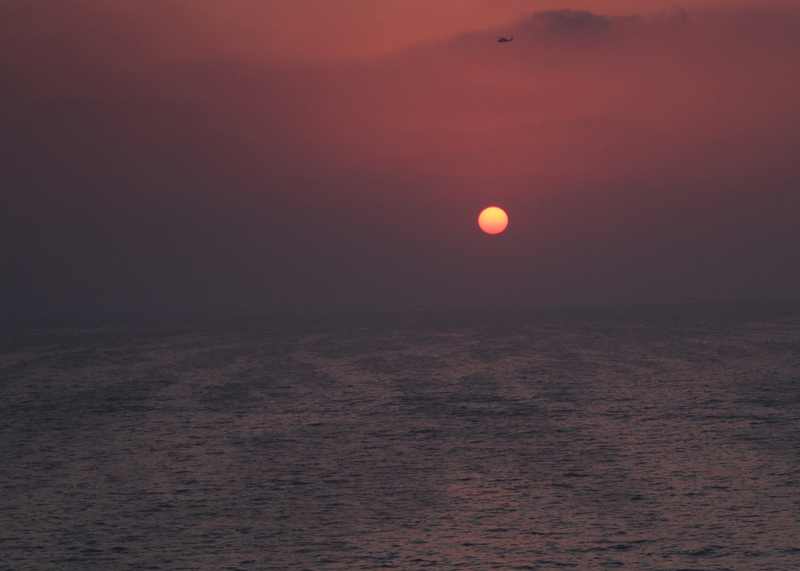
STRAIT OF HORMUZ — The Hormuz tanker attack October 2026 reached its most dangerous tempo this week: six commercial tankers struck in seven days in and around the world's most important oil chokepoint. On Thursday, the British military's maritime reporting center confirmed that a tanker transiting the strait had been hit by an "unknown projectile" and caught fire. Earlier in the week, three more tankers — all running with their transponders off — were hit on Tuesday and Wednesday. And on Friday, Iran's Revolutionary Guard navy announced it had struck a fifth vessel, a Togo-flagged tanker it accused of attempting an "illegal" passage, and warned that further attempts would mean "destruction." No independent source has verified Tehran's account. No party has claimed responsibility for any of the strikes. Brent crude, the global oil benchmark, surged 4.37 percent on Thursday to close at $102.31 a barrel — back above $100 for the first time in the current phase of the crisis.
What follows is an accounting of what is known, what is claimed, and what the numbers imply — because in a week like this one, the gap between those three things is where the next phase of the war will be decided.
The week in strikes: six tankers, two sets of claims
Thursday's UKMTO warning: an unknown projectile, a fire at sea
The most solidly documented of the week's incidents comes from UKMTO — United Kingdom Maritime Trade Operations, the Royal Navy-run reporting hub that functions as the shipping industry's early-warning system in the region. On October 1, UKMTO issued Warning 147-26 after a third party reported that a tanker transiting the Strait of Hormuz had been struck by an "unknown projectile." The strike started a fire aboard the vessel. The crew was reported safe. Damage to the ship and any environmental impact were unknown at the reporting cutoff. The warning was timestamped 17:50 UTC.
Note the vocabulary. UKMTO does not speculate; it relays what ship masters and third parties report, and it describes the weapon as "unknown" because no one who is talking knows — or will say — what it was. That restraint is itself a data point. In a waterway saturated with competing narratives, the British reporting center's refusal to attribute is the closest thing the record has to a neutral baseline.
Tuesday and Wednesday: three Liberia-flagged tankers, running dark
The Thursday strike was not the week's first. Three more tankers were hit on Tuesday and Wednesday, according to the maritime intelligence firm Marisks, via Reuters. All three were flagged in Liberia and had their AIS transponders switched off — the now-standard precaution for vessels attempting to move through contested waters without broadcasting their position to everyone with a receiver.
Two of the three are managed by ADNOC Logistics & Services, the shipping arm of the United Arab Emirates' national oil company: the oil products tanker Al Ruwais and the very large crude carrier Mersin Prosperity. The third, the Aframax Sinbad, is managed by Anglo-Eastern Tanker Management and had loaded refined products at Saudi Arabia's Jubail terminal in early September, according to Kpler data. UKMTO issued three separate warnings on September 30 covering the reported September 29 strikes. The pattern — Liberia flags, dark transponders, Gulf-linked ownership — suggests the attackers, whoever they are, are selecting targets with knowledge of the traffic, not firing at random.
Iran's version: the Trend, the "unauthorized route," and the mine claim
Iranian outlets described the week's events differently — or rather, additionally. The semi-official Fars News agency, citing the Persian Gulf Shipping Authority, said the vessel struck was a supertanker capable of carrying 2.5 million barrels, hit roughly 8 kilometers off Oman while sailing what Iran called an "unauthorized route" south of the strait. The Iranian news agency WANA reported a supertanker hit and burning on the southern route, and said several tankers had been struck in recent days, three of them owned or chartered by the UAE.
On Friday, the Islamic Revolutionary Guard Corps navy went further. It said a Togo-flagged oil tanker named Trend that attempted what it called an "illegal" passage was struck on Thursday night and brought to a halt — and warned that further "illegal" passage attempts would mean "destruction." The IRGC separately claimed that a supertanker on a "forbidden" route had exploded after striking naval mines.
These are claims, not established facts. No independent source has verified the IRGC's account of the Trend or the mine explosion, and Iranian state-linked outlets have every incentive to frame the strikes as enforcement of a maritime regime Tehran asserts but no international body recognizes. The "unauthorized route" framing deserves particular skepticism: under the law of the sea, there is no such thing as an unauthorized transit of an international strait, and Iran's assertion of one is a political claim dressed as a navigational fact. This article treats the IRGC statements as what they are — the claims of one belligerent party — and the UKMTO warnings as the verified floor of the story.
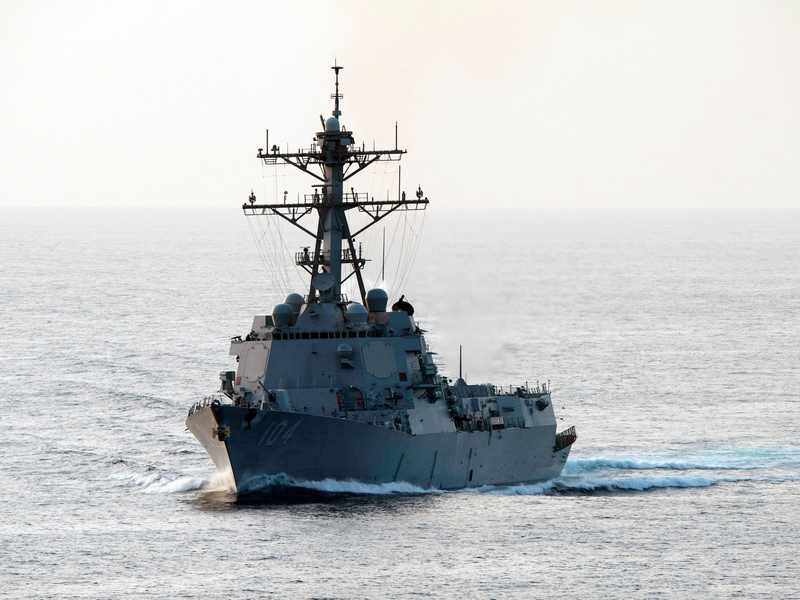
Why this matters: the insurance math just changed
Six hits in seven days is a campaign, not an incident
A single projectile can be absorbed. War-risk underwriters price anomalies; a lone strike on a lone tanker becomes a line item, a surcharge on one voyage, a story that fades when the fire is out. Six strikes in seven days — across different days, different flags, different owners, different reported weapons — cannot be absorbed that way. It reads as a campaign, and campaigns are priced as a regime change in risk.
This is the mechanism by which a handful of projectiles moves a global market. Marine insurers do not need to know who fired to raise premiums; they need only observe that the firing continues. Higher premiums become higher freight rates; higher freight rates become fewer willing shipowners; fewer willing shipowners become thinner flows through the strait — even without a single additional shot being fired. The physical damage from this week's strikes may prove modest. The repricing they trigger is not.
The waterway math: a fifth of the world's oil
The Strait of Hormuz is the world's most important oil chokepoint, and the numbers explain why markets flinch at every projectile. Before the current war, roughly 21 million barrels of oil a day moved through the strait — about a fifth of global petroleum liquids consumption — along shipping lanes just two miles wide in each direction. The U.S. Energy Information Administration's August 2026 outlook put the collapse in stark terms: Hormuz oil flows fell from 21.6 million barrels per day in the fourth quarter of 2025 to 4.9 million in the second quarter of 2026, with liquefied natural gas flows falling from 10.5 to 0.8 billion cubic feet per day over the same span. Kpler's more recent data shows a partial rebound — a seven-day average of about 14.19 million barrels per day against a pre-war 17.13 million — but the strait is still operating at roughly four-fifths of its former self, with no margin for disruption. Six burning tankers do not need to close the strait to wound it. They only need to make the next hundred transits more expensive than the last hundred.
How we got here: from the February war to the escort corridor
The chokehold and the corridor
The current phase of the crisis began with the U.S.-Israeli war on Iran in February 2026, which left the strait under a near-complete Iranian chokehold and commercial traffic effectively halted. Washington's answer was a naval escort operation — dubbed Project Freedom — to shepherd stranded merchant ships through the waterway, backed by mine-clearance operations after Iran seeded the strait with naval mines. The escorts worked, partially: flows recovered from their spring lows to the current ~14 million barrels a day. But an escort corridor is not a peace treaty. It is a moving perimeter inside a war zone, and this week's strikes are a test of whether that perimeter holds — or whether the attackers have learned to fire through it.
The diplomacy that keeps stalling
Behind the shooting sits a negotiation that keeps failing to close. Phased-deal diplomacy — ceasefire arrangements tied to incremental reopening of the strait — has produced announcements and little else. Iran's position, in essence: sanctions relief and security guarantees first, full reopening later. Washington's position, in essence: reopening first, talks later. Each tanker fire hardens both positions. Tehran reads the strikes as leverage accumulating; Washington reads them as coercion to be answered. The space between those readings is where diplomacy goes to die — and where, historically, it is eventually reborn, but only after the price of failure becomes undeniable.
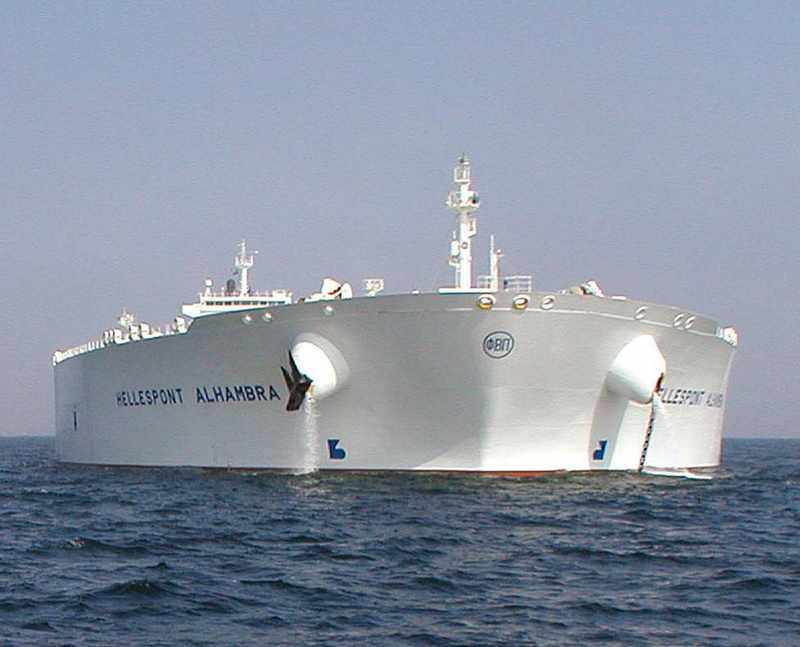
Who benefits, who loses
The winners: Moscow, Riyadh — and anyone selling insurance
Every barrel that cannot move through Hormuz reprices every barrel that can move somewhere else. Russia, selling Urals crude at a discount to Brent, benefits twice: higher absolute prices lift its revenues, and wider disruptions make its overland and Arctic routes comparatively more attractive. Saudi Arabia benefits on price even as it suffers on volume — the kingdom's Red Sea bypass routes via Yanbu keep its own crude moving while Hormuz-linked competitors sit at anchor, and triple-digit Brent repairs fiscal breakevens strained by months of war spending. And the war-risk insurance market — the underwriters in London who price danger by the voyage — is enjoying its best underwriting environment in a generation. None of this implies any of these parties ordered the strikes. It observes, coldly, who cashes the checks the strikes write.
The losers: Asian refiners, American drivers, and the crews
The pain concentrates downstream. Asian refiners — in China, India, Japan, and South Korea — depend disproportionately on Gulf crude; they cannot replace 14 million barrels a day of Hormuz flow with spot cargoes from elsewhere without bidding against everyone else doing the same. American drivers feel it at the pump: AAA's national average sat above $4.41 a gallon as the strikes landed, and gasoline prices transmit crude spikes within days, not months — an especially acute fact with the November midterm elections five weeks out. And then there are the seafarers: the Filipino, Indian, and Eastern European crews who sail these tankers for wages that do not include being shot at. The Trend's crew, the Sinbad's crew, the unnamed crews of the other four — the human cost of the campaign is measured first in their risk, long before it reaches any pump.
The critics' case — on every side
Each side's story has its skeptics, and honest analysis should air them. Critics of Iran's account note that the "unauthorized route" framing has no basis in international law; that the IRGC's mine claim arrived without wreckage, coordinates, or imagery; and that Tehran has a history of claiming enforcement successes it cannot evidence. Critics of the Western framing note that the three Liberia-flagged tankers were running dark — a practice that, while legal and prudent, also makes independent verification of what happened to them harder; and that "unknown projectile" is a phrase that can shelter everything from a drone strike to an accident. Critics of the market framing note that oil analysts have cried structural shortage at every Hormuz incident for forty years, and that flows have always, eventually, resumed. All three critiques have merit. None of them changes the fact that six tankers were hit in a week.
What the numbers actually say
Brent $102.31: the anatomy of a spike
Thursday's close tells the story in one number. Brent crude finished at $102.31 a barrel, up 4.37 percent on the day — reclaiming $100 for the first time in the current phase of the crisis. WTI, the U.S. benchmark, rose 2.71 percent to $92.87. The gap between them is the tell: Brent is the international barrel, the one priced off seaborne crude, and when Brent outruns WTI the market is pricing a risk premium on waterborne oil specifically — on tankers, on straits, on the exact kind of violence this week delivered. Murban, the UAE grade priced in the Gulf itself, traded near $109, a local panic premium layered atop the global one.
The bond market is voting too
The oil spike did not arrive alone. The 10-year U.S. Treasury yield touched roughly 5.233 percent — its highest in 24 years — as investors priced the collision of energy inflation with an economy already running hot. This is the feedback loop policymakers fear most: oil shocks raise inflation expectations, inflation expectations raise yields, higher yields tighten financial conditions, and tighter conditions slow the economy — all while the physical cause, six burning tankers, remains unresolved. ANZ's analysts put the market's fragility bluntly: inventories are low after six months of drawdowns, leaving the market, in their words, highly vulnerable to another spike. Translation: there is no cushion left. The next disruption lands on bare shelves.
Flows: the rebound that stalled
Set the week's strikes against the flow data and the picture sharpens. The EIA's August outlook documented the collapse: 21.6 million barrels a day through Hormuz in Q4 2025, down to 4.9 million in Q2 2026 — a 77 percent fall. LNG fared worse: 10.5 to 0.8 billion cubic feet a day. Kpler's recent seven-day average of ~14.19 million barrels a day, against a pre-war 17.13 million, showed the escort corridor clawing back more than half the loss. This week's strikes threaten that recovery at its most fragile point. The question for the next Kpler print is not whether flows dip — it is whether the dip becomes a trend, and whether underwriters decide the corridor is no longer insurable at any price the trade can bear.
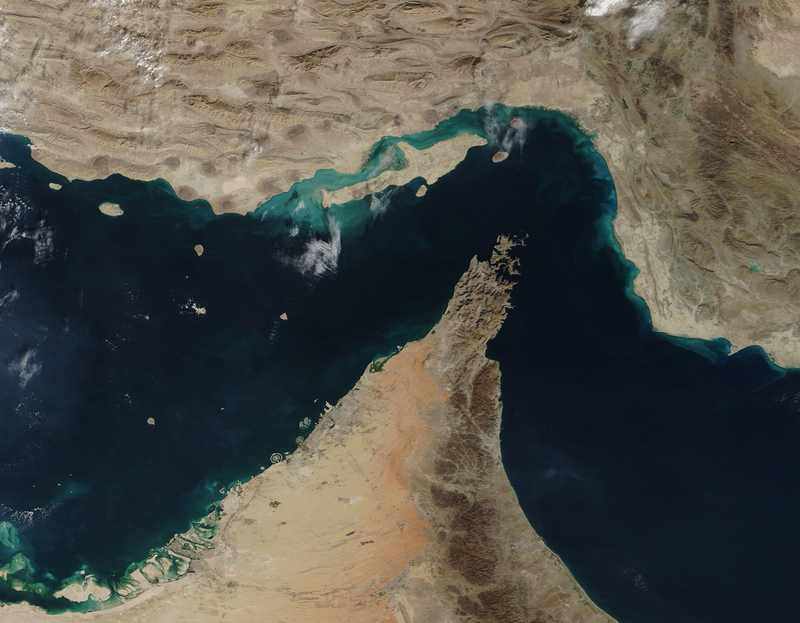
What happens next: two futures
Scenario one: the corridor deal
The optimistic path runs through negotiation, not firepower. A phased arrangement — verified demining, agreed transit windows, mutual restraint on commercial shipping — could stabilize the corridor and let underwriters stand down. The building blocks exist: the escort operation has a working relationship with the shipping industry, and both Washington and Tehran have, at various points, signaled that commercial traffic is not their preferred battlefield. The obstacle is trust, and trust is denominated in verification — satellite confirmation of mine clearance, independent incident investigation, consequences for violations. Achievable, but only if both sides decide the current tempo is worse than the concessions required to stop it.
Scenario two: the carriers arrive, the midterms pass
The darker path is already being loaded. In a Time interview published October 1, President Donald Trump said he may increase airstrikes and bombings against Iran after the November midterm elections. The Wall Street Journal reports the Pentagon is sending a third aircraft-carrier strike group plus a Marine expeditionary unit — roughly 9,000 to 10,000 additional troops — to the region by the end of November. The New York Times, via regional reporting, puts Iran's current tempo at roughly 30 drone and 10 missile attacks per week on commercial vessels, with UKMTO counting more than 13 vessels hit since October 10. If the carrier arrives and the bombing resumes after the midterms, the tanker campaign will not de-escalate — it will become the opening chapter of a wider war at sea, with Brent's $102 looking, in retrospect, like the low.
Four indicators to watch
Which future arrives will be visible in four signals. First, the next UKMTO warnings: silence means the campaign paused; new warnings mean it didn't. Second, war-risk premiums for Hormuz transits — the market's real-time vote on whether the corridor is insurable. Third, the Kpler flow prints: whether the 14-million-barrel recovery holds or rolls over. Fourth, any independent verification — or debunking — of the IRGC's Trend and mine claims, which will reveal whether Tehran is enforcing a blockade it can sustain or bluffing with press releases. Watch those four, and the fog over the strait starts to lift.
Sources and reporting notes
- Reuters, October 3, 2026 — UKMTO said a crude oil tanker was struck by an unknown projectile 4 nautical miles east of Oman; all crew were safe, no environmental impact was reported, the vessel was unnamed, and no one had claimed responsibility.
- Devdiscourse / Reuters, October 2, 2026 — UKMTO Warning 147-26: tanker struck by "unknown projectile" in the Strait of Hormuz on October 1, fire reported, crew safe, damage and environmental impact unknown.
- LaPresse / AP, October 2, 2026 — the October 1 Hormuz tanker strike as reported by the Associated Press.
- EnergyNews.pro, October 2026 — UKMTO's report of the attack on the tanker by an unidentified projectile.
- OilPrice.com / Reuters, September 30, 2026 — three Liberia-flagged tankers with transponders off struck September 29: Al Ruwais and Mersin Prosperity (ADNOC Logistics & Services) and Sinbad (Anglo-Eastern Tanker Management); UKMTO's three September 30 warnings.
- WANA (Iranian news agency), October 2026 — supertanker hit and on fire on the southern route of the strait; several tankers hit in recent days, three UAE-owned or chartered.
- Aju Press, October 2, 2026 — Fars News / Persian Gulf Shipping Authority account (2.5M-barrel supertanker, ~8km off Oman, "unauthorized route"); Trump's Time interview on post-midterm strikes; ~30 drone + 10 missile attacks per week per the New York Times; 13+ vessels hit since October 10 per UKMTO.
- Madhyamam, October 2026 — IRGC navy claim: Togo-flagged tanker Trend struck Thursday night and halted; warning of "destruction" for further "illegal" passage attempts; claimed supertanker mine explosion on a "forbidden" route.
- BigGo Finance, October 2026 — market data: Brent +4.37% to $102.31, WTI +2.71% to $92.87, Murban ~$109, AAA gasoline above $4.41, 10-year Treasury ~5.233%.
- Morningstar / Dow Jones, October 2, 2026 — the week in oil: crude exports recovering but regional tensions elevated; Kpler seven-day average throughput ~14.19M bpd vs pre-war 17.13M bpd.
- Kokthum, October 2026 — the deepening bond rout alongside tankers returning to the strait; EIA August 2026 STEO figures (21.6M → 4.9M bpd oil, 10.5 → 0.8 bcf/d LNG); ANZ on inventory vulnerability.
Reporting cutoff: October 2, 2026 at 5:20 p.m. PDT. Responsibility for all six strikes is unattributed: UKMTO describes the projectiles as "unknown," and no party has claimed responsibility. The IRGC's accounts of the Trend interception and the supertanker mine explosion have not been independently verified. Iran's "unauthorized route" / "illegal passage" framing is Tehran's political claim, not a recognized navigational regime. All crew were reported safe in both the October 1 strike and the latest incident east of Oman; no environmental impact was reported from the latest strike at the cutoff, while damage assessments remained unconfirmed. Price and flow figures are drawn from the cited market reporting and should be read as snapshots, not official data.