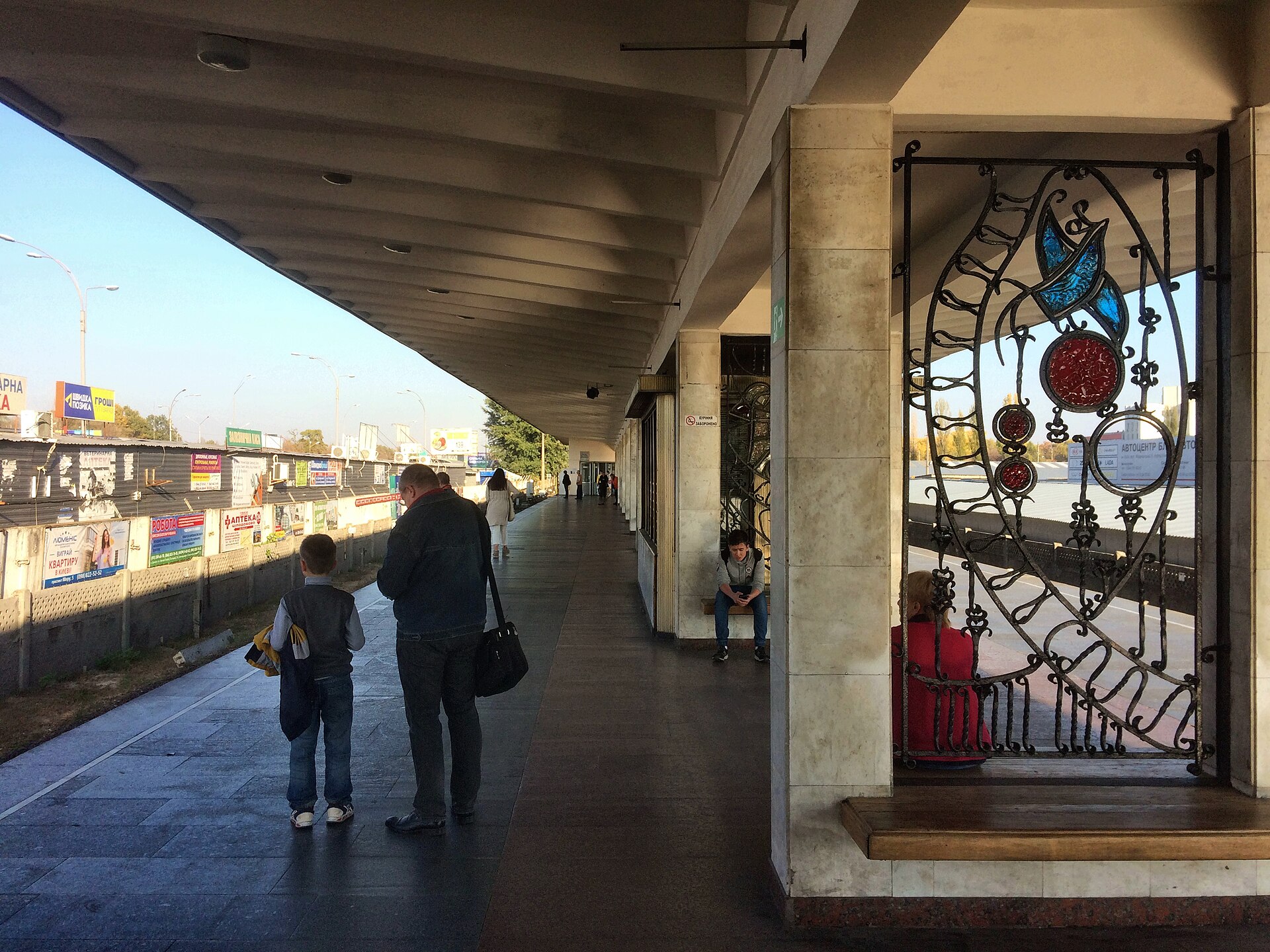
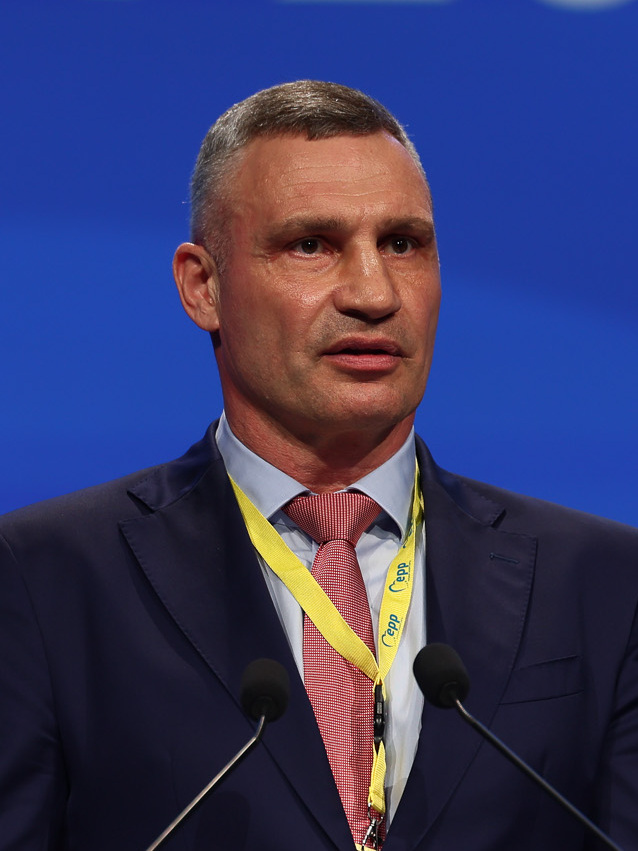
A Russian missile strike on Kyiv killed at least one person and injured ten on Monday evening, in an attack that hit beside a metro station in the capital's Desnyanskyi district, shattered windows at two medical facilities and cut power across districts on the east bank of the Dnipro River, Mayor Vitali Klitschko said. Klitschko, writing on Telegram, said that according to preliminary information one person had been killed near a supermarket. Reuters witnesses in the city reported a series of explosions. Local outlet Kyiv24 reported that the explosions were heard after 9:40 p.m., that a car caught fire near the station, and that local channels reported damage to Lisova station — the eastern terminus of the Svyatoshynsko-Brovarska line, and the same station damaged in a strike wave just over a week ago.
Track it live: Follow the front line and strike reports on our live Ukraine war map.
The attack was still developing late on Monday, and Ukrainian monitoring channels warned that further ballistic strikes were possible through the night. Moscow has long denied that it targets civilians.
Update — the toll rises to ten injured; a university campus was hit
Later reporting revised the toll and widened the damage list. Wire reporting later on Monday put the toll at one killed and 10 injured, including students at a dormitory; nine people were in hospital, three of them in serious condition, and a body was found by a heavily damaged apartment building. Klitschko's preliminary count, published while the attack was unfolding, had put the injured at seven. Kyiv Independent, citing Ukrainian authorities, reported that ballistic missiles hit the grounds of a university campus — the State Trade and Economics University, by Kyoto Park — along with residential buildings and the area near a metro station; its journalists heard explosions in the Podilskyi and Obolon districts around 9:45 p.m. after the Air Force warned ballistic missiles were headed for Kyiv. A paramedic and a medical technician were among the casualties, and an ambulance was damaged when an emergency team came under fire, the State Emergency Service said. Two medical facilities in Dniprovskyi district were damaged — blast waves shattered windows in an intensive care unit at one — and a school building in Desnyanskyi district was damaged.
President Volodymyr Zelenskyy condemned the attack on X: "Russian ballistic missiles struck the grounds of a university in Kyiv and the area around it, effectively the campus, Kyoto Park, the area near a metro station, and residential buildings" — and added that "artificial delays in providing air defense to Ukraine help terror," the argument at the centre of his Patriot sign-off dispute with Washington, covered below.
Update — Tuesday, October 27: explosions heard in Kyiv again
Within minutes of the Oleshky ceasefire taking effect at 3 a.m. Kyiv time on Tuesday, multiple ballistic-missile explosions were heard in Kyiv as air alerts sounded across parts of Ukraine, Reuters witnesses and the Associated Press reported. No casualties or damage from the Tuesday-morning explosions had been reported by either agency.
What happened on Monday evening — and what is still preliminary
The confirmed spine of the story, as reported by Reuters from Kyiv and by Kyiv24, is this. Explosions were heard across the capital after 9:40 p.m. local time on Monday, October 26. A hit was recorded in Desnyanskyi district, on the east bank of the Dnipro, next to a metro station, where a car caught fire. Klitschko said one person was killed near a supermarket and seven people were injured across the city — figures he himself flagged as preliminary. Explosions shattered windows at two medical facilities. Pictures posted on unofficial Telegram channels showed damage at a metro station and to a tram, Reuters reported, and Kyiv24 said local channels identified the damaged station as Lisova.
Two details deserve their sourcing kept visible, because they describe the pattern Ukrainians call a double tap. Reuters reported that a member of an emergency crew had come under attack after rushing to the scene of one strike. Kyiv24, also citing Klitschko, reported that a team of emergency medical responders heading to a call was under fire. Whether these describe the same crew or two separate incidents was not clear on Monday night; both accounts agree on the central fact that responders themselves came under fire during the attack. Reuters witnesses said power had been cut in districts on the east side of the Dnipro.
The same stations, hit again
If Lisova's identification is confirmed, Monday's strike will have hit a station that was damaged only days ago. Kyiv24 noted that the neighbouring Chernihivska station, one stop west on the same line, was hit last week and closed for several days. As Signal Post News reported in its coverage of the October 18–19 strikes on Desnyanskyi, that wave damaged both the Chernihivska and Lisova stations and a medical centre in the same district. In other words, the east-bank metro — the line that carries Desnyanskyi and Dniprovskyi commuters across the river — is being struck repeatedly, station by station, in successive weeks.
Why this matters: the metro is Kyiv's shelter system, not just its transport
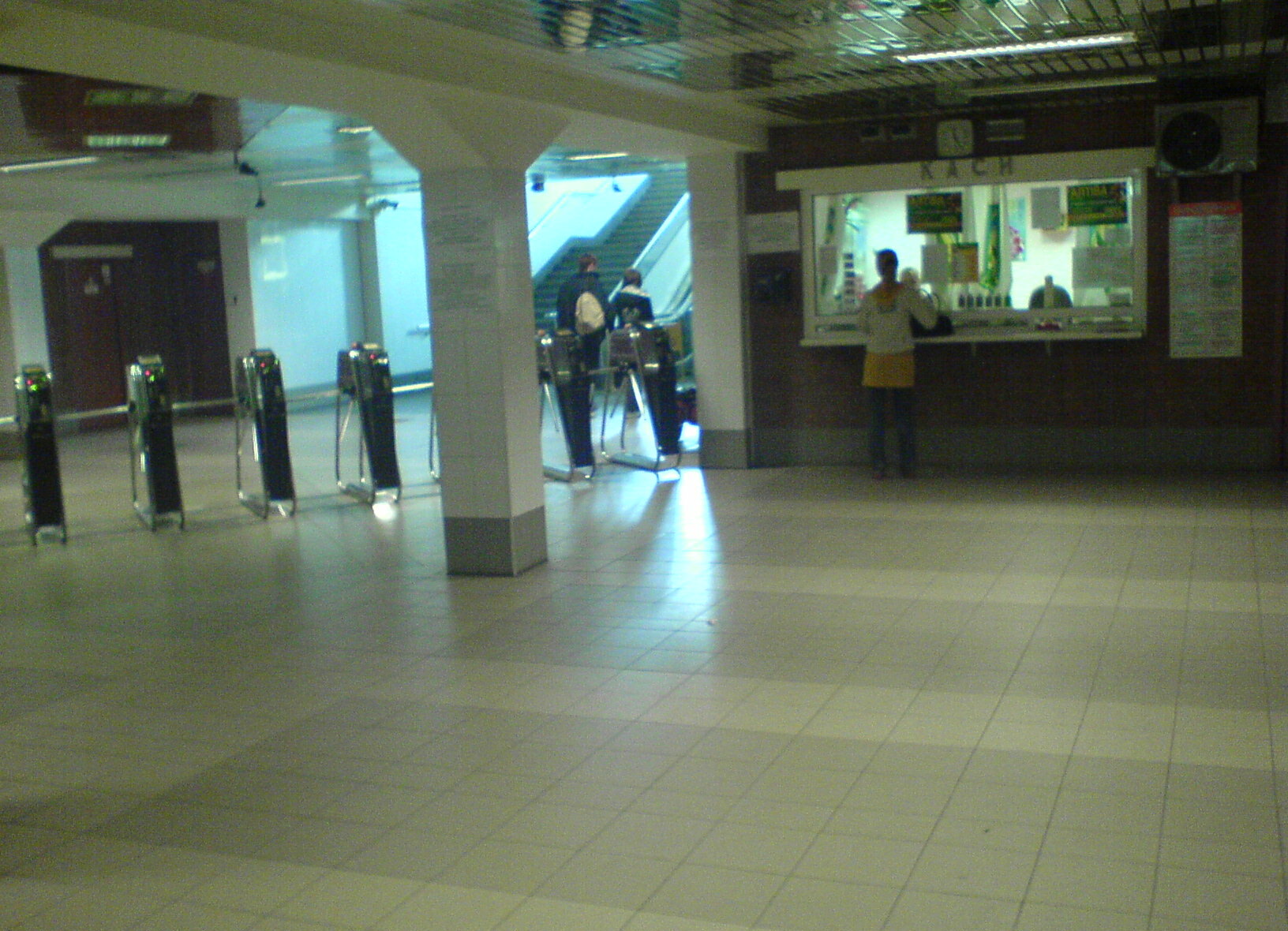
A strike beside a Kyiv metro station is not only an attack on transport. Since 2022 the metro has been the capital's default shelter system: its deep stations are where tens of thousands of Kyiv residents sleep through missile nights, and its east-bank stations serve the left-bank districts — Desnyanskyi and Dniprovskyi — that have absorbed some of the heaviest strike patterns of the autumn campaign. Damaging the surface stations of the Svyatoshynsko-Brovarska line does two things at once: it interrupts the one rail link that moves the east bank's population across the Dnipro, and it degrades the shelter geography residents rely on when the sirens sound. That is the practical significance of Monday night — one death and ten injuries are the human toll, but the target set tells the strategic story.
The timing tells one too. The strike landed on the same day President Volodymyr Zelenskyy said publicly that Ukraine has been waiting nearly a month for U.S. Defense Secretary Pete Hegseth to sign off on Patriot and NASAMS interceptor deliveries — the air-defence ammunition Kyiv says it needs before winter, as we reported in Zelenskyy's account of the Patriot sign-off delay. Ballistic missiles are precisely the threat Patriots exist to intercept, and precisely the threat against which Kyiv's other defences are thinnest. Every ballistic that gets through to a metro station or a hospital window lands, politically, in the middle of that argument.
A mayor, a president, and a winter argument
Monday's attack also lands in a live domestic dispute. Klitschko has spent October defending City Hall's winter preparations against public criticism from Zelenskyy, who said other Ukrainian cities were significantly better prepared, and against a street protest on October 17 at which hundreds of residents demanded the mayor's resignation over shelters, backup power and winter readiness, according to Kyiv Independent reporting at the time. Each new strike on the capital's infrastructure re-opens that argument from both directions: the mayor's defenders point to the scale of what Russia is firing at the city, while his critics point to every dark district as evidence. The preliminary toll Klitschko published on Telegram on Monday night will be read in Kyiv through that political lens as much as through a military one.
The pattern behind one night's strike
Step back and Monday evening fits a recognisable autumn pattern. Russia's campaign against Kyiv this season has alternated between mass drone-and-missile waves against the power grid and smaller, sharp ballistic strikes against individual districts — the October 18–19 Desnyanskyi wave, the strikes on Kyiv's power plants, and now a Monday-evening ballistic attack on the same east-bank corridor. Medical facilities recur in the damage lists: windows shattered at two facilities on Monday, a medical centre damaged in the same district a week earlier. Ukraine and its partners characterise strikes on medical facilities and on responders as part of a deliberate pattern; Moscow denies targeting civilians. What is documented, strike by strike, is the repeat geography — the same districts, the same line, the same kinds of buildings.
There is also a numbers point worth making plainly. A toll of one killed and ten injured will read as small against the war's mass-casualty nights, and it may yet rise as preliminary figures are updated. But ballistic strikes on a capital's shelter-and-transport backbone are not measured only in the night's casualties. They are measured in the repairs queued, the stations closed, the megawatts cut on the east bank, and the interceptor stock drawn down — the slow arithmetic of attrition that both sides are running as winter approaches, and that Zelenskyy's Patriot appeal on Monday morning was explicitly about.
What happens next
Three things to watch. First, the toll: Klitschko's figures were preliminary, published while the attack was still unfolding, and Kyiv's tolls in evening strikes have repeatedly been revised the following morning — as has the damage list, once the city administration surveys the metro stations and the two medical facilities in daylight. Second, the overnight hours themselves: monitoring channels warned of further ballistic launches through the night, and whether Lisova and Chernihivska can reopen — or join the list of stations closed for repairs — will be the morning's practical question for the east bank's commuters. Third, the air-defence argument: a ballistic strike on the capital on the very day Zelenskyy publicised a month-long wait for a Patriot sign-off gives Kyiv a pointed exhibit for Washington, and the American response — after Secretary of State Marco Rubio's insistence last week that the delay was not political — will say much about where the interceptor pipeline actually stands before winter.
Sources
Reuters, "Russian attack on Kyiv kills one person, hits metro station, medical facilities, mayor says" (October 26, 2026), reporting by Valentyn Ogirenko in Kyiv, writing by Ron Popeski — via SRN News; and Reuters, "Kyiv under attack, mayor says strike near underground station" (October 26, 2026, 20:16 UTC) — via KELO-FM. Kyiv24, "Evening ballistic missile strike in Kyiv causes casualties and damage" (October 26, 2026) — kyiv24.com. Mayor Vitali Klitschko's statements on Telegram, as reported by Reuters and Kyiv24. Later wire reporting (AAP) and Kyiv Independent reporting on the revised toll of one killed and 10 injured, the State Trade and Economics University campus and dormitory, the damaged ambulance and Dniprovskyi medical facilities, and President Zelenskyy's statement on X. Reuters witness report and Associated Press, October 27, 2026, on the Tuesday-morning explosions in Kyiv. File photographs: Lisova station platform and hall, Wikimedia Commons (CC BY-SA); Vitali Klitschko at the EPP Congress, Valencia, 2025, European People's Party via Wikimedia Commons (CC BY).