Kharkiv apartment bomb strike September 2026
Kharkiv apartment bomb strike September 2026Kharkiv guided bomb attackIhor Terekhov KharkivRussia Ukraine strikes September 28Saltiv district Kharkiv strikeZelenskyy terrorism sanctionsKyiv petrol station dronejet-powered drones UkraineSaudi ambassador residence Kyiv damageUN Ukraine new intensity September 2026
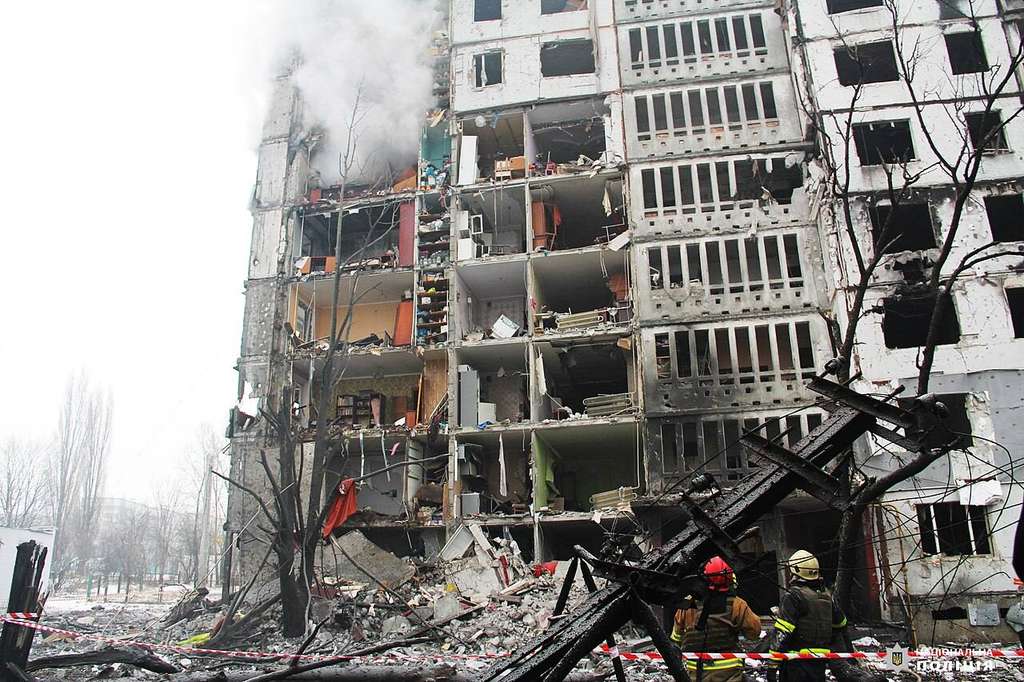
KHARKIV, Ukraine — The Kharkiv apartment bomb strike September 2026 wounded 22 people, including eight children, after a guided Russian aerial bomb hit a residential building in the northeastern city early Monday, Mayor Ihor Terekhov said. Local accounts described two guided-bomb impacts across the Kyiv and Saltiv districts, with the direct apartment-block hit in Saltiv. In a separate overnight incident, Kyiv authorities said a Russian drone hit a petrol station in the capital; they released no further details in the initial report.
The casualty figures, locations and weapon identification come from Ukrainian officials and had not been independently verified at publication. Russia's defence ministry had not commented on the Kharkiv incident. Moscow says its forces target military infrastructure and denies deliberately targeting civilians, while Ukrainian officials say repeated strikes have hit homes and public facilities.
What happened in the Saltiv and Kyiv districts
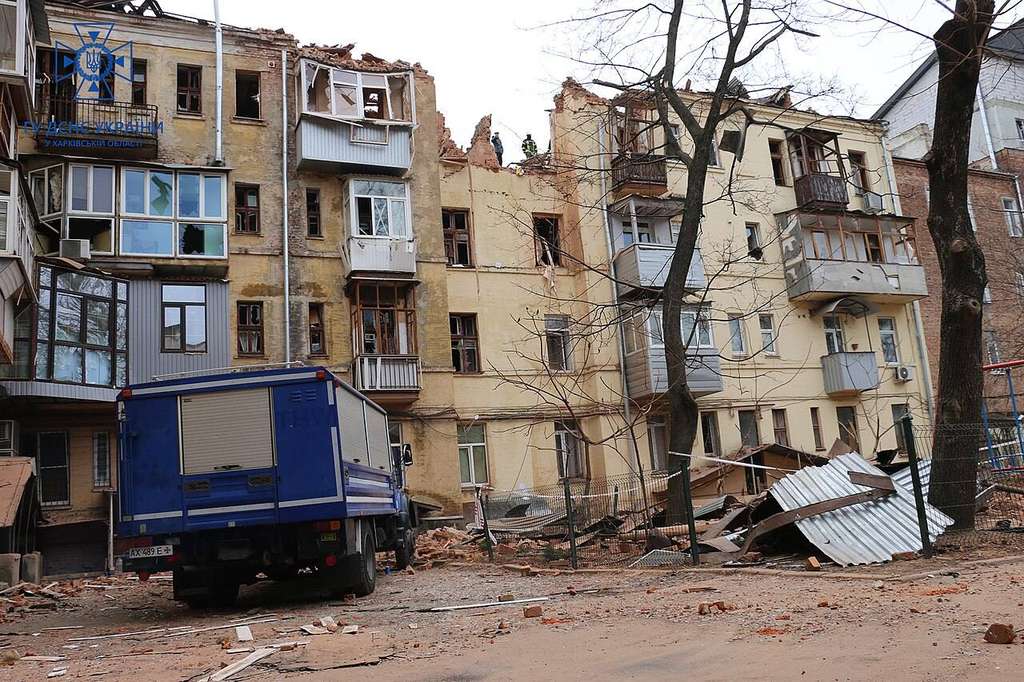
Terekhov first reported a double guided-aerial-bomb strike in Kharkiv's Kyiv district. Updated information from the city's situation centre placed one impact near apartment buildings in Saltiv, and the mayor later said residential buildings in both districts were damaged. Local authorities said a guided bomb struck the Saltiv apartment building directly.
The reported toll developed quickly. The Kharkiv regional administration put the number injured at 14 at 5:10 a.m. local time and raised it to 22 at 6:40 a.m., according to the Antikor account citing local officials. Eight of the injured were children. Two children — a 12-year-old and an 8-year-old boy — were hospitalized; six others, ranging in age from 3 to 15, received treatment at the scene. Reuters subsequently reported the final 22-person toll from Terekhov.
Those figures differ from an early wire update that said 15 people had been injured. The more detailed local chronology moved from 14 to 22; this article uses that sourced timeline rather than blending preliminary counts.
Kyiv petrol-station drone follows a daylong barrage
Kyiv city authorities said a Russian drone hit a petrol station, Reuters reported, but the initial announcement did not give a casualty count or describe the extent of damage. The absence of details matters: it is evidence of a strike report, not evidence of a large explosion or additional victims, and the incident should not be conflated with separate petrol-station attacks reported earlier in September.
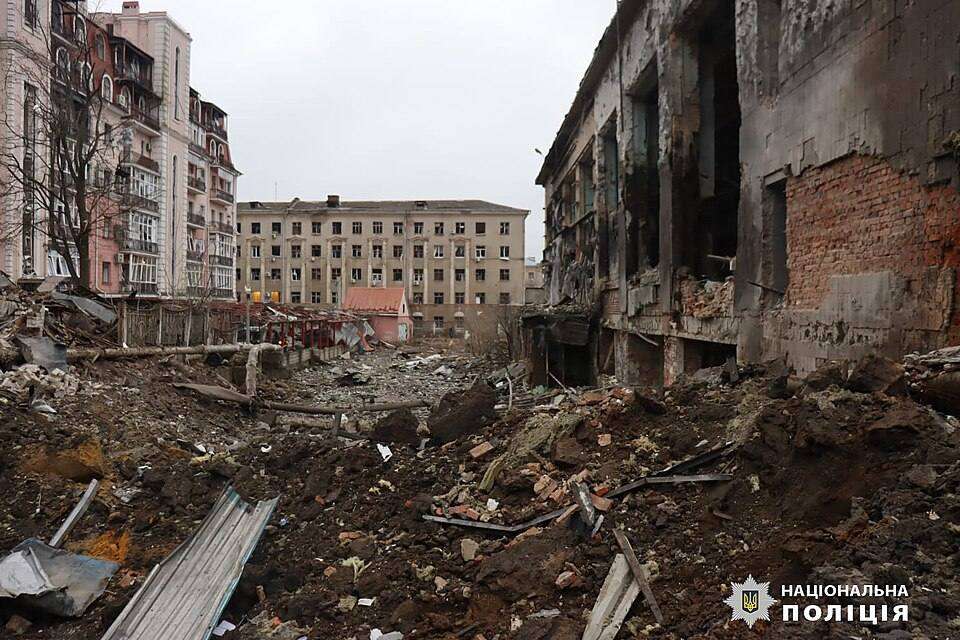
The capital was already absorbing a sustained wave. On Sunday, drones hit residential and commercial sites in and around Kyiv, and Ukrainian officials reported deaths and injuries across several regions. The emerging pattern is less a single night of saturation than a sequence of attacks distributed across the clock. That stretches mobile air-defence teams and emergency crews while shortening the intervals in which civilians can leave shelter, restore services or repair damage.
Zelenskyy calls the target set “terrorism” and presses for October sanctions
President Volodymyr Zelenskyy said Russia had launched 277 attack drones of various types since the previous day, 155 of them jet-powered. The jet-powered share — about 56% — is strategically important because faster models can compress warning and engagement times and make the mix harder for cheaper short-range interceptors to handle.
Zelenskyy said damage included two kindergartens, two schools, a residential building, an auto-repair shop, warehouses and communications facilities in Kyiv. He also said a building used as the Saudi ambassador's residence was damaged, along with a sports school in the Dnipropetrovsk region and a regional children's home in Sumy. Signal Post News could not independently verify the full list.
Calling the selection of targets “terrorism,” Zelenskyy argued that the attacks had no military purpose and were meant to break society. That is Ukraine's characterization, not a settled legal judgment in this incident. He urged partners to increase pressure and said Ukraine was preparing sanctions packages aimed at financial networks, component and equipment suppliers, companies and people supporting Russian weapons production, with restrictions expected in October.
Why guided bombs against homes change the risk
Guided aerial bombs give a conventional gravity bomb a stand-off guidance kit, allowing an aircraft to release it from farther away than an unguided bomb. Their large warheads can destroy several floors of a residential structure even when the intended aim point is nearby rather than the building itself. For a border city such as Kharkiv, the combination of short warning time, heavy explosive effect and repeated launches creates a civil-defence problem that is not solved by drone jammers alone.
The strategic dispute is stark. Russia's stated logic is military: it says strikes are directed at logistics, communications and other infrastructure supporting Ukrainian forces. Ukraine's stated logic is coercive: it says attacks on housing, schools and family facilities reveal an effort to terrorize civilians and degrade daily life. A neutral reading requires separating verified damage from each side's claimed intent. The repeated presence of civilian buildings in the damage reports is established by local accounts; why any specific weapon struck a specific building remains a question for investigation.
A September campaign of new intensity
Zelenskyy said Russia used roughly 3,900 weapons against Ukraine in the preceding week: more than 2,200 drones, about 1,650 aerial bombs and 38 missiles. Those are Ukrainian presidential figures, not an independently audited inventory, but they help explain why individual incidents are now part of a continuous national air-defence burden rather than isolated raids.
United Nations monitors reported that at least 200 civilians were killed and 1,234 injured from September 1 through September 24, and that Kyiv was struck on 16 of those 24 days. The UN described a “new intensity” in long-range attacks. The September 27 wave then extended the toll across Kyiv, Sumy, Kharkiv and Odesa, according to Ukrainian officials.
A parallel connectivity campaign compounds the physical damage. Russia's defence ministry has claimed strikes on data centres and communications-linked facilities it describes as military-support infrastructure. Ukrainian officials and operators have reported outages and damage affecting civilian services. Data centres can serve both civilian and state functions, but a hit can ripple through emergency messaging, banking and routine communications far beyond the immediate target.
Who benefits, who loses — and where critics focus
Moscow benefits if cheaper drones and stand-off bombs force Ukraine to spend scarce, high-value interceptors or leave cities exposed. Kyiv benefits politically when documented damage to housing and public facilities sustains allied support and strengthens the case for tighter sanctions. Neither advantage reduces the immediate cost borne by civilians, local hospitals, schools, utilities and emergency crews.
Critics of Ukraine's partners focus on the air-defence gap. Patriot-class systems are valuable against some ballistic and high-end aerial threats, but no single system can cheaply defeat every drone or bomb. The practical requirement is layered defence: long-range missiles, mobile gun teams, electronic warfare, lower-cost interceptors, aircraft and better sensor coverage. Supply is limited, the defended geography is large, and every interceptor allocated to one city is unavailable elsewhere.
What the numbers mean
Eight children among 22 injured means children accounted for more than one-third of the reported Kharkiv casualties — about 36%. That concentration can reflect the residential timing and location of the impact rather than a separate target category, but it underscores why apartment strikes generate a different casualty profile from attacks on remote logistics sites.
The 155 jet-powered drones in a 277-drone total represent roughly 56%. If the Ukrainian count is accurate, the faster type was not a niche supplement in that reporting window; it formed a majority. Compared with the war's earlier tempo of concentrated nighttime barrages, the larger shift is persistence: attacks now appear in overlapping waves, forcing defences to stay active through daylight as well.
What happens next
Three pressure points will shape the next phase. First, whether the October sanctions packages described by Zelenskyy are adopted by partners and whether they reach the payment channels and component supply chains used by weapons producers. Second, whether Ukraine receives additional Patriot launchers, missiles and complementary short-range systems quickly enough to narrow the air-defence gap. Third, whether Russia intensifies attacks on energy and communications infrastructure as colder weather approaches.
For Kharkiv, the immediate questions are more local: whether the reported casualty count changes, how many residents have been displaced, and what investigators conclude about the weapon and aim point. Until those assessments are published, claims about intent should remain attributed. The confirmed fact at the centre of the story is narrower and grave enough: local officials say a guided bomb struck an occupied apartment building and injured 22 people.
Sources and reporting notes
- Reuters, September 28, 2026: Kharkiv guided-bomb strike, Terekhov's 22-person toll and the Kyiv petrol-station drone report.
- Antikor, September 28, 2026: local-authority chronology, district damage, child casualty details and the 14-to-22 update.
- ANI via Desi Talk Chicago: Zelenskyy's statement, 277-drone count, damaged sites and sanctions call.
- Europe Says: Zelenskyy's 155 jet-powered drones figure, target list and proposed October sanctions.
- Reuters, September 27, 2026: Russia's claims about data centres, logistics and military-linked infrastructure.
Reporting cutoff: September 28, 2026. Casualty, weapon and damage claims are attributed to the officials and organizations that reported them. Russia had not commented on the Kharkiv incident at publication and says it does not deliberately target civilians.