Russia strikes Ukraine
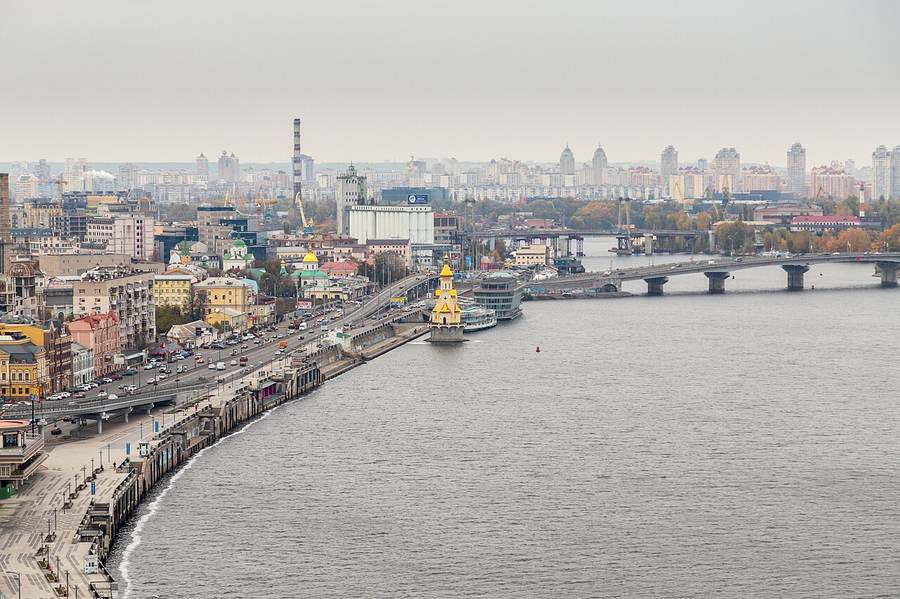
KYIV — Russia strikes Ukraine with a more explicit promise of escalation after a weekend exchange that linked Moscow's air campaign directly to Kyiv's attacks on Russian oil infrastructure. Russia's Defence Ministry said Sunday that its forces would intensify strikes on military facilities, defence-industry sites and related infrastructure in Kyiv and other Ukrainian regions. It framed the move as a response to Zelenskyy's Reuters interview, published Saturday, in which he said Ukraine would “double down” on attacks against Russian oil refineries.
The statements matter because they remove some of the ambiguity around an already expanding long-range war. Russia says its recent attacks answer what it describes as Ukrainian strikes on civilian targets inside Russia. Ukraine says refinery attacks are aimed at a revenue source that supports the Russian war effort and insists it will not deliberately strike civilian facilities. Both governments deny targeting civilians. Those denials do not settle disputes over particular targets or the civilian effects of attacks; they define the competing public cases each side is making.
Reuters reported the Russian announcement, while a statement attributed to the ministry and carried by state-run TASS was reported by Europe Says. The timing — hours after another strike on Kyiv's Northern Bridge and during German Chancellor Friedrich Merz's visit — makes the declaration more than routine battlefield messaging. It is a warning that the contest over energy and transport networks may intensify as winter approaches.
Why this matters
The deeper significance is a declared escalation spiral around infrastructure with both economic and military value. Refineries turn crude oil into diesel, gasoline and jet fuel while contributing export income and tax revenue. Power systems, rail lines, roads and bridges keep cities functioning and can also move troops and supplies. That overlap gives each side a military rationale for attacking facilities whose loss can also impose broad costs on civilians.
Escalation is not measured only by the number of drones or missiles. It can also mean widening target categories, striking more frequently, or choosing targets whose disruption multiplies across a network. A damaged refinery can tighten fuel supply far beyond the blast site. A closed Dnipro bridge shifts traffic onto other crossings, slowing ambulances, freight and commuters. A damaged heating main can affect households that have no role in military logistics.
Winter magnifies those effects. Electricity, heating, water pumping, communications and transport become more interdependent when temperatures fall. The same strike that creates a manageable inconvenience in summer can become a public-health and displacement risk in freezing weather. That is why the Sunday exchange is best understood not as two isolated threats, but as a contest over each society's capacity to absorb repeated shocks.
What each side says — and what remains unverified
Moscow's stated target set
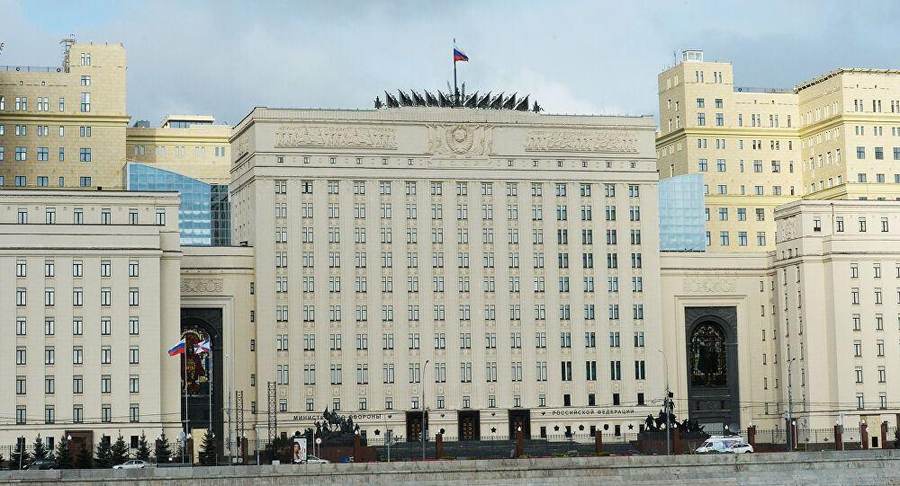
The Russian ministry said military facilities, defence-industrial sites and “related infrastructure” would face intensified attack. The last phrase is consequential because it can cover dual-use networks far beyond a weapons factory. Moscow said its recent strikes were retaliation for Ukrainian attacks inside Russia that it characterized as attacks on civilians.
The ministry's statement establishes declared intent, not independent proof about the status of every site struck. International humanitarian law requires parties to distinguish military objectives from civilian objects and to weigh expected civilian harm against the anticipated military advantage. Those judgments depend on evidence about a target's use and the circumstances of a particular attack — evidence often incomplete in the first hours.
Kyiv's “new doctrine” assertion
Zelenskyy told Reuters that Ukrainian intelligence had obtained documents showing President Vladimir Putin approved a “new doctrine” allowing attacks across a broader list of targets, including infrastructure, logistics, roads, schools and hospitals, in order to push residents out of Kyiv and other cities. The documents have not been made public. The Kremlin did not comment on the assertion when Reuters sought a response Saturday, so it remains a claim by the Ukrainian president rather than an independently verified Russian policy document.
Zelenskyy said Ukraine would answer attacks on its energy system by striking Russian energy assets, first of all refineries, which he described as a source of financing for the war. He also said Ukraine would not deliberately attack civilian objects. The distinction Kyiv draws is between an industrial energy target tied to military finance and indiscriminate civilian targeting. Critics will note that refinery attacks can still affect workers, nearby communities and fuel markets; supporters argue that constraining revenue and military fuel is a legitimate strategic aim.
How we got here: from winter grids to bridges and refineries
Russia's 2022–2023 winter campaign established the basic pattern: repeated missile and drone strikes damaged Ukraine's electricity generation and transmission system, producing emergency outages and forcing repairs under fire. The campaign demonstrated both the vulnerability and resilience of a national grid. Centralized assets could be hit, but engineers rerouted power, imported equipment and restored service. Later winters extended the same contest, with attacks and repairs adapting to one another.
The current phase adds transport chokepoints and faster drones. Kyiv's Southern Bridge was hit five times in less than 24 hours on Thursday and Friday. The Northern Bridge was struck Saturday, injuring two people and damaging the road surface and trolleybus cables, according to CNN. It was hit again Sunday while Merz visited the capital. That concentration matters: bridges are difficult to replace quickly and connect the two sides of a city of roughly three million residents.
Ukraine's Air Force said it intercepted or suppressed 123 of 135 drones launched overnight on October 3–4. That is about 91.1 percent. A rate above 90 percent sounds decisive, but 12 drones not stopped can still produce multiple impacts. Repeated nightly waves also force defenders to spend ammunition, keep crews deployed and protect many possible targets at once.
Merz's response illustrates the other side of the cycle. Germany announced €1 billion ($1.13 billion) in military aid and €350 million ($390 million) for energy-infrastructure repairs, alongside plans for joint drone and missile production. The combined €1.35 billion package is not merely solidarity; it is an attempt to increase Ukraine's ability to intercept attacks, restore damaged systems and produce longer-range weapons of its own. For more on the visit and the bridge strike, read Signal Post News's full Merz Kyiv analysis.
Who benefits, who loses, and what critics say
The strategic arguments
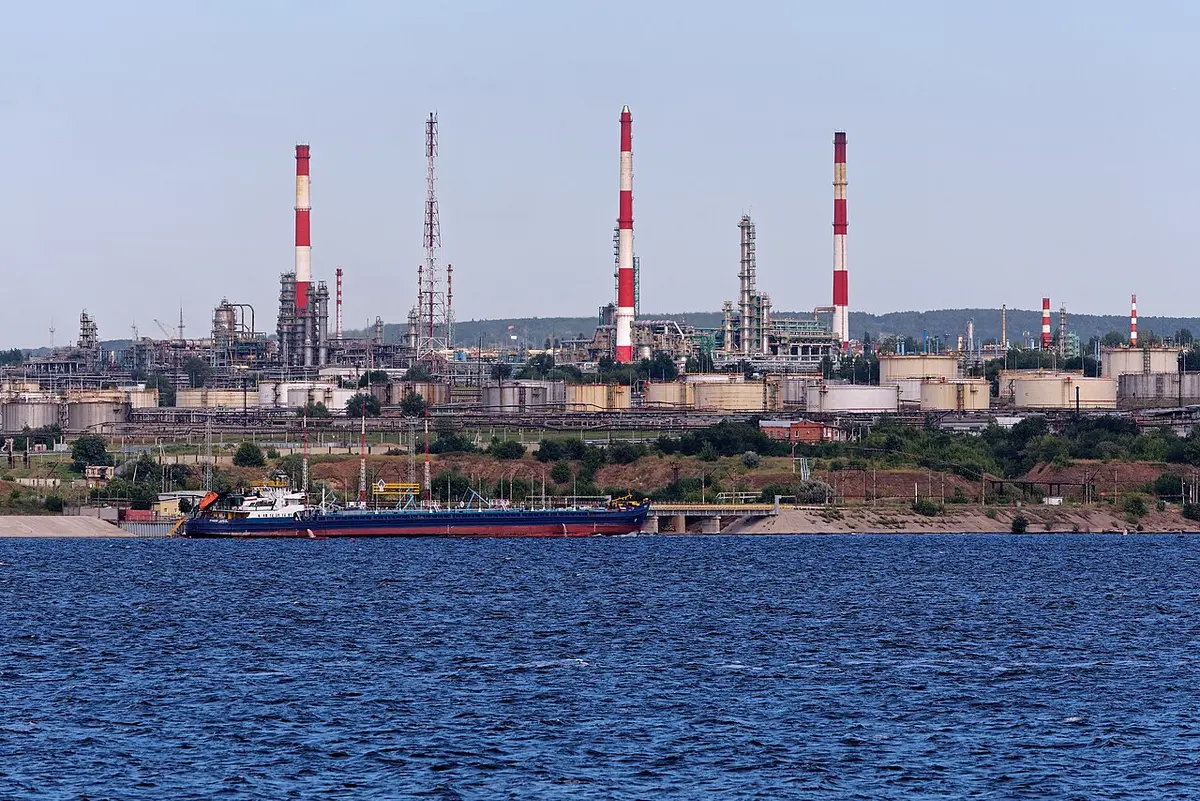
Ukraine can benefit if refinery strikes reduce Russian fuel output, force costly repairs, disperse air defences and pressure the fiscal machinery behind the war. The leverage rises when damaged processing capacity cannot be replaced quickly. Ukraine also gains an argument for continued European air-defence aid: every Russian attack on urban infrastructure reinforces Kyiv's case that interceptor supply is an urgent civilian as well as military need.
Russia can benefit if intensified strikes slow Ukrainian military production, disrupt logistics and compel Kyiv to divert scarce air defences from the front. Pressure on bridges and energy systems can also raise the economic cost of sustaining a large capital. Moscow's public description of retaliation seeks a further political benefit: presenting escalation as reactive rather than initiated by Russia.
The clearest losers are civilians and workers on both sides. Ukrainians face disrupted transport, power and heat. Russian refinery workers and neighboring communities face fires and industrial hazards. Consumers beyond the battlefield may encounter higher fuel prices if outages tighten refined-product supply. Last month, President Donald Trump urged Ukraine to avoid Russian oil installations, saying those attacks were contributing to surging diesel prices.
The critics' case
Critics of Kyiv's refinery campaign argue that economic pressure may not change Kremlin decisions quickly enough to justify the risk of retaliation, and that higher diesel prices can erode international support. Critics of Moscow's campaign argue that broad terms such as “related infrastructure” can swallow the distinction between a military objective and the civilian systems around it. Each concern points to the same problem: dual-use infrastructure creates strategic effects precisely because civilian and military life depend on the same networks.
There is also a risk of false precision in early reporting. Damage assessments, interception claims and statements of intent come from belligerents with strong incentives to shape perception. A careful reading should separate what is confirmed — the public statements, the reported bridge impacts, the announced aid figures — from what is alleged, including the contents and authority of the purported “new doctrine” documents.
What the numbers mean
123 of 135: Ukraine's reported overnight interception figure leaves 12 drones outside the stopped count. Even if every wave achieved the same 91.1 percent result, ten nights of 135 drones would statistically leave about 120 unstopped. That is not a forecast — routes, weapons and defenses change — but it shows why a high percentage can coexist with serious damage.
Five strikes in under 24 hours: repeatedly hitting one bridge can be more disruptive than spreading attacks across five unrelated sites. Inspections, closures and repairs compound. A second bridge then being hit narrows the network's redundancy.
€1.35 billion: Germany's package divides into roughly 74 percent military aid and 26 percent energy repairs. That allocation captures the two-front problem: stop incoming weapons where possible, and restore essential services when interception fails.
Three million residents: Kyiv's population turns infrastructure damage into a scale problem. A short interruption affecting even a small fraction of the city can touch tens of thousands of people. The strategic effect is therefore not limited to the physical cost of concrete, steel or transformers.
What happens next
Scenario one: controlled escalation
The most restrained path is a larger but still bounded exchange: Russia increases attacks on facilities it labels military or defence-related, while Ukraine expands refinery operations but avoids broader civilian energy targets. Both sides maintain their legal and political distinctions, and outside governments press privately for limits. Even this scenario would be costly because “bounded” campaigns can still produce outages, industrial accidents and casualties.
Scenario two: the infrastructure contest broadens
A second path is widening target selection. More bridges, substations, rail nodes, storage sites and fuel-processing facilities come under attack. The danger here is cumulative rather than spectacular: repair crews cannot restore assets as quickly as new damage occurs, spare parts run short, and air defences are pulled across too many priorities. The onset of cold weather would make that imbalance more consequential.
Scenario three: outside pressure creates a partial energy understanding
A narrower diplomatic arrangement could seek mutual restraint around energy infrastructure, even without a broader ceasefire. Such proposals have circulated before, but verification is difficult and the category is contested: one side may classify a refinery, power plant or railway as military support while the other calls it civilian. Trump's criticism of refinery attacks and Germany's simultaneous support for Ukrainian production show how divided outside incentives already are.
The immediate indicators are practical. Watch the frequency and target mix of Russian strikes after the ministry's announcement; the scale and reach of Ukrainian refinery attacks; whether Kyiv's bridges remain open; whether Germany's aid and production agreements turn into deliveries; and whether either side clarifies rules for energy targets. The rhetoric has escalated. The decisive question is how quickly it becomes an operational pattern.
Sources and reporting notes
- Reuters, October 4 — Russian Defence Ministry statement and response to Zelenskyy's interview
- Europe Says, citing state-run TASS — wording and context of the ministry statement
- Reuters, October 3 — Zelenskyy's refinery pledge, “new doctrine” assertion and winter air-defence context
- CNN, October 4 — Northern and Southern Bridge attacks, casualties and German aid
- Reuters, October 4 — Merz visit, aid package and joint weapons production
Verification note: The article distinguishes public statements from independently verified events. Zelenskyy's description of Russian “new doctrine” documents remains his assertion; the documents are not public and the Kremlin did not comment to Reuters. The photographs are clearly labeled file images.