Gazprom lost $12.9 billion. Rosneft's profits fell 70 percent. Urals crude trades near $35 against a $69 budget assumption. The official numbers still show growth — the balance sheet tells a different story.
Russia economy crisis 2026: For three years, the question about Russia's economy was when the sanctions, the war spending, and the exodus of Western firms would finally bite. In 2026, the answer is arriving all at once. The central bank's key rate sits at 16 percent — a level that strangles private investment. An estimated $202 billion in defense-linked lending flows through state banks in arrangements that never appear in the official budget. Gazprom, the gas giant that once filled a tenth of the federal budget, reported a $12.9 billion loss. Rosneft's profits collapsed 70 percent. Urals crude, Russia's main export blend, trades around $35 a barrel — roughly half the $69 price the government's budget assumed. Oil and gas receipts, the Kremlin's fiscal lifeblood, are down 49 percent.
None of this appears in the headline GDP figures the Kremlin cites, which is precisely the point. Russia's economy has not collapsed in the way Western forecasters predicted in 2022. It has done something arguably more dangerous for Moscow: it has kept functioning by mortgaging its future — through off-budget military lending, forced corporate transfers, seized private assets, and a monetary policy that sacrifices the civilian economy to fund the war. That model has a mathematical limit. The data suggests 2026 is where the Kremlin finds it.
Why this matters
Wars are ultimately decided by production as much as by tactics, and production is decided by credit. An economy that can no longer allocate capital to anything except the war effort is an economy that cannot regenerate itself. The significance of the 2026 numbers is not that Russia is about to run out of money tomorrow — it is that every mechanism Moscow used to defy the sanctions consensus is now visibly exhausting itself at the same time: the interest-rate defense of the ruble is crushing domestic borrowers, the shadow defense budget is piling risk into the banking system, the energy revenues that paid for everything are halving, and the state's answer to each new gap is to seize or commandeer more of the private economy.
For Ukraine and its backers, this is the material basis of the war's endgame debate. For energy markets, it explains why Russian crude keeps flowing at fire-sale prices regardless of OPEC posturing. And for anyone watching the ruble, Russian bonds, or the solvency of Russia's state banks, the question has shifted from whether the war economy is sustainable to how the unsustainability expresses itself — through inflation, through a banking crisis, through deeper expropriation, or through a forced fiscal reckoning the Kremlin has spent four years postponing.
Background: how the war economy was built
When Western sanctions froze roughly half of Russia's foreign reserves in 2022 and cut its banks from SWIFT, most analysts expected a rapid financial crisis. It did not happen, for three reasons. First, energy prices spiked, flooding Moscow with windfall revenue in 2022. Second, the central bank under Elvira Nabiullina executed a ruthless monetary defense — hiking rates, imposing capital controls, forcing exporters to sell foreign currency. Third, and most consequentially, the Kremlin built a parallel war-finance system: defense contractors were ordered to borrow from state banks at preferential terms, with the state implicitly guaranteeing the loans. Military production soared while the official defense budget told only part of the story.
By 2024, this system was producing real GDP growth — driven almost entirely by military-industrial output. Tanks and artillery shells count as GDP. But the growth was borrowed in every sense: borrowed money, borrowed labor pulled from civilian sectors, borrowed time before the bills arrived. The xpert.digital analysis that has circulated among Russia-watchers this year puts the scale of the opaque defense lending at roughly $202 billion — credit extended to the military-industrial complex through channels that keep it off the federal budget and out of the official deficit figures. If that lending sours, the losses land on the state banks, which land on the state.

The numbers: what the data actually shows
The 16 percent rate trap
A 16 percent policy rate is an emergency setting. It makes mortgages, business loans, and consumer credit punitively expensive, which is the intended effect — crushing demand to contain inflation and support the ruble. But the Russian economy now needs the opposite: civilian businesses need affordable credit to survive the labor shortages and supply disruptions of a war economy. The central bank cannot cut rates without risking a ruble slide and an inflation surge, and it cannot hold them without slowly asphyxiating the non-military private sector. This is the classic wartime monetary trap, and Moscow is deep inside it. Every month at 16 percent transfers wealth from borrowers to the state and deepens the economy's dependence on directed, subsidized military credit — the $202 billion shadow system.
$202 billion in shadow defense lending
The most alarming figure in the current analysis is not in any budget table. Roughly $202 billion in lending to defense-linked firms has been extended through state banks on non-market terms — effectively fiscal spending disguised as bank credit. This matters for two reasons. First, it means the true scale of war expenditure is far larger than the official defense budget suggests, and the true deficit far deeper. Second, it concentrates risk in the banking system: if defense contractors cannot repay — and many are being paid in ways that make full repayment doubtful — the state banks take the hit, requiring recapitalization from the same strained budget. It is a circular liability machine, and Western analysts at outlets from the Washington Post to the Economist have flagged it as the single largest hidden vulnerability in Russia's financial system.
Energy giants bleeding
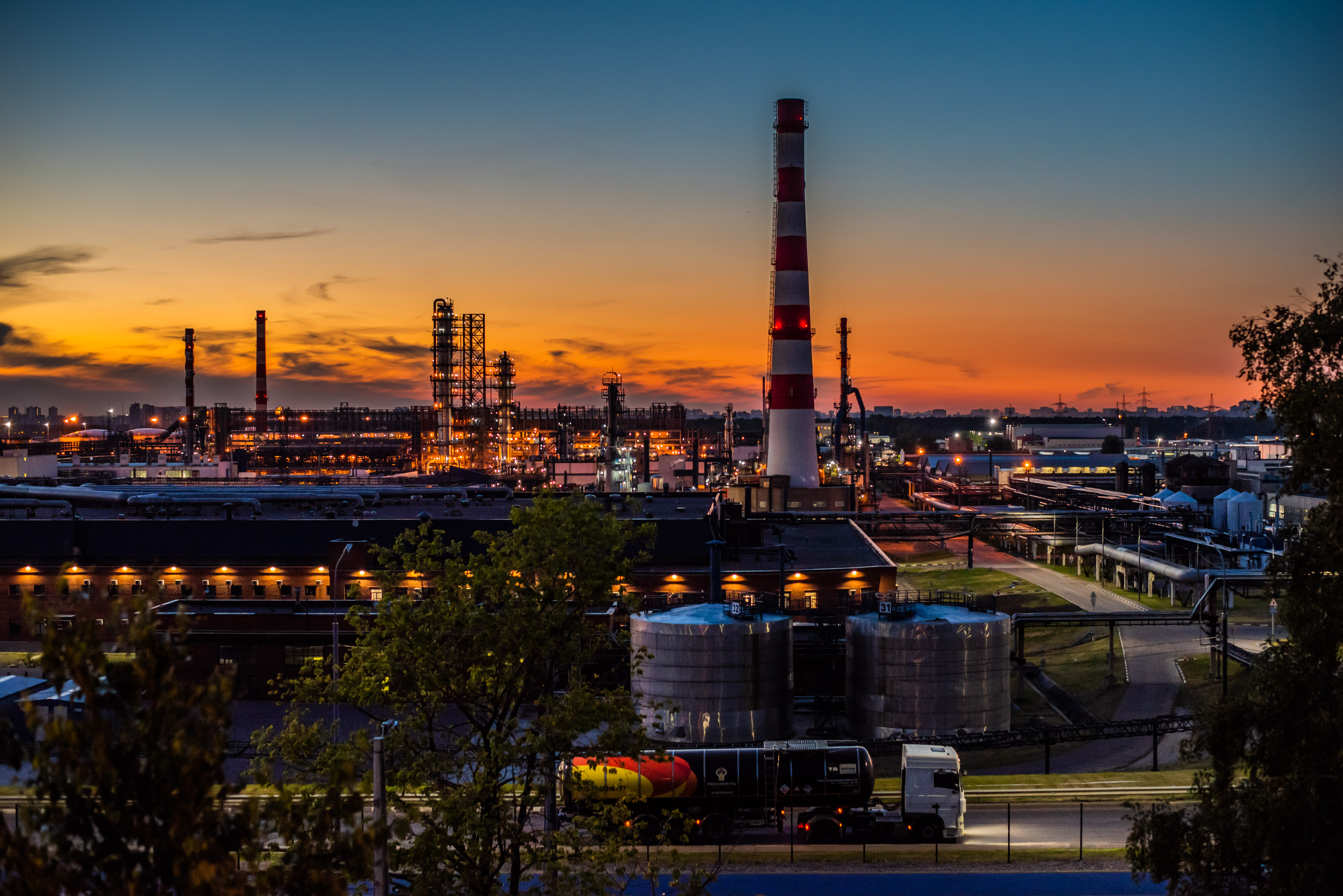
Gazprom's $12.9 billion loss would have been unthinkable in the 2010s, when the company was the Kremlin's cash machine and geopolitical weapon in one. The loss reflects the permanent destruction of its European pipeline business — volumes that cannot be rerouted to Asia at comparable prices or margins. Rosneft's 70 percent profit collapse tells the oil-side version: Urals crude at roughly $35 a barrel, against a budget built on $69, means every barrel exported earns about half what the fiscal plan assumed. With oil and gas receipts down 49 percent, the revenue hole is not cyclical — it is structural, the product of sanctions, the G7 price cap architecture, and Ukraine's successful campaign against Russian refining and export infrastructure.
Multiple angles: who benefits, who pays
The military-industrial complex wins — for now. Defense plants run three shifts, wages in military manufacturing have soared, and entire company towns depend on war orders. This constituency now has a direct material interest in the war's continuation, which constrains the Kremlin's freedom to de-escalate even if it wanted to.
Civilian business pays. At 16 percent rates, with labor drained by mobilization and military hiring, non-defense firms face a triple squeeze: expensive credit, scarce workers, and consumers whose real incomes are eroding. Bankruptcies in civilian sectors are rising while official statistics emphasize aggregate output.
The state pays by seizing. More than 500 firms have been seized or transferred to state control since the war began — a pace of expropriation that recalls the 1990s in reverse. Each seizure plugs a short-term gap and widens a long-term one: confiscated assets are typically managed worse than private ones, and the precedent chills whatever private investment remains.
Ordinary Russians pay through inflation and attrition. The official 2 percent unemployment rate is a statistical artifact of a war economy — it reflects a labor shortage, not labor health. Hundreds of thousands of working-age men are in uniform, have emigrated, or have been pulled into defense plants at inflated wages. The result is the worst of both worlds: labor scarcity alongside falling real living standards, as inflation outpaces wage growth everywhere except the military sector.
Skeptics note the resilience record. Analysts at Harvard's russiamatters.org and elsewhere have repeatedly cautioned that Russia's economy has survived predictions of collapse before — through import substitution, sanctions evasion networks, and Chinese and Indian commodity purchases. The shadow fleet still moves oil; the A7 network and similar channels still move money. Resilience is real. But resilience is not the same as sustainability, and the 2026 data describes an economy consuming its own foundations — reserves, human capital, private enterprise — to sustain current output.
The 2 percent unemployment illusion
Russia's roughly 2 percent unemployment rate is frequently cited as proof of economic health. It proves the opposite. In a normal economy, 2 percent unemployment means everyone who wants work has it. In Russia's war economy, it means the labor market has been strip-mined: mobilization, emigration, and defense-sector hiring have removed so many workers from the civilian pool that employers cannot fill positions at any wage the civilian economy can afford. The shortages are most acute in exactly the sectors a modern economy needs for long-term productivity — engineering, IT, logistics, healthcare. A generation of skilled workers is either in uniform, abroad, or assembling weapons. That is not a tight labor market; it is a hollowing one, and its effects compound over years, not quarters.
What happens next: 2026 scenarios
Scenario one: managed deterioration. The Kremlin muddles through — rolling over shadow loans, seizing more assets, leaning harder on China and India for commodity revenue, and accepting structurally higher inflation. The war continues, the civilian economy slowly hollows, and the breaking point recedes into 2027 or beyond. This is the base case most analysts assign the highest probability, precisely because the Kremlin has proven adept at postponing reckonings.
Scenario two: a banking stress event. The $202 billion in opaque defense lending begins to default in visible ways, forcing state bank recapitalizations that blow open the official deficit. A disorderly episode — a bank run, a forced bail-in, emergency rate moves — shatters the narrative of stability and forces fiscal choices the Kremlin has avoided: cut war spending, raise taxes sharply, or print money and accept the inflationary consequences.
Scenario three: an energy price shock finishes the job. If Urals discounts widen further — through tighter price-cap enforcement, more Ukrainian strikes on refining and export infrastructure, or a global demand downturn — the 49 percent revenue decline deepens toward levels where even creative accounting cannot bridge the gap. The budget's $69 assumption becomes indefensible, and the Kremlin must choose openly between guns and butter.
The through line is that all three scenarios end the era of cost-free war finance. Russia funded four years of war by spending reserves, seizing assets, hiding liabilities, and sacrificing the civilian economy's future. In 2026, the ledger is catching up. Whether the breaking point arrives as a crisis or as a slow grind, the direction is set: the war-on-credit model has reached its limit, and what comes next will be decided by how — not whether — Moscow pays the bill.
Sources
- xpert.digital — analysis of Russia's war-credit economy and opaque defense lending
- The Washington Post — reporting on Russian economic strain and fiscal pressure
- The Economist — coverage of Russia's fiscal position and energy revenues
- russiamatters.org — Harvard Kennedy School Russia Matters project analysis