War / Ukraine
A Russian jet-powered drone struck a crowded platform at Dnipro's main railway station on Thursday morning as passengers were boarding a commuter train to Zaporizhzhia, killing 13 people, Ukrainian officials said. President Volodymyr Zelenskyy called the strike "horrific" and argued that sanctions on Moscow must not be eased; Russia had not publicly commented on this specific strike in the reports available.
Track it live: https://signalpostnews.com/tracker/ukraine-war-map
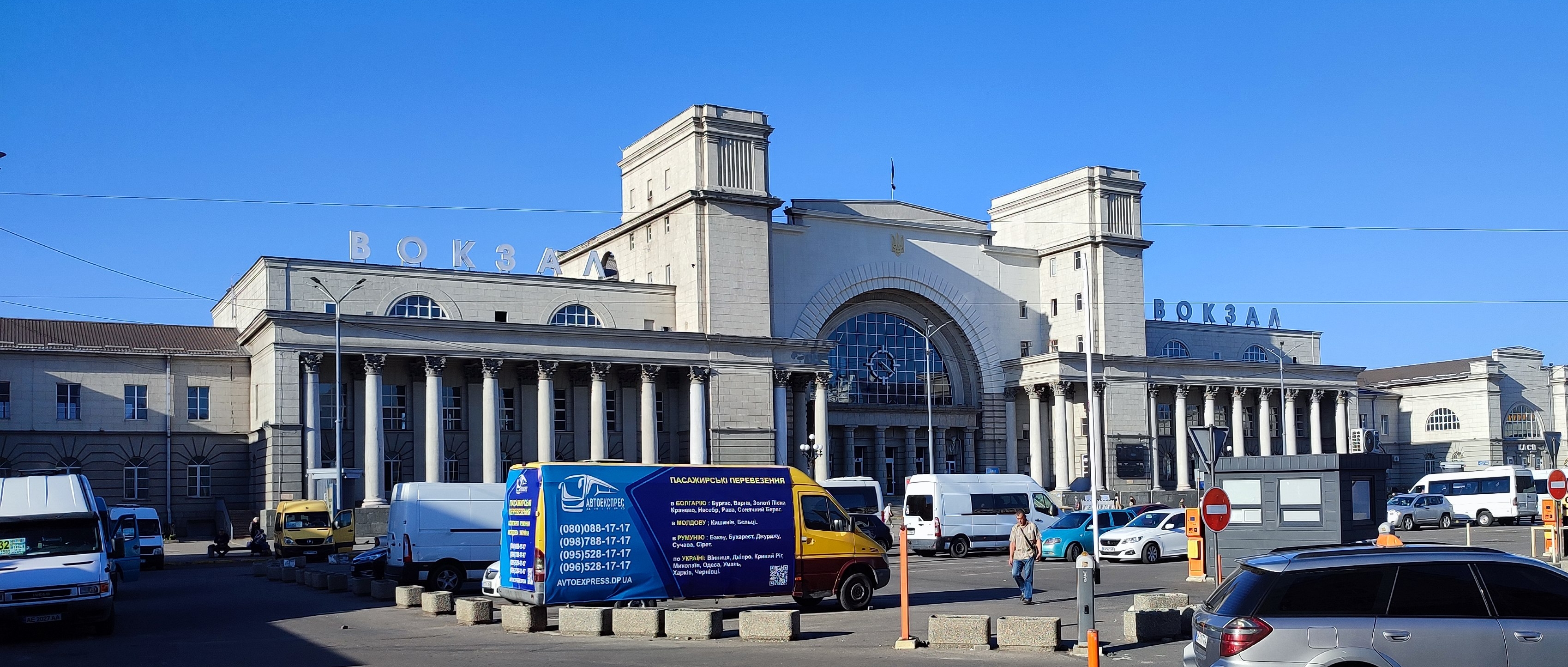
A Russian drone hit a crowded platform at Dnipro's main railway station on Thursday morning, killing 13 people as passengers boarded a commuter train, Ukrainian officials and international news agencies reported. The drone struck the platform at Dnipro–Holovnyi station where commuter train No. 866, bound for Zaporizhzhia, was standing, according to Ukrzaliznytsia, Ukraine's state railway operator, which described the weapon as a jet-powered drone. Reuters, CNN and AFP each reported 13 people confirmed dead.
Dnipro's mayor, Borys Filatov, said many people had been killed and injured in the strike. Ukrzaliznytsia's chief, Oleksandr Pertsovsky, said an elevated threat level had been announced before the strike, but that many people were still on the platform when the drone arrived. Rescuers and medical teams attended the scene, the railway said. The station is the principal rail hub of Dnipro, a major industrial city on the Dnipro River in east-central Ukraine that has served throughout the war as a logistics, medical and evacuation centre behind the front lines to its east and south.
The wounded count, stated plainly
The death toll was consistent across the reporting: 13 dead, reported by Reuters, CNN and AFP alike. The wounded count was not, and the discrepancy is worth stating rather than smoothing over. Ukraine's national police said at least 10 people were injured. The regional governor, Oleksandr Hanzha, said early on that at least five people had been wounded. Both figures were published as minimums — "at least" — and they were given at different points in a fast-moving morning by different authorities counting in different ways: a regional governor's early statement from the scene, and a later national police figure. Neither account, in the reporting available, claimed to be a final total, and casualty counts in the first hours after a mass-casualty strike routinely rise as hospitals report in and rescuers finish at the site. Readers should treat 13 dead as the confirmed figure all three agencies share, and the wounded total as unsettled between at least five and at least 10, pending a consolidated official count.
Zelenskyy calls the strike "horrific" — and makes a sanctions argument
President Volodymyr Zelenskyy responded on social media, calling the strike "horrific" and confirming that 13 people had been killed. Zelenskyy went further than condolence: he argued that sanctions on Moscow must not be eased, linking the platform strike to this month's easing by the United States of some sanctions on Russian fossil fuels and to reported talks concerning Russia's sovereign wealth fund, the Russian Direct Investment Fund. That linkage is Zelenskyy's argument, made by Ukraine's president in the immediate aftermath of the strike, and it is presented here as his position — not as an established causal account of why the drone was launched. Kyiv has consistently opposed any relaxation of sanctions pressure on Russia, and mass-casualty strikes have repeatedly become the occasions on which that argument is pressed hardest in Western capitals.
Russia had not publicly commented on this specific strike in the reports available. No statement from Russia's defence ministry, the Kremlin or Russian state media addressing the Dnipro station strike itself had appeared in the Reuters, CNN or AFP accounts published on Thursday, and none is quoted here. That absence is recorded as a fact about the available reporting, not as evidence about the strike itself: Moscow comments on some strikes and not others, and a later statement, if one comes, would update this account.
A railway under fire since 2022
The Dnipro strike is the deadliest recent episode in a campaign against Ukraine's railways that is as old as the full-scale war. Drones have been fired at Ukrainian trains since 2022, destroying hundreds of locomotives, AFP reported. The threat is now routine enough to be measured in timetables: in September alone, passengers were evacuated from more than 5,800 train services because of drone threats, according to Ukrzaliznytsia figures reported by AFP. A network that evacuates thousands of services in a single month is operating under a standing emergency, not an exceptional one — trains held, passengers moved off platforms and into shelters, schedules rebuilt around air-raid alerts as a matter of daily practice.
That context is what makes the detail in Pertsovsky's statement significant. An elevated threat level had been announced, he said — the warning system worked as designed — and yet many people were still on the platform when the drone hit. A commuter service at a main station in the morning cannot simply be emptied on every alert without ceasing to function as transport at all; passengers gather where the train is, and a train standing at a platform draws a crowd by definition. The gap between a warning issued and a platform cleared is where Thursday's casualties fell.
Why this matters
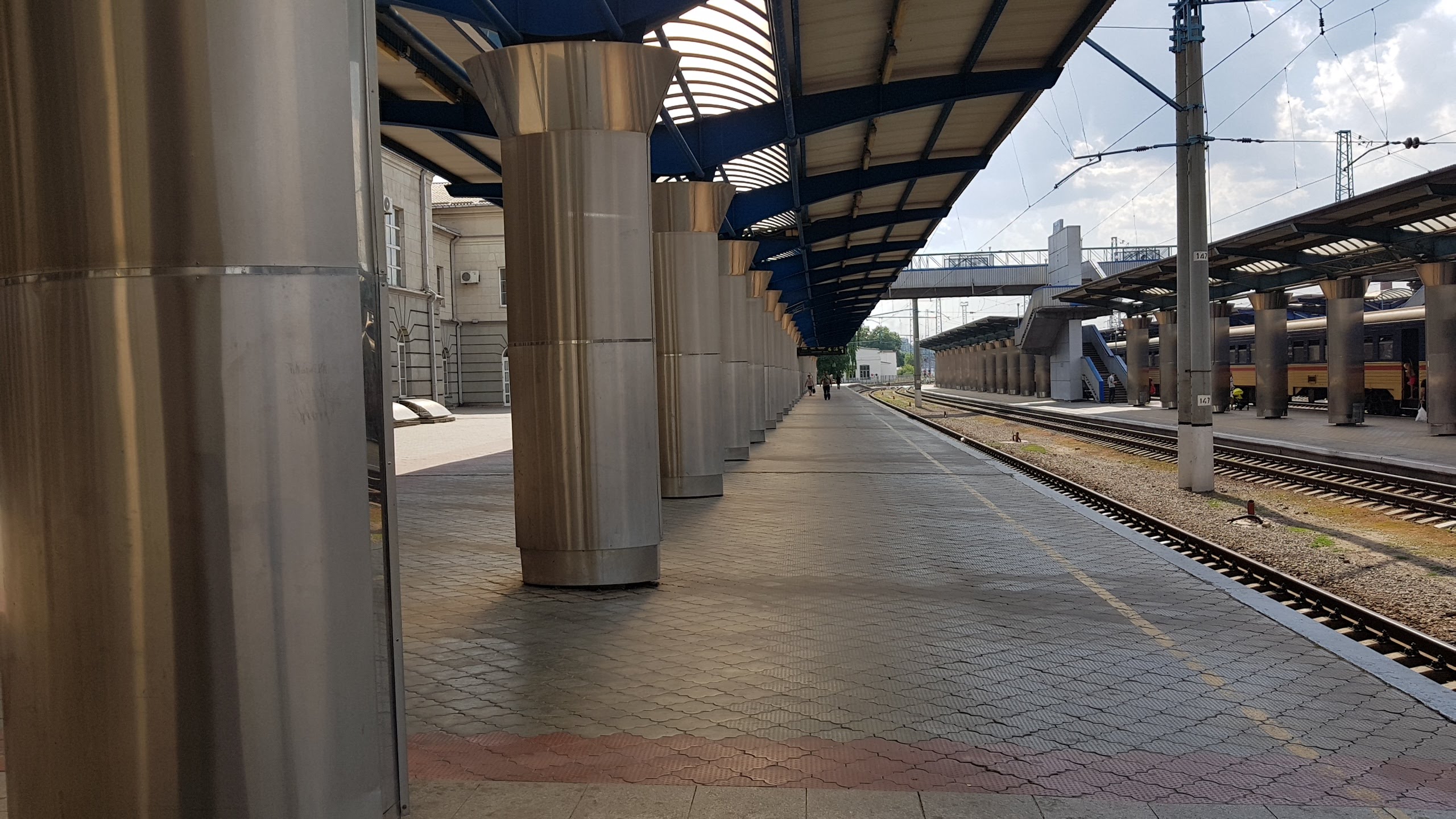
Four features of this strike give it weight beyond one morning's casualty list. The first is the target type. A station platform at boarding time is among the hardest civilian spaces in a city to protect: it is outdoors or under open canopies, it concentrates people in a predictable place at a published time, and its timetable is public information. Hardening it is not like hardening a power station or dispersing an airfield. The crowd is the function.
The second is the weapon. Ukrzaliznytsia described the drone as jet-powered. Jet propulsion matters because it compresses the warning timeline: a faster airframe covers the distance from detection to impact in a fraction of the time a slower propeller-driven drone allows, and evacuation procedures built around the slower threat — announcement, movement, shelter — have correspondingly less time to work. If jet-powered drones become a standard weapon against rear-area rail targets, the protective model of warn-and-clear becomes harder to sustain, and Thursday's sequence — threat announced, platform still occupied — may be the template rather than the exception.
The third is geography. Dnipro is not a front-line city. It sits well behind the fighting in the Donbas and the Zaporizhzhia sector, and its wartime role — hub, hospital city, transit point for the displaced — depends on it being comparatively safe. A strike that kills 13 people on a platform there restates a condition of this war that no Ukrainian city has escaped: distance from the front shortens the list of plausible weapons, but it does not remove a city from the threat envelope of long-range drones, and a commuter platform is reachable by exactly the class of weapon now produced in the largest numbers.
The fourth is speed of translation into diplomacy. Within hours, the strike had become an argument in the sanctions debate — Zelenskyy himself made it one, explicitly, tying the deaths on the platform to this month's US easing of some Russian fossil-fuel sanctions and to reported talks on Russia's sovereign wealth fund. Whether or not one accepts that linkage, its immediacy is the fact: in this phase of the war, mass-casualty strikes do not stay military events. They are entered, the same day, as evidence in negotiations over sanctions relief, frozen assets and the terms on which the war might eventually be bargained down — which is precisely why each side's framing of an event like Thursday's is contested from the first hour.
Context and background
Dnipro's main station, Dnipro–Holovnyi, is one of Ukraine's great railway buildings. The station opened in 1884, in the era when the city — then Ekaterinoslav — was becoming an industrial centre of the Russian Empire, and the present station building was rebuilt in 1951, after wartime destruction, in the monumental style visible in its colonnaded facade on Vokzalna Square. The station has 12 platforms. In peacetime it was the departure point for trains across Ukraine; in wartime it has been a hinge of the country's survival — moving soldiers toward the front, wounded toward hospitals, and displaced families toward the west, as well as the ordinary commuter traffic, like train No. 866 to Zaporizhzhia, that keeps a city region functioning.
Ukraine has seen a station strike with mass civilian casualties before. In April 2022, a strike on the station at Kramatorsk, in Donetsk region, killed dozens of people who had gathered there to evacuate; Ukraine and its partners attributed that strike to Russia, and Russia denied carrying it out. Kramatorsk is cited here as the historical parallel it is — the earlier occasion on which a Ukrainian station crowd became a mass-casualty scene, with attribution contested at the time — and as the reason station platforms have been treated ever since as a recognised vulnerability in Ukraine's civil defence planning. Dnipro is now the second name in that ledger, with its own facts: a jet-powered drone, per the railway operator; a standing commuter train; 13 dead on the agreement of three news agencies.
The strike also landed in the middle of the war's now-routine exchange of deep strikes. Overnight, Russia said its air defences downed most of 613 drones sent toward Moscow as three of the capital's airports restricted flights and a Russian strike damaged an educational institution in Kharkiv — reported in Ukraine Sends 613 Drones Toward Moscow, Russia Says, as Airports Shut and Kharkiv School Is Hit. And the war's widening human reach was documented the same day in Uganda Says 27 Citizens Killed or Presumed Dead Fighting for Russia in Ukraine. The front itself can be followed on the Ukraine war map — live tracker.
What is confirmed, and what is not
Confirmed
- A drone hit a platform at Dnipro's main station, Dnipro–Holovnyi, on Thursday morning, October 29, 2026, where commuter train No. 866 (Dnipro–Zaporizhzhia) was standing; Ukrzaliznytsia described the weapon as a jet-powered drone and attributed it to Russia.
- 13 people were confirmed dead — a figure reported consistently by Reuters, CNN and AFP.
- Dnipro's mayor, Borys Filatov, said many people were killed and injured; rescuers and medical teams attended the scene.
- Ukrzaliznytsia chief Oleksandr Pertsovsky said an elevated threat level had been announced, but many people were still on the platform.
- President Zelenskyy posted on social media calling the strike "horrific", confirming 13 dead, and arguing sanctions on Moscow must not be eased.
Not confirmed
- The final wounded total. The national police said at least 10 injured; regional governor Oleksandr Hanzha said at least five wounded early on. Both were stated as minimums at different times, and no consolidated final figure had been published in the reports available.
- The drone's exact type, launch point and intended target beyond the railway's account. Ukrzaliznytsia's description of a jet-powered drone is the operator's characterisation, reported as such.
- Russia's account of the strike. Russia had not publicly commented on this specific strike in the reports available, so no Russian position on it can be stated or weighed.
- Whether the strike will alter the sanctions discussions Zelenskyy invoked. His argument linking the strike to this month's US easing of some Russian fossil-fuel sanctions and to reported sovereign-wealth-fund talks is his stated position; its effect on those discussions was not known at publication.
What happens next
Four developments will shape what this strike becomes. The first is the casualty ledger: Ukrainian authorities are expected to publish a consolidated wounded figure, and the names and circumstances of the 13 dead will emerge through local reporting and official notifications — the point at which a number becomes a list of people, and the story's weight changes with it. The second is Moscow's response, if one comes: a Russian statement acknowledging, denying or reframing the strike would move it from a one-sided record into a contested one, and its absence, sustained, is itself a position other governments will note. The third is the railway's operating answer — whether Ukrzaliznytsia changes boarding practice at major stations under elevated threat levels, holds trains outside stations during alerts, or accepts that a functioning commuter network cannot fully empty its platforms, each option carrying real costs in a country that runs on rail. The fourth is the diplomatic track Zelenskyy named directly: whether the strike is taken up in the sanctions and sovereign-wealth-fund discussions now under way, and whether Thursday's platform in Dnipro appears, in the weeks ahead, in the arguments of governments deciding how much pressure on Moscow to keep. The drone took seconds to arrive. Its consequences will be measured in those four ledgers — the dead, the denials or silence, the timetable, and the negotiation.
Sources: Reuters, October 29, 2026 (13 killed at Dnipro train station; Ukrainian officials' accounts); CNN, October 29, 2026 (13 dead in the Dnipro station strike); AFP wire report, October 29, 2026 (13 dead; drones have been fired at Ukrainian trains since 2022, destroying hundreds of locomotives; passengers evacuated from more than 5,800 train services in September over drone threats, per Ukrzaliznytsia). Ukrainian official statements as reported: Ukrzaliznytsia and its chief Oleksandr Pertsovsky (jet-powered drone; train No. 866 Dnipro–Zaporizhzhia; elevated threat level announced; rescuers and medical teams attended); national police (at least 10 injured); Dnipropetrovsk regional governor Oleksandr Hanzha (at least five wounded, early statement); Dnipro mayor Borys Filatov (many killed and injured); President Volodymyr Zelenskyy on social media ("horrific"; 13 dead; sanctions on Moscow must not be eased). Russia had not publicly commented on this specific strike in the reports available. The wounded figures differ between official sources and are reported above as stated by each.