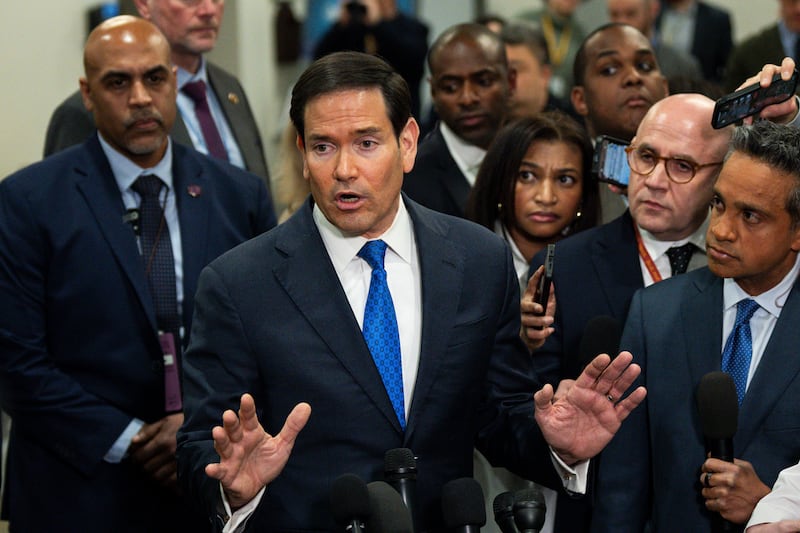
Trump Russia sanctions 60 days: Secretary of State Marco Rubio said on Saturday, October 17, 2026, that President Donald Trump will use up to 60 days to assess the economic impact of the Russia sanctions and tariffs he waived a day earlier under the Graham Act — the first time the administration has put any duration on a waiver whose executive order specified none — as Republican and Democratic senators, and Ukraine's President Volodymyr Zelenskyy, pressed their objections in public.
Washington / The order named no deadline. On Saturday, the secretary of state gave it one: 60 days
Track it live: follow this conflict on the Signal Post News Live Global Wars Tracker and the Ukraine war map, and oil markets on the oil price tracker.
WASHINGTON — Rubio made the remarks on Saturday before boarding a plane for a trip to Uzbekistan, Reuters reported. "I think the president wants to take the 60-day period of time to sort of analyze what imposing both sanctions and tariffs will mean to the global economy and even to the US economy," he said. The measures at issue — tariffs on Russian goods and penalties on countries that buy Russian oil and gas — were due to take effect in the coming week under the Lindsey O. Graham Sanctioning Russia and Iran Act, the law Trump signed last month at the urging of lawmakers who want to pressure Moscow over its war in Ukraine. Friday's executive order waived them without specifying how long the waiver would last. Rubio's 60 days are, so far, a statement to reporters, not a date written into any published order — a distinction this article keeps throughout.
The complication Rubio named: India, and two wars at once
Rubio pointed to the part of the Graham Act that reaches beyond Russia itself. The law calls not only for sanctions on Russia but for tariffs on goods from countries that import Russian energy — and he named India, an important American partner that has diversified its energy supplies but remains heavily dependent on Russian oil, as the kind of case a rushed decision could damage. He also defended the separate agreement under which Russia will increase diesel supplies to global markets: Trump has said Russia will initially supply more than 300,000 metric tons of diesel to the United States, with further shipments in November and beyond. "That diesel is going to be sold one way or the other," Rubio said. "The only difference is how much of it the United States was going to get." The waiver, he argued, reflects the difficulty of managing the war with Iran and the war in Ukraine at the same time, with both disrupting energy supplies. "These conflicts around the world are starting to crash into each other," he said.

Congress answers: the law's own family, first
The sharpest responses came from the president's own party, and the first from the law's own family. Senator Darline Graham of South Carolina — whose late brother Lindsey Graham championed the legislation that bears his name — said she disagreed with the decision and planned to discuss it with Trump when he campaigns for her next week. "Personally, I would choose to keep the pressure on Russia," she told reporters on Saturday. "Because I don't trust Putin and I don't trust Russia." Senator Thom Tillis of North Carolina, who is retiring in January, called the waiver "beyond irresponsible" on social media and asked what part of enforcing a law passed 86–11 by the Senate the president and his advisers did not understand, describing the move as capitulation to a Russian dictator who illegally invaded Ukraine. Senator Rick Scott of Florida said it was clear Russia was the aggressor and that the United States had to do everything it could to put economic pressure on Russia. Senator John Cornyn of Texas wrote that "Lindsey would be appalled." Senator Ted Cruz called the waiver a mistake, and former ambassador Nikki Haley called it a terrible misjudgment of Putin. Democrats were at least as blunt: Senator Richard Blumenthal said the waivers had nothing to do with national security and everything to do with sucking up to Vladimir Putin, Senator Elizabeth Warren accused Trump of disregarding Congress and enabling Putin to continue the war, and Representative Don Beyer called it a surrender to Putin that betrays Ukraine. Representative Don Bacon, a Republican, wrote that the president is prolonging the war, not ending it.
Kyiv's reading: the diesel deal is the first step
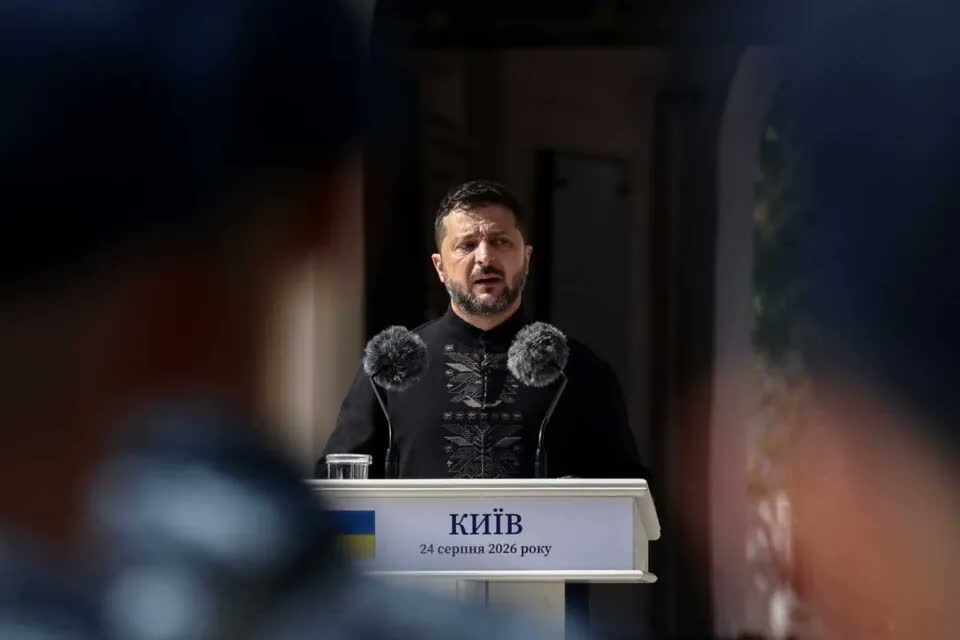
Ukraine's president had already condemned Friday's order, warning it would embolden President Vladimir Putin and prolong the war — and on Saturday, in remarks reported from Kyiv, Zelenskyy said he expected the lifting of sanctions to continue, describing the diesel deal as the first step and saying Putin feels joy at the direction of travel. That reading is the mirror image of Rubio's: where Washington describes a bounded analytical pause, Kyiv describes a sequence whose first moves have all run in one direction. Both readings are, at this point, interpretations of the same three documents and statements — an order with no expiry date, a secretary of state's 60 days, and a president who says his decision is not yet known. What is established is narrower: the sanctions were due, they were waived, no replacement date has been published in law or order, and the argument about what happens on day 61 has already begun.
Established, reported, and not established
Established: Trump signed an executive order on Friday, October 16, waiving key Graham Act sanctions and tariffs on Russia that were due to take effect in the coming week; the order specified no duration. On Saturday, Rubio said the president will use up to 60 days to assess the economic impact, and Trump, at Mar-a-Lago, said his final decision had not been announced. The diesel agreement (an initial 300,000-plus metric tons to the United States, further shipments from November) stands as announced by the president and defended by Rubio. Reported: the congressional reactions quoted above, as reported by Reuters and the Associated Press and their syndication; Zelenskyy's Saturday expectation of further lifting, as reported from Kyiv. Not established: whether the 60 days will be written into any order or notice; what happens when they expire — reinstatement, extension, or a different package; whether Congress will move to constrain the waiver; and any Kremlin response to the 60-day framing, of which none was reported in the coverage reviewed.
Why this matters
A number, once spoken by a secretary of state, becomes a fact other people can plan around — and that is what changed on Saturday. Before Rubio spoke, the waiver was indefinite in the only sense that legally mattered: the order set no end. After he spoke, every actor in this story acquired a clock. Moscow can count 60 days of certain relief and price its diesel accordingly. Kyiv can count the same 60 days across the start of its winter heating season, while Russian strikes on its energy grid continue. Congress can count 60 days that run straight through the November midterm elections — the political fact Reuters placed at the centre of its report, with the president under pressure over high energy prices as the Iran war disrupts oil supplies. And India, named by Rubio himself, can count 60 days in which the tariff question hangs over its Russian oil purchases without being answered. The analytical question the 60 days are supposed to settle — what the sanctions and tariffs would do to the global and American economies — is a real one: secondary tariffs on major Russian-energy buyers are the most economically disruptive tool in the Graham Act, and energy economists quoted in weekend coverage doubted the waiver itself would move global prices very much either way, since pausing a penalty does not create new supply. But the pause also has a strategic price that no economic study will capture: sanctions derive much of their force from credibility, from the belief in Moscow that a passed law will actually bite on schedule. A law signed, scheduled and then paused at the edge of its own deadline — for reasons its defenders describe as prudence and its critics as surrender — tests that credibility in a way that reimposing the same measures in December may not fully repair. That, more than the number itself, is why Saturday's reaction was so fast and so bipartisan.
Both sides: prudence, or a signal?
The administration's case. Rubio's argument is sequencing, not sympathy: two wars are colliding in the same energy market, fuel prices are already elevated by the Iran conflict, and tariffs aimed at Russian-energy buyers would land on partners such as India as much as on Russia. On that view, 60 days of analysis before triggering the most disruptive provisions of a new law is ordinary diligence, the diesel agreement captures supply that would be sold regardless, and nothing in the waiver repeals the law — the penalties remain on the books, available the moment the review ends. The critics' case. The bipartisan response starts from the vote count: 86–11 in the Senate is not a suggestion, and a waiver issued two days before the deadline, followed by a duration announced at an airport rather than in the order itself, reads to critics as a decision already made and a rationale assembled afterwards. Zelenskyy's version adds the battlefield: every week of relief arrives while Ukraine's grid is under attack, and Moscow, he argues, will bank the signal regardless of what Washington decides in December. Between the two cases sits the unresolved fact both sides are arguing around: nobody, including — by his own account — the president's audience at Mar-a-Lago, has yet been told the final decision.
What the numbers actually say
Three figures frame the dispute. 86–11: the Senate margin for the Graham Act, which is why the waiver is being fought as a constitutional as well as a policy argument. 300,000 metric tons: the initial Russian diesel volume in the agreement Rubio defended — real supply, but a small fraction of global diesel trade, which is why analysts doubt either the deal or the waiver moves prices much on its own. 60 days: from mid-October, that clock runs into mid-December — past the November midterms, and into the coldest, highest-demand weeks of Ukraine's energy winter. Timing, in sanctions as in war, is not a detail. It is most of the effect.
What happens next
Four checks will show what the 60 days really are. First, paperwork: whether any order, notice or statement formalises the 60-day period, or whether it remains a spokesman's number. Second, Congress: Darline Graham says she will raise the waiver with Trump in person this week; whether that produces a commitment — or whether Tillis, Scott, Cornyn and their Democratic counterparts move from statements to legislation — decides whether the pause is contested or merely criticised. Third, the diesel: whether the announced November shipments move on schedule will test the administration's claim that this is about supply. Fourth, Kyiv and Moscow: Zelenskyy has predicted more lifting; the Kremlin has not, in the reporting reviewed, answered the 60-day framing at all. If December arrives with the review unpublished and the waiver still in force, Saturday's number will be remembered as the moment an indefinite waiver acquired a deadline nobody enforced. If the measures bite on day 61, it will be remembered as the weekend the administration bought itself time — at a price its critics have already itemised.
Related reading: Trump waives the Russia sanctions Congress passed · Ukraine's 1,000-drone night over Russia · Russia strikes 15 Ukrainian energy facilities · Live Global Wars Tracker
Sources: Reuters, Oct. 18, 2026 (Rubio's 60-day assessment remarks before departing for Uzbekistan; Trump's Mar-a-Lago "decision not yet announced" remark; the order specifying no duration; Darline Graham's disagreement; the diesel agreement figures; the India complication; "conflicts crashing into each other"); Associated Press reporting syndicated Oct. 18, 2026 (Tillis "beyond irresponsible" and the 86–11 vote; Scott on Russia as aggressor; Cornyn "Lindsey would be appalled"; Cruz, Haley, Blumenthal, Warren, Beyer and Bacon reactions; Graham's "keep the pressure on Russia"); Kyiv Independent and Guardian Ukraine war briefing, Oct. 18, 2026 (Zelenskyy's Saturday remarks expecting further lifting). Verification note: the 60-day figure comes from Secretary of State Rubio's own public remarks as reported by Reuters and corroborated across AP-syndicated coverage; it does not appear in the text of Friday's executive order as reported, and this article presents it as the administration's stated intention, not a legal deadline.