Ukraine drone attack St Petersburg: overnight on October 18 local time, St. Petersburg and Leningrad Oblast came under one of the largest Ukrainian drone attacks of the war — fires broke out at the Petersburg Oil Terminal in the Great Port of St. Petersburg, Pulkovo Airport operated under safety restrictions, and the regional governor's count of drones shot down climbed from 57 to 127 through the morning as official tallies diverged and the full extent of the damage remained unverified.
Ukraine / The second city under fire — a burning fuel terminal, a restricted airport, and a drone count that kept climbing all morning
Track it live: Ukraine war map — live tracker · Live global wars tracker
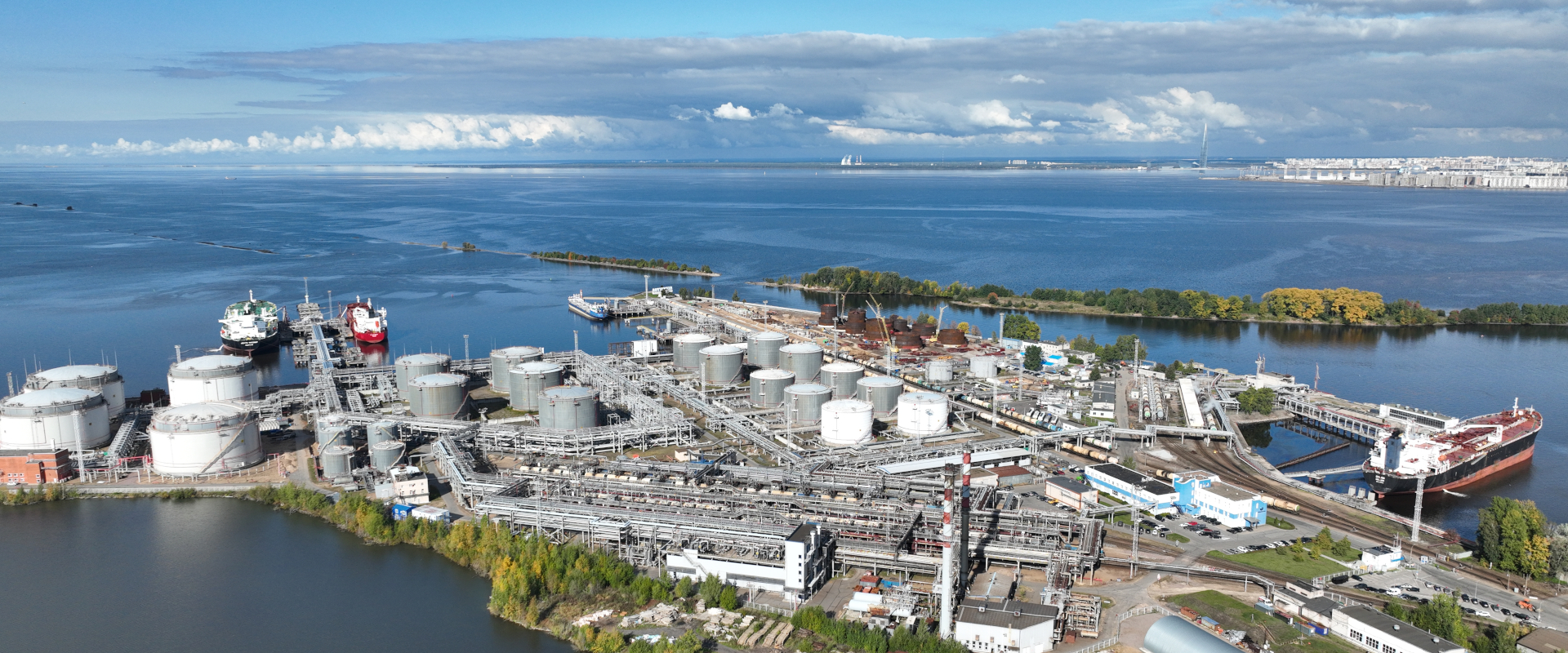
ST. PETERSBURG, Russia — The Ukraine drone attack on St Petersburg began, by the account of Ukrainian monitoring channels that track incoming aircraft, at about 2:50 a.m. local time on Sunday, October 18. Eyewitness footage shared by the channels Exilenova+ and Supernova+ and reported by the Kyiv Independent showed drones overhead and air-defence fire over the city — Russia's second largest, home to 5.6 million people and lying roughly 856 kilometres (532 miles) north of the Ukrainian border, far behind any front line. What followed was one of the largest Ukrainian drone attacks of the war by the measure Russian officials themselves supplied: an interception count for Leningrad Oblast that started at 57 drones, was later updated to 127, and sat alongside other official and state-media tallies ranging from 126 to 144. St. Petersburg Governor Alexander Beglov said fires broke out at the Petersburg Oil Terminal in the Great Port of St. Petersburg and at civilian infrastructure sites in four districts of the city. He said there were no fatalities. The Kyiv Independent said plainly that it could not independently verify the full target list or the extent of the damage — and that caution frames everything reported below.
What the governors said
The most detailed official account came from Beglov, who said the fires at the oil terminal were matched by fires at civilian infrastructure sites in the Nevsky, Krasnoselsky, Krasnogvardeysky and Moskovsky districts — a spread that covers much of the city's south and east. He said he was personally heading the operational headquarters coordinating the response, and he reported no fatalities. Falling debris was part of the night's cost on the ground: in Leningrad Oblast, drone debris damaged four cars in a parking lot, according to regional reporting. Those details — fires, districts, debris, no deaths — come from Russian officials and are reported here as their account; no independent assessment of the damage at any of the named sites had been published by Sunday morning. Ukraine's own official channels had not, in the reporting reviewed, issued a detailed claim of responsibility for the attack as a whole, a point returned to below.
Pulkovo airport drone attack restrictions ground the city's gateway
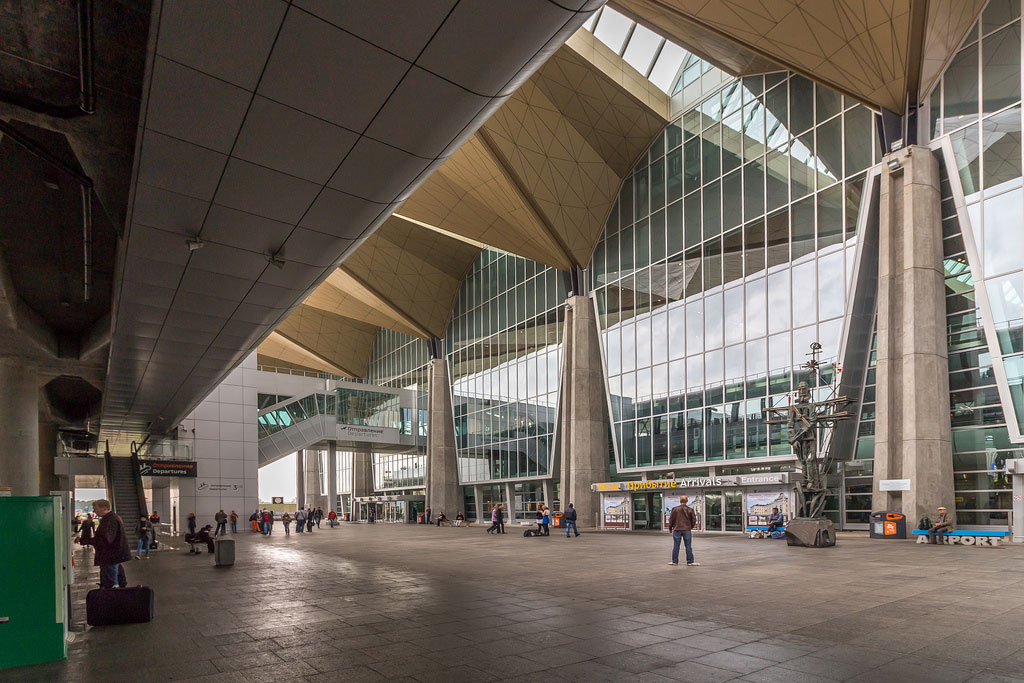
The attack reached the city's air gateway as well. Beglov said Pulkovo Airport — St. Petersburg's only major international airport, south of the city centre — was operating under safety restrictions during the alert, with flights delayed and restricted. Swedish reporting from the TT news agency, carried by Sweden Herald, added a concrete measure of the disruption: a charter flight arriving from Egypt was diverted to Finland during the Saturday-night alert rather than landing at Pulkovo. Airport restrictions of this kind have become a recurring feature of drone nights across western Russia, as aviation authorities close airspace while air defences are active; what made Sunday notable was the scale of the attack that triggered them and the size of the city underneath it. A city of 5.6 million spent the night listening to its own air defences — a sound residents of Ukrainian cities have known for years, and one that has now been heard, repeatedly, over Russia's second city.
Leningrad region drones shot down: a count that would not sit still
The numbers told their own story about the fog of a mass drone attack. Leningrad Oblast Governor Alexander Drozdenko initially reported 57 drones shot down over the oblast. Through the morning, that figure was updated to 127. Other official and TASS-relayed tallies cited in coverage of the attack ranged from 126 to 135, and one headline figure put the count at 144. These are evolving official figures that do not yet agree with each other, and they should be read that way: interception totals in large raids are compiled from separate air-defence units and local reports, are revised as wreckage is checked, and measure drones Russian forces say they destroyed — not drones that reached targets, which none of the tallies directly counts. What the spread of figures does establish, even at its lowest bound, is the scale of the raid: by any of the morning's counts, well over a hundred drones were engaged over a single Russian region in a single night, hundreds of kilometres from the front. A St Petersburg oil terminal fire and a six-figure interception ledger are, together, the signature of a strike campaign that has industrialised.
What is reported — and what is not verified
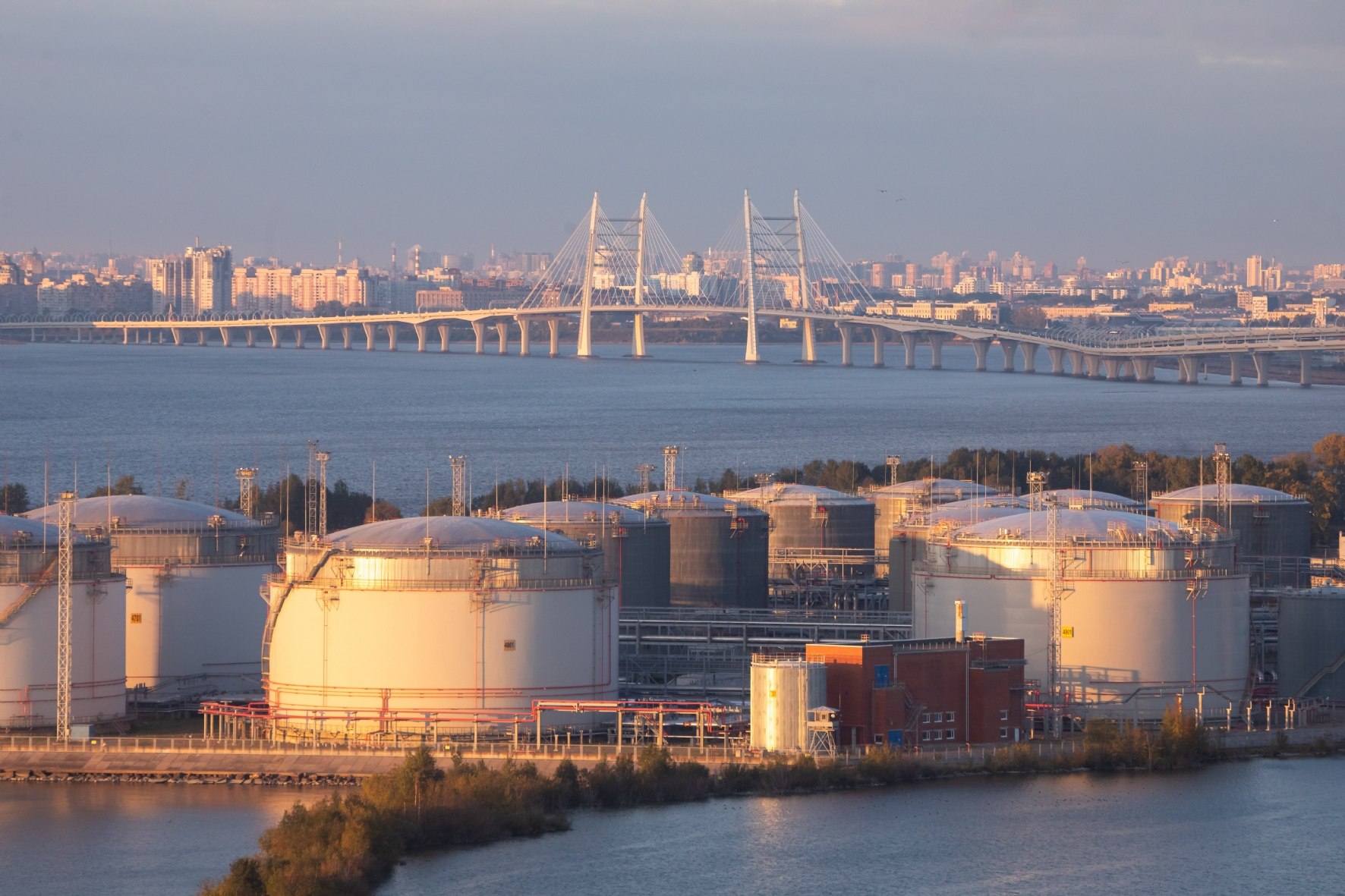
Beyond the terminal and the districts named by Beglov, a longer list of alleged targets circulated through the night, and it is important to be precise about its status. Reports from Ukrainian monitoring channels and Russian state media named, among the targets, a VKontakte data centre, an Ozon warehouse, an eight-lane bridge and the Vostochnaya 330 kV electrical substation, and reported a power substation hit with local blackouts. The Kyiv Independent explicitly said it could not independently verify the full target list or the extent of the damage, and none of those additional targets is established fact in the reporting available on Sunday morning; they are presented here as reported and unverified, no more. One specific claim did come with a named source: Fire Point, a Ukrainian drone manufacturer, claimed that one of its FP-1 long-range drones hit the oil terminal. That is a manufacturer's claim about its own product, attributed as such; it has not been independently confirmed either. The distinction matters because it is the whole discipline of covering a night like this: the fires at the terminal are stated by the city's governor, the interception figures are stated by the region's governor, the target list beyond that is stated by monitoring channels and state media — and verification, for most of it, is still outstanding.
The terminal at the centre of the night
The Petersburg Oil Terminal is not a symbolic target. Situated in the Great Port of St. Petersburg on the Gulf of Finland, it is one of Russia's largest fuel storage and export facilities, with a reported throughput of about 12.5 million tonnes of oil products per year, according to the Kyiv Independent — diesel, fuel oil and other products loaded onto tankers for export. Nor was Sunday its first night of the war. Ukraine previously hit and damaged the same terminal on July 4, 2026, a strike that established the facility as a repeat target in Kyiv's campaign against the oil infrastructure that funds and fuels Russia's war effort. Storage terminals occupy a particular place in that campaign: unlike a refinery, whose damage is measured in processing units, a terminal is a chokepoint of tanks, berths and loading arms, where a fire can interrupt exports even when the wider fuel system is intact. How much of the terminal's capacity Sunday's fires affected is, again, not yet established — Beglov confirmed fires, not their scale, and no throughput or export impact had been quantified by Sunday morning.

Why this matters
Start with geography. St. Petersburg sits about 856 kilometres north of the Ukrainian border — farther from the front than Moscow's outskirts are from Kyiv's guns, deep in Russia's northwest, on the Baltic. For Ukrainian drones to work over it in three-figure numbers, they must cross the length of Russia's western air-defence belt and arrive in numbers large enough to matter. That Ukraine strikes St Petersburg at this scale, repeatedly — the terminal was already hit in July — marks how far its long-range strike campaign has come from the first improvised one-way drones of the war's early years to manufactured systems like Fire Point's FP-1, produced in quantity and aimed, deliberately, at the oil economy. The second significance is timing, and it is stark: this attack came the night after Russia's massive October 17 strike on more than 15 Ukrainian energy facilities, one of the largest attacks on Ukraine's grid of the war, which Signal Post News covered in full — Zelenskyy: Russia struck more than 15 energy facilities in one of its largest grid attacks yet. Ukrainian officials have said, as Sweden Herald reported, that attacks on Russian oil facilities will continue while Russia attacks Ukraine's power supply. Read together, the two nights describe a mirror-image energy war settling into doctrine on both sides: Russia strikes the grid that heats and lights Ukrainian cities before winter; Ukraine strikes the fuel infrastructure that earns Russia its export revenue — each side targeting the energy system the other society runs on.
The third significance is defensive arithmetic. Russia air defence over St Petersburg and the northwest now faces the same problem Ukraine's defenders know intimately: mass, cheap, one-way drones arriving at night, in waves, against targets spread across a major city and its region. Every battery committed to defending St. Petersburg, its port and its airport is a battery not deployed elsewhere — and the northwest's air-defence demands now extend from the Baltic coast to the Finnish border region. The fourth is what the target set implies for the Baltic. The Great Port is Russia's principal Baltic outlet; its fuel cargoes move past the coasts of Finland and Estonia, and an export terminal burning inside it — with a charter flight diverting to Finland the same night — folds the war's air campaign visibly into the Baltic's shared airspace and sea lanes. The same weekend, on the war's other maritime edge, Romanian F-16s shot down two drones over the Black Sea off Sulina — Romania shoots down two drones over Black Sea waters — a reminder that the drone war's perimeter now runs from the Danube delta to the Gulf of Finland, and that states along it are increasingly answering with live fire.
Both sides: what Moscow says, what Kyiv says, what neither has shown
What Moscow says. Russian officials framed the night as a defence that held: interception counts in three figures, fires acknowledged but no fatalities, an airport restricted rather than closed, and a governor personally running the response headquarters. Russian state media circulated the wider target reporting, and TASS-relayed tallies formed part of the morning's shifting count. Moscow has not, in the reporting reviewed, published its own verified damage assessment of the terminal or said what it intends to do in response. What Kyiv says. Ukraine's position, stated by its officials and reported by Sweden Herald, is that strikes on Russian oil facilities are a standing policy that continues while Russia attacks Ukraine's power supply — the logic of the mirror-image energy war, stated openly. The specific claim of a hit on the terminal came from a drone manufacturer, Fire Point, for its FP-1; a formal Ukrainian military claim detailing the operation had not appeared in the reporting reviewed by Sunday morning. What neither side has shown. Verified damage: no independent imagery assessment, no satellite confirmation, no agreed drone count, and no confirmed account of the additional reported targets — the data centre, the warehouse, the bridge, the substation, the blackouts. Ukrainian drones over Russia in October 2026 are a documented, recurring fact of this war; the precise balance sheet of this particular night is not yet one.
What happens next
The first answers will be physical. Fire and repair reporting from the terminal in the coming days — whether loading operations pause, whether tanker schedules at the Great Port slip — will show whether the Petersburg Oil Terminal fire interrupted exports or merely scorched a tank farm, and export data will eventually put a number on it. The second watchpoint is the count: whether Russian officials consolidate the morning's divergent tallies into one figure, and whether Ukraine's military issues its own account, will determine how this attack is entered into the war's record. The third is repetition and reply. Ukraine hit this terminal in July and returned in October, the night after Russia's largest recent grid strike; if the stated Ukrainian policy holds — oil strikes while grid strikes continue — then the question is not whether St. Petersburg hears air defences again, but when, and what Russia's northwest must now permanently station to answer. And behind all of it stands the winter both energy wars are aimed at: Russia trying to darken Ukraine's, Ukraine trying to make Russia pay for the fuel of its own.
Related coverage: Zelenskyy: Russia struck more than 15 energy facilities in one of its largest grid attacks yet · Romania shoots down two drones over Black Sea waters as F-16s fire off Sulina
Sources: Kyiv Independent, republished at Bytes Europe, Oct. 18, 2026 (attack began about 2:50 a.m. per Exilenova+ and Supernova+ monitoring channels; eyewitness footage of drones and air-defence fire; Beglov on fires at the Petersburg Oil Terminal and in the Nevsky, Krasnoselsky, Krasnogvardeysky and Moskovsky districts, no fatalities, operational headquarters; Drozdenko's interception count updated from 57 to 127; debris damaged four cars; Fire Point's FP-1 claim; terminal throughput of about 12.5 million tonnes a year; July 4, 2026 strike on the same terminal; Kyiv Independent could not independently verify the full target list or extent of damage); LaPresse / TASS, Oct. 18, 2026 (official and TASS-relayed interception tallies ranging from 126 to 135; reported targets including a VKontakte data centre, an Ozon warehouse, an eight-lane bridge and the Vostochnaya 330 kV substation — reported, not verified); Sweden Herald / TT, Oct. 18, 2026 (headline tally of 144 drones reported downed over the Leningrad region; Pulkovo restrictions and the charter flight from Egypt diverted to Finland; Ukrainian officials saying attacks on Russian oil facilities will continue while Russia attacks Ukraine's power supply). Verification note: the fires at the oil terminal and the four districts are stated by Governor Beglov; interception figures are Russian official figures that diverged through the morning and are reported as a range; the additional target list and the Fire Point claim are attributed to their sources and were not independently verified at publication.