War / Africa / Sudan
The man who recruited for the Rapid Support Forces has walked away from it on camera — and his reason, that the paramilitary belongs to one family, is the charge its own commanders keep repeating as they leave.
RSF commander defects Sudan
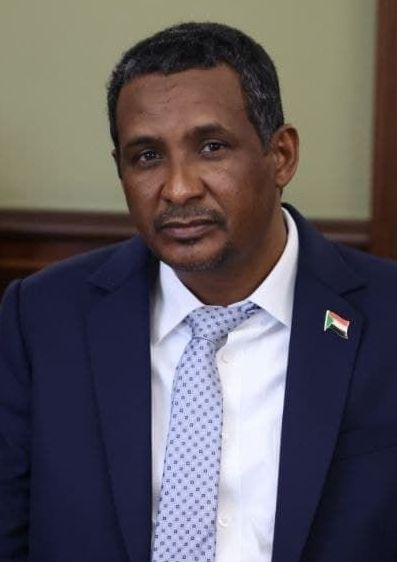
SUDAN, October 31, 2026 — A senior commander of Sudan’s paramilitary Rapid Support Forces (RSF) has announced his defection in a video statement, accusing the family of RSF leader Mohamed Hamdan Dagalo — known as Hemedti — of running the paramilitary as a private family project. Siddiq Ander, the RSF’s mobilisation and recruitment official and commander of its Group 15, made the announcement in footage published on Friday and obtained by Al Jazeera. He pledged allegiance to the Sudanese Armed Forces (SAF) and urged other fighters to join what he called the country’s legitimate institutions. No response from the RSF leadership to his announcement had been reported as of Saturday.
Track it live: Africa wars — live tracker
“It has become clear to us beyond any doubt that we were serving a purely family-based project controlled by Hemedti’s relatives in every aspect, money, weapons, fighters’ movements and the granting of ranks,” Ander said. “Anyone who speaks out and tells the whole truth faces expulsion, imprisonment or a hidden death.” The structural fact behind the charge is not hard to see: Hemedti’s brother, Abdul Rahim Hamdan Dagalo, serves as the RSF’s deputy commander. Ander also alleged that the Dagalo family project receives external support in funding, weapons and drones, along with tens of thousands of fighters from African countries and elsewhere — claims that could not be independently verified.
Not the first commander out the door
Ander’s announcement is the latest in a sequence of departures from the RSF’s command layer this year:
- On October 8, Lt Col Mohammed Azraq al-Fanjari announced he was leaving with 300 officers and soldiers and 30 military vehicles.
- In September, commander Al-Tayeb Al-Wahidu crossed over to the Sudanese army in Omdurman with 50 fighters and five armed vehicles, citing abuses within the paramilitary.
- In April, Maj. Gen. al-Nour Ahmed Adam, known as Al-Qubba, joined the army alongside dozens of fighters and equipment.
The departures do not by themselves establish that the RSF is breaking apart. But losing commanders, fighters and vehicles challenges a force built on a network of semi-autonomous commanders — a structure that holds together only while the men who lead its parts believe staying serves them better than leaving.
Why this matters
A recruiter defecting is different. Ander was not only a battlefield commander. As the RSF’s mobilisation and recruitment official, he sat on the paramilitary’s manpower pipeline — the machinery that replaces its losses. A recruiter walking away attacks the force’s ability to refill its ranks, and his video is aimed squarely at the rank and file, not at diplomats: it tells serving fighters that the man who signed them up has concluded the cause is a family business.
The numbers are small; the pattern is not. The named defections this year total a few hundred fighters plus dozens of vehicles — small against pre-war estimates that put RSF strength at roughly 100,000 fighters. The significance is not arithmetic but sequence and seniority. The exits keep coming from the command layer, and each defector repeats the same grievance — family control — which is harder for the RSF to dismiss than a battlefield setback.
The timing is pointed. The defection lands in the week the world marked one year since the RSF’s capture of El Fasher on October 26, 2025, after an 18-month siege — an anniversary that brought UK sanctions on 15 commanders from both sides and renewed UN attention on atrocities. A force under sanctions and scrutiny can least afford a public loyalty problem.
Who gains, who loses. The SAF gains a propaganda asset and a debriefer who knows RSF recruitment networks from the inside. The RSF loses its cohesion narrative. Critics of the SAF note, however, that defections have not yet changed the map: a year after El Fasher, the RSF still holds Darfur and much of the west, and atrocity reports from RSF-held territory — including the reported execution of 25 civilians at Umm Badr — continue to accumulate.
Background — a war between two armies that used to be one state
Sudan’s war began in April 2023, when the power struggle between the SAF under Gen. Abdel Fattah al-Burhan and the RSF under Hemedti — over integrating the paramilitary into the army — escalated into open conflict. Burhan has since rejected peace talks and vowed to retake territory held by the RSF, a position that makes defectors both a military and a political prize. Follow the wider conflict on the wars — live tracker.
The RSF grew out of the Janjaweed militias of the Darfur war and was formalised in 2013. Its command has always been concentrated in the Dagalo family and Rizeigat networks — the very structure Ander now cites as his reason for leaving. What changed is not the structure but the willingness of senior men inside it to name it on camera.
The conflict has forced about 14 million people from their homes and left parts of Sudan facing famine. Fighting has increasingly become a drone war between the two sides, fought over a country split between an SAF-held east and north and an RSF-held west.
What happens next
Watch, first, for an RSF response or a counter-video; so far there has been silence. Watch whether Ander appears alongside SAF officials, and whether further group commanders follow him — defection cascades in militia-network forces tend to move in clusters, because commanders take their personal followings with them. Watch, too, the SAF’s handling: publicised amnesty and integration offers would test whether Khartoum wants Ander as a symbol or as the start of a programme. Diplomatically, defections strengthen the SAF’s argument in ceasefire forums that the RSF is fragmenting — an argument mediators will weigh against the RSF’s continued territorial control.
Both armies stand accused by the UN and rights groups of grave abuses against civilians. Ander’s claims are those of a defector with his own reasons, and they are reported here as claims; the RSF has not answered them. What is not in dispute is the fact of the video, the role of the man in it, and the pattern he has joined.
Related coverage: El Fasher Has Fallen: Sudan’s Army Abandons Darfur’s Last Stronghold as the RSF Takes Full Control · Burhan Rejects Sudan Peace Talks, Vows to Retake Territory · RSF Executed 25 Civilians in Umm Badr, Sudan Doctors Network Alleges
Sources
- Al Jazeera — exclusive video footage, published October 30, 2026, of senior RSF commander Siddiq Ander announcing his defection and accusing Hemedti’s relatives of controlling the RSF’s finances, weapons, troop movements and promotions.
- The Eastleigh Voice — independent report, October 31, 2026, confirming the defection and the wider pattern of RSF departures, including al-Fanjari on October 8, Al-Wahidu in September and Maj. Gen. al-Nour Ahmed Adam “Al-Qubba” in April.
- QNC News — report, November 1, 2026, on Ander’s role as mobilisation and recruitment official and commander of Group 15, his pledge of allegiance to the Sudanese Armed Forces, and his unverified allegation of external support for the RSF.