Turkish ship sunk Black Sea
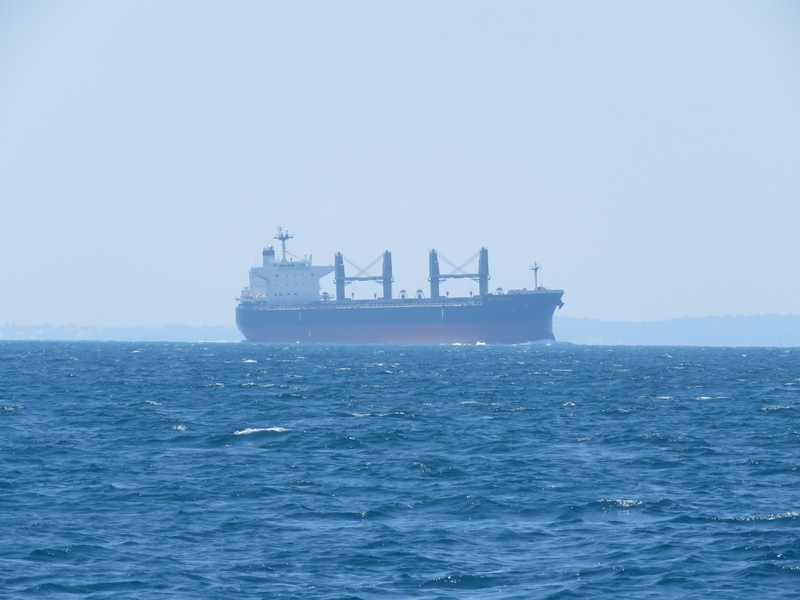
The phrase Turkish ship sunk Black Sea compresses a complicated and consequential incident into five words. At about 11 a.m. local time on Monday, Romania's Coast Guard border police were alerted to a fire aboard the Royad Mammadov, a Turkish-owned, St Kitts and Nevis-flagged bulk carrier roughly 30 nautical miles south of Sfantu Gheorghe. The position was inside Romania's exclusive economic zone, near the Danube Delta and well beyond the Ukrainian coastline.
Romania's Interior Ministry confirmed the outcomes that can be stated as fact: the vessel caught fire and sank; 11 crew members were rescued; and two people were identified as dead. Romania's Naval Authority named the ship. Romanian media placed the incident near an OMV Petrom offshore oil platform, and the company told HotNews.ro that the platform was operating normally. Romanian authorities did not identify what caused the fire.
Ukraine supplied the allegation that turned a maritime disaster into an international confrontation. President Volodymyr Zelenskyy wrote on X that two Russian drones had hit a civilian corn carrier in what he called neutral waters. He said Azerbaijani and Indian citizens were aboard, that the captain had been killed and that one rescued crew member was injured. Russia has not commented on this specific incident. A Russian Defence Ministry bulletin separately said Russian forces had struck two cargo vessels, but Moscow made no official link between that statement and the Royad Mammadov.
That distinction is not a technicality. A fire and sinking are confirmed; the Russian-drone attribution is a claim by Ukraine's president. An investigation will need wreckage analysis, electronic tracks, survivor testimony and any radar or platform-camera records before the cause can be independently established.
Why this matters
The Royad Mammadov was carrying corn from Izmail, Ukraine's Danube export hub, to Ravenna, Italy, according to vessel-tracking information cited by AAP and AFP. Every leg of that route is economically loaded. Izmail became a critical workaround when larger Black Sea ports were blockaded or attacked. Ravenna is an Adriatic gateway into Italy's food and feed supply chains. A ship lost between them demonstrates how combat risk can travel from a launch point to a supermarket price without crossing a front line.
Grain shipping is unusually sensitive to small changes in perceived danger. The cargo is low-margin, the voyages are frequent and the vessels rely on insurance that can be repriced quickly. One sinking does not stop trade by itself. It can, however, raise war-risk premiums, narrow the pool of willing crews, force longer waits and persuade owners that a nominally open corridor is commercially unusable. Those costs are eventually paid by farmers, carriers and food importers rather than the governments making the military decisions.
The location adds a second layer. An exclusive economic zone is not sovereign territorial sea, but Romania is a NATO member and the incident occurred in waters where Romanian authorities have rescue and economic interests. That does not automatically trigger the alliance's collective-defence clause. It does make the event harder to contain politically, especially if evidence eventually shows that a weapon crossed into or detonated near NATO-adjacent commercial activity.
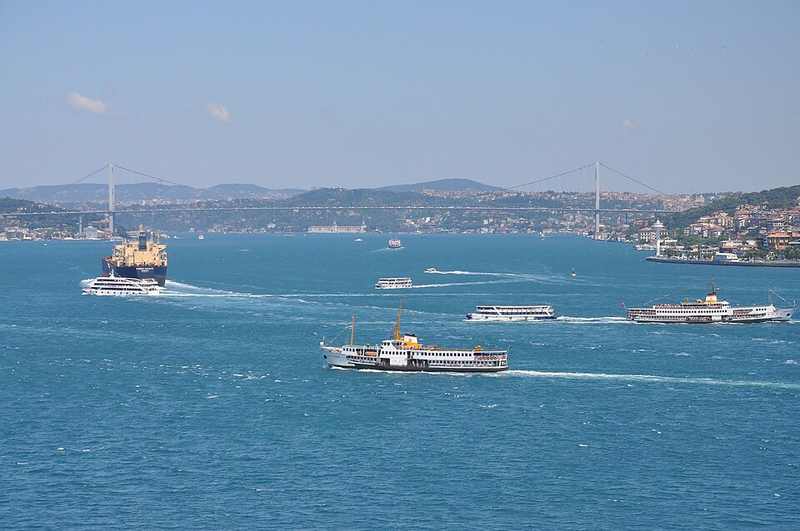
Turkey is the pivotal third country. The owner is Turkish; Ankara controls passage through the Bosphorus and Dardanelles under the Montreux Convention; and President Recep Tayyip Erdoğan has tried to preserve working relations with both Kyiv and Moscow. A Turkish commercial loss therefore tests the balance that allows Turkey to mediate, trade and manage the straits without joining either belligerent's war aims.
How we got here
The Black Sea maritime campaign has changed shape repeatedly since Russia's full-scale invasion in 2022. The first phase centered on blockade, mined approaches and the internationally brokered grain initiative. After that deal collapsed, Ukraine opened a coastal shipping route backed by its own military pressure on Russia's Black Sea Fleet. Commercial traffic resumed, but safety increasingly depended on deterrence rather than agreement.
By 2026 the center of gravity had shifted toward merchant shipping itself. Turkey's Chamber of Maritime Commerce, IMEAK, said last month that 226 civilian and commercial vessels had been attacked in the Black Sea since the war began, with the vast majority of those incidents occurring this year. The number is a warning about trend, not proof that every case had the same perpetrator, weapon or legal character.
September brought the danger into sharper view. Signal Post News reported on a Black Sea cargo-ship strike that killed a captain, followed by Erdoğan and Zelenskyy's clash over attacks on commercial vessels. The pattern has expanded the category of risk from port infrastructure to the ships that carry exports away from it.
Diplomatic proposals have not kept pace. Ukraine floated a maritime-truce proposal, while Turkey and other third countries pressed variants of safe-passage or deconfliction arrangements. None produced a durable, mutually accepted mechanism with transparent monitoring and consequences for violations. The result is a corridor that exists operationally but not politically.

The numbers, in context
The immediate human accounting is stark: 13 people appear to have been aboard, based on the 11 rescued and two dead reported by Romania. Zelenskyy said the captain was among those killed. Nationalities matter here because they widen the diplomatic audience. Azerbaijan and India now have citizens directly caught in the war's maritime spillover, even though neither country is a belligerent.
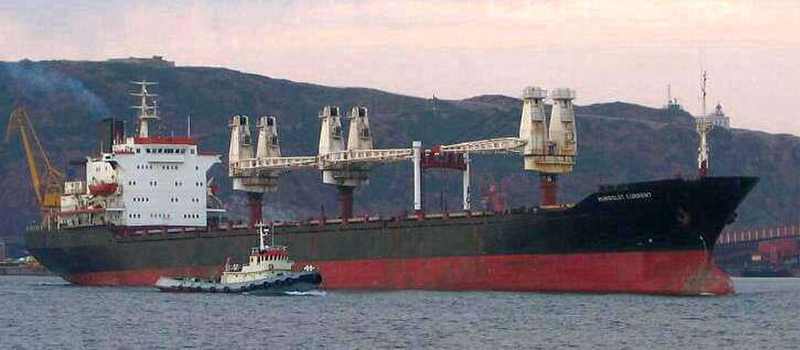
The ship was 139 metres, or about 455 feet, long: not a symbolic fishing boat or a military auxiliary, but a working bulk carrier sized for a commercial supply chain. Its corn cargo moved from Izmail, at the Danube's Ukrainian outlet, toward Ravenna. That route illustrates the hidden logistics behind the phrase “grain corridor.” Barges, river ports, coastal navigation, strait management, Adriatic terminals and insurers must all function for a shipment to reach its buyer.
The 226-vessel figure from IMEAK is more significant as a rate of change than as a cumulative headline. If the chamber is correct that the vast majority were attacked in 2026, the campaign's pressure has accelerated toward civilian and commercial hulls. That raises the risk of misidentification, inaccurate targeting and attacks in waters that draw uninvolved states into the aftermath.
Two deaths may look small beside battlefield casualty totals, but shipping markets react to different thresholds. A dead master, a total loss and a multinational crew can affect recruitment and underwriting far beyond a single voyage. The relevant denominator is not the war's total dead. It is the number of recent civilian voyages that ended with a crew fatality and a ship on the seabed.
Who gains, who pays
In military terms, pressure on shipping can be read as counter-escalation. Ukraine has spent 2026 trying to weaken Russian refining, logistics and revenue through long-range attacks. Russia has intensified pressure on Ukrainian ports, energy systems and the trade routes that sustain Kyiv. Each side presents its campaign as aimed at military or war-supporting capacity, and both deny deliberately targeting civilians. Merchant ships nevertheless occupy the space where those claimed distinctions can collapse.
If commercial risk reduces Ukrainian exports, Moscow gains economic leverage without having to re-establish a complete naval blockade. If international anger instead leads Turkey, Romania and other states to strengthen monitoring and escort-like support, Kyiv may gain a more durable corridor. The political effect therefore depends not only on what hit the ship, but on what evidence emerges and how third countries respond.
The immediate losers are clearer. The Turkish owner faces the loss of a vessel and cargo exposure. Azerbaijani and Indian families have experienced death, injury or rescue at sea. Insurers must reassess a route whose risk can no longer be confined to Ukrainian territorial waters. Food buyers inherit delay and premium costs. Crews must decide whether wages compensate for a voyage where an ordinary watch can become a combat-zone emergency.
Turkish critics have been warning that this is not sustainable. IMEAK's vessel tally has put the industry's concern into a single number. Erdoğan told the United Nations General Assembly last month that attacks on commercial shipping were “unacceptable,” while Turkish seafarers have protested deaths in the campaign. Those positions create domestic pressure for Ankara to produce more than another statement if the evidence supports Zelenskyy's allegation.
What happens next
The first task is forensic. Romanian investigators and maritime authorities can determine whether the hull damage, fire pattern and debris are consistent with an external strike, onboard accident or another cause. Radar tracks, recovered drone fragments or weapon signatures would materially change the diplomatic stakes. Until then, governments should distinguish evidence from assertion even while preparing for the possibility that Zelenskyy's account is correct.
Turkey has options, but each carries a cost. Ankara can summon diplomats, demand a joint investigation, press Moscow and Kyiv for a renewed deconfliction channel, or tighten the political conditions around strait access within the limits of the Montreux Convention. It can also coordinate more actively with Romania on maritime awareness. What it cannot easily do is guarantee a commercial corridor without accepting a larger security role in a war it has tried to mediate.
Romania's position will be watched across NATO. A sinking in its exclusive economic zone is not the same as an attack on Romanian territory, yet repeated weapons incidents near offshore infrastructure and rescue zones can push the alliance toward more surveillance, air-policing and naval coordination. The challenge is to improve warning and attribution without turning every commercial transit into an armed confrontation.
India has direct interests as well. Foreign Minister Subrahmanyam Jaishankar said Monday that New Delhi was pursuing talks with Russia and Ukraine on safe passage for grain and fuel shipments. With Indian nationals reported aboard the Royad Mammadov, that effort is no longer abstract diplomacy. India has labor, food-security and shipping interests tied to whether the route remains viable.
Insurance will move before diplomacy. Underwriters can raise premiums, limit cover, impose route clauses or require more information about voyage timing and protection. In winter, poorer visibility and rougher seas make rescue harder while both sides' drone campaigns continue. Another sinking could produce a nonlinear response: owners may withdraw faster than governments can negotiate replacements.
The food-price transmission is slower but real. Higher shipping and insurance costs do not instantly create a global shortage, especially when grain inventories and alternative origins are available. They do make Ukrainian exports less competitive, squeeze farm income and add cost for importers most exposed to Black Sea supply. The central question after the Royad Mammadov is therefore larger than attribution. It is whether commerce can remain meaningfully civilian when the sea lane carrying it has become part of the battlefield.
Sources
- Turkish Minute, October 5 — AAP/AFP wire reporting on the ship, cargo, route, Romanian response and Zelenskyy's allegation.
- AAP News, October 5 — direct wire report on the sinking off Romania.
- Reuters, October 5 — same-day escalation context from the wider Russia–Ukraine air campaign.
- Reuters, October 5 — Russia's separate statement that it struck two cargo vessels; no official link to the Royad Mammadov was established.
- Berliner Tageblatt, Le Pays De France and Dubai Telegraph — AFP wire versions used to cross-check the Romanian authority statements.
- @ZelenskyyUa on X, October 5, 2026 — the Ukrainian president's allegation that two Russian drones struck the ship and his account of the crew.
Reporting basis: This is a fixed October 5, 2026 snapshot. The fire, sinking, two deaths and 11 rescues are attributed to Romania's Interior Ministry via AFP. The drone attribution is Zelenskyy's claim; Romania did not name a cause, and Russia had not commented on this specific incident at publication.