Day 1697 / Kyiv calls Russia's map an 'illusion' — as the steelworks burn and the grain waits
Track it live: Live Ukraine war map
The map war: Gerasimov's 92 settlements, and Kyiv's answer
The claim came first, on Friday, in the Kremlin. Valery Gerasimov, chief of Russia's General Staff, told President Vladimir Putin that Russian forces had captured 92 Ukrainian settlements and more than 1,800 square kilometres (about 695 square miles) of territory since the start of September, including the eastern town of Dobropillia, and that his troops had reached the outskirts of Kramatorsk and were advancing in the suburbs of Sloviansk. On Saturday, Ukraine's General Staff spokesman Andriy Kovaliov rejected the account in full. The claims were false, he said in an emailed statement reported by Reuters: through their active operations, Ukrainian forces "have liberated more territory since the beginning of autumn than the enemy has managed to capture," and the Russian military leadership "continues to create an illusion of major victories for its political leadership and domestic audience." Dobropillia, southwest of Kramatorsk and Sloviansk, remains under Ukrainian control despite sustained Russian attacks, Kovaliov said, and Russian troops had not reached the positions Gerasimov described. Reuters noted it could not independently verify either side's battlefield claims — a caveat readers should keep attached to both versions.
The fortress belt: Kramatorsk, Sloviansk and a slowing advance
What is not disputed is where the pressure sits. Sloviansk and Kramatorsk form the spine of Ukraine's so-called fortress belt in Donetsk region, a chain of fortified cities built up since 2014 whose capture would bring Russia close to its declared goal of seizing the entire industrialised region. Reuters reported that Russian advances along the front have slowed this year, even as Moscow's forces bear down on the belt, and that many sectors are now largely static across a drone-saturated "kill zone" in which movement itself is the danger. That context is the key to reading Saturday's exchange. A claim of 1,800 square kilometres in six weeks would, if accurate, represent a dramatic acceleration over the grinding pace independent analysts have tracked this year; Kyiv's counter-claim would, if accurate, mean the front is moving the other way entirely. The two accounts cannot both be right, and the gap between them is itself the story: with the ground war slow, the war of the map — briefed upward to Putin, broadcast to domestic audiences, and answered line by line by Kyiv — has become a front of its own.
Steel and substations: Kryvyi Rih, Zhytomyr, Zaporizhzhia
While the generals argued over the map, the air war continued against the economy underneath it. Russia's defence ministry said on Saturday that its forces had carried out a large-scale overnight attack on Ukrainian infrastructure, hitting the country's largest steelworks at Kryvyi Rih — the ArcelorMittal plant, which the ministry said supplied steel products to Ukraine's military-industrial complex — an electricity substation in Zhytomyr and a second steel plant in Zaporizhzhia, near the front line. The Kryvyi Rih works had already suspended operations in September after a series of ballistic missile strikes, as we reported in our coverage of Russia's strikes on 15 Ukrainian energy facilities; Saturday's claim therefore describes a further blow to an already-idled plant, and to any prospect of restarting it. The ministry also said a cargo vessel in the Black Sea had been hit, alleging it was delivering military cargo to Odesa. Reuters could not independently confirm the ministry's report. The target list — power, heat, steel, ports — describes a campaign against the systems that let Ukraine earn, export and keep warm.
Grain by rail: Zelenskyy's ask, and Hungary's sealed trains
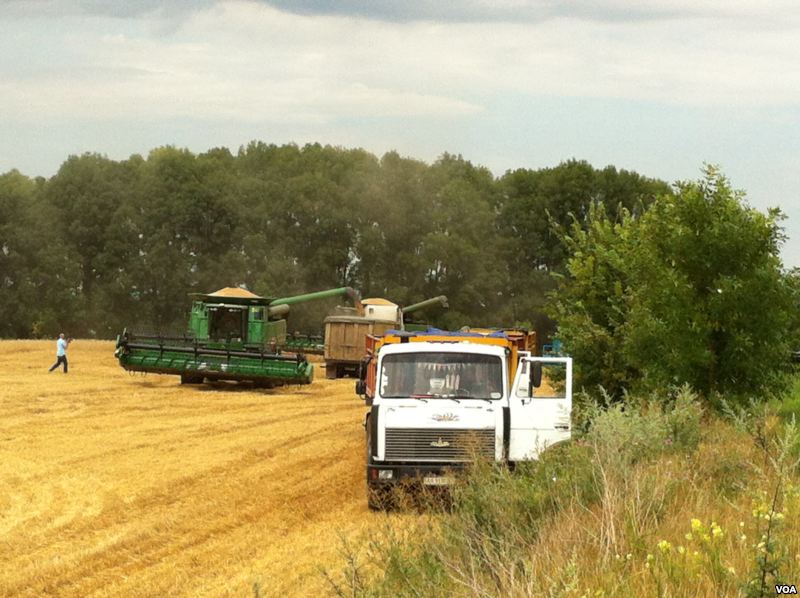
The Black Sea claim connects directly to the day's diplomacy. With Russian attacks having almost halted agricultural exports from Ukraine's Black Sea ports — the route that normally carries around 90 percent of the country's wheat, corn and sunflower exports — Zelenskyy has asked Poland, Romania, Slovakia and Hungary to allow Ukrainian grain cargoes to transit their territory, Hungarian Prime Minister Peter Magyar said on Saturday. The model is the one improvised in 2022: sealed trains carrying Ukrainian maize westward across Hungary, without the cargo entering the Hungarian market. Magyar, who agreed with Zelenskyy on Friday to reset Ukraine-Hungary ties, told the broadcaster RTL he would have no objection provided the grain only passed through, and assured Zelenskyy of his solidarity against what he called Russia's inhuman aggression — while repeating that Hungary will not send arms and expects progress on the rights of its ethnic Hungarian minority in Ukraine. The timing sharpens the need: the European Commission in late August forecast an EU maize harvest of 50.1 million tonnes, a near two-decade low, after heat and drought hit France and Hungary especially hard. Ukrainian grain moving west by rail is thus both a lifeline for Kyiv's farm economy and supply for a European market short of its own harvest — if four governments, and their farmers, agree to let it through.
Starlink, interceptors and a possible G20 meeting
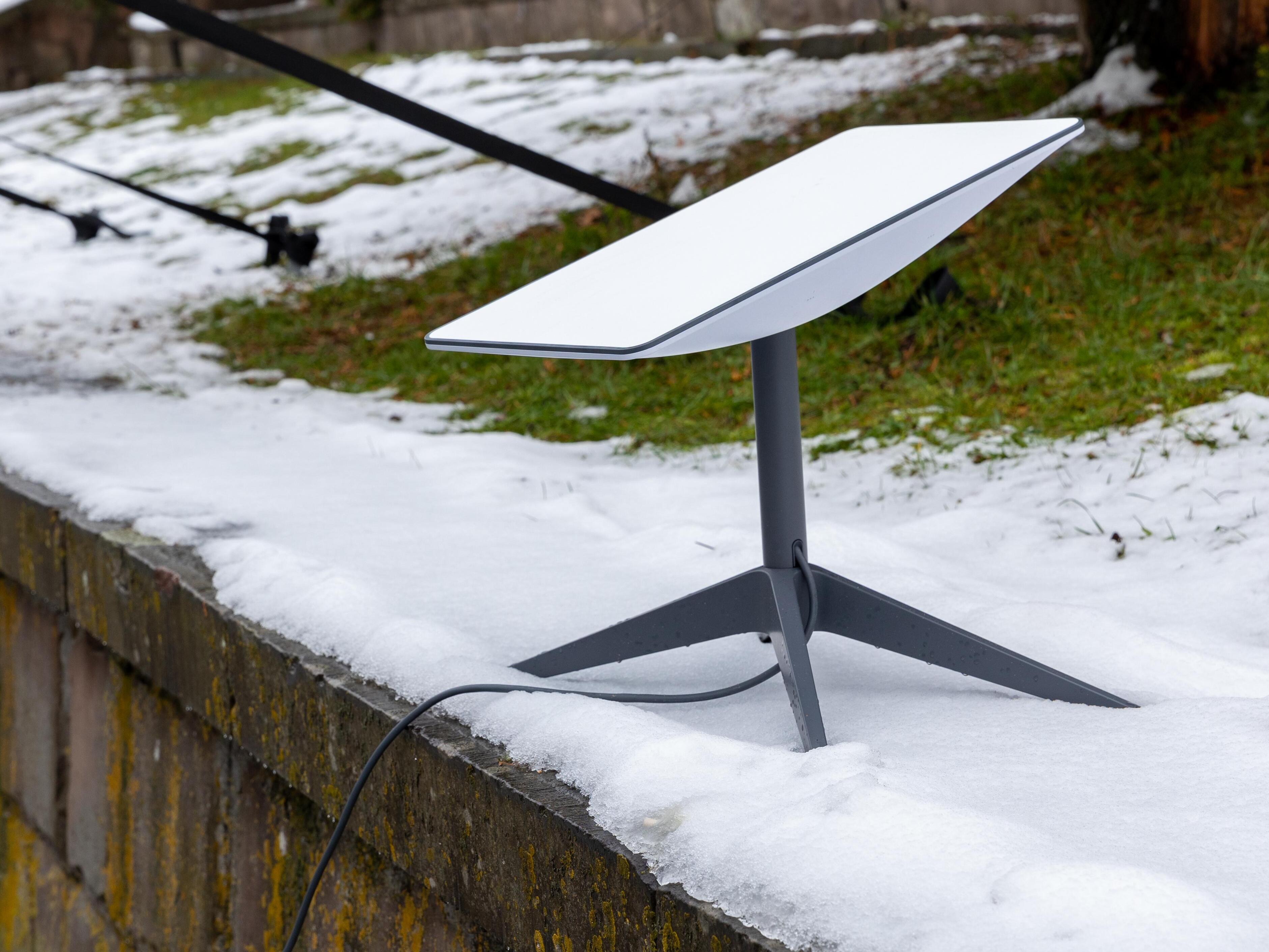
Zelenskyy also raised a problem that sits at the junction of technology and diplomacy. Ukraine's interceptor drones — the cheap aircraft it has fielded to hunt Russian attack drones — are not operating, he told reporters, because of speed restrictions on Starlink, the satellite service provided by Elon Musk's SpaceX: "Today, our interceptor drones are not operating because of speed limitations." Kyiv had been told the restrictions stemmed from technical issues, he said, but tests inside the European Union showed no such issues there. On Friday, President Donald Trump said he did not think either he or Musk was responsible for Ukraine losing Starlink capability in a way that affected its military operations. In the same briefing to reporters, Zelenskyy floated the day's one diplomatic opening: a three-way meeting between Ukraine, the United States and Russia could take place in the United States during the G20 summit in Miami in December — though neither Washington nor Moscow has confirmed it, and venues in Europe or the Middle East remain possible. He said Ukrainian negotiators spoke with U.S. officials on Friday, and argued that Europe needs its own track of talks with Russia as well.
Why this matters
Day 1697 matters because it compresses the whole war into one Saturday: a contested map, a burning industrial base, a blockaded harvest, a satellite switch that can ground a weapons system, and a humanitarian warning underneath everything. On Friday, the International Organization for Migration cautioned that millions of Ukrainians face possibly the hardest winter since the invasion began, with nearly 3.6 million people still internally displaced, some 3.8 million returned to homes that are often damaged, and its Ukraine response plan less than 7 percent funded. That warning reframes the day's other news: every substation struck is, by the IOM's logic, a displacement decision made for another family. The map dispute matters for the opposite reason — it is about what outsiders believe. Peace-feelers of the kind Zelenskyy described for the G20 are priced on perceived momentum: a Russia believed to be advancing negotiates differently from a Russia believed to be stalling, which is why Kyiv invested a Saturday in rebutting Gerasimov settlement by settlement. And the grain trains may prove the most concrete item of all: unlike claims, a sealed train either crosses Hungary or it does not.
What happens next
Four threads run into Day 1698. First, verification: independent battlefield mapping over the coming days will test the Dobropillia and fortress-belt claims more reliably than either general staff. Second, the energy war: whether the Kryvyi Rih and Zhytomyr strikes mark another step-up in the autumn campaign against power and industry, after Friday's drone attacks killed three people and cut power to hundreds of thousands. Third, the grain corridor on rails: formal answers from Warsaw, Bucharest and Bratislava, and the first sealed trains from Hungary, will show whether the 2022 model can be revived at scale. Fourth, the Starlink question and the G20 idea: whether the interceptor fleet returns to the air will be visible in Ukraine's nightly interception figures, and whether Washington or Moscow confirms any December meeting will signal if the diplomatic track is real. This briefing returns tomorrow for Day 1698.
Sources: Reuters, Oct. 17, 2026 (Kovaliov rebuttal; Dobropillia; fortress belt); Reuters, Oct. 17, 2026 (Russian defence ministry claims: Kryvyi Rih, Zhytomyr, Zaporizhzhia, Black Sea vessel); Reuters, Oct. 17, 2026 (grain transit; Magyar sealed trains); Reuters, Oct. 17, 2026 (G20 meeting; Starlink remarks); Reuters, Oct. 16, 2026 (IOM winter warning). Related on Signal Post News: Ukraine War, Day 1696 briefing · Russia strikes 15 Ukraine energy facilities.