Published October 1, 2026 at 1:25 p.m. PDT
Renee Good lawsuit
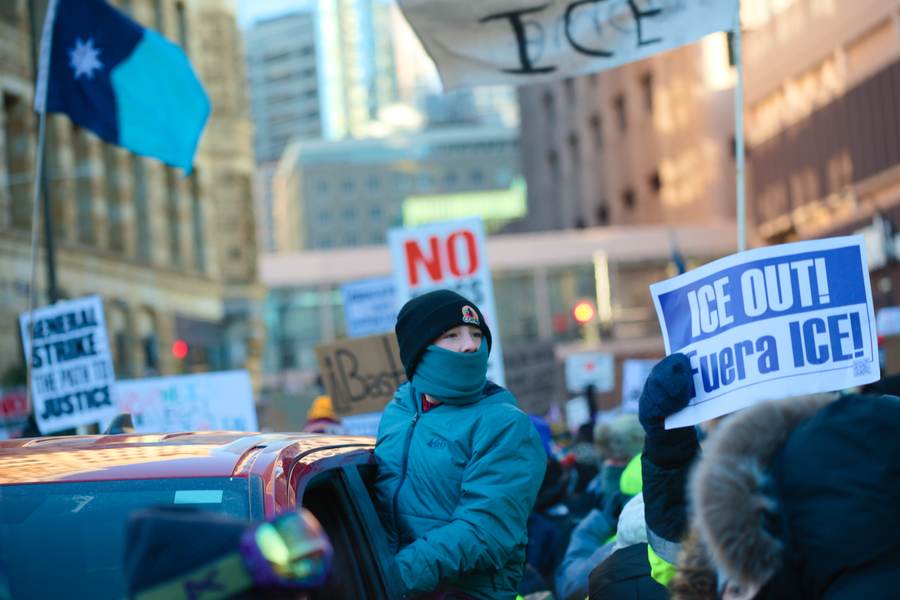
MINNEAPOLIS — The Renee Good lawsuit is not one case but two, and that split is the family's strategy. One complaint asks the United States to answer for the January 7 fatal shooting under federal tort law. The other seeks to hold ICE agent Jonathan Ross and senior architects of President Donald Trump's immigration campaign personally liable for what the family alleges was a civil-rights conspiracy carried out through Operation Metro Surge.
Filed October 1 in federal court in Minnesota, the cases move the death of Good — a 37-year-old U.S. citizen and mother of three — from an unresolved shooting investigation into a direct courtroom test of federal force, immunity and political command. Her brother Brent Ganger filed as trustee for her next of kin, including her three minor children, parents and siblings. Her partner, Becca Good, also sued in her own right, alleging post-traumatic stress and insomnia.
The government's response was immediate and categorical. White House spokeswoman Lauren Bis said the administration would “vigorously defend these baseless civil lawsuits.” The Justice Department declined to comment on pending litigation, and the Department of Homeland Security did not respond to USA Today's request for comment.
Why this matters
This is the first major civil action aimed at the operation that came to define immigration enforcement in the opening stretch of Trump's second term. Roughly 2,000 additional officers were sent into Minnesota. Similar surges reached other Democratic-led cities under Homeland Security Secretary Kristi Noem, drawing accusations from state and local officials that the administration was targeting jurisdictions that resisted its policies. Administration supporters countered that federal deployments were necessary wherever local officials would not cooperate with immigration enforcement.
The narrower lawsuit tests what happened in a matter of seconds around Good's SUV. The broader one tests whether those seconds were the foreseeable result of decisions made far above the street. That is why the Ku Klux Klan Act civil rights conspiracy claim is the legal moonshot. If it survives an early dismissal bid, it could open a path to discovery of internal communications, deployment plans and instructions exchanged among officials. If it fails, the case could contract back toward the shooting itself and the more limited remedies Congress has allowed.
The complaint is not proof. Its allegations still have to survive legal challenges and then be established with admissible evidence. But civil litigation can ask questions that a stalled or unfinished criminal investigation has not answered publicly: who set the rules, what agents were told, how officials evaluated risk, and what happened after the gunfire.
Two lawsuits, two theories of accountability
Federal Tort Claims Act wrongful death case
The first suit, Ganger v. United States, D. Minn., No. 26-cv-4230, names the United States. It alleges wrongful death under Minnesota law through battery, assault, false imprisonment, intentional infliction of emotional distress and negligence. It also invokes the Fourth Amendment and alleged violations of DHS policy. Because the Federal Tort Claims Act waives sovereign immunity only in defined circumstances, the claim proceeds against the government rather than Ross personally and seeks a bench trial.
The family sent administrative notice letters in January and waited the required six months without a response before suing. The FTCA path is substantial but constrained: it bars punitive damages and jury trials, and the government can dispute whether particular conduct falls within the statute's waiver of immunity.
Renee Good civil rights lawsuit reaches the chain of command
The second action is a 149-page complaint naming Ross, White House adviser Stephen Miller, Noem, border czar Tom Homan, Corey Lewandowski, acting ICE director Todd Lyons, Border Patrol official Gregory Bovino and 10 unidentified agents. Each is sued individually. The family seeks compensatory and punitive damages and a jury trial.
Its central theory invokes the Ku Klux Klan Act of 1871. The complaint alleges a conspiracy to deny equal protection to Minnesota's Somali and Hispanic communities and to intimidate, arrest or use force against people who observed, documented or warned neighbors about the operation. Pleading that theory is one thing; connecting named policymakers to a legally actionable agreement is another. Recent Supreme Court decisions have sharply restricted damages claims against federal officers for constitutional violations, giving the defendants a formidable threshold argument.
That tension makes the cases complementary. The tort suit is institutionally narrower but rests on an established statutory route. The civil-rights suit is far more ambitious, but it offers the possibility of individual accountability and broader discovery if the family can clear the immunity and cause-of-action barriers.
The Renee Good ICE shooting: what the videos show — and do not
Good had dropped her 6-year-old son at school before she and Becca encountered federal agents in their south Minneapolis neighborhood. According to the complaints, Becca got out to film while Good honked the SUV's horn to alert neighbors. Video shows officers ordering Good out of the vehicle. She reversed, then drove forward. Ross, a 10-year ICE veteran who was filming on his phone, fired three times: once through the windshield and twice through the open driver's-side window. The SUV then crashed into a parked vehicle.
The family alleges Ross had moved out of the SUV's path before he fired and that agents failed to render aid, even turning away a bystander who identified himself as a physician. Those are allegations, not judicial findings. The videos were disputed from the start. They show Good turning the wheel and accelerating, but they do not clearly establish whether the SUV struck Ross.
Noem said Ross fired “defensive shots,” alleged that Good tried to use her vehicle as a weapon and called the incident “domestic terrorism.” Trump later described Good as, “under normal circumstances, a very solid, wonderful person,” while saying her actions “were pretty tough” and that “there are a couple versions of that tape that are very, very bad.” Those statements express the administration's view; they do not resolve the factual dispute a court may now examine.
An independent autopsy commissioned by the family described three gunshot paths: through the left forearm, into the right chest, and into the left temple with an exit on the other side. The Hennepin County Medical Examiner classified the death as a homicide — a medical description meaning death caused by another person, not a legal finding that a crime occurred.
From January 7 to October 1: the timeline
January 7: Ross fired three shots into Good's SUV during an encounter tied to Operation Metro Surge. The family retained Romanucci & Blandin, the firm that also represented George Floyd's family, within days and sent Federal Tort Claims Act notices that month.
February: Good's brothers Luke and Brent Ganger testified before Congress. Trump ended the Minnesota surge later that month. A second Minneapolis death already shadowed the debate: 37-year-old Alex Pretti had been killed by Customs and Border Protection agents Raymundo Gutierrez and Jesus Ochoa in another January encounter.
July: After Minnesota sued the federal government for access to evidence, federal authorities turned over hard drives and Good's bullet-damaged SUV. That evidence is now in state hands and can inform the parallel inquiries by Hennepin County prosecutors, the Minnesota Bureau of Criminal Apprehension and the state attorney general.
October 1: Nine months after the shooting, with no criminal charges filed against Ross, the family brought its two federal cases. The absence of charges does not establish that Ross acted lawfully, just as filing civil complaints does not establish liability. Criminal and civil proceedings use different rules, burdens and remedies.
The numbers explain the scale — not the verdict
Four numbers frame the dispute: about 2,000 additional officers, a 149-page civil-rights complaint, three shots and nine months without criminal charges. They describe institutional scale, pleading breadth, lethal force and elapsed time. They do not answer the decisive legal questions.
The deployment number supports the family's argument that the shooting should not be isolated from policy. Yet scale alone does not prove conspiracy. The complaint's length shows how many officials and episodes the lawyers seek to connect, but pages are not evidence. The three shots are undisputed; whether each was reasonable under the circumstances will turn on position, timing, perception and the video record. Nine months without charges explains the family's demand for another route to accountability, but investigations can remain open without producing either an indictment or an exoneration.
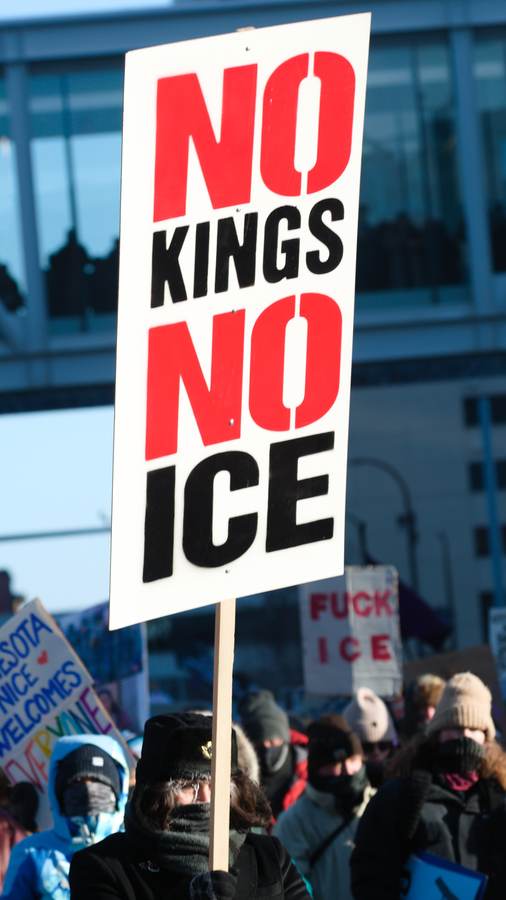
The two citizen deaths in Minneapolis that January — Good and Pretti — intensified scrutiny of federal operations. Critics see them as evidence of an enforcement model that put armed federal teams into confrontational street encounters. Supporters of the surge emphasize the federal duty to enforce immigration law and the dangers officers may face around moving vehicles and resistant crowds. A court will have to separate those political judgments from the particular evidence and legal standards governing each defendant.
A family's case, and a government's defense
At an October 1 press conference, Brent Ganger said, “The hole in my family and myself, created by my sister's passing, is hauntingly apparent.” He added: “What happened to Renee was completely senseless and the fact that there's been no accountability, no investigation, no expression of condolence, no change in policy is completely mind-blowing... What happened to America? Something must change now.”
Becca Good, speaking publicly for the first time, said Renee was her first thought every morning and that “we should have had 40 more years together.” Her conclusion was simple: “What happened to us should never happen to any family.” Good's father, Tim Ganger, had described his daughter to the Associated Press as “slow to anger, quick to love, quick to care.”
Attorney Antonio Romanucci framed the filing as a rule-of-law challenge: “Our country cannot tolerate unjustified and excessive use of force.” He said there could be no impunity for violating protected rights and that government power must face accountability when it crosses the line. His firm's role inevitably recalls the Floyd litigation, but a shared law firm and the same city do not make the legal records interchangeable. Good's cases rise or fall on their own facts and causes of action.
The administration will likely argue that Ross responded to an imminent threat, that the challenged policies were lawful exercises of federal authority and that senior officials cannot be personally liable for operational events without a much tighter causal link. It can also invoke immunity doctrines and statutory limits before the cases reach fact discovery. Those are not technical distractions; in federal-officer litigation, they often decide whether a court ever reaches a jury.
What happens next
Dismissal motions will set the battlefield
Expect motions attacking jurisdiction, the FTCA's waiver boundaries, the availability of constitutional damages and the sufficiency of the alleged conspiracy. The government may seek to narrow or dismiss claims before producing sensitive internal records. The family will argue that its detailed allegations justify discovery into how Operation Metro Surge was planned and directed.
The jury demand belongs principally to the civil-rights action; the FTCA case is for a judge. That split could produce different schedules and different evidentiary fights even though both suits arise from the same death. Courts may coordinate some issues, pause one case for another investigation or permit limited discovery while immunity questions move through appeals.
Evidence and the disputed video
The hard drives and damaged SUV transferred in July matter because physical and digital evidence can test competing descriptions of the shooting. Phone video, frame-by-frame timing, vehicle trajectory, bullet paths and agent communications may clarify whether Ross remained in danger when he fired and what happened in the moments afterward. The public videos carry enormous emotional force, but a courtroom will examine provenance, timing and expert interpretation rather than treating a viral clip as self-explanatory.
Political reverberations before the midterms
The Renee Good lawsuit October 2026 filing lands weeks before the midterm elections, when immigration and federal power are already defining campaign issues. Democrats are likely to use the case to argue that Trump's urban enforcement surges lacked accountability. Republicans can point to the administration's promise to defend the suits and frame them as an effort to second-guess agents enforcing federal law.
Neither campaign message predicts the legal result. The family's hardest task is converting an alleged nationwide strategy into claims that existing law allows against specific people. The government's hardest task is persuading a court that accountability ends at immunity even if contested facts warrant examination. If the conspiracy theory survives, discovery could make this an inquiry into the design of Operation Metro Surge. If it does not, the narrower question remains: whether the United States is civilly responsible for three shots on a Minneapolis street.
Sources
- Reuters, October 1, 2026: Renee Good's family sues Trump administration
- CNN, October 1, 2026: Lawsuits over Renee Good's death
- USA Today, October 1, 2026: Renee Good lawsuit names ICE officer
- Bloomberg Law, October 1, 2026: Renee Good family files suit over ICE shooting
Reporting basis: Published October 1, 2026. Facts are drawn from Reuters, CNN, USA Today and Bloomberg Law reports linked above. Allegations in the complaints are identified as allegations; legal context, implications and forward-looking analysis are Signal Post News's.