U.S. · IMMIGRATION ENFORCEMENT
U.S. / Investigation
ICE Agent Who Shot Lorenzo Salgado Araujo Identified as Gregory Feathers
Nearly three months after a Houston father of three bled out on a barbershop driveway, the Texas Tribune has named the officer who pulled the trigger — a retired ICE agent brought back to the force amid a bonus-driven recruitment push.
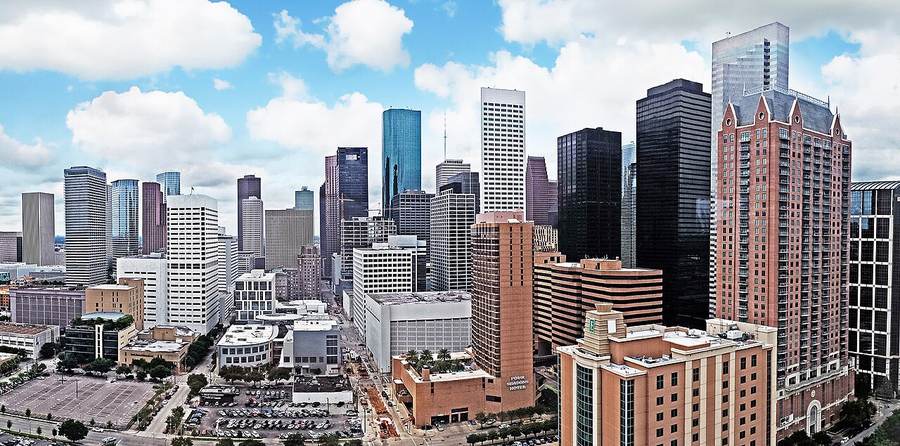
HOUSTON — For nearly three months, the federal government refused to say who killed Lorenzo Salgado Araujo. A joint investigation by the ICE List and the Texas Tribune has now supplied the answer: the agent was Gregory Feathers, a man who had retired from Immigration and Customs Enforcement before being rehired within the past two years as the Trump administration expanded its deportation force.
The Tribune's identification, also reported by USA Today and the Houston Press, rests on several lines of evidence: an official familiar with the investigation; a Form I-213 — ICE's equivalent of an arrest report — that the U.S. Attorney's Office mistakenly released last month before it was sealed; records listing Feathers as one of two arresting agents; and a photo identification by Victor Salgado Araujo, who was sitting beside his brother when the shot was fired. The records say Feathers called paramedics after the encounter.
Feathers has not been charged with a crime. DHS continues to describe the shooting as self-defense, while the van's passengers dispute the government's account. Naming the agent does not settle that conflict. It does, however, turn an anonymous federal use of lethal force into a case with an identifiable officer, a hiring history and a growing demand for public accountability.
The shooting on Canal Street
Around 6:50 a.m. on July 7, agents in unmarked black SUVs chased a white work van through Houston's East End. Lorenzo Salgado Araujo, 52, was behind the wheel and picking up his construction crew. His brother Victor and two other workers were in the vehicle. Araujo, a Mexican immigrant who had lived in Houston for about 35 years, owned a construction business, had no criminal record and was pursuing U.S. citizenship. He was married and the father of three sons.
DHS says Araujo rammed an agent's vehicle, tried to run an officer over and was shot in self-defense. The passengers reject that account and say agents opened fire on an unarmed man driving to work. Victor said he saw his brother shot in the stomach from the front passenger seat. The van stopped on a barbershop driveway, where Araujo later died.
One fact cuts through the competing accounts: ICE acknowledges that Araujo was not the intended target of the immigration operation that morning. That admission raises a basic question investigators must answer — how a search for someone else escalated into a pursuit and fatal gunfire against a man with no criminal record.
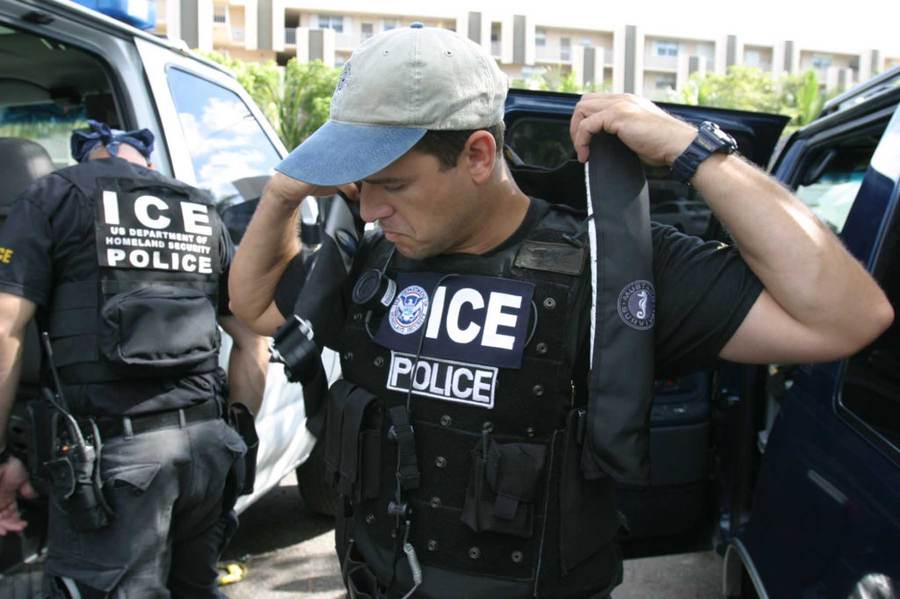
Who is Gregory Feathers?
The Tribune describes Feathers as an experienced agent whom the government brought back after retirement. His return overlapped with the Trump administration's recruitment campaign offering signing bonuses of as much as $50,000 to help rapidly expand immigration enforcement. His name appeared in the mistakenly released I-213 and in records placing him among the agents involved in the attempted arrest.
Victor Salgado Araujo's identification adds what the paperwork does not. He described a heavy-set, bearded man with military-style hair and tattoos on both forearms. “The bullet passed right in front of me,” Victor said. “They destroyed our whole family.”
A necessary legal caveat remains. The records do not state in a single sentence that Feathers fired the shot. The identification is based on the convergence of the official's confirmation, the federal documents and the eyewitness account. Feathers remains uncharged, and the grand-jury process has not yet produced a public decision.
Why the secrecy lasted three months
The government's refusal to identify the agent has become part of the case. Local police departments commonly release an officer's name after a shooting once immediate safety and investigative concerns are addressed. Federal immigration authorities have been far more secretive, particularly since President Trump's second term began in January 2025.
The mistaken release of the I-213 exposed that tension. The document entered the public record, disclosed a name central to a fatal encounter and was then sealed. The sequence left the family and the public dependent on investigative reporting to learn what a local police department might ordinarily announce itself.
Outside Houston City Hall on September 29, protesters demanded that the agent be prosecuted. A Houston Chronicle editorial also condemned the shooting and urged residents to defend the freedom to live without fear of federal violence. Neither protest nor editorial establishes criminal liability, but both show how secrecy has widened the case from one disputed shooting into a larger argument over federal power.
Why this matters
The case tests two competing theories of accountability. Under the first, federal immigration agents should face the same basic public scrutiny as other armed officers: a name, an incident report and an investigation whose conclusions can be evaluated. Under the second, anonymity is treated as an operational necessity even after an operation ends in death.
The rapid expansion of ICE makes that dispute more urgent. Rehiring retirees with large bonuses may help an agency increase headcount quickly, but it also raises questions about training, supervision and whether recruitment targets are moving faster than systems for evaluating the use of force. Feathers' return to duty will now be examined alongside the decision-making on Canal Street.
Araujo's life also matters to the policy claim surrounding the operation. He was not the sting's target. He had no criminal record. He was a construction business owner driving to collect his crew. His death complicates the administration's repeated insistence that its most aggressive operations are focused on dangerous criminals.
The numbers behind the outrage
The Texas Tribune reports that at least 25 people have been shot by ICE agents since Trump's second term began in January 2025. Six died, including three U.S. citizens. Those figures do not by themselves determine whether any individual shooting was lawful, and the circumstances differ from case to case. They do show that armed encounters are no longer rare exceptions at the margins of civil immigration enforcement.
The number also changes the frame of the Feathers investigation. A single disputed encounter might be treated as an isolated tragedy. A series of shootings requires a broader examination of deployment practices, pursuit rules, weapons training, body-camera policies and the threshold agents use before escalating force.
The public still lacks enough standardized federal data to compare ICE shootings cleanly with local police departments or other agencies. That information gap is itself consequential. Accountability becomes harder when the public must reconstruct basic facts one leaked document, anonymous source and family interview at a time.
What happens next
Harris County District Attorney Sean Teare is empaneling a grand jury to consider the evidence. The FBI, the U.S. Attorney's Office and DHS are also investigating. Those parallel inquiries could produce charges, a finding that the shooting was justified, internal discipline or no public action at all.
The central evidence will include the full I-213, any available video, vehicle damage, ballistics, witness accounts and the agents' contemporaneous statements. The grand jury will have to weigh DHS's claim that an officer faced an immediate threat against the passengers' account that Araujo was unarmed and trying to get away.
Three outcomes are possible. A grand jury could decline to indict, effectively accepting that prosecutors cannot prove a crime. It could return an indictment, an uncommon step in an on-duty federal shooting. Or the investigations could continue without resolution for months. What has already changed is that the case is no longer anonymous: Gregory Feathers' identity, retirement and return to ICE are now part of the public record against which every official conclusion will be judged.
Related coverage
Sources
- USA Today — ICE agent in Houston shooting identified
- Houston Press — Protesters demand arrest in ICE shooting
- The ICE List — joint investigation with the Texas Tribune
U.S. Desk analysis · Published September 30, 2026Back to all stories
Disclosure: Signal Post News may earn a commission from qualifying purchases made through links on this page, at no extra cost to you. Learn more.