judge blocks DoorDash driver deportation
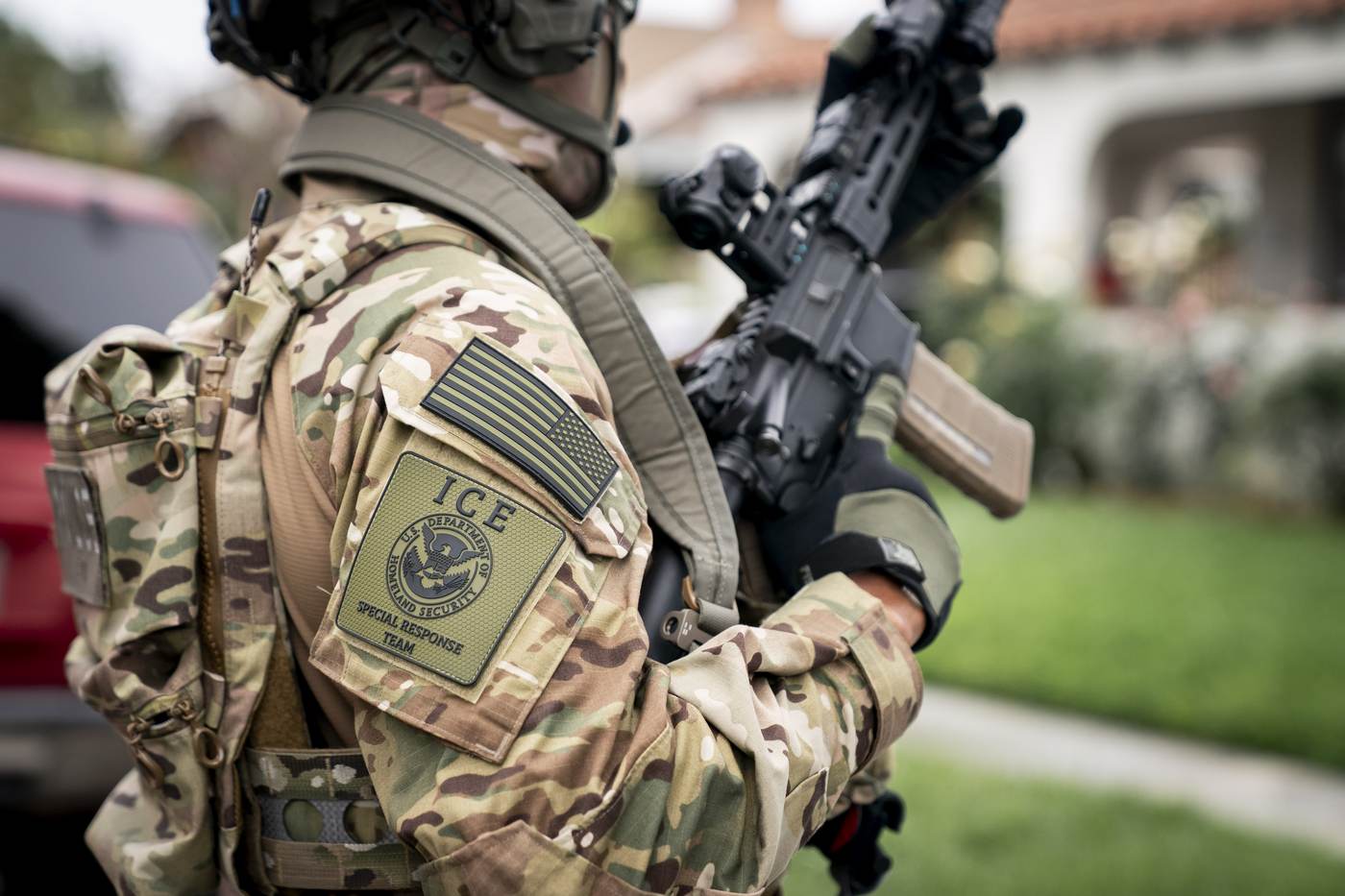
Judge blocks DoorDash driver deportation is the immediate consequence of a temporary restraining order issued by U.S. District Judge Orlando L. Garcia in a case now forcing two questions into the same courtroom: whether immigration authorities may remove Wilber Rafael Garces Perez while he is a central witness to his own shooting, and whether the medical care he has received in federal custody is adequate for injuries his lawyer says include a fractured clavicle, numbness and loss of movement in his left arm.
Garcia, a judge in the Western District of Texas, ordered the 28-year-old Venezuelan man kept in Texas and brought to an in-person hearing on Sept. 30. The order is temporary. It does not decide the merits of his immigration case, require his release or establish whether the ICE officer's use of force was lawful.
What it does is preserve the court's ability to hear from the person at the center of the dispute. Deportation before the shooting investigations are complete could place a key witness outside the reach of state and federal investigators, complicate his access to lawyers and doctors and make any later remedy harder to enforce.
Two accounts of the Sept. 20 shooting
Garces Perez was shot on Sunday, Sept. 20, in North Austin while making DoorDash deliveries. His attorney, Kate Lincoln-Goldfinch, says officers in an unmarked ICE truck sideswiped his car. According to her account, Garces Perez made a U-turn beneath a highway, the truck struck his car again and an agent shot him in the upper back below the neck.
DHS says Garces Perez was the subject of a targeted vehicle stop because of his immigration status. Austin police, who said their officers were not involved in the encounter, described a brief foot pursuit before the shooting and later released dash-camera and body-camera footage showing the aftermath rather than the gunfire itself. The ICE officer has not been publicly identified.
Those accounts are not yet reconciled. The evidence needed to reconstruct the encounter includes vehicle positions and damage, dispatch traffic, witness statements, forensic findings and any available federal video. Homeland Security Investigations and the FBI are examining the shooting; Austin police and the Texas Rangers are also investigating, according to reports on the case.
The medical-custody controversy
Lincoln-Goldfinch says the bullet remains lodged in Garces Perez's back. She says the gunshot fractured his clavicle, caused significant swelling and pain and left him with numbness and loss of movement in his left arm. According to her account, he spent about four hours at Dell Seton Medical Center before being transferred to the South Texas ICE Processing Center in Pearsall without pain medication. He was later returned to a hospital, given morphine and treated for a suspected fractured collarbone before being sent back to federal custody.
DHS disputes that portrayal. The department says Garces Perez is receiving round-the-clock medical care, including pain medication, and says ICE did not decide whether the bullet should be surgically removed. A spokesperson for the health network operating Dell Seton told The Wall Street Journal that the hospital followed its protocol for interactions with law enforcement during his care.
“This person is an illegal alien who has no legal status to be here and has been given some of the best medical care he's ever received in his life,” Homeland Security Secretary Markwayne Mullin said, according to The Wall Street Journal. The statement asserts the department's position; it does not resolve the factual disagreement over the transfer sequence, the continuing symptoms or whether detention arrangements meet his medical needs.
The dispute is consequential because custody transfers can fragment treatment: hospital clinicians make one set of decisions, detention medical staff inherit the patient and lawyers may receive information only after the fact. The Sept. 30 appearance gives the court a concrete opportunity to assess his condition, continuity of care and access to counsel. It is not a substitute for medical judgment, but it creates a judicial checkpoint.
Background: the disputed removal order
DHS says Garces Perez's work authorization had expired and that he was under a final order of removal. Lincoln-Goldfinch says her client entered the United States legally through a Biden-era immigration program and held a valid work permit. His legal team does not deny that a removal order exists, but says it followed a missed immigration hearing because notice was sent to an old address even though Garces Perez had updated his address with the court.
The old-address dispute is not a technical footnote. Notice is the mechanism that gives a person a meaningful chance to appear and contest removal. If the government can show proper notice under the governing rules, the final order carries substantial force. If his lawyers establish that notice failed despite a timely address update, they may seek to reopen the proceeding or pursue other relief. The restraining order preserves time for that argument; it does not resolve it.
Travis County District Attorney Jose Garza wrote to Secretary Mullin and ICE Director David Venturella asking that Garces Perez remain in the United States while the shooting investigation proceeds. The request identifies a conflict in institutional timing: immigration authorities seek to execute a removal order, while investigators need continued access to a shooting victim and potential material witness.

Why this matters
The case sits at the intersection of immigration enforcement, police accountability, medical care in detention and evidence preservation. Immigration status does not answer whether force was justified. A serious injury does not by itself prove unlawful force. And a removal order does not eliminate a person's value as a witness or the government's obligation to provide adequate care.
Removal could hinder follow-up interviews, medical examinations and participation in a future prosecution or civil case. Continued detention, meanwhile, leaves DHS responsible for Garces Perez's custody and care while another arm of the federal government helps investigate the encounter. That overlap is not proof of wrongdoing, but it strengthens the case for preserving records and maintaining outside scrutiny.
Garcia's order is therefore important for what it prevents: one government process foreclosing review of another before the evidence can be tested. The judiciary has not decided the facts of the shooting or the immigration dispute. It has kept the courthouse door open long enough to hear them.
Who wins and loses
Garces Perez wins time, access to federal court and a chance to appear in person. His lawyers gain a defined hearing at which they can press questions about notice, medical care and possible immigration relief. Local and federal investigators gain a better chance of retaining access to a central witness. The government loses the option of immediate removal but retains custody and can defend the legality of the stop, the treatment provided and the removal order.
No side has won the underlying cases. The temporary order does not find that DHS's account is false, that the officer used unlawful force, that Garces Perez has lawful status or that he must be released. It also does not validate every detail of the attorney's account. Those questions require records, testimony and investigative findings.
The public loses if the case is reduced to a single label — “illegal alien,” “delivery driver” or “shooting victim.” Each phrase describes only one part of the legal picture. The credibility of the outcome will depend on whether officials publish enough evidence to explain both the use of force and the treatment that followed.
What happens next: three scenarios
1. The court extends protection. Garcia could continue blocking removal while the immigration-notice dispute, medical-care claims and possible relief are examined. That would keep Garces Perez available to investigators without deciding that he is entitled to remain permanently.
2. The government prevails on the removal record. DHS could establish that notice was legally sufficient and that custody conditions meet required standards. Removal might then resume after the court determines that the shooting investigations and any witness obligations can continue without his presence.
3. New evidence changes both tracks. Video, forensic findings, medical records or witness testimony could alter the use-of-force inquiry and strengthen a request for immigration relief tied to cooperation with investigators. If federal, state and local investigators reach different conclusions, their evidentiary bases will become central to public trust.
The fixed next step is the Sept. 30 in-person hearing. The most useful disclosures before or after it would be a precise force timeline, available body-camera or dash-camera footage, vehicle-damage evidence, medical records released with appropriate consent and the policies governing the operation.
The earlier Signal Post News report on the Austin ICE shooting explains the initial conflicting accounts. A separate analysis of DoorDash's $131.5 million New York settlement examines a different legal pressure facing delivery workers and the platform economy. Here, the immediate issue is narrower but more urgent: keeping the injured driver within reach of the court long enough for facts, medical evidence and legal claims to be tested.
Sources and reporting basis
- The Wall Street Journal, “Federal Judge Pauses Deportation of Man Shot by ICE in Texas”
- Fox News, “Federal judge temporarily blocks deportation of illegal immigrant shot by ICE in Austin, attorney says”
- Washington Examiner, “Judge pauses deportation of man shot by ICE officer in Texas”
- BBC News, “US judge blocks deportation of DoorDash driver shot by ICE,” September 2026.
Claims about the shooting, immigration notice and medical care in custody remain disputed and are attributed accordingly.