Published October 1, 2026 at 12:43 p.m. PDT
Supreme Court mandatory immigration detention
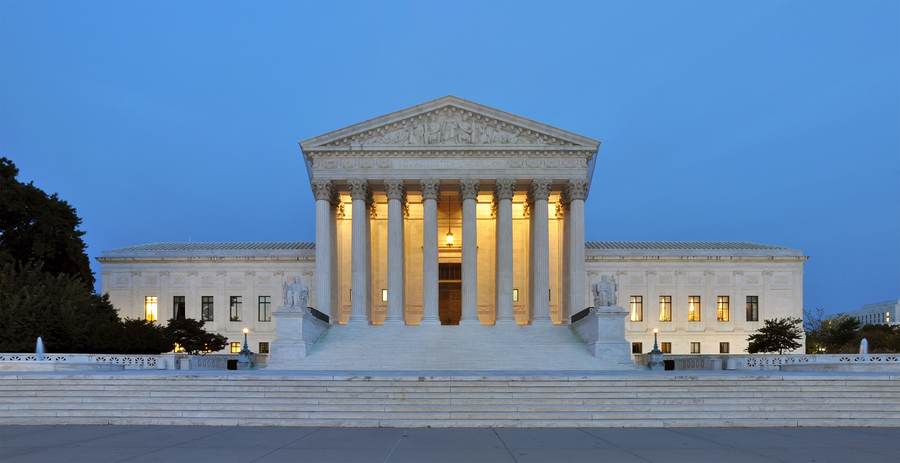
WASHINGTON — The Supreme Court mandatory immigration detention fight is moving to the nation's highest court. On Thursday, October 1, the justices agreed to hear the Trump administration's appeal of a New York-based federal appeals court ruling that rejected a policy requiring immigrants living in the United States illegally to remain in custody without bond hearings for the full course of their deportation proceedings. The case, involving a Brazilian national, arrives as the Court prepares to open its new term on Monday, October 5.
The immediate question is statutory: whether federal immigration law authorizes this broad no-bond rule. The practical question is larger and more human. Can the executive branch take a person who may have lived in the country for years, place that person in civil detention, and deny any individualized hearing on danger or flight risk while a removal case stretches across months or even years?
The administration says Congress required detention and that the policy supports enforcement, public safety and appearance in immigration court. Challengers argue that the government has taken a narrow mandatory-detention provision and turned it into a sweeping rule that erases case-by-case review. The Court has not decided who is right. Its decision to hear the case settles nothing on the merits, but it signals that a fragmented national system can no longer be left to thousands of individual lawsuits.
Why this matters
Bond is not a final judgment about whether someone may remain in the United States. It is an interim judgment about whether detention is necessary while a court decides that separate question. Removing the hearing removes the individualized inquiry. A person with deep community ties and no record of violence is treated, for detention purposes, like someone whom the government considers a serious danger or flight risk.
That distinction matters because immigration detention is formally civil, not criminal punishment, yet confinement is still confinement. Jobs disappear. Families lose income and care. Lawyers become harder to reach. Evidence is harder to gather. Time in custody can change the bargaining power of a case before any judge has ruled on its merits.
This is also a test of scale. ICE's detained population rose from just under 38,000 at the end of the Biden administration to more than 65,000 this past summer. At that size, a rule that eliminates bond hearings is not a technical adjustment. It becomes an operating principle for a national detention system and a measure of how far executive power may extend when Congress's words and decades of agency practice point in different directions.
How we got here: the July 2025 reversal of a 30-year practice
The DHS detention guidance issued in July 2025 did more than tighten an existing standard. It reversed the executive branch's nearly three-decade understanding that many people already living in the country could seek release on bond while removal proceedings continued. Under the new interpretation, unlawful presence itself can place a much broader group into mandatory custody without that hearing.
That timing matters. Administrative agencies often change policy when administrations change, but courts ask different questions when an agency also changes its reading of the statute that supposedly compels the policy. If Congress clearly required the new result, the earlier practice may carry limited weight. If the text is ambiguous, the long-running interpretation and the liberty interest at stake become much harder to wave away.
The 1990s statute at the center
The dispute turns on a mandatory-detention provision Congress enacted in 1996 as part of a broader overhaul of the Immigration and Nationality Act. For decades, the government did not read that provision to sweep in every person apprehended long after entering the country. Many long-term residents instead could ask an immigration judge for bond, with release depending on factors such as danger, flight risk and ties to the community.
The mandatory detention INA 1996 argument therefore asks the Court to choose between competing ways of reading the law. The administration emphasizes the breadth of Congress's detention language and its enforcement design. Challengers emphasize statutory context, the old implementation and the constitutional problems that arise when detention can continue without individualized review. The Court could decide the case narrowly on statutory text or write more broadly about due process. That legal uncertainty is one reason the stakes exceed this single Brazilian litigant.
First term vs. second term
President Donald Trump's first administration pursued aggressive detention and removal policies, but it did not adopt this reinterpretation. The second administration did, after making mass deportation a central governing promise and seeking tools that move cases faster and with fewer opportunities for release.
What changed was not the 1996 statute. The change was the executive branch's legal strategy and its operational ambition. Mandatory custody can increase the pressure to accept removal, abandon claims or resolve cases quickly because remaining in litigation also means remaining detained. That does not prove the policy unlawful. It does show why this is more than a semantic fight over which statutory subsection applies.
The legal battlefield: 20,000 rulings and a 2-vs-9 circuit split
The policy generated a flood of habeas corpus immigration detention lawsuits, the traditional mechanism for asking a court to test whether confinement is lawful. Reuters reported that hundreds of judges had found the detentions unlawful more than 4,400 times. CNN legal analyst Steve Vladeck cited more than 20,000 lower-court rulings, overwhelmingly against the administration's position. The differing counts measure different universes, but they point in the same direction: this is mass litigation, not an isolated challenge.
At the appellate level, the split is stark. CBS counted two federal circuits permitting the no-bond approach and nine requiring bond hearings or release for at least some detainees. Most appeals courts rejected the policy; the New Orleans-based Fifth Circuit sided with the administration in February. The Second Circuit immigration detention ruling now before the Supreme Court went the other way.
A 2-vs-9 circuit split is a classic invitation for Supreme Court review. Federal law should not mean mandatory detention in Texas but access to a bond process in New York. Yet uniformity alone does not tell us which interpretation wins. It only explains why the justices were likely to intervene once the disagreement hardened across the country.
The Court's 6–3 conservative majority has allowed several hardline immigration policies to take effect, including in emergency proceedings. That history gives the administration reason for confidence, but it is not a verdict. Justices who favor executive authority can still reject an agency's new statutory reading, and emergency orders do not necessarily predict the outcome after full briefing and argument.
Who benefits, who loses
The winners
If the administration prevails, ICE gains a simpler and more forceful detention rule. Officials would not have to litigate danger and flight risk in individual bond hearings for the affected class. Continued custody can also give the government leverage in removal proceedings: a person deciding whether to keep fighting a complex case must weigh the prospect of staying locked up throughout it.
Detention operators could benefit from sustained demand for beds, transportation and related services as capacity expands. That is an analytical inference from the larger detained population, not a claim that the pending case guarantees any particular company a contract or profit. Congress controls funding, agencies control procurement and actual capacity remains constrained by facilities, staffing and court orders.
The losers
The most direct burden falls on detainees who would otherwise have a chance to show that conditions of release could manage any risk. Some will ultimately lose their immigration cases; others may win protection or another lawful status. A blanket rule confines both groups before the legal system knows which is which.
Families absorb lost wages, child-care gaps, legal bills and the psychological cost of prolonged separation. Taxpayers fund each additional day of custody. Immigration courts may also face distorted incentives: detention can push cases toward faster resolutions, but it can make representation and case preparation harder, creating more procedural disputes and appeals. Speed produced by pressure is not necessarily efficiency produced by accuracy.
What critics and legal scholars say
Critics frame the dispute as a basic due-process problem: liberty should not depend on an agency's categorical assumption when a neutral decision-maker could test an individual's circumstances. Their strongest point is duration. The longer proceedings run, the harder it is to characterize no-hearing detention as a modest administrative measure.
Supporters respond that immigration enforcement depends on custody. Release can create flight risk, complicate removal and, in some cases, raise public-safety concerns. They argue that Congress made a policy choice in 1996 and that courts should not invent a bond process the statute withholds. The difficulty is that these interests do not prove every detainee poses the same risk. The case asks whether Congress nevertheless required one rule for all of them.
The numbers, in context
The rise from fewer than 38,000 detainees to more than 65,000 is a roughly 27,000-person increase — more than two-thirds in raw growth relative to the earlier base. Funding and new or expanded detention arrangements create the physical ability to hold more people. The no-bond policy can then operate as a capacity multiplier by keeping beds occupied for longer and reducing releases while cases proceed.
The 20,000-plus adverse lower-court rulings cited by Vladeck do not bind the Supreme Court, and repeated orders in similar cases do not equal 20,000 independent appellate precedents. Still, their volume is evidence of a policy colliding persistently with the legal system. The narrower Reuters finding — more than 4,400 unlawful-detention rulings by hundreds of judges — reinforces that the resistance is broad rather than the work of one courthouse.
The fiscal burden is equally real even without assigning an unverified national per-person price tag. Detention requires beds, guards, health care, food, transportation and legal administration every day. A rule that extends the average length of custody raises the public bill even if new arrests remain flat. The government may argue that those costs buy compliance and enforceability; critics will ask whether supervised release and individualized bond decisions could achieve the same goals more cheaply and with less intrusion on liberty.
What happens next
If the administration wins
A broad government victory would validate a central piece of Trump's deportation strategy and reduce the force of thousands of lower-court orders. ICE could apply mandatory detention more consistently across circuits, increasing pressure on detention capacity and likely narrowing the role of immigration judges in release decisions. The exact reach would depend on the opinion's statutory reasoning and whether the Court leaves room for constitutional challenges to unusually long confinement.
If the challengers win
A victory for the challengers would not require the government to release everyone. It would preserve or restore a process in which covered detainees can seek a bond hearing, and the government can argue that a particular person should remain confined because of danger or flight risk. The policy consequence would be individualized judgment rather than automatic release.
Such a ruling could also restrain future administrations from using new agency guidance to transform settled detention practice without clearer congressional language. But a narrow decision might resolve only which statutory detention track applies, leaving broader due-process questions for another case.
The timeline and the midterms
The Supreme Court October 2026 term begins October 5. Full arguments in a newly granted case would typically be held between January and April 2027, with a decision expected by the end of June 2027. The Court has not yet set an argument date, so that timetable is an informed procedural range, not a fixed schedule.
That puts a final ruling months after the November 2026 midterm elections, but the case will still shape the campaign. Republicans can present the grant as proof that the administration's enforcement agenda deserves a definitive national rule. Democrats and civil-liberties advocates can point to the thousands of adverse rulings and the absence of individualized review. Both messages compress a complicated statutory dispute into a sharper political choice.
The case also sits beside the Court's separate decision allowing third-country deportations to restart while litigation continues. Together, the disputes show a Court repeatedly asked to define the boundary between rapid enforcement and procedural protection. The justices' answer here will determine not merely where people wait for a ruling, but how much process the government owes before taking away their freedom while they wait.
Sources
- Reuters, October 1, 2026: Supreme Court to hear clash over Trump immigration detention policy
- CNN, October 1, 2026: Supreme Court takes up ICE detention without bond dispute
Reporting basis: Published October 1, 2026. Facts are drawn from the Reuters and CNN reports linked above. Legal interpretation, consequences and scenario analysis are Signal Post News's; the Supreme Court has agreed to hear the dispute but has not ruled on the merits.