Rajnath Singh strike warning Pakistan
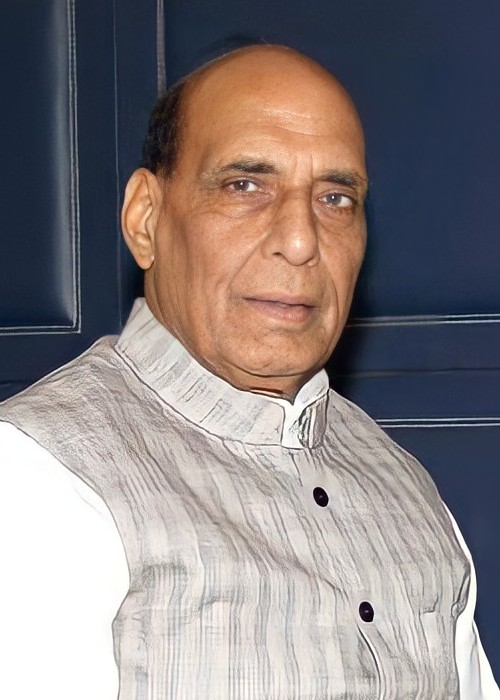
Rajnath Singh strike warning Pakistan: Indian Defence Minister Rajnath Singh said in New Delhi on Sunday, September 27, that India was fully prepared to carry out “any kind of strike” against terrorism if Pakistan continued what he described as a state policy of terrorism. Speaking at the NDTV Defence Summit 2026, Singh coupled that warning with a declaration that India sought peace and dialogue, did not want another country's territory, and would not compromise on its security.
The statement matters because it defines dialogue as conditional rather than automatic. Singh did not announce an operation, identify an imminent target or say that a strike had been ordered. He instead presented readiness to strike as an enduring policy response to conduct India attributes to Pakistan. Pakistan has repeatedly denied sponsoring terrorism and rejects India's characterization of the Pakistani state. Those rival claims remain central to the dispute and are stated positions, not findings independently established by this report.
What Singh said at the defence summit
Singh framed the message through a contrast between restraint and vulnerability. “India believes in peace, does not want war. India does not want to take over another land, does not want to threaten anyone. But there is a difference between silence and weakness,” he said, according to the IANS account. He then added: “India wants peace, but it will not compromise on its security.”
The warning itself was explicit in direction even when Singh referred to Pakistan as the neighboring country. “Till the time our neighbouring country propagates terrorism, we will be ready for any strikes against terrorists — we want to tell them and the world,” he said. In another account of the address, the formulation was rendered as India being ready for “every kind of strike against terrorism.” The wording places counterterrorism at the center of the justification while leaving the geography, scale and timing of any future action unspecified.
Singh also drew a bright line around negotiations: “India believes in dialogue, but if any country propagates terrorism, the dialogue will end then and there.” He said cooperation would not come at the cost of national interest. That structure — peace, dialogue and cooperation offered on one side; strike-readiness on the other — was designed to present Indian policy as conditional deterrence rather than a call for war.
He reinforced the military side of that argument with two familiar maxims: “If you want peace, prepare for war” and “the more you sweat in peace, the less you bleed in war.” Singh described the modern soldier as operating in a multi-domain environment and said India's defence strategy was future-ready. He linked preparedness to diversified energy resources and to domestic control of defence supply chains, arguing that strategic autonomy depends on producing critical components and weapons at home.
Modi's Bishkek message and the wider strategic frame
Singh referred to Prime Minister Narendra Modi's remarks at the 26th Shanghai Cooperation Organisation summit in Bishkek. Modi had called for dismantling what he described as the entire ecosystem of terrorism, including financing, recruitment, radicalization and safe havens, and said terrorism could not be treated as a “strategic asset.” By invoking that speech, Singh placed Sunday's warning inside a broader government line rather than presenting it as a stand-alone reaction.
The defence minister also used the “Thucydides Trap,” the idea that a rising power and an established power are pushed toward conflict, to explain what India says it wants to avoid in global politics. Singh called a simple revisionist-versus-status-quo binary too narrow for India and described the country as a civilizational power. His point connected military preparedness with strategic autonomy: India would cooperate internationally, he argued, but not at the expense of its national interests or freedom of action.
That global framing serves a domestic purpose as well. It allows the government to cast readiness against Pakistan, self-reliance in defence manufacturing and independence from major-power blocs as parts of one strategy. The factual claim is that Singh joined those themes in the same summit address. The analytical implication is that New Delhi wants audiences to read any future counterterrorism action not as alliance politics, but as a sovereign decision under its own security doctrine.
Why this matters now
The timing sharpened the message. A day earlier, Pakistan Prime Minister Shehbaz Sharif used his UN General Assembly address to raise Kashmir and warn that any Indian attempt to stop, impede or divert Pakistan's share of Indus waters would be treated as an “act of war.” India says its decision to hold the Indus Waters Treaty in abeyance followed security concerns after the Pahalgam attack; Pakistan says the suspension has no legal basis. Read our full analysis of Sharif's Kashmir and Indus warning at the UN.
Singh's speech therefore arrived after Islamabad had elevated water into the language of war and after Indian officials had again emphasized a right to act against terrorism. The two statements are not identical threats: Sharif spoke about river flows, while Singh spoke about terrorism. Yet they interact. Each government is naming a threshold it says the other must not cross, and each is describing its own response as defensive.
This is especially consequential because India and Pakistan are nuclear-armed neighbors. Nuclear deterrence can discourage deliberate total war, but it does not remove the danger of limited strikes, artillery exchanges, drone incidents or misread signaling. Public declarations of readiness can strengthen deterrence if they make red lines clear. They can also narrow leaders' room to pause if a new attack or border incident creates pressure for visible retaliation.
The 2025 background: Pahalgam, strikes and treaty suspension
The immediate security background dates to April 22, 2025, when attackers killed 26 people, including one Nepali national, at Pahalgam in Jammu and Kashmir. India said Pakistan-based terrorists carried out the attack. Pakistan denied involvement. India later launched Operation Sindoor on May 7 against sites it described as terrorist infrastructure in Pakistan and Pakistan-administered Kashmir. Pakistan disputed that account and responded militarily. Four days of fighting ended on May 10.
The same crisis changed the water relationship. New Delhi placed the Indus Waters Treaty in abeyance after Pahalgam. Sharif told the UN that the treaty could not be suspended unilaterally and made interference with Pakistan's share of the river system a war threshold. India's position is that security and cooperation cannot be separated while terrorism persists. The disagreement now ties together three subjects that are difficult enough on their own: militant violence, military retaliation and water security.
The Pahalgam attribution remains contested between the governments. India's case is that Pakistan-based groups have repeatedly attacked Indian targets and that state policy must impose consequences. Pakistan's stated position is that it does not sponsor terrorism and should not be held responsible without evidence it accepts. Neutral reporting must preserve both positions while noting what each government actually did and said. It should not turn allegations into settled fact merely because they are repeatedly asserted.
Who gains, who loses and what critics see
The Modi government gains a deterrence narrative. Singh's language supports the argument that India can seek peace while retaining the option of force. It also advances the government's defence-preparedness story: a future-ready military, diversified energy supplies and domestic production from “chips to ships.” For supporters, that combination demonstrates resolve and reduces dependence on foreign suppliers.
Pakistan's government gains its own diplomatic argument. Islamabad can point to the strike warning as evidence for its claim that regional tensions require international attention, particularly after Sharif raised Kashmir and water at the UN. But both governments also pay a cost. The more they define talks as conditional on the other's prior concession, the less political space remains for quiet diplomacy.
Civilians carry the largest downside. Residents near the Line of Control, communities in Kashmir and families dependent on predictable river management have little control over national rhetoric but face the consequences of an escalation. Businesses and investors also absorb uncertainty when security, transport, trade and energy planning become tied to a crisis calendar.
Critics of escalation rhetoric argue that phrases such as “any kind of strike” can create uncertainty about proportionality and geographic limits. Critics of Pakistan's position argue that denials do not answer India's concern about armed groups operating from Pakistani territory. Critics of India's approach argue that making dialogue contingent on agreement over terrorism can freeze the only channel capable of reducing risk. Those are competing judgments, not verified predictions. The central fact is that the public thresholds on both sides have become harder.
Four scenarios from here
- A diplomatic freeze. New Delhi and Islamabad continue exchanging accusations through international forums, while formal bilateral talks remain suspended. This is the least immediately violent path, but it preserves the conditions for a sudden crisis.
- A Line of Control flare-up. A border incident, militant attack or disputed infiltration claim triggers artillery fire or a limited operation. The risk is that each side reads restraint by the other as permission to widen the exchange.
- International calls for mediation. Outside governments urge talks or crisis management after a new incident. Pakistan has shown greater openness to external involvement; India has generally insisted that disputes be handled bilaterally and has rejected third-party claims about the May 2025 ceasefire.
- Quiet de-escalation. Military hotlines, back-channel contacts or technical water discussions reduce ambiguity without requiring either side to retreat publicly from its stated position. This would be the least visible outcome and potentially the most stabilizing.
What to watch next
The first test is Pakistan's official response: whether Islamabad answers Singh directly, repeats its denial of state support for terrorism, or shifts the debate back to Kashmir and the Indus system. The second is operational evidence — any reported incident along the Line of Control, change in military posture or new counterterrorism claim should be assessed separately from political rhetoric. A warning is not proof that an operation is imminent.
The third signal will come from later ministerial statements. If Indian officials add clearer conditions, targets or timelines, the speech will look more like doctrine in motion. If both sides return to legal, technical or diplomatic channels, the warning may remain deterrent messaging rather than a prelude to action. Related regional tensions are also visible in the disputed Pakistan–Afghanistan border clash and in the wider debate over military thresholds documented in our coverage of the UN Security Council's response to Houthi attacks on Saudi Arabia.
Singh's message was constructed to sound simultaneous rather than contradictory: India wants peace, and India is ready to strike. Whether that formulation deters violence or increases pressure for retaliation will depend less on the summit stage than on what happens after it — the next official response, the next border report and whether any private channel remains open when public language hardens.
Sources and reporting notes
- IANS via hi INDiA — Singh's NDTV Defence Summit remarks and Pahalgam context
- ANI via NewKerala — full warning, SCO reference and strategic-autonomy remarks
- BizzBuzz / IANS — parallel account of Singh's speech
- Fact News — India–Pakistan diplomatic and May 2025 context
- Khel Ja / ANI — summit remarks and UN exchange
- Wikimedia Commons — Rajnath Singh portrait source and GODL-India attribution
Reporting cutoff: September 27, 2026. Statements by Indian and Pakistani officials are attributed. Signal Post News has not independently verified allegations of state support for terrorism or operational claims from the 2025 confrontation. Analysis and scenarios are identified as such.